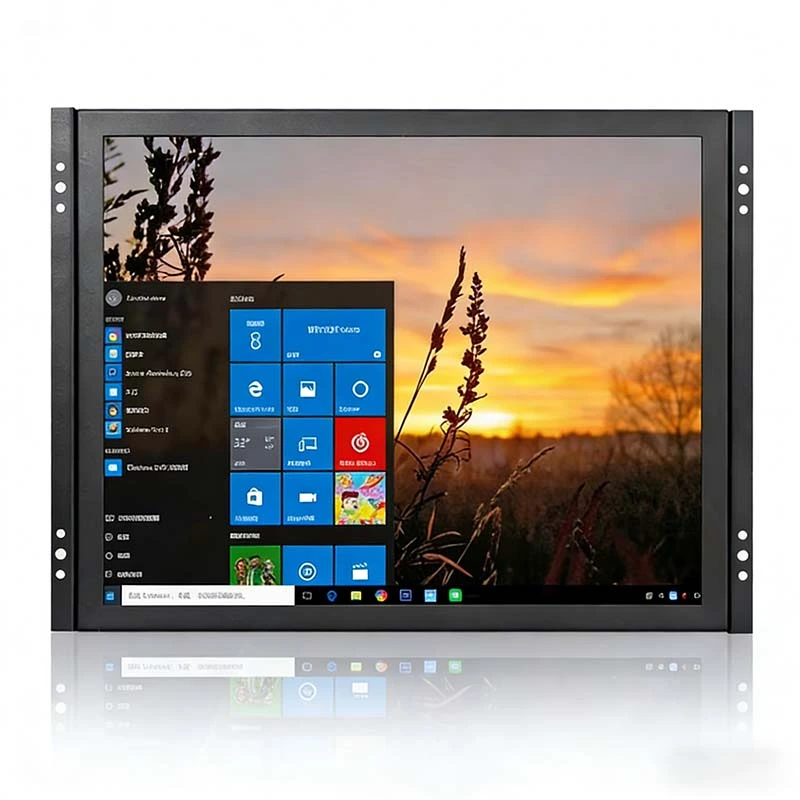
Digital Signage Solutions for Hotel Restaurants: Enhancing Guest Experience and F&B Operations
A practical guide for hotel groups, hospitality integrators, and F&B directors evaluating digital menu boards, tabletop ordering displays, and self-service kiosks — covering real deployment scenarios, supplier selection criteria, and project data from completed hotel restaurant upgrades.
Why Hotel Restaurants Are Moving Toward Digital F&B Solutions
Most hotel restaurants still run on a combination of printed menus, manual order-taking, and verbal communication between guests, waitstaff, and the kitchen. This model worked well when menus rarely changed and dining volume was predictable. As hotel F&B operations have grown more complex — multiple outlets, rotating seasonal menus, banquet events, and multilingual guest bases — the gaps in a fully manual workflow have become harder to ignore.
Across the hotel groups and F&B operators we work with, three operational pain points come up consistently when a property starts evaluating a digital signage solution.
1. Menu Management Becomes Difficult to Scale
Hotel restaurants routinely need to update breakfast menus, seasonal dishes, daily specials, promotions, and pricing — sometimes several times a week during high season. With printed menus, every change means a new print run, a review cycle, and physical replacement across every outlet.
2. Manual Ordering Increases Labor Pressure
In a fully manual ordering flow — guest to waiter to kitchen — every step introduces a chance for error and adds to service time. This pressure is most visible during breakfast rush, banquet service, and in larger hotel restaurants with high table turnover.
Figures reflect typical ranges observed across hotel restaurant digitalization projects and are intended as directional estimates rather than a formal industry study.
3. Limited Guest Engagement and Promotion Opportunities
Hotel F&B revenue depends on more than the core menu — buffet packages, seasonal promotions, beverage offers, and special dining events all need visibility at the right moment. Static printed materials can't be updated in real time and can't be tailored by daypart, so promotional opportunities are frequently missed.
Taken together, these three pressures point to the same conclusion: hotel restaurants don't need a single display product. They need an integrated digital dining and communication solution that connects the guest-facing menu, the ordering process, and the kitchen.
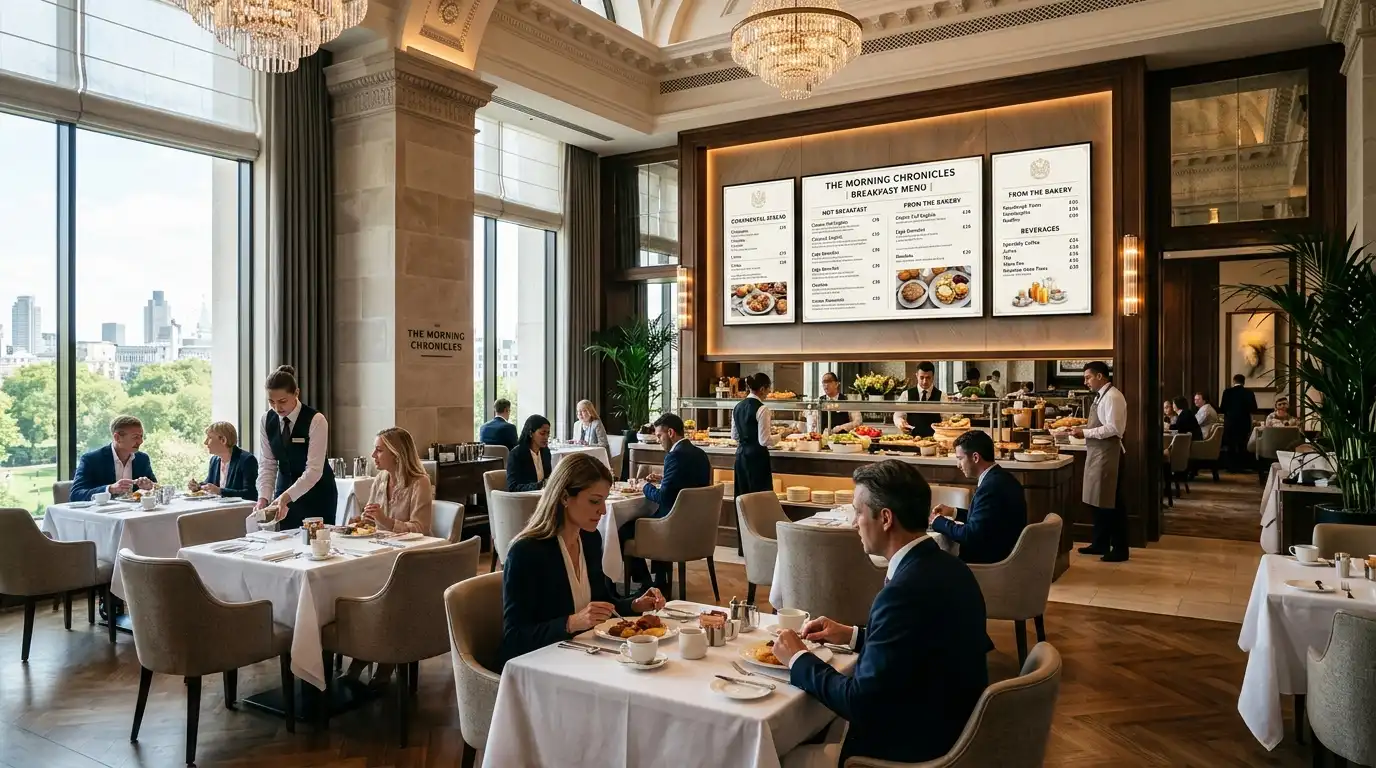
Digital menu displays help hotel restaurants update pricing and seasonal dishes in minutes instead of days.
Digital Solutions for Different Hotel Restaurant Scenarios
Before comparing suppliers, it helps to map where digital signage actually fits inside a hotel restaurant's operation. Most projects fall into four functional zones, each with a different hardware requirement.
Used for menu display, promotional content, and brand communication as guests enter or are seated.
Electronic menu board options →Supports menu browsing, self-ordering assistance, and a more interactive dining experience at the table.
Tabletop ordering display options →Handles kitchen order display, order management, and coordination between front-of-house and kitchen staff.
Industrial touch display requirements →Enables customer self-ordering, payment integration, and reduced queueing during peak hours.
Self-service ordering kiosk options →These four scenarios show that hotel restaurant digitalization is not a single-device purchase — it's a system-level decision that touches guest experience, staff workflow, and kitchen operations at the same time. That's precisely why choosing the right technology partner matters more than choosing a single product.
What Hotel Restaurant Brands Should Consider When Selecting a Digital Solution Partner
Once a property or hotel group decides to move forward, the harder question isn't which product to buy — it's which supplier can actually deliver and support a multi-component system. Here's what typically separates a good fit from a costly mismatch.
2.1 Understanding of Hotel F&B Operations
A supplier that only manufactures hardware will sell you a screen. A supplier that understands hospitality will ask about your guest journey, kitchen workflow, and staffing model before recommending a configuration. Hotel F&B needs are rarely a single-device purchase, and a partner who treats it as one usually gets the deployment wrong.
2.2 Ability to Build an Integrated Solution
Hotel restaurant projects typically span both sides of the operation:
Look for a supplier that can support hardware integration across both sides rather than one that only sells isolated devices.
2.3 Product Consistency for Multi-Location Deployment
For hotel groups, consistency matters as much as capability. A group with 20 properties, each running multiple restaurant outlets, needs the same hardware configuration, stable component supply, and consistent build quality at every location — otherwise maintenance and staff training becomes a location-by-location headache.
2.4 Customization Capability for Hospitality Brands
Hotel brands — particularly luxury properties — have visual standards that off-the-shelf hardware rarely meets out of the box. Appearance customization, logo integration, system configuration, and size options should be available without a full custom-engineering project each time.
2.5 Long-Term Technical Support
The relationship doesn't end at installation. Ongoing operation depends on remote support availability, access to replacement parts, software compatibility over time, and clear maintenance guidance for on-site staff.
2.6 Certifications, MOQ & Warranty — What Buyers Should Verify Before Signing
Before committing to a supplier, hotel procurement teams and integrators typically confirm the following:
These points rarely appear in a product brochure, which is exactly why they're worth asking about directly during supplier evaluation.
Building a Scalable Digital Restaurant Solution for Hotel Groups
The right architecture depends on whether you're deploying to a single property or planning a group-wide rollout.
Single Hotel Deployment
A single-property rollout typically covers one restaurant with a digital menu board at the entrance, tabletop displays for guest ordering, and a kitchen display system tying the two together.
Multi-Hotel Deployment
For hotel groups, the same components scale through a centralized structure: headquarters manages a digital content system that pushes menu updates, pricing, and promotions to multiple properties simultaneously. This delivers three practical advantages:
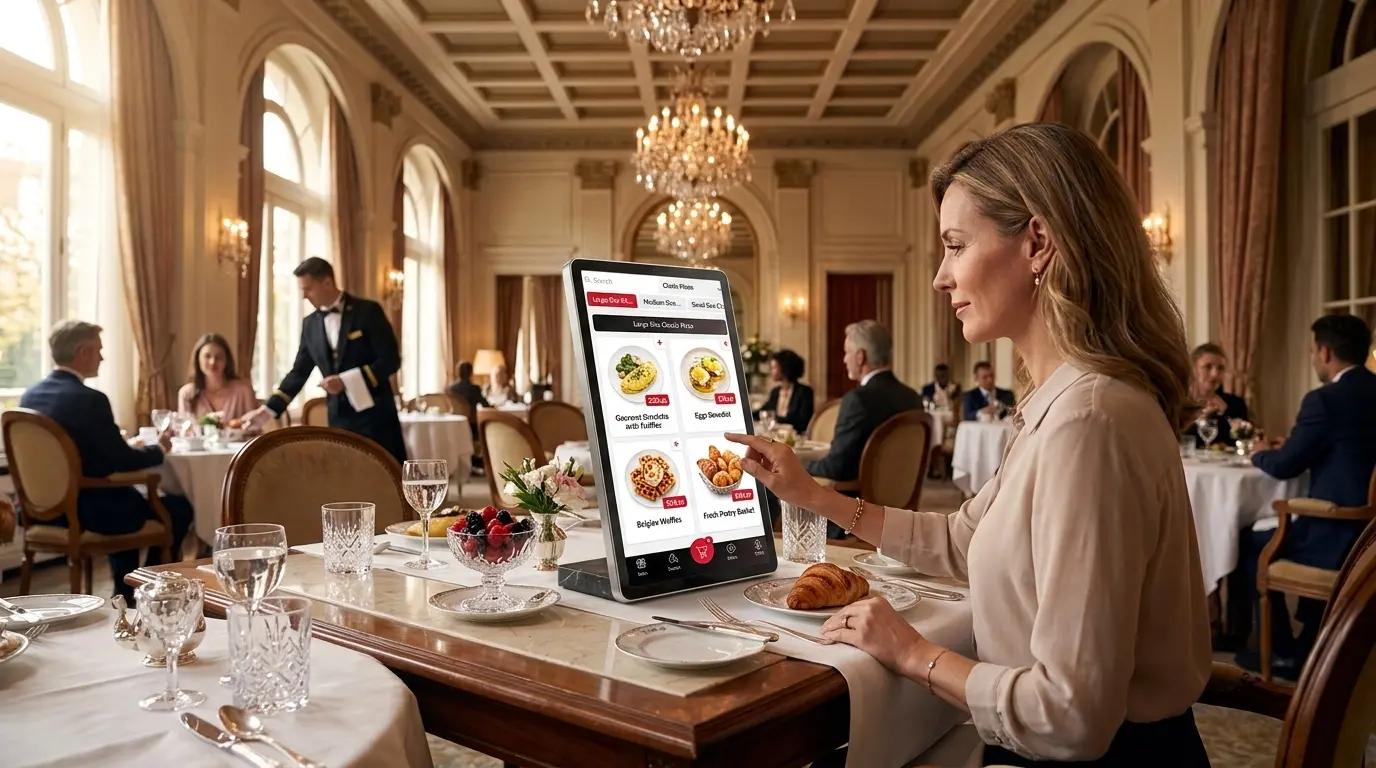
Tabletop displays let guests browse the menu and place orders directly, reducing wait time during peak service.
Real Project Examples
Hotel Restaurant Digital Upgrade Project — Dubai, UAE
Project Background:
A premium luxury hotel in Dubai operates two dining outlets offering buffet breakfast, a‑la‑carte services and banquets. The hotel launched a digital transformation project to enhance guest experience and improve overall F&B service efficiency.
Challenges:
Frequent seasonal menu changes, traditional printed menus caused long update cycles and recurring printing costs
Heavy workload during breakfast and banquet peak periods; manual order handover easily led to miscommunication & service delays
Required unified high‑end brand visual experience across all guest‑facing interaction points
Solution:
12 units digital menu signage: Installed at restaurant entrances and public dining zones, supporting remote centralized content publishing for fast menu and promotion updates
14 units table‑side interactive touch displays: Deployed in dining areas for guests to browse dishes and submit orders directly
6 units industrial kitchen touch terminals: Set up at kitchen workstations to receive real‑time order information and special guest notes
Total: 30+ units, forming a closed loop from guest ordering to kitchen order management. All devices support 24/7 stable operation for hospitality scenarios.
Figures are approximate and based on typical outcomes for comparably scoped hotel restaurant projects.
Boutique Hotel Restaurant Digitalization Project — Italy
Project Background:
A high‑end boutique hotel in Italy features an on‑site fine‑dining restaurant, well‑known for farm‑to‑table local cuisine. To preserve its classic interior aesthetic while upgrading guest service, the hotel rolled out targeted digital display transformation for its restaurant area.
Challenges:
Menus change frequently following seasonal local ingredient supply, bringing repeated printing work and material waste
Large share of international tourists stay at the hotel; guests require multilingual menu support
Hope to cut ongoing print‑material expenses, meanwhile digital hardware must harmonize with the restaurant’s vintage interior style
Solution:
‑ 8 units digital menu boards: Wall‑mounted at restaurant entrance and lounge area, for central remote content management of rotating seasonal dishes
‑ 11 units interactive table displays: Placed at dining tables, supporting one‑click language switching for global visitors
‑ Custom‑styled commercial display housings: 19 sets in total, custom‑finished casings matching the restaurant’s classic interior decor, avoiding visual conflict with boutique‑style surroundings
Figures are approximate and based on typical outcomes for comparably scoped hotel restaurant projects.
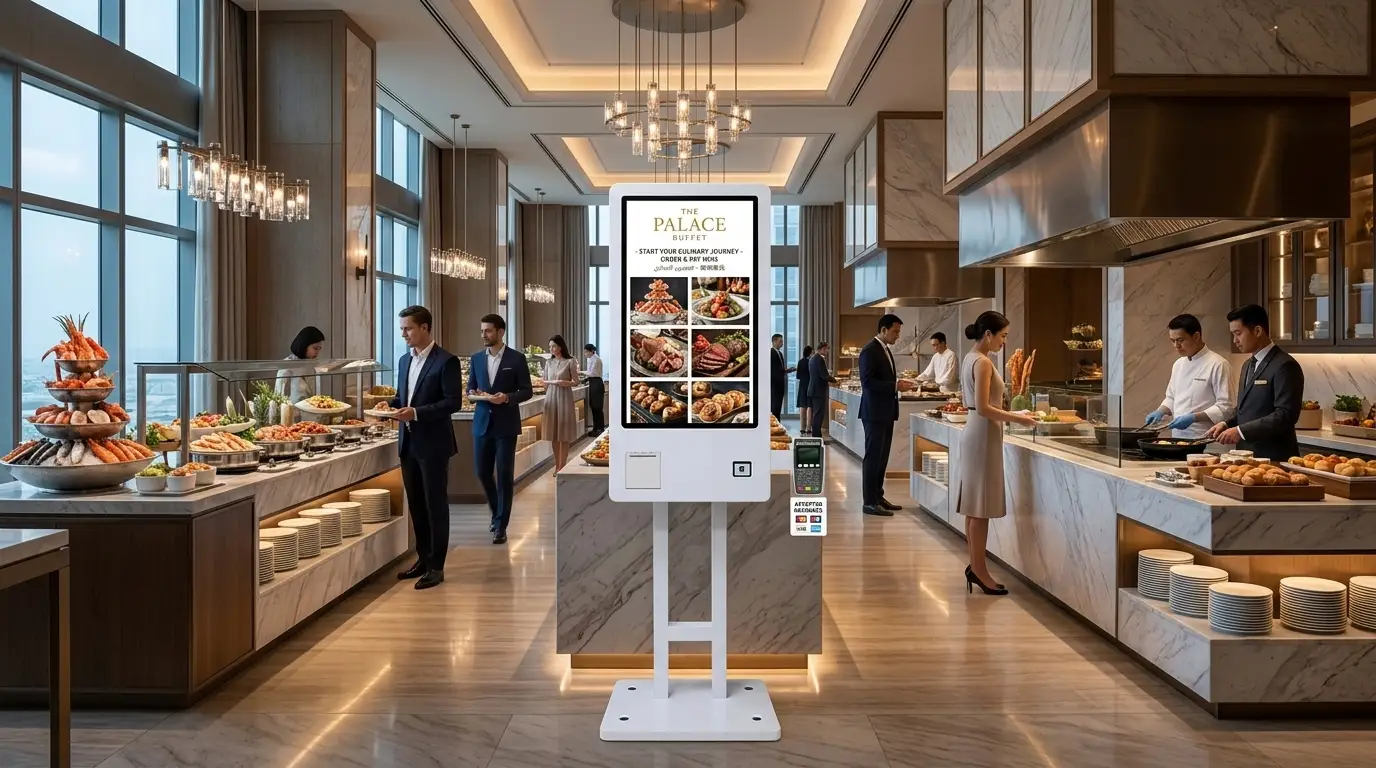
Self-service kiosks reduce queueing during peak hours while integrating directly with kitchen order systems.
FAQ Before Starting a Hotel Restaurant Digital Solution Project
Can one supplier provide digital menu displays, kitchen displays, and ordering kiosks together?
Yes — this is one of the main advantages of working with a supplier that manufactures across product categories rather than a single device type. It reduces the number of vendor relationships to manage and helps keep hardware specifications consistent across the front-of-house and kitchen.
What products are commonly used in hotel restaurant digitalization projects?
Most projects combine an electronic menu board for entrance and dining-area display, tabletop ordering displays for guest-facing interaction, industrial touch displays for kitchen order management, and self-service ordering kiosks for high-traffic areas.
Can the solution be customized for different hotel brands?
Yes. Appearance, housing materials, logo placement, screen size, and system configuration can typically be adapted to match a brand's interior design standards, particularly for luxury and boutique properties.
How can hotel groups manage multiple restaurant locations?
A centralized content management system allows headquarters to push menu, pricing, and promotional updates to all connected properties at once, rather than managing each location individually.
What is the typical deployment process for a hotel restaurant project?
Most projects move through requirement scoping, hardware and content configuration, a pilot installation at one outlet, and then phased rollout across remaining locations. Timelines vary by project scope, but 4–8 weeks is a reasonable planning window for a single property.
Can suppliers support bulk orders and international delivery?
Established hardware manufacturers typically support bulk production runs along with international shipping and import documentation — this is worth confirming early if you're planning a multi-property or multi-country rollout.
What is the minimum order quantity (MOQ) for a hotel group project?
MOQ varies by product type and level of customization. Standard configurations generally have lower minimums than fully customized housings or branded units — it's best to confirm MOQ against your specific configuration during initial discussions.
Can the supplier provide product samples before bulk ordering?
Most manufacturers can provide sample units for evaluation before a bulk commitment, which allows your team to test hardware quality, software behavior, and fit within the actual restaurant environment before scaling up.
Partner with a Digital Solution Provider for Hotel Restaurant Transformation
From restaurant displays to kitchen operation systems, a reliable technology partner helps hotel brands build scalable digital F&B solutions — rather than a shelf of disconnected hardware.
Whether you're upgrading a single hotel restaurant or planning a multi-property rollout, our team can help you map the right combination of menu displays, tabletop ordering screens, and self-service kiosks for your specific operation.
Get in touch with our solution team to talk through your project requirements — no obligation, just a conversation about what would actually work for your properties.
Talk to Our Solution TeamContent last reviewed and updated August 2026 by the Qtenboard Solutions Team.

CEO | Interactive Display & Collaboration Solution Expert
I am the founder of Qtenboard, bringing over 17 years of hands-on expertise to the touch display industry. Drawing on the global management perspective gained through my EMBA studies at ShenZhen University, I lead my team in optimizing every stage of our operations—from product definition to high-efficiency supply chain management—ensuring our manufacturing capabilities remain at the forefront of the industry.
As the leader of Qtenboard, I specialize in providing tailored OEM/ODM solutions for interactive whiteboards, LCD video walls, digital signage, and industrial-grade touch terminals. Backed by our 330,000 m² modern industrial park in Shenzhen, we maintain full-lifecycle control over industrial design, precision manufacturing, and rigorous performance testing.
With nearly two decades of project experience, Qtenboard’s display solutions are now deployed in over 120 countries and regions, earned the trust of more than 15,000 enterprise customers worldwide. If you are seeking a responsive partner with a deep manufacturing foundation for your customized touch display projects, my team and I are ready to support your vision with professional excellence.

 EN
EN
 pt
pt  spa
spa  th
th  vie
vie  aze
aze  bel
bel  est
est  lav
lav  ukr
ukr  ru
ru