The global self‑service kiosk market is growing at over 12% CAGR, and digital touchpoints have become standard infrastructure across retail, QSR, healthcare, education, and government services. Yet for B2B buyers, the single most consequential decision—choosing between Android and Windows—is often made with incomplete technical insight.
Industry data suggests that misaligned OS selection can inflate total cost of ownership (TCO) by 20‑30% over a 3‑year lifecycle, driven by unexpected integration costs, peripheral incompatibility, and higher field‑service overhead. This guide is built for three distinct enterprise personas:
We will dissect the technical underpinnings—chip architecture, driver stacks, device management protocols, and security models—and translate each into tangible business impact. No marketing fluff, just decision‑grade analysis.
Facts: Android kiosks predominantly run on ARM‑based SoCs (e.g., Rockchip RK3588, Qualcomm QCM6490) with TDP between 5‑15W, enabling fanless designs. Windows devices are built on x86 (Intel Core / Celeron) with TDP ranging 15‑65W, requiring active cooling (fans or heat sinks).
Problems in the field: For unattended, semi‑outdoor environments (drive‑thru lanes, parking garages, kitchen back‑offices), dust and grease quickly clog cooling fans, causing Windows terminals to throttle or shut down during peak hours. Android’s fanless design drastically reduces this failure mode. Conversely, complex 3D rendering or large‑model AI inference still favours x86’s GPU muscle.
Value for your project: Match the thermal envelope to your deployment environment. A wrong architectural choice translates directly to unplanned downtime—and in high‑traffic retail, each minute of outage can cost hundreds in lost revenue.
Facts: Android peripherals rely on standard USB HID, serial GATT profiles, or ESC/POS command sets. Most barcode scanners, thermal printers, and card readers are plug‑and‑play (driver‑less or auto‑download). Windows relies on vendor‑specific .inf drivers, often tied to exact OS builds (e.g., a high‑resolution camera driver may fail on Windows 11 24H2).
Problems in deployment: Rolling out 100 Windows kiosks with mixed peripheral models requires IT staff to install different driver versions on each unit—adding 3‑5 working days to the initial setup. For Android, the same deployment can be completed remotely via zero‑touch provisioning.
Value for procurement: Audit your existing software stack. If your core business application is a .NET Framework / WinForms system that calls local DLLs, Windows is non‑negotiable. If your application is web‑based or uses cross‑platform frameworks, Android offers a faster, cheaper path to scale.
Facts: Android Enterprise (EDLA‑certified) supports Zero‑Touch Enrollment and MDM (Mobile Device Management) with locked‑down kiosk mode and auto‑recovery on reboot. Windows offers Active Directory, Group Policy, WSUS patching, BitLocker encryption, and advanced firewall rules.
Problems for large fleets: Deploying 500+ units: Android can be staged via cloud policies; devices self‑configure on first boot. Windows requires sysprep imaging or SCCM, consuming significant IT man‑hours. Additionally, Microsoft’s “Patch Tuesday” can force reboots during business hours—a major risk for 24/7 operations. Android’s FOTA updates are more controllable and have predictable security patch cycles.
Value for your organisation: If you have a centralised IT team with domain expertise, Windows offers deeper security granularity. If your sites are distributed and lack on‑site support, Android’s cloud‑native management is a decisive advantage.
In these cases, Android delivers 30‑40% lower 5‑year TCO due to lower hardware cost, faster deployment, and reduced field service.
Here, Windows is the only viable option; forcing Android would incur unsustainable customisation and maintenance costs.
Concrete examples help ground technical theory in business reality. Below are two anonymised deployments that illustrate the decision framework in action.
Background: A 200‑store franchise needed self‑order kiosks for peak lunch hours. Stores had no dedicated IT staff, and most locations had open kitchens with high ambient temperature and grease.
Challenge: Windows‑based kiosks tested in pilot stores overheated and crashed during 12:00‑14:00 rush, requiring manager reboots. Driver conflicts with new receipt printers delayed rollout by weeks.
Solution: Deployed Android kiosks (RK3588, fanless) with MDM remote management. Single‑app lockdown, ESC/POS printer support, and zero‑touch provisioning allowed store managers to unbox and plug in without IT assistance.
Result: 98.5% uptime during peak hours; initial deployment time per store reduced from 4 hours to 25 minutes; 5‑year TCO projected 37% lower than the Windows alternative.
Background: A group of 5 hospitals planned to install check‑in kiosks for patient registration, lab result printing, and payment. The system had to integrate with the central HIS (Hospital Information System) running on a .NET application with local SQL Server.
Challenge: Android lacked native support for the HIS client, which used ActiveX controls and called Windows‑specific DLLs. Additionally, the kiosks needed to connect to multiple medical peripherals (barcode label printers, high‑precision scanners, and card encoders) that only provided Windows drivers.
Solution: Chose Windows IoT Enterprise on fan‑cooled x86 hardware. The hospital’s IT team managed devices through AD and deployed group policies for security compliance.
Result: Seamless integration with existing infrastructure; 100% compatibility with all peripherals. The slightly higher hardware cost was justified by zero re‑engineering of the core HIS application and faster patient throughput.
Takeaway: The “best” OS is the one that aligns with your existing software, environment, and support model. Both platforms are robust—the key is honest assessment, not vendor bias.
Two major trends are reshaping kiosk procurement decisions. Ignoring them risks non‑compliance or missed cost savings.
Since 2024, Google has progressively tightened requirements for Android Enterprise devices. Starting in 2026, non‑EDLA‑certified Android terminals cannot legally ship with Google Mobile Services (GMS) in many regions. For overseas education and government tenders (especially in the EU and US), EDLA is becoming a mandatory entry ticket.
Procurement action: Verify that your Android supplier holds valid EDLA certification. Otherwise, your devices may be barred from public‑sector bids, regardless of hardware excellence.
Modern kiosks increasingly embed computer vision for age verification, empty‑tray detection, or automated checkout. Android’s ARM + NPU (neural processing unit) offers excellent performance per watt for lightweight models (e.g., classification, object detection). Windows x86 + dGPU delivers higher peak throughput but at much higher power and cost.
Decision rule: If your AI workload is lightweight and runs on‑device, Android wins on TCO. If you plan to deploy large language models or generative AI at the edge, Windows with a discrete GPU is the practical choice.
As an SI, your credibility hinges on recommending the right OS for each client. Here are three proven rules:
🔍 Pro tip: When presenting to the client, replace “which OS is better?” with a “risk inventory” — list scenarios like network outage recovery, peripheral replacement, and patch timing. This shifts the conversation from opinions to operational resilience.
Q1: Which OS is more stable for 24/7 unattended kiosks?
Android’s fanless ARM design has lower hardware failure rates in dusty or warm environments, but stability also depends on application quality. For harsh conditions, Android often wins.
Yes, via standard USB/RS232 protocols. Confirm that the payment device provides an Android SDK or supports generic HID. PCI‑DSS compliance is handled at the application layer.
Technically yes, but you lose centralised policy and security management. For deployments without on‑site IT, this is not recommended.
EDLA (Enterprise Device Licensing Agreement) certifies Android devices for legal GMS and timely security updates. From 2026, it is a hard requirement for most government/education tenders overseas.
Key drivers: hardware cost (Android 20‑30% lower), deployment labour (Android ~50% less), and field service (Android remote‑fix vs. Windows on‑site). Request a detailed TCO model from your hardware partner.
Choosing between Android and Windows is not about brand loyalty—it is about aligning technical characteristics with your specific business constraints. From thermal design and driver models to management protocols and emerging EDLA/AI requirements, every detail ultimately translates into dollars, downtime, and deployment headaches.
We offer both industrial‑grade Android and Windows self‑service kiosks—from 15.6″ to 65″ touchscreens, fully certified (CE, FCC, EDLA where applicable), and customisable for your peripheral mix. Our engineering team does not push a single platform; we listen to your project and recommend the best fit.
Fill in your deployment scenario, peripheral list, and budget – we’ll return a custom recommendation within 24 hours. No sales pressure, just expert guidance.
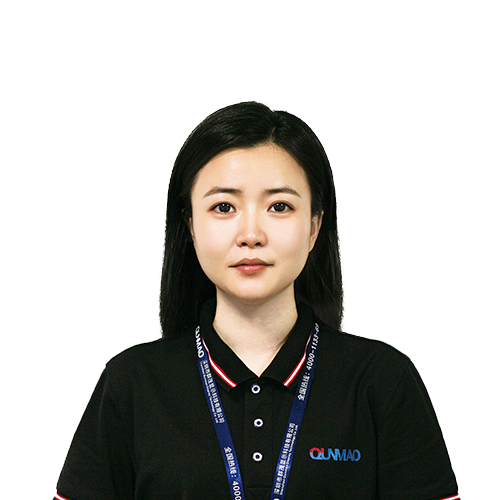
CEO | Interactive Display & Collaboration Solution Expert
I am the founder of Qtenboard, bringing over 17 years of hands-on expertise to the touch display industry. Drawing on the global management perspective gained through my EMBA studies at ShenZhen University, I lead my team in optimizing every stage of our operations—from product definition to high-efficiency supply chain management—ensuring our manufacturing capabilities remain at the forefront of the industry.
As the leader of Qtenboard, I specialize in providing tailored OEM/ODM solutions for interactive whiteboards, LCD video walls, digital signage, and industrial-grade touch terminals. Backed by our 330,000 m² modern industrial park in Shenzhen, we maintain full-lifecycle control over industrial design, precision manufacturing, and rigorous performance testing.
With nearly two decades of project experience, Qtenboard’s display solutions are now deployed in over 120 countries and regions, earned the trust of more than 15,000 enterprise customers worldwide. If you are seeking a responsive partner with a deep manufacturing foundation for your customized touch display projects, my team and I are ready to support your vision with professional excellence.
 EN
EN
 pt
pt  spa
spa  th
th  vie
vie  aze
aze  bel
bel  est
est  lav
lav  ukr
ukr  ru
ru