In modern K12 smart classroom and corporate meeting room projects, system integrators frequently encounter three interrelated delivery challenges when deploying Windows interactive flat panel for education and corporate. These common contradictions often lead to delayed acceptance, rework, and rising after-sales costs that affect overall project profitability.
First is the conflict of IT strategy. Most educational institutions operate with fixed long-term IT architectures, where unified educational software platforms have not yet completed Win11 adaptation. In contrast, corporate and government projects enforce strict security compliance upgrades, with Win11 often listed as a mandatory tender requirement. A single hardware solution cannot accommodate these two completely different IT upgrade rhythms.
Second is software incompatibility. A large number of exclusive teaching programs run stably only on Win10, making Windows interactive whiteboard for K12 classroom highly dependent on legacy system environments. Upgrading to Win11 will trigger program errors and system failures. Meanwhile, enterprise office ecosystems, including domain management components and enterprise-grade conferencing tools, are natively designed for Win11 environments. Version mismatch directly causes on-site acceptance failures and costly rework.
Third is cross-system collaboration conflicts. Current project scenarios feature heterogeneous IT environments: teaching buildings rely on Windows for professional software operation, while innovation laboratories adopt Android for lightweight interactive teaching; corporate headquarters use Windows for compliant office work, while branch meeting rooms prefer Android for quick casting and collaboration. Single-OS devices fail to cover such diverse demands, forcing integrators to cooperate with multiple suppliers and manage complex inventory.
The root cause of these pain points lies in fragmented supply chains from non-original manufacturers, where hardware design, system pre-installation, and delivery are separated across different vendors, leaving integrators to bear all on-site coordination risks. This guide focuses on original factory system integration capabilities, providing actionable BOM configuration standards and risk avoidance strategies for professional system integrators.
Education and corporate clients show entirely different IT upgrade logics. Educational software iteration is constrained by regional unified platform adaptation progress, resulting in slow system upgrades. Government and enterprise projects prioritize security audit compliance, driving proactive and rapid Win11 promotion.
This creates a major delivery dilemma for integrators: most mainstream interactive displays ship with fixed factory OS versions, making it impossible to cover dual IT strategies with one hardware model. Mismatched system versions require on-site reinstallation or factory reconfiguration, extending project cycles and eroding profit margins.
Qtenboard provides flexible factory-customized OS pre-installation, enabling unified hardware platforms to ship with Win10 or Win11 on demand without hardware modification or on-site system rework. As a professional manufacturer with independent production lines, all customized orders are self-produced and self-tested, ensuring controllable delivery cycles and simplified SKU management for integrators.
Scenario-based deployment fully matches real project needs: Win10 is widely adopted in legacy K12 campuses to ensure full compatibility with stock teaching software; Win11 is the preferred option for new corporate and multinational meeting projects to meet modern security compliance standards.
Educational and enterprise scenarios have essential differences in IT management demands. Most K12 classrooms operate independently without domain control or unified policy audit requirements. In comparison, multinational enterprises and government institutions require centralized domain management, remote security control, and unified IT policy auditing, which can only be realized through enterprise-level system configurations.
Improper version matching leads to two typical project risks: deploying Windows Professional for general classrooms causes over-specification and unnecessary bulk procurement costs, while equipping corporate compliant projects with Windows Standard results in unmet audit standards and failed acceptance. Accurate scenario-based selection helps integrators deliver precise BOM quotations and avoid common industry configuration errors.
| Dimension | K12 Smart Classroom | Corporate / Multinational Meeting Room |
|---|---|---|
| IT Management Requirement | No domain control, independent classroom operation | Centralized domain management, unified policy audit |
| Recommended Version | Windows Standard | Windows Professional |
| Core Demand | Teaching software compatibility, cost control | Security compliance, remote operation & maintenance |
| Cost Sensitivity | High (large-scale procurement) | Medium (compliance first) |
This standardized selection framework can be directly applied to bidding documents, achieving balanced advantages in scenario adaptation, cost optimization, and compliance qualification for all Professional Windows interactive flat panel for enterprise meeting and educational display projects.
Most market products adopt a fragmented assembly mode of post-installed OS and third-party OPS modules. Separated suppliers for screens, hardware modules, and operating systems lead to inherent compatibility defects, including driver conflicts, touch latency, and unstable long-hour operation. These failures frequently occur in high-frequency classroom startup cycles and all-day corporate meeting scenarios.
For system integrators, such hidden failures increase on-site debugging, rework, and after-sales labor costs, damaging project reputation and restricting subsequent business cooperation.
As a mature manufacturer of OPS embedded Windows interactive flat panel, Qtenboard implements full-link original factory integrated calibration covering hardware design, batch testing, and after-sales responsibility. The whole machine structure, OPS hardware, touch components, and heat dissipation systems are integrally designed to eliminate compatibility risks at the source. Every device undergoes strict aging testing, touch accuracy calibration, and performance inspection before delivery, requiring no secondary on-site debugging.
The closed-loop value logic is verifiable: original factory integrated adaptation reduces hardware failure rates, cuts after-sales and operation costs, and steadily improves project delivery stability and client satisfaction.
Education and corporate scenarios rely on differentiated system ecosystems. Educational scenarios prioritize professional teaching software operation and lightweight interactive collaboration, while enterprise scenarios focus on high-definition video conferencing and enterprise document collaboration. Single-OS devices cannot cover such heterogeneous application demands.
Many clients have mixed scenario layouts: teaching buildings require Windows support for professional courseware tools, while maker laboratories need Android's flexible lightweight interaction; enterprise headquarters demand Windows-compliant office systems, while branch offices need Android's one-click quick meeting functions. Traditional dual-device and dual-supplier solutions double procurement and after-sales management pressure for integrators.
Qtenboard independently develops and debugs Dual OS Windows Android interactive flat panel solutions, realizing stable one-click switching and coexistence without third-party splicing. This professional dual-system architecture avoids common industry defects such as system stuttering, adaptation failures, and unstable switching, enabling integrators to cover all client heterogeneous IT scenarios with a single product line and simplify the entire supply chain system.
A large cross-regional educational group in Kazakhstan covers new and old teaching campuses, innovation maker laboratories, and corporate administrative meeting rooms. The project requires unified equipment deployment for professional teaching, scientific training, and compliant enterprise conferences, placing high demands on system compatibility, operational stability, and batch cross-border delivery.
Inconsistent Windows versions across new and old campuses caused massive legacy teaching software incompatibility; third-party spliced OPS solutions delivered a quarterly failure rate of 12%, with frequent touch drift, driver errors, and system crashes during peak teaching periods; multi-scenario incompatible equipment models led to complex SKU inventory and high cross-border operation pressure.
Targeted customized configuration for differentiated scenarios: Win10 Standard for teaching areas to inherit existing educational software assets; Win11 Professional for administrative meeting rooms to meet enterprise security compliance and remote management strategies; dual Windows+Android OS configuration for innovation laboratories to adapt to dual teaching and maker scenarios. All Factory integrated Windows interactive flat panel devices complete unified assembly, system pre-installation, aging testing, and touch calibration at the original factory, achieving one-time integrated delivery without on-site modification. Unified factory production eliminates batch inconsistencies and staggered delivery risks in cross-border multi-supplier projects.
Equipment quarterly failure rate dropped from 12% to 0.8%; overall project acceptance cycle shortened by 25% with zero rework risks; unified product line coverage reduced supply chain management costs by 40%, greatly lowering the integrator's cross-border inventory and after-sales pressure.
For scenarios with massive legacy teaching software, independent classroom operation, and high-frequency startup usage, prioritize Win10 Standard equipped with original factory integrated stable hardware to balance software compatibility, long-term operational stability, and bulk procurement cost performance.
For projects with strict security compliance, centralized domain management, and remote audit requirements, select Win11 Professional matched with high-performance factory-calibrated OPS hardware to ensure full compliance and long-term stable enterprise-level operation.
Yes. Qtenboard supports both and installs the version that best fits your project requirements.
Windows is installed and validated at the factory as part of the complete system.
Only if your project requires advanced IT management or security features.
Windows runs on validated OPS or embedded PC hardware matched to your workload.
Yes. Many Qtenboard panels support both systems through different configurations.
The core differentiation of smart interactive display devices lies not in conventional hardware parameters, but in professional system integration and customized delivery capabilities. The ability to flexibly pre-install targeted Windows versions, complete factory-level integrated hardware and software calibration, and cover multi-scenario heterogeneous IT demands with a single product line determines the final delivery quality of education and corporate display projects. Original factory integrated capabilities help system integrators achieve stable project delivery, low after-sales failure rates, and higher bid-winning advantages in global education and commercial display markets.
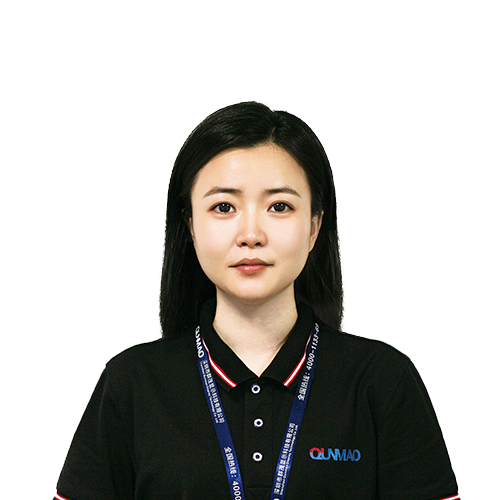
CEO | Interactive Display & Collaboration Solution Expert
I am the founder of Qtenboard, bringing over 17 years of hands-on expertise to the touch display industry. Drawing on the global management perspective gained through my EMBA studies at ShenZhen University, I lead my team in optimizing every stage of our operations—from product definition to high-efficiency supply chain management—ensuring our manufacturing capabilities remain at the forefront of the industry.
As the leader of Qtenboard, I specialize in providing tailored OEM/ODM solutions for interactive whiteboards, LCD video walls, digital signage, and industrial-grade touch terminals. Backed by our 330,000 m² modern industrial park in Shenzhen, we maintain full-lifecycle control over industrial design, precision manufacturing, and rigorous performance testing.
With nearly two decades of project experience, Qtenboard’s display solutions are now deployed in over 120 countries and regions, earned the trust of more than 15,000 enterprise customers worldwide. If you are seeking a responsive partner with a deep manufacturing foundation for your customized touch display projects, my team and I are ready to support your vision with professional excellence.
 EN
EN
 pt
pt  spa
spa  th
th  vie
vie  aze
aze  bel
bel  est
est  lav
lav  ukr
ukr  ru
ru