A corporate training room needs more than a large screen. What it really needs is a collaboration system that supports presentation, annotation, multi-participant interaction, hybrid delivery, and content reuse across every session. Choose poorly and you inherit the same problems training teams have lived with for years: a projector washed out by daylight, a trainer juggling laptop, projector, and flip chart, learners who cannot edit anything on screen, whiteboard notes that vanish the moment the meeting ends, remote participants who are passive viewers, inconsistent rooms across sites, and IT support tickets every Monday morning.
This guide is written for training managers, HR and L&D teams, IT/AV buyers, and system integrators who need a defensible procurement decision rather than a spec-sheet comparison. It walks through training use cases first, then room size, the features that actually change instruction quality, total cost of ownership, and how to evaluate the supplier behind the hardware. Qtenboard offers 55–110 inch 4K interactive meeting whiteboards with multi-touch, wireless casting, Android/Windows dual system, DMS management, and OEM/ODM — and this article explains where each configuration fits.
| Training scenario | Recommended size | Recursos indispensáveis | Direção Qtenboard |
|---|---|---|---|
| Small coaching / huddle | 55–65" | 4K, touch, wireless casting, easy operation | 55-65 "painel interativo |
| Standard instructor-led training | 75–86" | 4K, multi-touch, whiteboarding, video meetings | 75–86" interactive panel |
| Large workshop / hybrid training | 86–98" | 40–50 point touch, camera/mic, UC compatibility | 86–98" interactive panel |
| Training hall / seminar | 98–110" or multi-display | Large format, multi-touch, long-hour operation | 98–110" interactive panel |
| Multi-site deployment | 55–110" standardized | DMS, batch supply, unified UI, spare parts | Factory-direct B2B supply |
| OEM/ODM training project | 55–110" | Branding, software, hardware, CKD/SKD | Qtenboard OEM/ODM programa |
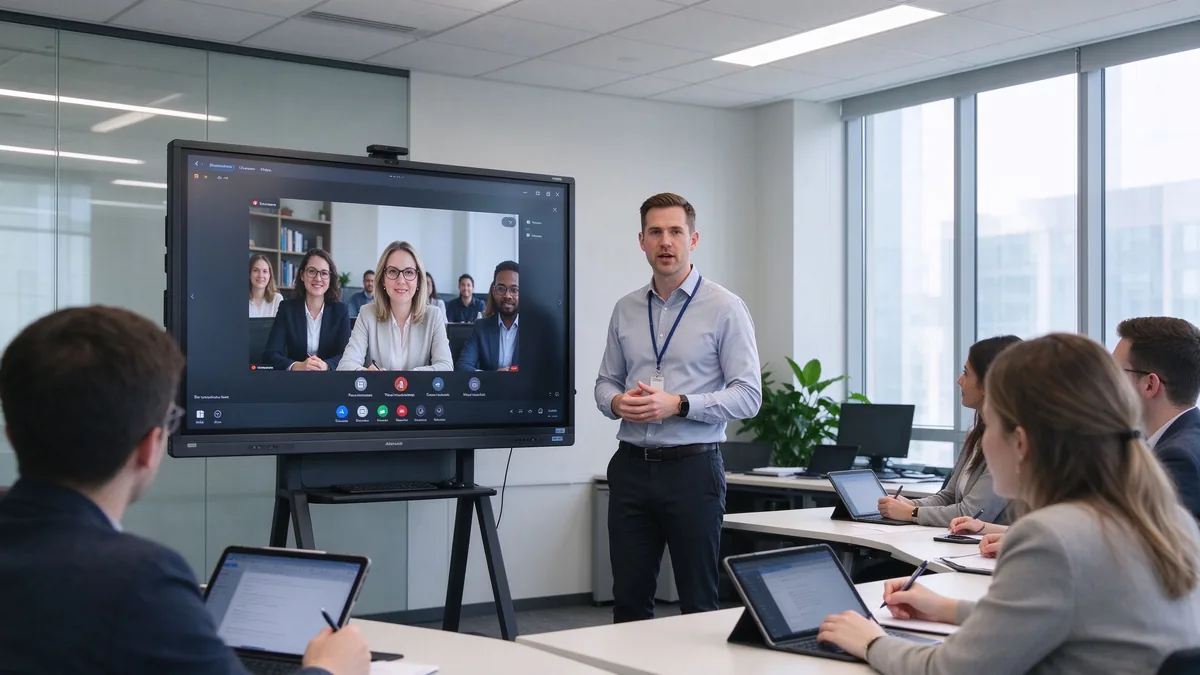
The old training-room stack has a familiar failure pattern. A projector loses contrast the moment blinds go up; the trainer walks between laptop, projection, and flip chart; learners watch but never edit anything; the useful notes on the whiteboard disappear; remote participants stare at a small speaker box; and no two rooms in the company work the same way. IT ends up troubleshooting connections that should never need troubleshooting.
A smart board should fix the workflow, not just the picture. It should present slides, video, web pages, and documents; let the trainer mark up training material directly; let several learners participate; accept laptops and tablets wirelessly; connect to remote training platforms; save the whiteboard session as reusable content; and standardize how every training room behaves across the company.
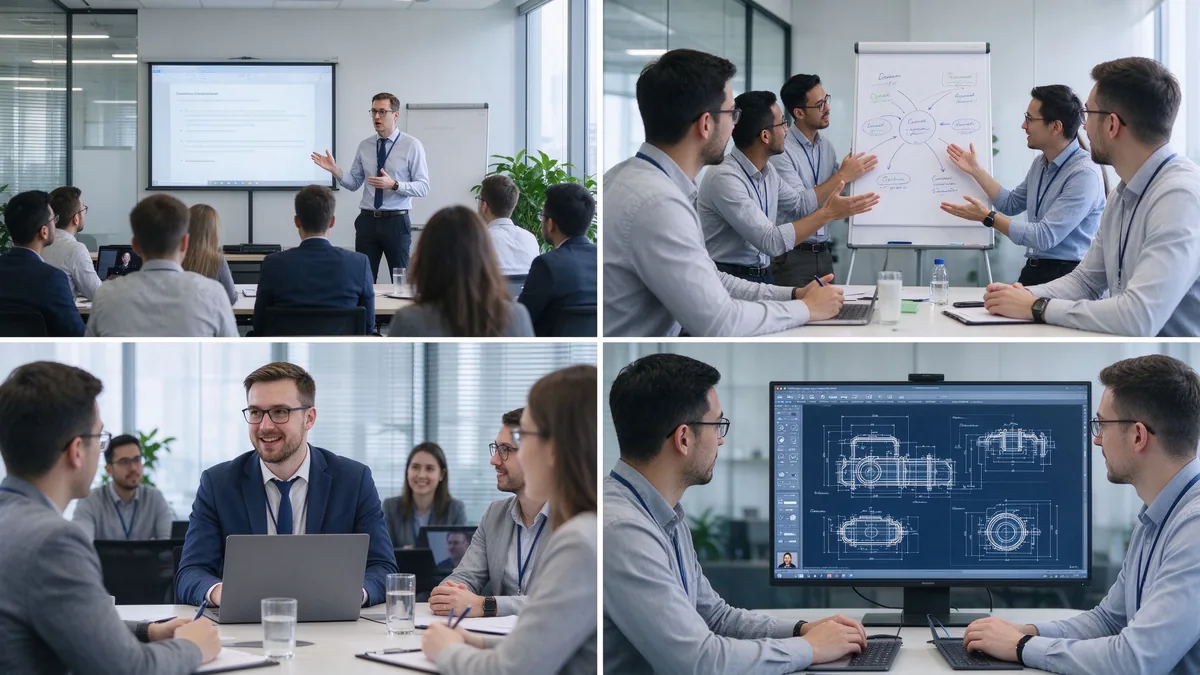
Training rooms are not interchangeable. A compliance classroom and a product-workshop room reward very different hardware. Define the dominant format before you compare sizes. In practice, L&D teams who define a dominant format first make faster, cheaper decisions: a room used 80% for workshops needs different touch and furniture than a room used 80% for video-based compliance training. When multiple formats share one room, choose features for the most interactive use case — the one that fails loudest when the hardware is under-specified.
Onboarding, product knowledge, sales skills, compliance and safety, software rollouts. Needs large 4K clarity, natural writing, document annotation, reliable video playback, content saving and export, and an interface simple enough that any trainer can start a session without IT.
Brainstorming, case studies, project planning, management offsites. Needs multi-user touch, simultaneous writing, infinite canvas, insertable sticky notes and graphics, content organization and sharing, and often a mobile stand so the board can move between group spaces.
Cross-region sessions, headquarters-to-branch teaching, remote employee training, customer and dealer online training. Needs camera coverage, microphone array, speakers, Teams/Zoom/Google Meet compatibility, wireless casting, visible remote participants, and shared or recorded content.
Industrial products, engineering technology, software systems, medical devices, after-sales repair. Needs 4K detail, PDF and drawing annotation, zoom and multi-window, USB/HDMI inputs, precise touch, and long-hour stable operation.
Multinationals, retail chains, banking and government, large manufacturing, branch training centers. Needs a complete size line, standardized configuration, remote device management, batch purchasing, firmware and software updates, consistent branded UI, and regional certification and after-sales.
| Training room type | Typical group size | Suggested display size | Melhor para |
|---|---|---|---|
| Small training room | 2–6 | 55–65" | Coaching and small-group instruction |
| Standard training room | 6–12 | 75–86" | Instructor-led training and presentations |
| Large training room | 12–25 | 86–98" | Workshops and hybrid training |
| Training hall | 25+ | 98–110" or multi-display | Large-group instruction and seminars |
Before ordering, measure the room, not just the participant count: room length and width, number of learners, the farthest viewing distance, available wall width, seating layout (U-shape, classroom, group clusters), natural light and lighting, camera mounting position, the trainer’s movement range, whether a mobile stand is needed, and whether trainer video and training content must appear side by side.
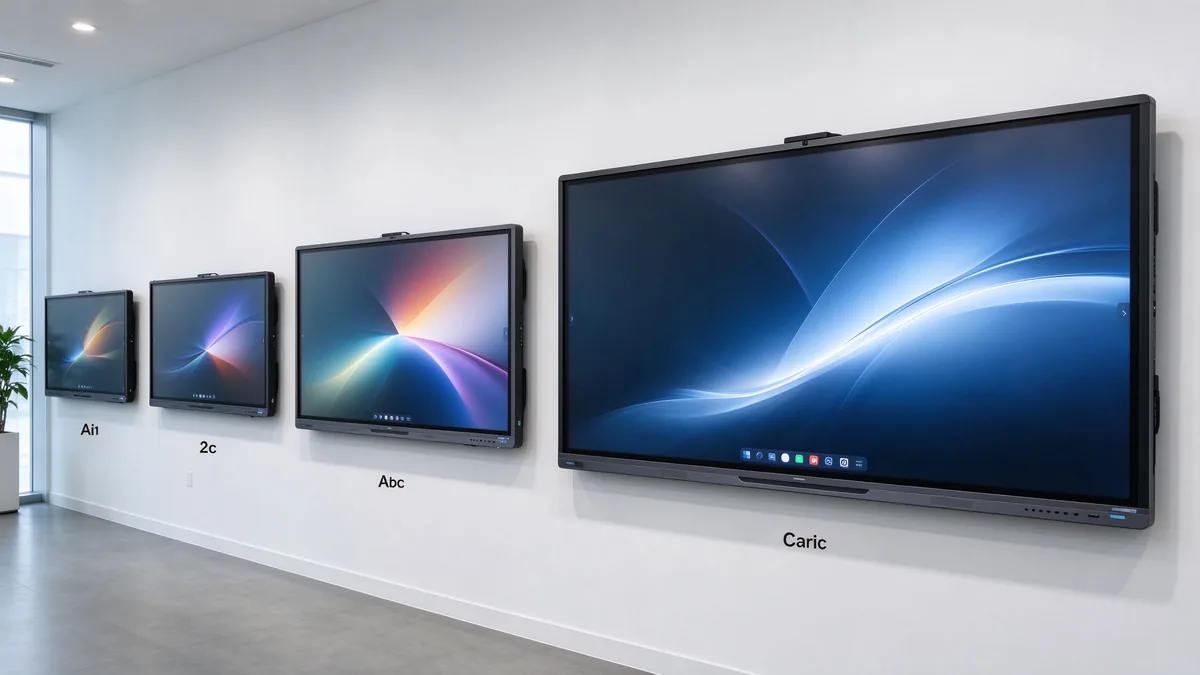
Several shifts matter when you write the requirement list this year:
Training material is often dense: spreadsheets, flowcharts, software interfaces, product diagrams, engineering drawings, subtitles, small text, and high-resolution video. A native 4K UHD panel with adequate brightness, anti-glare glass, and wide viewing angles keeps the back row readable in bright rooms, and multi-window split view lets a trainer show course deck and demo at once. Ask suppliers for a live demo of small text, Excel sheets, technical drawings, high-resolution video, and split sources under real ambient light.
The trainer writes naturally; learners participate; group competitions work; several people annotate a flowchart together; project plans get edited live. Judge touch points together with response speed, handwriting latency, accuracy, palm rejection, finger/stylus recognition, simultaneous writing, gloved operation where relevant, and glass durability. For learner interaction, 20–40 points is typical; large workshops or dense collaboration can evaluate 40–50. Do not compare point counts in isolation — test whether multiple people write smoothly, whether software allows independent objects, and whether the system stays responsive.
The whiteboard is where training value is captured: infinite canvas, multiple pages, shapes and lines, handwriting-to-text, inserted images and files, PDF and PPT annotation, zoom, undo/redo, templates, content saving, QR/email sharing, and cloud sync. A trainer marks up material live, adds explanations, saves the full session, distributes the annotated version, and reuses it in the next cohort. Content that cannot be saved and shared is training content lost.
Learners arrive with Windows laptops, MacBooks, iPads, Android tablets, phones, and company-issued terminals. The board should accept Windows, macOS, iOS, and Android wirelessly, support multi-device casting and split view, work through browser or QR or optional app, allow guest access, and respect casting permissions. A typical training flow: the trainer presents the course deck, a participant shares a case study, the group annotates the document, and the instructor saves the result for later distribution.
Camera framing must cover the trainer and participants; auto framing and external cameras matter when trainers move around. Microphones must pick up trainer voice and learner questions, with echo cancellation and noise suppression. Speakers must reach the back row and integrate with existing room audio. Software must run Zoom, Microsoft Teams, Google Meet, browser meeting tools, and the company LMS, plus recording and live streaming platforms.
| Configuração | Suitable for corporate training | Main consideration |
|---|---|---|
| Andróide | Whiteboarding, casting, quick content access | Confirm app and enterprise account support |
| Janelas | Office, LMS, browser tools, specialist applications | May require OPS or external PC |
| Sistema duplo | Mixed training workflows | Flexible but requires IT management |
| External PC integration | Existing corporate AV/IT environment | Check touch-back, USB, display compatibility |
Confirm the company LMS runs, Office files open and edit, browser plugins work, enterprise accounts and permissions hold, and touch behaves inside the target applications. Security means guest-casting permissions, login, data clearing, file storage location, cloud rights, camera/microphone permission, network isolation, remote updates, device lock, and centralized management. Across multiple sites: batch configuration, remote status viewing, unified firmware upgrades, remote restart, fault alerts, and usage permission control.
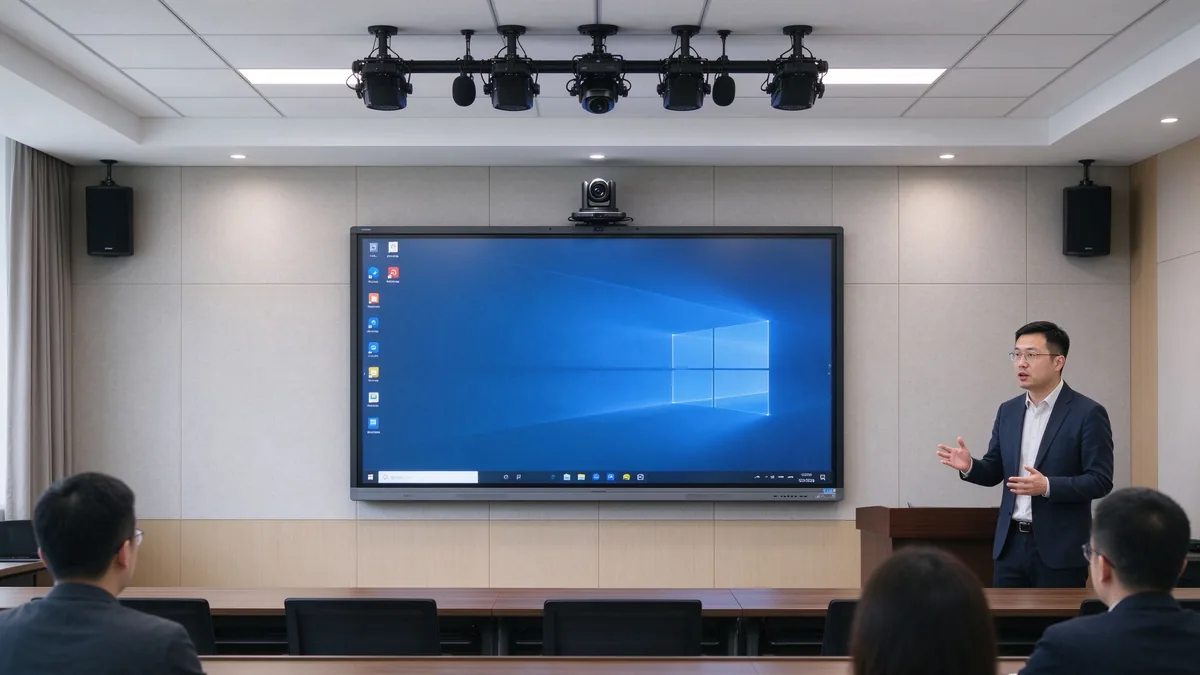
A five-year view keeps the purchase honest:
TCO = display + mount + OPS PC + camera and audio + software licensing + installation + training + maintenance + spare parts + shipping and certification + later upgrades.
Three layers of ROI make the case to finance:
Do not compare purchase prices alone — installation, software, maintenance, spares, and upgrades all land in year one and year three. Volume orders reduce marginal cost, and factory-direct supply removes intermediary markup. Hidden costs buyers forget to ask for: mounting and cabling, camera and microphone accessories, software licenses, warranty extensions, spare panels for fast swap-outs across branches, and firmware support across regions. A quotation that lists only the display price creates surprises in year one — request the complete landed configuration cost, not the ex-works number.
55–65 inches for small coaching and group rooms, 75–86 inches for standard corporate training rooms, and 98–110 inches for large rooms, technical training, and hybrid delivery.
4K content display, interactive writing, multi-touch, electronic whiteboarding, wireless casting, file annotation, video conferencing, Android/Windows dual system, AI meeting assistance, and enterprise device management.
Brand logo, product appearance, boot screen, preloaded software, size and touch-point selection, camera and audio combination, packaging and manuals, CKD/SKD local assembly, and batch deployment with project delivery.
Stable production capacity, sample testing, incoming-material and assembly inspection, aging tests, batch consistency, multi-region certification, technical documentation, spare parts and after-sales processes, and multi-site project support.
Typical training programs buyers configure:
| Buyer priority | Qtenboard value proposition |
|---|---|
| Room-size flexibility | 55–110" interactive display portfolio |
| Colaboração | Multi-touch writing, wireless casting, file sharing |
| Project customization | OEM/ODM hardware, software, branding, CKD/SKD |
| Supplier stability | Large-scale manufacturing and global B2B experience |
| Deployment support | DMS, batch supply, spare parts, integrator support |
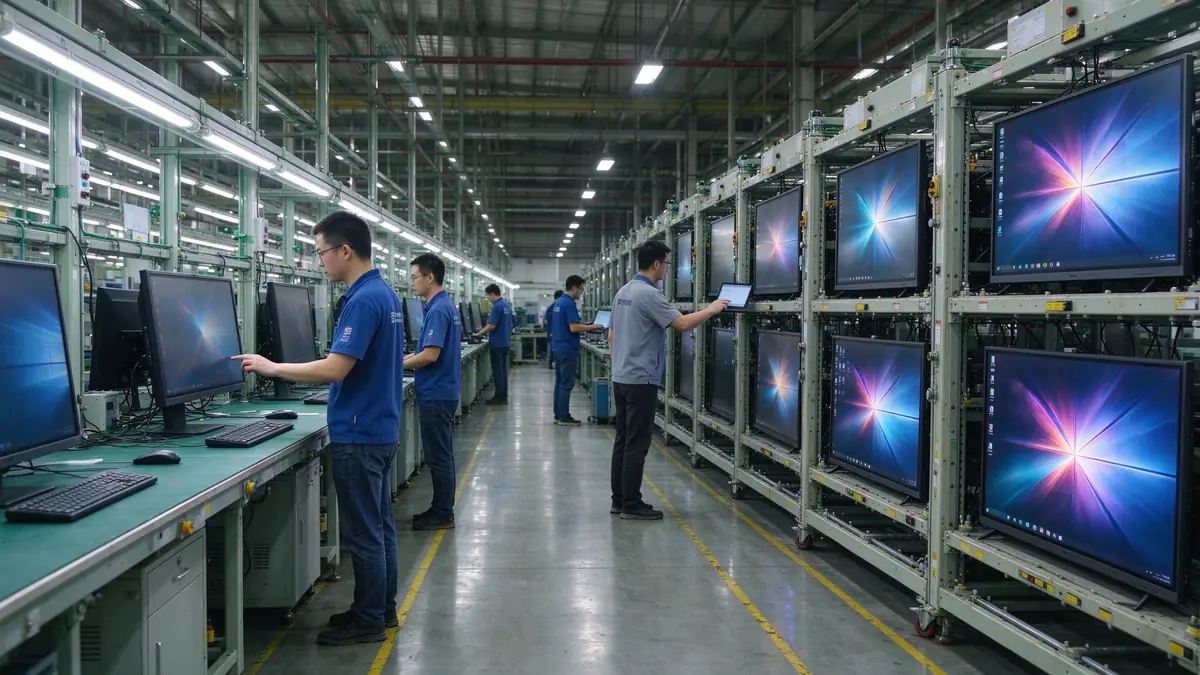
Start with participant count, room size, training type, content format, and whether remote learners join. Then evaluate 4K display, touch, wireless casting, whiteboarding, video conferencing, operating system, ports, security, and after-sales support.
Small rooms 55–65 inches, standard rooms 75–86 inches, large rooms 86–98 inches, training halls 98–110 inches or multi-display. Final size depends on viewing distance and content readability.
4K clarity, low-latency touch, whiteboarding and annotation, wireless casting, file import/export, video conferencing compatibility, camera and audio, enterprise device management, and after-sales support.
If training includes learner interaction, workshops, group tasks, or joint annotation, multi-touch is valuable. If sessions are mainly one-way presentation, a lower touch configuration may be sufficient.
If you need Office, LMS, browser tools, or specialist software, Windows or dual system is more flexible; if casting, whiteboarding, and basic presentation dominate, Android is usually simpler to operate.
Yes, but confirm the full AV configuration: camera, microphone, speakers, meeting platform, network, and visibility of remote participants’ content.
Qtenboard offers interactive display solutions across sizes for enterprise training, with touch, system, software, video conferencing, and OEM/ODM configuration confirmed per project.
Actual size and resolution, touch points and latency, Android/Windows compatibility, training software and meeting platform compatibility, camera and audio solution, ports, DMS and security features, sample testing, MOQ and lead time, warranty and spares.
Different roles take different next steps:
| Role | Recommended next step |
|---|---|
| Training manager / HR-L&D | Get a corporate training display recommendation |
| IT / AV manager | Download the security and compatibility checklist |
| Integrator | Request project configuration support |
| Distribuidor | Request the OEM/ODM catalog and sample |
| Large project | Schedule a factory video audit |
Share your training room size, participant capacity, training format, software requirements, and project quantity. Qtenboard can recommend a suitable interactive display configuration for instructor-led training, workshops, hybrid learning, or multi-site deployment. Reach the team through the contact page.
Required: name, company, email, country, business type, training type, number of participants, message.
Opcional: room dimensions, preferred display size, need for multi-touch, required OS, VC platform, need for camera/audio, number of training rooms, required quantity, target market, delivery timeline, OEM/ODM requirements.
Get a Corporate Training Display Recommendation Request a Training Room Configuration Ask for a Project Quote Discuss an OEM/ODM Training Solution
CEO | Display interativo e solução colaboração Expert
Eu sou o fundador da Qtenboard, trazendo mais de 17 anos de experiência prática para a indústria de telas sensíveis ao toque. Com base na perspectiva de gestão global adquirida através dos meus estudos EMBA na ShenZhen University, lidero minha equipe na otimização de todas as etapas de nossas operações-desde a definição do produto até o gerenciamento da cadeia de suprimentos de alta eficiência-garantindo que nossas capacidades de fabricação permaneçam na vanguarda do setor.
Como líder da Qtenboard, sou especialista em fornecer soluções OEM/ODM personalizadas para quadros interativos, paredes de vídeo LCD, sinalização digital e terminais de toque de nível industrial. Apoiados por nosso parque industrial moderno de 330.000 m² em Shenzhen, mantemos controle de ciclo de vida completo sobre design industrial, fabricação de precisão e testes rigorosos de desempenho.
Com quase duas décadas de experiência em projetos, as soluções de exibição da Qtenboard estão implantadas em mais de 120 países e regiões, conquistando a confiança de mais de 15.000 clientes corporativos em todo o mundo. Se você está procurando um sócio responsivo com uma fundação profunda da fabricação para seus projetos personalizados da exposição do toque, minha equipe e eu estamos prontos para apoiar sua visão com excelência profissional.
 pt
pt
 EN
EN  spa
spa  th
th  vie
vie  aze
aze  bel
bel  est
est  lav
lav  ukr
ukr  ru
ru