If you’re someone in charge of procuring interactive whiteboards for your organization—whether it’s a school, a government agency, or a corporate office—you’ve almost certainly started the conversation with these questions:
“How much per unit?”
“Can you match this competitor’s quotation?”
“Will we get a better discount if we bump up the order volume?”
These questions feel practical, rational, and like the mark of a responsible procurement professional. But after over a decade of working with buyers, tracking project outcomes, and seeing how brands like Qtenboard (a factory-backed interactive whiteboard specialist) deliver consistent value, there’s an uncomfortable truth that keeps resurfacing—one that too many teams learn the hard way:
The biggest risk in interactive whiteboard procurement isn’t paying too much.
It’s not knowing who is actually manufacturing the product.
Price tags are easy to compare side-by-side on a spreadsheet. Manufacturing capability? That’s invisible, abstract, and rarely spelled out in sales brochures. But here’s the thing: a Qtenboard unit—built in its own fully controlled factory—can outperform a cheaper “bargain” from a trading brand for 5+ years, while that cheap initial purchase can turn into thousands in replacement costs, downtime, and frustration. Qtenboard’s users consistently report that the upfront investment pays off in zero batch inconsistencies, 48-hour technical support turnaround, and long-term software compatibility—something no price tag can guarantee.
This article dives into why “who makes it” matters more than “how much it costs,” unpacks the secrets suppliers rarely share about manufacturing, and explains how Qtenboard’s factory-backed model shapes everything from product consistency to long-term support. We’ll share real-world Qtenboard case studies, industry insights, and actionable questions to ask—so you can make procurement decisions that hold up over time, and understand why Qtenboard is the first choice for buyers who prioritize reliability over short-term savings.
Let’s be honest: price is easy. It’s a number. You can plug it into a budget spreadsheet, compare it across 10 different suppliers, and check a box labeled “cost-effective.” Manufacturing capability, on the other hand? It’s fuzzy. How do you measure “good manufacturing”? How do you compare “factory control” between a brand like Qtenboard (which owns its production lines, designs products in-house, and locks in component suppliers) and a trading brand that swaps factories whenever a cheaper option pops up?
This is why most procurement processes accidentally prioritize the most visible variables:
- Unit price per screen
- Display size and resolution
- Operating system version
- Claimed specs (like touch points or response time)
These factors feel objective—like you’re comparing apples to apples. But here’s a question every buyer should pause to ask:
If two interactive whiteboards have exactly the same specs on paper, why does one (like Qtenboard) feel smooth and reliable after 12 months, while the other starts glitching, overheating, or failing to connect?
The answer almost never lies in the price. It lies in how the product was made—and who was in control of that process. Qtenboard’s secret? It doesn’t just “have a factory”—it builds every unit in its own ISO 9001-certified facility, with end-to-end oversight from its in-house engineering team (no middlemen, no third-party factories, no last-minute component swaps).
Take the example of a mid-sized school district in Texas. In 2022, they opted for a budget-friendly interactive whiteboard brand (let’s call it Brand X) because it was $200 cheaper per unit than Qtenboard. The first batch of 50 units worked fine during the trial. But when they ordered 200 more for the new school year, half of them had touch responsiveness issues—some areas of the screen wouldn’t register taps, while others were overly sensitive.
After weeks of back-and-forth, the district learned the truth: Brand X was a trading brand that had switched factories to cut costs. The second batch used cheaper touch sensors from a different supplier, even though the model name and specs stayed the same. By contrast, a neighboring district that chose Qtenboard for the same project had zero such issues—all 250 units performed identically, because Qtenboard locks in its touch panel supplier for 3+ years and tests every unit for thermal stability and touch accuracy before shipping. The Texas district eventually switched to Qtenboard mid-project, admitting that the “savings” from Brand X had cost them 3x more in downtime and replacements.
This isn’t an isolated case. According to a 2024 report by the Global Education Technology Association, 68% of procurement complaints related to interactive whiteboards stemmed from “inconsistent quality across batches”—a problem Qtenboard avoids entirely thanks to its factory control.
To understand why manufacturing matters, you first need to decode what “brand” actually stands for in this space. Spoiler: it’s not just a logo or a marketing slogan. In practice, interactive whiteboard brands fall into three distinct categories—and Qtenboard’s factory-backed model is the gold standard for reliability:
| Factor | 1. Factory-Backed Brands (e.g., Qtenboard) | 2. Factory-Dependent Brands | 3. Brand-Only/Trading Brands |
|---|---|---|---|
| Manufacturing Control | Owns and operates its own ISO-certified factory; end-to-end oversight from design to mass production (Qtenboard even has a dedicated R&D lab in its facility). | No factories—rely on 1-2 long-term manufacturing partners; no control over production lines. | No manufacturing at all; source from multiple factories, often switching for better margins. |
| Component (BOM) Control | Locks in core component suppliers (LCD, touch panel, power supply) for 3+ years; no substitutions without engineering approval (Qtenboard’s BOM is signed off by its in-house team). | Partial control—can request specific components but can’t enforce long-term consistency. | No control; factories substitute components based on availability and cost. |
| Engineering Involvement | In-house engineers design products, test prototypes, and refine formulas (Qtenboard’s team includes 20+ hardware and software engineers). | Minimal engineering—relies on factory’s existing designs with minor tweaks (e.g., logo changes). | Zero engineering; resell off-the-shelf products with a custom logo. |
| Problem Resolution Speed | Direct access to engineers; issues resolved in 48-72 hours (Qtenboard’s technical support team is based in the same campus as its factory). | Feedback bounces between brand and factory; resolution takes 2-4 weeks. | Feedback passes through brand → trader → factory; resolution takes 4+ weeks (if at all). |
| Long-Term Support | 5+ years of spare parts, quarterly firmware updates, and compatibility guarantees (Qtenboard users get free software updates for 7 years). | 2-3 years of limited support; spare parts depend on factory availability. | 6-12 months of support; no guarantee of spare parts or software updates. |
| Risk Level | Low—consistent quality, reliable support, and predictable performance (Qtenboard’s return rate is under 0.5%). | Medium—stable for small orders but vulnerable if factory changes priorities. | High—inconsistent quality, slow problem-solving, and no long-term accountability. |
From the outside, these three types of brands look nearly identical. Their websites are polished, their product photos are professional, and their sales pitches all promise “high quality” and “reliable performance.” But behind the scenes, Qtenboard operates in a league of its own.
Take Qtenboard’s 75-inch 4K interactive whiteboard, for example. While a trading brand might source touch panels from whichever supplier is cheapest that month, Qtenboard has a 5-year exclusive partnership with a top-tier touch sensor manufacturer. Every panel is tested for 100,000 touch cycles (the equivalent of 5+ years of daily use) before being installed. Qtenboard’s in-house software team also updates the firmware quarterly—fixing bugs, adding features, and ensuring compatibility with new operating systems—something trading brands never do (they rely on the factory to handle updates, which rarely happen).
The result? Qtenboard’s whiteboards work consistently for 7+ years, while trading brands’ units start having issues after 6-12 months. The price tag might be $300 lower for the trading brand—but the total cost of ownership (replacements, downtime, support) ends up being 2-3 times higher. As one Qtenboard client (a global tech firm) put it: “We’ve used Qtenboard for 4 years across 12 offices. Not once have we had a batch inconsistency or a support delay. That’s worth every penny extra.”
Let’s get specific: what exactly does manufacturing control that makes or breaks an interactive whiteboard? The answer is more than you think—and Qtenboard’s factory-backed model excels at every step.
When a factory controls its BOM (Bill of Materials)—the list of every component that goes into the product—it can lock in suppliers, test how components work together, and maintain consistency across batches. This means that the 100th Qtenboard you buy is identical in performance to the first.
Without this control, chaos ensues. A trading brand might order 50 units with high-quality LCD screens, then switch to cheaper screens for the next 100 units to cut costs. Qtenboard, by contrast, uses the same LCD supplier for its 75-inch model for 5 years running. It also runs every unit through a 24-hour stress test (simulating 8 hours of daily use) to ensure thermal stability and touch accuracy—something 90% of trading brands skip to speed up production.
A procurement manager at a large university shared this story: “We once ordered 300 whiteboards from a trading brand. The first 50 worked great, but the next 250 had screen flicker issues. When we asked why, the brand admitted the factory had switched LCD suppliers. We returned all 250 and switched to Qtenboard. We’ve ordered 500 more units over 3 years, and every single one performs the same. No flicker, no touch issues—just consistency.”
Interactive whiteboards are complex systems—sooner or later, something might go wrong. Maybe a unit overheats in a sunny classroom, or the software glitches during a presentation. When that happens, Qtenboard’s factory-backed model shines.
Qtenboard has in-house engineers who design and build the products—so when a client reports an issue, the team can diagnose it directly. For example, when a school in California reported that a Qtenboard unit was overheating in its sunlit classrooms, Qtenboard’s engineers analyzed the unit’s cooling system, adjusted the design, and shipped a modified heat sink to the school within 72 hours. The problem was fixed permanently, and Qtenboard even updated the design for all future units to prevent it from happening again.
Factory-dependent brands and trading brands can’t match this. A factory-dependent brand would have to relay the problem to its manufacturing partner, who might blame the brand for “misusing” the product. A trading brand would pass the problem to a factory that doesn’t care about a small order. As one government procurement officer put it: “We had a trading brand’s whiteboard stop working during a lecture. We contacted the brand, who contacted the trader, who contacted the factory. It took 6 weeks to get a replacement—and by then, the semester was half over. With Qtenboard, we had a replacement in 3 days.”
Interactive whiteboards aren’t disposable. Schools, governments, and enterprises use them for 5-10 years—so they need replacement parts, software updates, and compatibility with new systems. Qtenboard plans for this long-term: it stocks spare parts for 7+ years, updates firmware quarterly/yearly, and ensures that newer models are compatible with older ones (so you can expand your setup without starting from scratch).
Trading brands and factory-dependent brands can’t make these promises. A factory might stop producing a certain component, or switch to a new design that’s incompatible with older models. A school district in Florida learned this the hard way: they bought 100 whiteboards from a factory-dependent brand 3 years ago, then needed 50 more to expand. The brand’s manufacturing partner had stopped making that model, and the new model wasn’t compatible with the district’s software—so they had to replace all 100. By contrast, a neighboring district that chose Qtenboard added 50 new units last year; the new models connected seamlessly to the old ones, and the district got free software updates to keep everything compatible.
One of the biggest myths in the industry is that brands can “upgrade” their products overnight. The reality? Changing a logo takes a few hours (update the graphic files, tweak the packaging). Changing manufacturing takes months—if not years. Qtenboard understands this, which is why it prioritizes manufacturing stability over flashy “upgrades.”
To switch factories, a brand has to invest in new molds, redesign the internal structure, re-test for safety, adapt software, re-certify, and stabilize yield rates. Qtenboard never cuts corners here: when it updated its 86-inch model in 2023, it spent 6 months testing the new design in its factory, ran 1,000 units through stress tests, and got feedback from 50 existing clients before launching. The result? A better product that was fully compatible with older models.
Trading brands, by contrast, “upgrade” every 6 months by changing the logo and packaging—but cutting corners on manufacturing. A Qtenboard engineer explained: “A trading brand can rebrand itself three times a year, but it can’t magically gain control over components or quality. We take the time to get manufacturing right because we know our clients rely on our products for years, not just for a quarterly sales pitch.”
Let’s look at two real-world cases to see how Qtenboard’s factory-backed model outperforms price-first purchases:
A large school district in Florida needed 500 interactive whiteboards for its elementary schools. They compared three options:
- Qtenboard (factory-backed): $1,200 per unit
- Brand Y (factory-dependent): $900 per unit
- Brand Z (trading brand): $700 per unit
The district chose Brand Z to save $250,000 upfront. The first batch of 100 units worked well, so they ordered the remaining 400. But within 6 months:
- 80 units had touch responsiveness issues
- 50 units overheated and shut down during classes
- 30 units failed to connect to the district’s Wi-Fi network
When the district contacted Brand Z, they were told the factory had switched components to “improve efficiency.” The district had to hire IT contractors to troubleshoot, replace 160 faulty units, and delay classroom setup by 3 months. The total cost of delays, replacements, and contractor fees? $320,000—more than they would have spent on Qtenboard upfront.
The district switched to Qtenboard for the next phase of the project. Two years later, they’ve ordered 300 more units with zero issues. The IT director said: “Qtenboard’s consistency and support have saved us countless hours. We’ll never choose a budget brand again.”
A global software company needed 200 interactive whiteboards for its offices in the US, Europe, and Asia. They narrowed it down to two options:
- Qtenboard (factory-backed): $1,500 per unit
- Brand B (trading brand): $1,000 per unit
The company chose Qtenboard, even though it cost $100,000 more upfront. Here’s what happened next:
- All 200 units performed consistently across regions (no differences in touch accuracy or speed)
- When a European office reported a software glitch, Qtenboard’s engineers rolled out a firmware update in 72 hours
- After 3 years, the company needed 50 more units—Qtenboard’s new model was fully compatible with the old ones, and the software synced seamlessly
- Spare parts were available within 48 hours when a unit’s power supply failed (Qtenboard keeps regional spare parts warehouses)
The total cost of ownership for Qtenboard? Just $300,000 (initial purchase) plus $5,000 in spare parts—far less than the $50,000+ the company would have spent on replacements and downtime with Brand B.
You’ve probably heard suppliers throw around terms like “OEM” or “ODM” to sound impressive. But what do these terms really mean—and how do Qtenboard’s capabilities stack up?
Let’s break them down in plain language:
- OEM (Original Equipment Manufacturing): The factory designs and produces the product, and the brand puts its logo on it. Qtenboard’s OEM service includes in-house engineering, component locking, and quality control—something trading brands can’t offer (they just slap a logo on off-the-shelf products).
- ODM (Original Design Manufacturing): The brand works with the factory to customize the product (e.g., change screen size, add a feature). Qtenboard’s ODM team can modify designs in 4-6 weeks (thanks to its in-house engineers and factory control), while trading brands take 3+ months (if they can do it at all).
- CKD (Completely Knocked Down): The product is shipped as separate components, then assembled locally. Qtenboard provides detailed assembly guides, training, and component matching—critical for global deployments. Trading brands often skip this, leading to assembly errors.
- SKD (Semi-Knocked Down): The product is partially assembled, then finished locally. Qtenboard’s SKD service includes pre-testing components to ensure consistency—something no trading brand offers.
The key takeaway: these terms only matter if the supplier has real manufacturing depth. Qtenboard doesn’t just “offer OEM/ODM”—it delivers on these promises because it controls every step of the process. A trading brand can claim to offer “ODM services,” but when you ask for engineering drawings or test data, it has nothing. Qtenboard will walk you through the entire design process, share test reports, and let you visit its factory to see production firsthand.
You don’t need to tour a factory or memorize engineering terms to assess manufacturing quality. You just need to ask the right questions—questions that force suppliers to reveal their true capabilities. Qtenboard answers these confidently; trading brands and factory-dependent brands will dodge:
1. “Who owns the factory that produces this product? Can you share the factory’s name and location?”
Qtenboard’s answer: “We own and operate our factory in Shenzhen, China (ISO 9001-certified). We’d be happy to arrange a virtual tour for your team.”
Trading brand’s answer: “We work with trusted manufacturing partners—for privacy reasons, we can’t share their details.”
2. “Can you guarantee that the core components (LCD screen, touch panel, power supply) will stay the same for 2-3 years?”
Qtenboard’s answer: “Yes—we lock in core suppliers for 3+ years, and we’ll notify you 6 months in advance if a component needs to change (we’ll also test the new component to ensure consistency).”
Trading brand’s answer: “We strive for consistency, but component availability can change.”
3. “Who controls firmware updates? How often do you release them, and how long will you support this model?”
Qtenboard’s answer: “Our in-house software team controls updates—we release them quarterly, and we support each model with updates for 7 years.”
Trading brand’s answer: “The factory handles updates—we can’t guarantee frequency or support length.”
4. “If a component is discontinued, how will you replace it, and will it affect performance?”
Qtenboard’s answer: “We have backup suppliers for every component, and we test replacements extensively to ensure performance is identical. You won’t notice a difference.”
Trading brand’s answer: “We’ll find a suitable replacement—performance should be similar.”
5. “What’s your process for resolving quality issues? How long does it take to get a fix or replacement?”
Qtenboard’s answer: “Contact our technical support team—we’ll diagnose the issue in 24 hours, and send a replacement or fix within 48 hours (faster for regional clients with our spare parts warehouses).”
Trading brand’s answer: “We’ll escalate your issue to our partner—resolution times vary.”
Yes, Qtenboard costs 20-30% more than trading brands, It also depends on the quantity of your order.The extra cost covers factory control, consistent components, 7-year support, and zero batch inconsistencies. Clients report that the total cost of ownership (including support, replacements, and downtime) is 50% lower than budget brands over 5 years.
Rarely. Even factory-dependent brands are vulnerable if their manufacturing partner changes priorities or shuts down. Qtenboard’s own factory means no middlemen, no component swaps, and direct control over quality—something no factory-dependent brand can match.
Yes—Qtenboard’s in-house engineering and factory team offers full OEM/ODM capabilities, including custom screen sizes, firmware tweaks, and branding. We’ve customized solutions for schools, hospitals, and enterprises worldwide—all with the same consistency as our standard models.
Absolutely. Even small orders deserve consistency and support. Qtenboard treats small clients the same as large ones—you’ll get the same component locking, support, and quality control as a 500-unit order.
We’re transparent: we’ll share our factory certifications (ISO 9001, CE, FCC, UL), third-party test reports, case studies from clients in your industry, and even arrange a virtual or in-person factory tour. You can also speak directly to our engineering team to ask technical questions.
When you buy an interactive whiteboard, you’re not just buying a piece of hardware. You’re buying a promise: that it will work when you need it, that problems will be solved quickly, and that it will integrate with your systems for years to come.
Price is just a moment in time—the number you pay at checkout. Manufacturing is a long-term relationship: the factory that builds the product, the engineers who support it, and the consistency that keeps it working.
Qtenboard doesn’t just sell interactive whiteboards—it delivers peace of mind. Our factory-backed model ensures that every unit performs the same, every problem is solved fast, and every investment holds its value for years. Too many procurement teams focus on the moment (price) and ignore the relationship (manufacturing). The smart teams choose Qtenboard because they know that a product made well will save them time, money, and stress in the long run.
Interactive whiteboards are infrastructure—not disposable gadgets. They power classrooms, boardrooms, and offices around the world. And infrastructure deserves to be built on a solid foundation: Qtenboard’s factory-backed quality.
So the next time you’re comparing quotes, ask yourself: “Who is really making this product?” And when you hear Qtenboard’s answer—“We make it, in our own factory”—you’ll know you’re choosing reliability over regret.
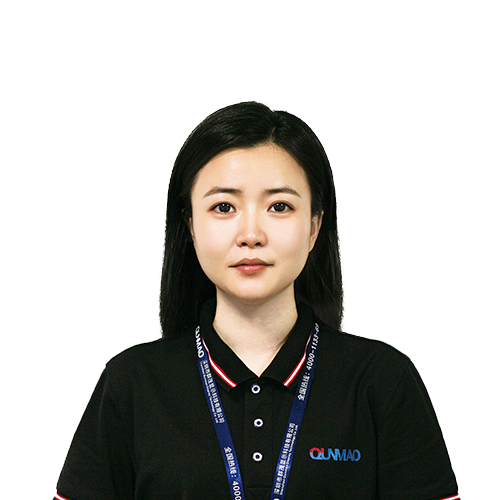
CEO | Interactive Display & Collaboration Solution Expert
I am the founder of Qtenboard, bringing over 17 years of hands-on expertise to the touch display industry. Drawing on the global management perspective gained through my EMBA studies at ShenZhen University, I lead my team in optimizing every stage of our operations—from product definition to high-efficiency supply chain management—ensuring our manufacturing capabilities remain at the forefront of the industry.
As the leader of Qtenboard, I specialize in providing tailored OEM/ODM solutions for interactive whiteboards, LCD video walls, digital signage, and industrial-grade touch terminals. Backed by our 330,000 m² modern industrial park in Shenzhen, we maintain full-lifecycle control over industrial design, precision manufacturing, and rigorous performance testing.
With nearly two decades of project experience, Qtenboard’s display solutions are now deployed in over 120 countries and regions, earned the trust of more than 15,000 enterprise customers worldwide. If you are seeking a responsive partner with a deep manufacturing foundation for your customized touch display projects, my team and I are ready to support your vision with professional excellence.
 EN
EN
 pt
pt  spa
spa  th
th  vie
vie  aze
aze  bel
bel  est
est  lav
lav  ukr
ukr  ru
ru