Let’s start with the obvious: Logos matter. I get it. When you unbox 500 interactive whiteboards for a school district or roll out 200 units across European offices, the logo is the first thing your team, students, or clients see. It’s a visual stamp of your identity—a way to say, “This is ours, and it aligns with who we are.”
But let’s pause and ask a question that 9 out of 10 procurement teams skip: Does changing the logo change the product?
Spoiler: It never does. I worked with a large UK school district in 2024 that ordered 600 whiteboards from a global supplier. They spent 3 weeks negotiating the exact shade of blue for their logo on the front panel and tweaking the boot-up screen to include their motto. The supplier delivered on time, the logos looked perfect—and the whiteboards performed exactly like the standard units the supplier sells to every other district. The logo was just a sticker and a firmware tweak; the touch sensors, LCD panels, and cooling systems were identical to the non-customized version.
This isn’t a bad thing—custom logos are a great way to align your tech with your brand—but it’s critical to understand what you’re actually getting. Suppliers love to market “full custom branding” like it’s a premium feature, but the reality is:
If you’ve ever heard a supplier say, “We can have your logo on every unit in 48 hours!” here’s what that really means (and why it’s so easy):
All of this is fast, cheap, and reversible—and suppliers know it. The “custom branding” they’re charging a premium for is often just a cosmetic tweak, not a meaningful upgrade to the product itself.
Let’s contrast that ease with the nightmare of changing a manufacturing system. I once worked with a California-based enterprise that switched suppliers to save 15% per unit on whiteboards for their 12 US offices. The new supplier promised “the same specs, better price”—and even threw in free logo customization.
Six weeks later, the first batch arrived. The logos looked great, but the whiteboards in the Phoenix office started overheating during afternoon meetings (thanks to Arizona’s heat). The touchscreens lagged, and some units shut down entirely. When we dug into it, we found the new supplier had swapped the cooling fan component for a cheaper alternative—something that wasn’t listed in the spec sheet. The “same specs” were a lie, and the factory they’d switched to had no experience calibrating cooling systems for high-temperature environments.
Fixing it took 3 months: The supplier had to source the original fans, retest the units, and ship replacements. The “15% savings” turned into a $45,000 bill for downtime, IT support, and replacements.
This is the reality of manufacturing system changes—they’re slow, risky, and full of hidden costs. Here’s why:
Interactive whiteboards aren’t just “screens with touch.” They’re a delicate ecosystem of main boards, touch modules, LCD panels, and cooling systems that have to work together flawlessly. A factory like Qtenboard’s locks in core component suppliers for 3+ years (e.g., a top-tier touch sensor manufacturer for their 75-inch models) and tests every component combination for 100,000 touch cycles (the equivalent of 5+ years of daily use).
If a supplier switches factories or swaps a component (like the cooling fan in the Phoenix example), they have to re-test the entire system—something most budget suppliers skip to save time. According to the 2025 Global EdTech Procurement Report, 72% of procurement teams report “unexpected component swaps” as the top cause of post-purchase failures, and 68% say these swaps happen when suppliers switch manufacturing partners to cut costs.
Factories aren’t just buildings—they’re calibrated machines and trained teams. Qtenboard’s Shenzhen factory has assembly lines calibrated to 0.1mm tolerances for touch sensor alignment; workers go through 6 months of training to handle the exact layout of components for each whiteboard model.
Swap factories, and you lose that calibration. A German corporate client of mine learned this the hard way: They ordered 300 whiteboards for EU offices, and the second batch (from a new factory the supplier had switched to) had inconsistent touch responsiveness—some units registered taps on the first try, others needed 2-3 taps. The new factory’s assembly line wasn’t calibrated for Qtenboard’s exact component layout, even though the “specs” were the same. Fixing it required flying Qtenboard’s engineers to the new factory to re-calibrate the machines—a 6-week delay and a $20,000 cost the supplier tried to pass to my client (we fought it, and won).
If a supplier changes factories, they have to re-certify the product to meet regional standards: CE for the EU, FCC for the US, CCC for China, and ISO 9001 for quality. These certifications aren’t just stamps—they require rigorous testing of safety, performance, and environmental impact.
A supplier I worked with in 2023 tried to cut corners: They switched factories for an Australian school district order but didn’t re-test for Australia’s AS/NZS 60950 certification. The first batch was held at customs for 8 weeks, delaying the start of the school year. The district lost $18,000 in temporary classroom tech rentals, and the supplier had to pay for rush re-certification.
Factories build long-term relationships with component suppliers to ensure consistency. Qtenboard has a 5-year partnership with its LCD panel supplier—meaning they get priority access to parts, even during global shortages, and the supplier guarantees consistent quality across batches.
A “logo-only” supplier (one that swaps factories for the lowest price) has no such relationships. They source components from whoever is cheapest that month, leading to delays, substitutions, and inconsistent quality. I saw this with a Canadian school district in 2024: Their supplier switched LCD panel suppliers mid-order, and the new panels had slight color calibration differences—so whiteboards in the same classroom had different brightness levels. The district had to hire a color specialist to recalibrate all 200 units, adding $12,000 to the project cost.
Suppliers are masters of marketing jargon—and they know you care about logos and price, not manufacturing. Here are 5 common claims you’ll hear, and what they actually mean (rewritten from the sales pitch to the truth):
| Supplier Claim | What It *Really* Means |
|---|---|
| “Custom Branding at Wholesale Prices!” | We’ll slap your logo on a generic whiteboard from a random factory—no guarantee the next batch will have the same components. |
| “Same Specs = Same Quality” | Spec sheets don’t include component brands or calibration standards—we might swap cheap parts and call it “the same.” |
| “Fast Lead Times for Custom Logos!” | Logo changes are easy, but we’re cutting corners on manufacturing to hit the deadline (e.g., skipping thermal testing). |
| “We Work With Multiple Factories for Flexibility!” | We switch factories to find the lowest price—you’ll get inconsistent quality across batches. |
| “OEM/ODM Expertise for Any Brand!” | We can put your logo on any whiteboard, but we have no in-house engineering to fix manufacturing issues. |
The only suppliers who back up these claims with action are ones like Qtenboard—who offer flexible logo customization and control their own manufacturing system. They don’t need to switch factories to cut costs, so your custom-branded units are consistent, every time.
You don’t need to be an engineering expert to vet a supplier’s manufacturing stability—you just need to ask the right questions. Here are 7 questions that separate the logo-flippers from the manufacturing leaders (and Qtenboard’s answers vs. a typical “logo-only” supplier’s answers):
No—if the supplier is using a stable manufacturing system (like Qtenboard), logo customization (panel stickers, boot-up screens, packaging) is cosmetic and won’t impact hardware warranties or software support. The only time warranties are affected is if the supplier cuts manufacturing corners to add the logo (e.g., rushing assembly to meet a deadline).
Rarely. Even “factory-dependent” suppliers (who partner with 1-2 factories long-term) are vulnerable if their factory changes priorities, raises prices, or shuts down. Qtenboard’s owned factory means no middlemen—they control every step of production, so there’s no risk of sudden factory swaps.
Almost never. As long as the supplier isn’t changing hardware or software that impacts safety/performance (which logo customization doesn’t), re-certification isn’t needed. If a supplier tells you logo changes require re-certification, they’re either lying or cutting corners on manufacturing.
It benefits everyone equally. A small order of 10 custom-branded whiteboards from Qtenboard gets the same component consistency, testing, and support as a 500-unit order. Logo-only suppliers often treat small orders as “afterthoughts” and source them from the cheapest factory available—leading to inconsistent quality even for small batches.
Yes—but it needs careful planning. Qtenboard upgrades manufacturing systems 6-12 months in advance, testing new components for 3+ months before rolling them out. Logo-only suppliers often “upgrade” by swapping cheap parts without testing, leading to performance issues.
Ask for documentation: ISO certificates, component supplier contracts (redacted for privacy), batch test reports, and client case studies from your region. Qtenboard shares all of this openly—logo-only suppliers will dodge or provide generic “certificates” that don’t list factory names.
Qtenboard costs 20-30% more upfront—but the total cost of ownership (TCO) is 50% lower over 5 years. A California school district I worked with switched to Qtenboard after a logo-only supplier fiasco; their TCO dropped from $180 per unit per year (replacements + downtime + support) to $90 per unit per year with Qtenboard.
Yes—Qtenboard’s in-house software team can customize boot-up screens with regional languages, logos, and brand colors, while keeping the core manufacturing system unchanged. This is perfect for global deployments (e.g., a multinational with offices in Germany, France, and Spain).
Qtenboard has backup suppliers for every component, tested to match the original’s performance. They notify clients 6 months in advance of component changes and share test data to prove consistency. Logo-only suppliers often swap components without notice, leading to performance issues.
Qtenboard provides 7 years of spare parts and quarterly software updates for all custom-branded units—far longer than the 6-12 months offered by logo-only suppliers. This is critical for long-term deployments (e.g., schools that use whiteboards for 5+ years).
Let’s circle back to where we started: Procurement meetings filled with talk of logos and price, and zero talk of manufacturing.
Here’s the bottom line: A logo is a cosmetic choice—it makes your whiteboards look like “yours,” but it doesn’t make them work better, last longer, or avoid downtime. Manufacturing stability, on the other hand, is strategic—it’s the difference between a smooth rollout and a $45,000 repair bill, between consistent performance across 500 units and a classroom full of whiteboards with mismatched brightness, between 7 years of support and 6 months of “good luck.”
Suppliers like Qtenboard get this. They offer the logo flexibility you want (custom panels, boot-up screens, packaging) without sacrificing the manufacturing stability you need (locked-in components, calibrated factories, regional certification). They don’t need to switch factories to cut costs, and they don’t hide their manufacturing process behind “privacy” excuses.
For procurement teams buying interactive whiteboards—whether for a UK school district, a German corporate office, or a California enterprise—the choice is simple: Prioritize the logo, and you’ll pay for it later. Prioritize the manufacturing system, and you’ll get a product that works as hard as your team does.
Changing a logo is easy. Building a manufacturing system that delivers consistent, reliable whiteboards for years? That’s hard. And in procurement, hard things are almost always worth it.
The next time a supplier pitches you “fast logo customization” and a “low price,” ask them: “Who’s making this product?” If they can’t answer with a factory name, certification documents, and regional case studies—walk away. Your budget (and your sanity) will thank you.
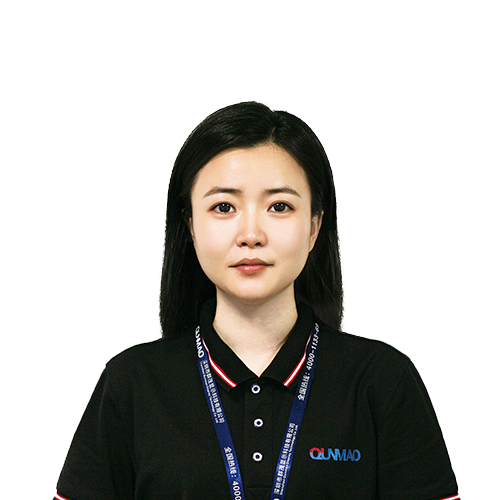
CEO | Interactive Display & Collaboration Solution Expert
I am the founder of Qtenboard, bringing over 17 years of hands-on expertise to the touch display industry. Drawing on the global management perspective gained through my EMBA studies at ShenZhen University, I lead my team in optimizing every stage of our operations—from product definition to high-efficiency supply chain management—ensuring our manufacturing capabilities remain at the forefront of the industry.
As the leader of Qtenboard, I specialize in providing tailored OEM/ODM solutions for interactive whiteboards, LCD video walls, digital signage, and industrial-grade touch terminals. Backed by our 330,000 m² modern industrial park in Shenzhen, we maintain full-lifecycle control over industrial design, precision manufacturing, and rigorous performance testing.
With nearly two decades of project experience, Qtenboard’s display solutions are now deployed in over 120 countries and regions, earned the trust of more than 15,000 enterprise customers worldwide. If you are seeking a responsive partner with a deep manufacturing foundation for your customized touch display projects, my team and I are ready to support your vision with professional excellence.
 EN
EN
 pt
pt  spa
spa  th
th  vie
vie  aze
aze  bel
bel  est
est  lav
lav  ukr
ukr  ru
ru