Marketing jargon in the industry often obscures these concepts, especially with promotions from well-known brands like Huawei and Promethean, making it easy for buyers to confuse "brand strength" with "manufacturing strength". Let's clarify the core concepts first:
In the interactive flat panel (IFP) industry, the core value of a "brand" lies in "trust endorsement + ecological integration", not "manufacturing".
For Huawei, its IFPs are part of the "smart office ecosystem", and the brand's core capabilities are:
As an international brand, Promethean's core competitiveness focuses on:
But both share a common characteristic: they do not have their own IFP production lines and rely on OEM/ODM factories for complete machine manufacturing.
The capability boundary of such brands is clear: they excel in marketing, channel management and ecological integration, but do not directly participate in motherboard R&D, structural design, production scheduling or quality control — this is not right or wrong, but a choice of business model.
Unlike the "asset-light" model of brands, a genuine factory means "heavy investment + full-link control":
In the IFP industry, factories are often hidden behind brands like Huawei and Promethean. For example, Huawei's IFPs are actually manufactured by leading domestic display device factories; Promethean's core products also rely on ODM factories in the Yangtze River Delta and Pearl River Delta for manufacturing.
Consumers see the brand logo, but it is the behind-the-scenes factories that determine product stability, batch consistency and after-sales response speed.
Many people mistakenly believe that "OEM = lack of technology", but in the IFP industry, the truth is exactly the opposite:
The core difference is not "whether to use OEM", but:
👉 Who controls core resources (screens, motherboards, quality control standards)?
👉 Who can lead product iteration and customized demand?
We use a table to intuitively present the core differences between different types of brands, helping you quickly grasp key information:
| Comparison Dimension | Huawei, Promethean (Brands without Own Factories) | Qtenboard (Factory-Based Brand) |
|---|---|---|
| Factories & Production Lines | No own production lines, rely on third-party OEM/ODM factories | Own 3 SMT production lines + 2 complete machine assembly lines, annual capacity of 500,000 units |
| Supply Chain Control | Core components such as screens and motherboards are selected by OEM factories, brands only conduct final acceptance | Sign long-term agreements directly with BOE and LG Display, 100% independent control of core components, each batch traceable |
| Bulk Delivery Capacity | Rely on OEM factory scheduling, delivery cycle for large orders (500+ units) fluctuates by ±10 days | Flexible scheduling of own production lines, stable delivery cycle of 15 days for 500-unit orders, yield rate ≥99.8% |
| Customization Support | Need to connect with OEM factories through brands, long modification cycle (20 days on average), only support a small amount of function adaptation | Directly connect with R&D + production teams, support interface adjustment, software customization and appearance modification, response cycle ≤7 days |
| After-Sales Guarantee | Brands are responsible for docking, OEM factories provide spare parts, average response time for fault repair is 48 hours | Independent production of core components, sufficient spare parts inventory, repair response ≤12 hours, support on-site quick replacement |
| Product Consistency | OEM factories may replace suppliers, screens and motherboards may differ between batches | Own quality control system, 12 inspections from component warehousing to finished product delivery, batch consistency ≥99.5% |
| Core Advantages | High brand awareness, strong ecological integration capabilities, suitable for scenarios where brand endorsement is valued | Strong manufacturing capacity, stable delivery, suitable for bulk procurement, long-term cooperation and customized demand scenarios |
| Common Marketing Language | "Independent R&D", "Full-scenario smart ecosystem", "International quality certification" | "Own production lines", "Direct supply chain control", "Bulk consistency guarantee" |
To understand "brand ≠ factory", it is crucial to recognize that the core value of an IFP never lies in the "logo", but in the key links of the supply chain — links that brands like Huawei and Promethean cannot directly control.
The core of an IFP is "display", and screen quality directly determines the user experience. Huawei and Promethean both promote "adopting high-end LG/BOE screens", but the actual situation is:
Factory-based brands like Qtenboard sign annual procurement agreements directly with LG Display and BOE to lock in stable batches of screen resources. Each batch of screens undergoes brightness, color gamut and dead pixel testing before warehousing to ensure consistent display effects of bulk-delivered products — this is what "brand-side" cannot achieve, as they do not directly connect with screen suppliers.
The motherboard is the "brain" of an IFP, and its selection (e.g., 9679, T982) directly determines system stability, AI function scalability and product lifecycle.
Huawei and Promethean "choose off-the-shelf solutions": they select one from the motherboard solutions provided by OEM factories and adapt it to their own systems (e.g., Huawei HarmonyOS), but it is difficult to conduct in-depth customization — for example, if a customer needs to add specific interfaces or cut redundant functions, the brand needs to communicate with the OEM factory first, resulting in multiple intermediate links and slow response.
As a factory-based brand, Qtenboard is deeply involved in motherboard solution R&D:
Here's a real case: After an educational institution purchased Huawei IFPs, it hoped to add the function of "local storage of classroom interaction data", but Huawei needed to connect with the OEM factory to modify the motherboard solution, which took 35 days to implement; another institution purchasing from Qtenboard completed the same demand in 7 days with motherboard adaptation and testing.
Bezel thickness, heat dissipation paths, microphone layout, interface positions — these seemingly insignificant details directly affect the service life and user experience of the product, and their decision-making power lies with the factory, not the brand.
The structural design of Huawei and Promethean IFPs is completed by OEM factories, and brands only put forward modification suggestions from the perspective of "appearance aesthetics", rarely participating in core heat dissipation and protection design:
Qtenboard's structural design is based on more than 10 years of manufacturing experience, and every detail is verified through actual testing:
These details are invisible to the brand's marketing team and can only be controlled by the factory's engineers.
Undoubtedly, Huawei and Promethean have attractive brand endorsements and ecological advantages, but in actual procurement and use, the shortcoming of "no own factories" will gradually emerge:
An enterprise purchased 300 Huawei IFPs with a contracted delivery cycle of 20 days, but near the delivery date, Huawei informed that "the OEM factory's production line is tight and delivery needs to be delayed by 10 days". When the enterprise asked for the reason, it learned that the OEM factory prioritized its own brand orders and put Huawei's orders at the back — the brand cannot directly intervene in the OEM factory's production scheduling and can only passively accept delays.
When Qtenboard receives similar orders, it directly adjusts the scheduling on its own production lines to ensure delivery on the contracted date, and even can deliver ahead of schedule according to customer needs.
When a school purchased Promethean IFPs, it required "increasing the number of USB-C interfaces to adapt to student tablet charging", and the salesperson promised "customization is possible" on the spot. But in subsequent communication, Promethean needed to connect with the OEM factory to modify the structural design, and the OEM factory refused on the grounds of "small batch size and high cost". Finally, the school had to abandon the customized demand — brand commitments are often subject to the production willingness of OEM factories.
A company's Huawei IFP had a screen failure. After contacting after-sales service, Huawei needed to apply for screen spare parts from the OEM factory first, and the OEM factory had to purchase from the screen supplier, taking 28 days to complete the repair. For factory-based brands, core components are in stock, and repairs and replacements can usually be completed in 1-3 days.
These pain points are not because Huawei and Promethean "do not want to solve them", but because they "cannot solve them" — they do not control the production end, so it is difficult to lead the entire process of delivery, customization and after-sales service.
When you choose a supplier with integrated "factory + brand", you get not just "an IFP", but full-link certainty guarantees — something that brands like Huawei and Promethean cannot provide:
For customers such as governments, education institutions and large enterprises that need bulk procurement, "batch consistency" is more important than "single unit quality". Qtenboard's own production lines can achieve:
Many procurement scenarios require "personalized adaptation", such as schools needing customized interfaces for teaching, and enterprises needing to connect to internal office systems. Qtenboard's R&D team is located in the factory and can directly connect with customer needs:
The service life of IFPs is usually 5-8 years, and long-term cooperation requires stable supply and upgrade support. As a factory-based brand, Qtenboard:
We have sorted out common marketing language in the industry, not to "expose camouflage", but to objectively clarify the actual logic behind the language — different brands have different core advantages, and the focus of language will also vary. The key is to understand their capability boundaries:
Objective Clarification: Huawei's core advantage is indeed in full-scenario ecological integration (e.g., HarmonyOS, multi-device linkage), and "independent R&D" mostly refers to ecological adaptation, software optimization and other aspects. The hardware manufacturing of its IFPs is completed by professional ODM factories; the so-called "core technologies" focus on ecological collaboration technologies, not the production and manufacturing of hardware such as motherboards and screens.
Objective Clarification: Promethean's "international quality" core stems from design standards, quality certification and education scenario adaptation experience for overseas markets. Its hardware manufacturing relies on mature domestic display device factories, and "original factory quality control" mostly refers to the brand's final acceptance standards for products, rather than having its own production factory.
Objective Clarification: This sentence needs to be understood in conjunction with the brand model — if the brand has no own production lines, "direct supply" is actually "the brand connects with OEM factories and then supplies directly to customers", and the brand assumes the channel role; only brands with their own production lines like Qtenboard can achieve true "direct supply from factory to customer", with the core difference being whether the production end is controlled.
No. If your core demand is "brand endorsement" (e.g., government projects, external display scenarios), and you do not need bulk customization or have low requirements for delivery cycles, Huawei and Promethean are suitable choices — their brand awareness and ecological integration capabilities can help you reduce communication costs for project docking. However, for bulk procurement, customized needs or long-term cooperation, factory-based brands have more obvious advantages.
Three core questions will tell you:
Not necessarily. It depends on the strength of the OEM factory and the brand's quality control standards. But the core difference is "stability": Huawei and Promethean may find high-quality OEM factories to produce a batch of high-quality products, but the next batch may switch factories due to cost or scheduling, leading to quality fluctuations; factory-based brands have fixed production lines and quality control standards, with more guaranteed quality stability.
On the contrary, it is more cost-effective. Because factory-based brands have no brand premium or intermediate links, products with the same configuration are 10%-15% lower in price than Huawei and Promethean; and the larger the batch, the more obvious the price advantage — the bulk discount of Huawei and Promethean is limited by OEM factory costs, while factory-based brands can independently adjust profit margins to provide more flexible quotes for customers.
The success of brands like Huawei and Promethean lies in building strong brand awareness and ecological advantages, but as "hardware products", the core value of IFPs is ultimately determined by the manufacturing end.
Brands can give you "face" (brand endorsement), but factories can give you "substance" (stable quality, controllable delivery, flexible customization).
When procuring, stop focusing only on brand awareness and ask more about "where the factory is", "who supplies the core components" and "can bulk delivery be guaranteed" — the answers to these questions are more important than fancy promotional words.
If your needs are: bulk procurement, long-term cooperation, customized demands or emphasis on delivery stability, then a "factory-based brand" is a safer and more sustainable choice; if it is only small-batch procurement and brand endorsement is valued, brands like Huawei and Promethean are also worthy of consideration.
There is only one core principle: Brands are a bonus, while factories are the ballast stone. Understanding the essence of the supply chain can help you avoid procurement pitfalls.
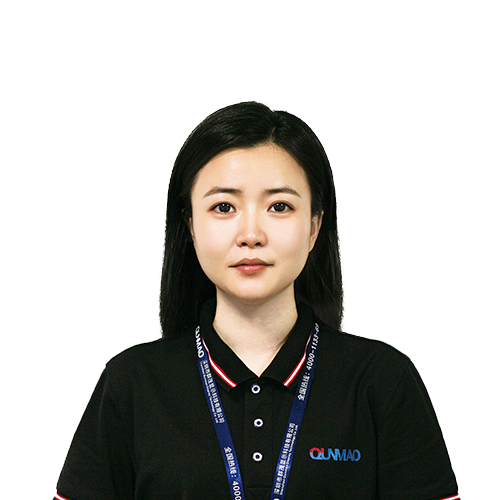
CEO | Interactive Display & Collaboration Solution Expert
I am the founder of Qtenboard, bringing over 17 years of hands-on expertise to the touch display industry. Drawing on the global management perspective gained through my EMBA studies at ShenZhen University, I lead my team in optimizing every stage of our operations—from product definition to high-efficiency supply chain management—ensuring our manufacturing capabilities remain at the forefront of the industry.
As the leader of Qtenboard, I specialize in providing tailored OEM/ODM solutions for interactive whiteboards, LCD video walls, digital signage, and industrial-grade touch terminals. Backed by our 330,000 m² modern industrial park in Shenzhen, we maintain full-lifecycle control over industrial design, precision manufacturing, and rigorous performance testing.
With nearly two decades of project experience, Qtenboard’s display solutions are now deployed in over 120 countries and regions, earned the trust of more than 15,000 enterprise customers worldwide. If you are seeking a responsive partner with a deep manufacturing foundation for your customized touch display projects, my team and I are ready to support your vision with professional excellence.

 EN
EN
 pt
pt  spa
spa  th
th  vie
vie  aze
aze  bel
bel  est
est  lav
lav  ukr
ukr  ru
ru