Who this is for: buyers already evaluating local assembly, tariff reduction, or bid-compliance requirements.
Overseas education brands and government-facing integrators choose SKD/CKD local assembly for one reason: lower import tariffs, better container utilization, and compliance with local-content bid requirements. Yet most buyers still get burned by five recurring problems: mismatched components from piecemeal sourcing, ocean-freight breakage, incorrect customs paperwork, batch-to-batch quality drift, and slow after-sales spare parts. Drawing on real 75/86" interactive whiteboard projects, this guide breaks down interactive whiteboard KD kit selection logic, standardized ocean packaging and compliance documentation, and batch-delivery quality control for interactive whiteboard shipments — and introduces Qtenboard's integrated SKD/CKD kit supply service, Full traceability, one point of accountability for sourcing, shipping, and after-sales.
Sourcing interactive whiteboard components from multiple vendors yourself versus buying a standardized interactive whiteboard kit from one integrated supplier are not remotely the same cost or risk profile — Part 2 lays out exactly why in a side-by-side comparison.
In almost every failed interactive whiteboard SKD/CKD project, the root cause was not the local assembly step — it was upstream component sourcing. Mismatched panel batches, inconsistent touch-frame quality, missing power certifications, and HS code misclassification are already baked in the moment the order is placed. Basic local assembly is not the hard part. What actually determines project success is whether the kit supplier delivers stable, consistent, compliant components every single batch — from a single point of accountability.
This guide is written for overseas education integrators, government bid managers, and distribution partners evaluating 75"/86" SKD or CKD local-assembly sourcing. It covers SKD vs CKD decision logic, component standards, ocean packaging and customs documentation, batch quality control, and after-sales support — with two real public-school deployment case studies (Uzbekistan, Indonesia).
In nearly every failed KD project we've seen, the root cause of returns and delays was never the local assembly step itself — it was the component sourcing. Mismatched panel batches, inconsistent touch-frame quality, missing power certifications: these problems are already baked in the moment the order is placed. Basic local assembly is not the hard part. What actually determines whether an interactive whiteboard KD project succeeds is whether your upstream kit supplier can deliver stable, consistent, compliant components — every single batch.
Judged purely on procurement cost and order volume:
For a deeper walkthrough of how customs actually classifies each model and what belongs in an 86" interactive whiteboard SKD bill of materials, see our 86" interactive whiteboard SKD bill of materials & customs classification guide.
| Dimension | Self-sourced from multiple vendors | Qtenboard integrated kit |
|---|---|---|
| Number of vendors | Panel / mainboard / touch / power sourced separately — typically 4-6 vendors | 1 vendor, full kit supplied |
| Batch consistency | Cannot be guaranteed — color and touch feel often vary | Single panel factory, single batch, locked in |
| Accountability | Vendors point fingers at each other; root-cause tracing drags on | Full after-sales support, one point of accountability |
| Customs compliance | Buyer must compile HS codes and certifications for every market | Full documentation package, tailored to destination market |
| Spare parts response | Each vendor handles requests independently — 1-2 month turnaround | Centralized spare parts stock, supplied together with main bulk shipment |
| Hidden cost | Significant time spent on coordination and inspection | Single point of contact, materially lower labor overhead |
Built to eliminate the risk of substandard components from the source:
Uniform Grade-A original panels, single batch locked to a single panel factory, with brightness and ΔE color-deviation test reports included — no mixed grades. See our guide to LCD panel grade standards and MTBF analysis for how grade selection affects long-term consistency.
RK3576 for standard classroom use, RK3588 for high-end conferencing and recording; both ship pre-loaded with the target region's language system and support OEM boot-logo customization.
Standardized 20/40/50/100-point configurations, uniform IR emitter density, with touch coordinates factory-precalibrated. Full breakdown in our IR multi-touch frame performance specification.
Matched to target-market voltage, fully CE/FCC/CB certified, with nameplate specs matching certification documents exactly — no inflated wattage claims.
Boot logo, UI, pre-installed teaching software, and outer packaging print can all be customized on your interactive whiteboard kit, with MOQ, sampling lead time, and tiered pricing clearly defined for each level of customization — all handled directly by the original factory, with no third-party vendor to coordinate. Customization typically runs through three stages: requirement confirmation, sample approval, and mass production; sample lead time varies with customization depth, and final pricing is calculated project-by-project by your procurement advisor.
Practical packaging, documentation, and delivery-scheduling guidance for interactive whiteboard KD kit shipments:
75/86" panels ship in individually reinforced anti-shock wooden crates with desiccant, while circuit boards and touch modules are packed in separate anti-static boxes; carton layouts are optimized for 40HQ containers, with standard unit counts provided to maximize load and lower per-unit ocean freight cost. All packaging passes ISTA drop and vibration testing to significantly reduce long-haul breakage.
Every carton you receive arrives with a breakage rate below the industry average — fewer inspection disputes and no container-wide delays.
Each component is classified separately under the compliant HS code for the destination market, with packing lists, invoices, certificates of origin, and full product certification documents included — avoiding the risk of customs reclassifying the shipment and demanding back-tariffs. Documentation can be tailored for the Middle East, Southeast Asia, Europe, and other regions.
You don't need to research every country's customs classification rules yourself — the shipment clears customs on arrival, with no surprise back-taxes or delays.
Large education projects can be split across multiple containers with staggered shipping schedules and matching documentation for each batch, aligned to your region-by-region installation timeline — avoiding the cash-flow pressure of stocking a full order upfront.
Even a project spanning multiple school districts or provinces can receive deliveries matched to installation progress, without tying up capital in early bulk inventory.
Incoming component inspection → 24-hour high-temperature burn-in of assembled units → full functional testing → disassembly into individually packaged KD kits. Every kit carries a batch-traceable QR code, with panel and mainboard production batches logged in the MES system to prevent lower-spec components being substituted mid-shipment. For the full test data and traceability standard behind these numbers, see interactive flat panel batch quality control & DOA test data.
Uzbekistan has been aggressively advancing education digitization under its "Digital Uzbekistan" strategy, and government-led public school interactive panel tenders carry explicit requirements for local assembly ratios and tariff cost control. A local systems integrator was awarded a public school interactive panel procurement project covering Tashkent and several surrounding regions.
Previously sourcing components from multiple vendors, the integrator saw inconsistent touch-frame and panel suppliers across batches, resulting in visibly different touch feel and color rendering between schools receiving the same batch — drawing scrutiny during the local education authority's acceptance inspection. Fragmented customs clearance also repeatedly delayed delivery, pushing past the school-opening tender deadline.
Switched to Qtenboard's standardized SKD kit, with panels and touch modules locked to a single factory and single batch, plus compliant local customs documentation and an illustrated calibration manual to support the local assembly team.
Delivery was staggered across batches covering schools in Tashkent and surrounding regions, with fully consistent color and touch performance across every batch. The project passed the local education authority's acceptance inspection without issue, spare parts arrived within the committed window, and total procurement cost dropped roughly 30% versus the previous piecemeal-sourcing model.
Indonesia is one of Southeast Asia's fastest-moving markets for education digitization, with equally strong local demand for tariff optimization and local assembly, while Indonesian customs applies particularly strict HS code scrutiny to imported display devices. A local education equipment distributor was awarded a public school interactive panel procurement project spanning multiple provinces.
The project spanned multiple islands, meaning long transit times and elevated risk of ocean-freight damage. The distributor had previously been required to pay back-tariffs after an HS code misclassification, and delivery delays had already put the school-opening tender timeline at risk.
Adopted Qtenboard's 75" standardized SKD kit with size-specific reinforced anti-shock packaging built to ISTA testing standards, along with compliant Indonesian customs HS codes and a complete clearance documentation package.
Ocean-freight breakage stayed below the industry average, customs clearance proceeded without any back-tariff disputes, and split-batch delivery matched the multi-island installation schedule — hitting the pre-opening delivery deadline on time.
1What's the minimum order quantity for 75/86" SKD/CKD kits? Does a custom order raise the MOQ?
The MOQ for standard SKD kits varies by size and configuration. CKD kits, which involve more customization steps, typically carry a higher MOQ than standard kits, with the exact figure depending on panel size and customization depth. We recommend sharing your project requirements so your procurement advisor can calculate a precise quote.
2Which overseas project scenarios fit RK3576 versus RK3588?
RK3576 is built for standard classroom teaching — strong performance-to-cost ratio and stable operation, suited to mid-to-large education projects. RK3588 targets high-end conferencing and recording scenarios with heavier multitasking demands, suited to premium government and enterprise projects. Both ship pre-loaded with the target region's language system and support OEM boot-logo customization.
3What documentation comes with a KD kit export, and can it support Saudi SASO certification?
Standard export documentation includes a packing list, commercial invoice, certificate of origin, and full product certifications (CE/FCC/CB, etc.). For Middle East markets, SASO certification documentation can be arranged on request; the exact document set varies by destination country, so let us know your target market in advance so we can prepare accordingly.
4What's the typical ocean-freight breakage rate, and how are damaged components replaced?
Size-specific reinforced wooden crating, desiccant packaging, and ISTA drop and vibration testing keep breakage rates below the industry average. In the rare case of individual damage, the batch-traceable QR code lets us identify the exact component and arrange a replacement as part of your project's ongoing shipment schedule, so you're not stuck waiting on a one-off parcel.
5Can large orders be split across multiple containers, and how is the delivery timeline planned?
Yes. Large projects can be split into multiple staggered container shipments with matching customs documentation for each batch, avoiding the cash-flow pressure of receiving the full order at once. Delivery timing is planned collaboratively based on order volume and project pace, matched to multi-region, multi-batch installation schedules.
6If touch drift or color mismatch appears after local assembly, what technical support is available?
We provide real-time remote troubleshooting plus an illustrated assembly manual. Combined with uniform IR emitter density and factory-precalibrated touch coordinates, this substantially reduces the risk of drift appearing after local assembly. If an issue can't be resolved remotely, we coordinate a spare-part replacement.
7How long does spare parts dispatch take, and is long-term panel supply stable?
Core spares are pre-stocked at 1-3% of order volume and shipped together with your main order, so you have cover on hand from day one rather than waiting on a separate dispatch. Panel supply is secured by locking each batch to a single original-grade-A panel factory, and long-term partners receive priority production scheduling and stable supply — avoiding batch-to-batch color drift caused by switching panel factories.
The core advantage of SKD/CKD local assembly is lower cost and bid compliance — but the real risk sits in three places: upstream component sourcing, logistics, and after-sales support. Qtenboard runs a mature 75/86" IFPD KD production system, offering standardized kits, custom hardware and software, compliant logistics packaging, full customs documentation, and global technical after-sales — all as a single service. If you need a sourcing plan, sample testing, or tiered pricing matched to your market, connect with your dedicated project procurement advisor.
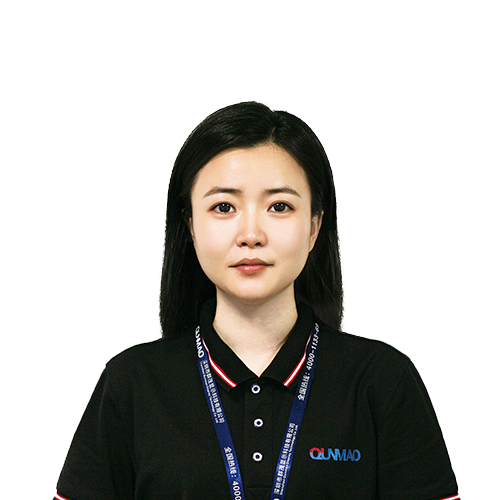
CEO | Interactive Display & Collaboration Solution Expert
I am the founder of Qtenboard, bringing over 17 years of hands-on expertise to the touch display industry. Drawing on the global management perspective gained through my EMBA studies at ShenZhen University, I lead my team in optimizing every stage of our operations—from product definition to high-efficiency supply chain management—ensuring our manufacturing capabilities remain at the forefront of the industry.
As the leader of Qtenboard, I specialize in providing tailored OEM/ODM solutions for interactive whiteboards, LCD video walls, digital signage, and industrial-grade touch terminals. Backed by our 330,000 m² modern industrial park in Shenzhen, we maintain full-lifecycle control over industrial design, precision manufacturing, and rigorous performance testing.
With nearly two decades of project experience, Qtenboard’s display solutions are now deployed in over 120 countries and regions, earned the trust of more than 15,000 enterprise customers worldwide. If you are seeking a responsive partner with a deep manufacturing foundation for your customized touch display projects, my team and I are ready to support your vision with professional excellence.

 EN
EN
 pt
pt  spa
spa  th
th  vie
vie  aze
aze  bel
bel  est
est  lav
lav  ukr
ukr  ru
ru