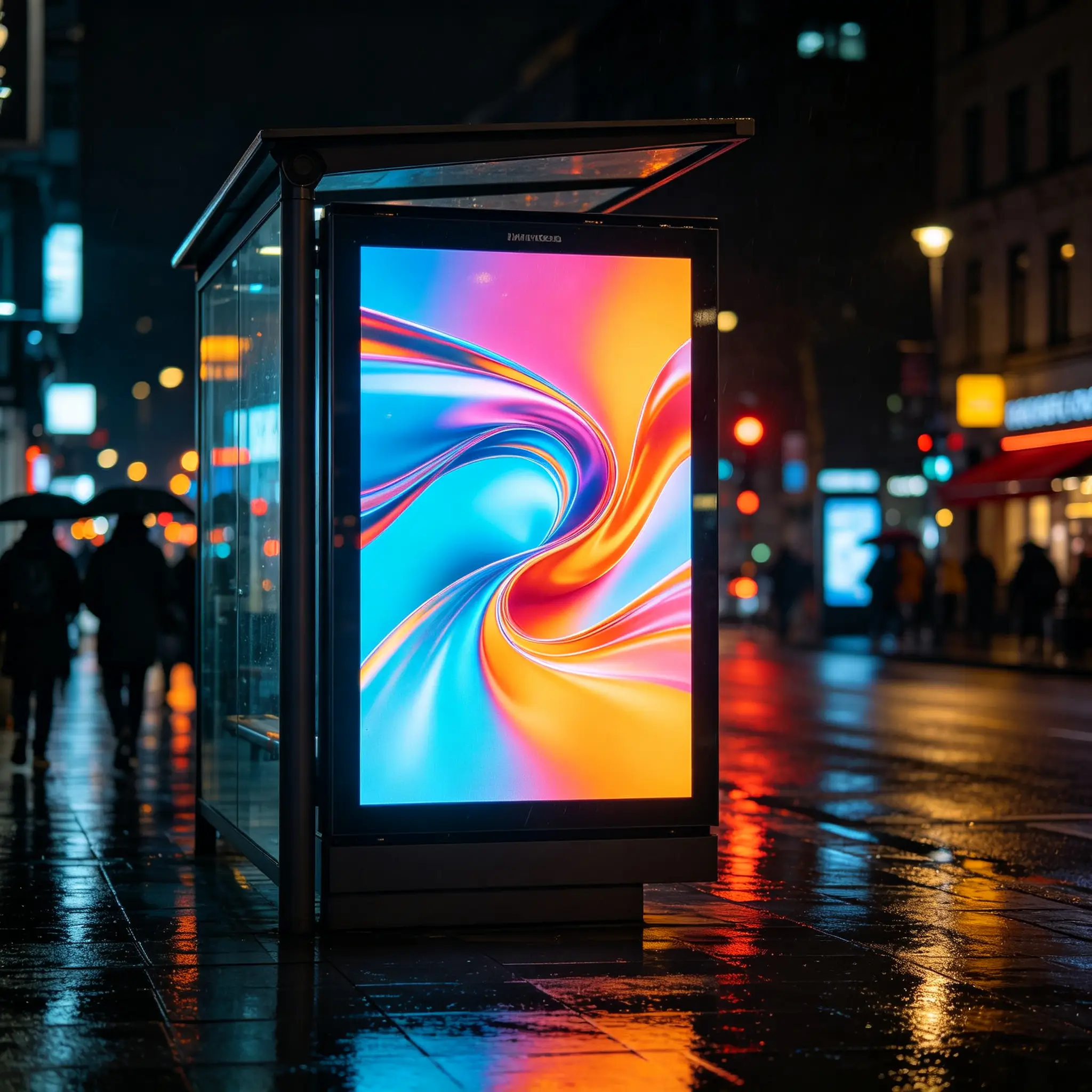
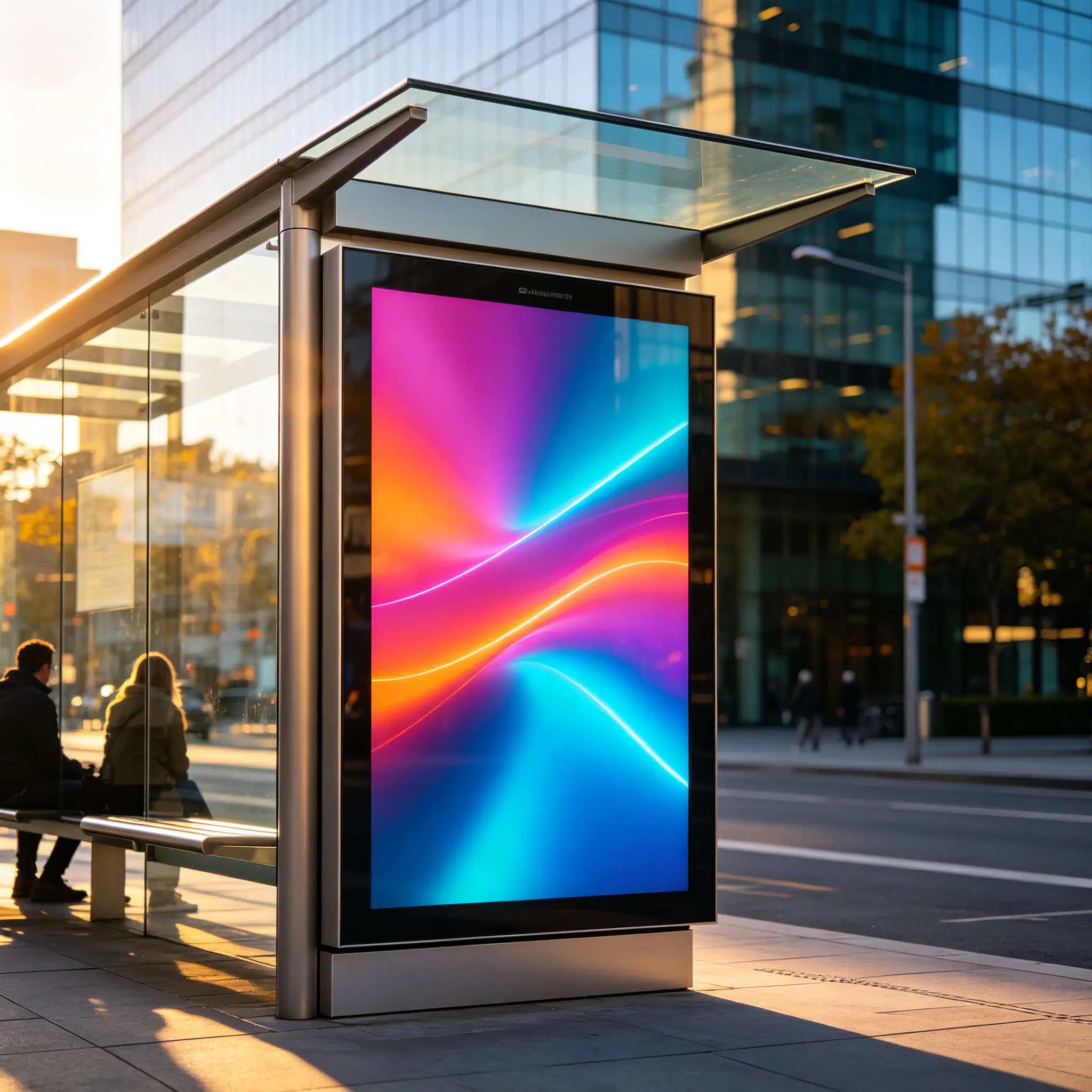
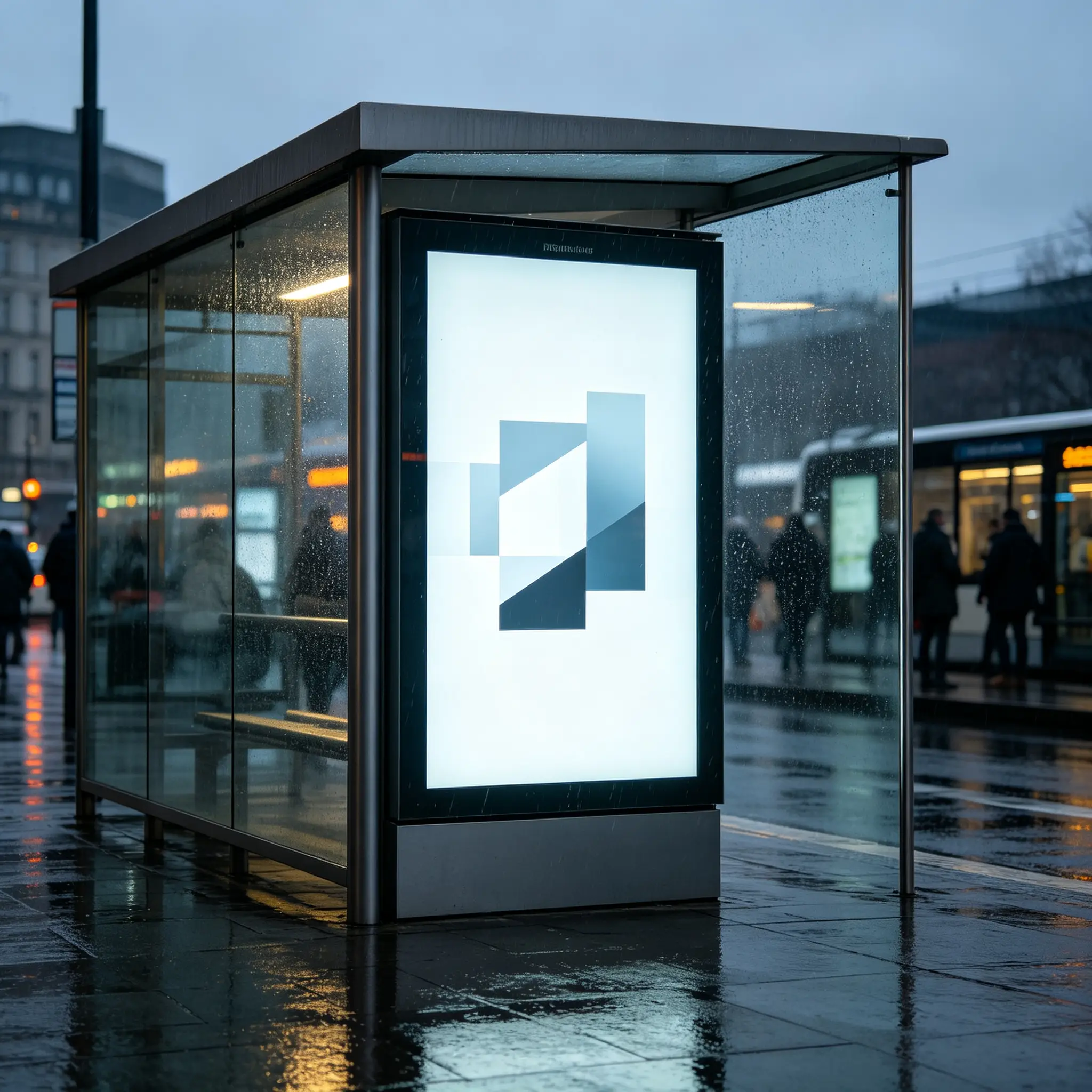















modern‑bus‑stop‑at‑night‑a‑large‑vertical‑digital‑advertising‑kiosk‑as‑the‑hero‑subject modern‑city‑bus‑stop‑shelter‑vertical‑digital‑advertising‑kiosk modern‑bus‑shelter‑on‑a‑rainy‑day‑large‑vertical‑digital‑advertising‑kiosk‑as‑the‑main‑focal‑point

Smart Bus Stop Digital Signage Outdoor Real-Time Passenger Information Display

Size:21.5-98 inch
Resolution: 2K-4K
Android: 9.0 / 11.0 / 14.0 / 16.0
Internet:4G / Wifi
Brightness: ≥700-2000 cd/m²
Qtenboard ANATEL Certificate Qtenboard CB Certificate Qtenboard CE Certificate Qtenboard EMC Certificate Qtenboard ERP Certificate Qtenboard FCC Certificate Qtenboard EDLA Certificate Qtenboard EPEAT Certificate Qtenboard ENERGY-STAR Certificate Qtenboard ISO4001 Certificate Qtenboard ISO9001 Certificate Qtenboard ISO27001 Certificate Qtenboard ISO45001 Certificate Qtenboard LVD Certificate Qtenboard PVOC Certificate Qtenboard RETIE Certificate Qtenboard RoHs Certificate

Technical specifications:

Qtenboard Outdoor Digital Signage & Kiosk Manufacturer · Shenzhen · OEM / ODM info@qtenboard.com +86 181 2471 3748
Outdoor Digital Signage · Transit · Smart City
Smart Bus Stop Digital Signage for Real-Time Passenger Information and Outdoor Advertising

A weather-resistant outdoor digital bus stop display designed for transit information, public communication and advertising. Configure the screen, enclosure, brightness, CMS, network connection, passenger-information integration and interactive modules for your transportation or smart-city project.
  • Outdoor digital display for bus stops and shelters
  • Real-time passenger information integration available
  • High-brightness LCD for outdoor readability
  • Weatherproof enclosure options
  • Transit API and CMS integration
  • Remote content and device management
  • Advertising and public-information playback
  • Optional audio, touch, camera, QR and NFC modules
  • Custom structure, branding and project configuration
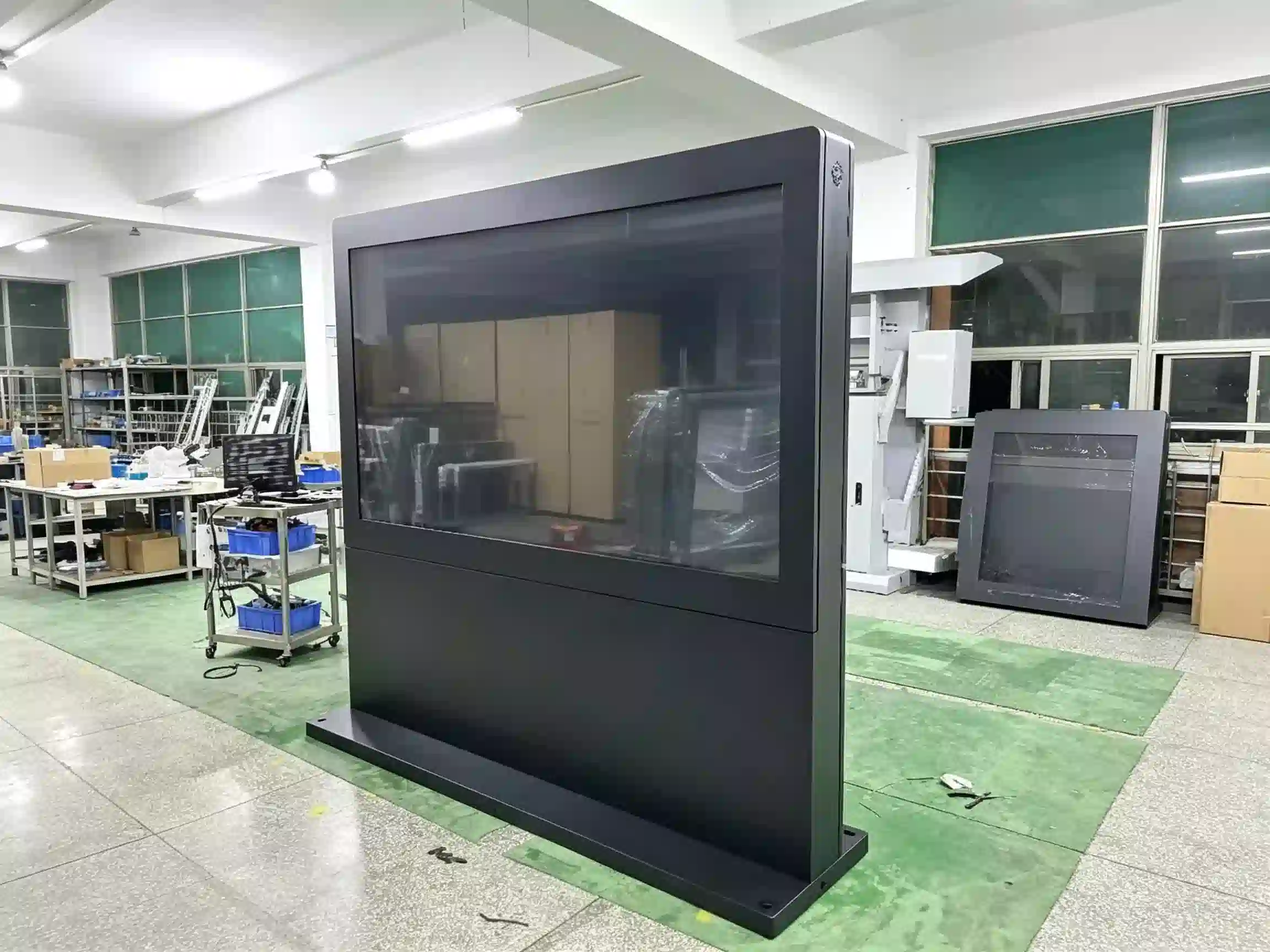
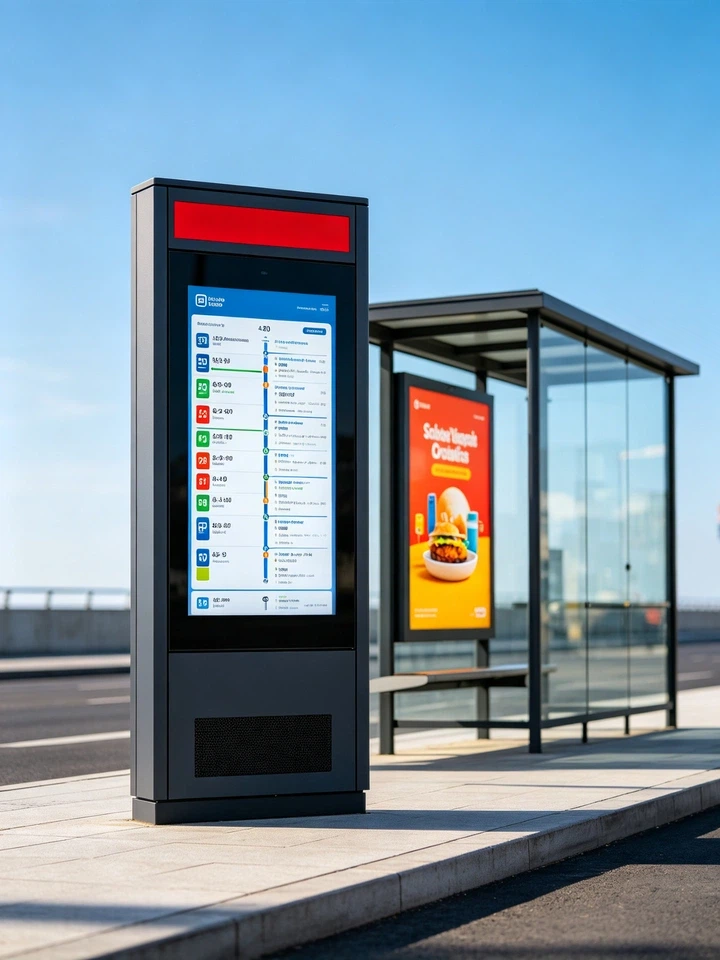
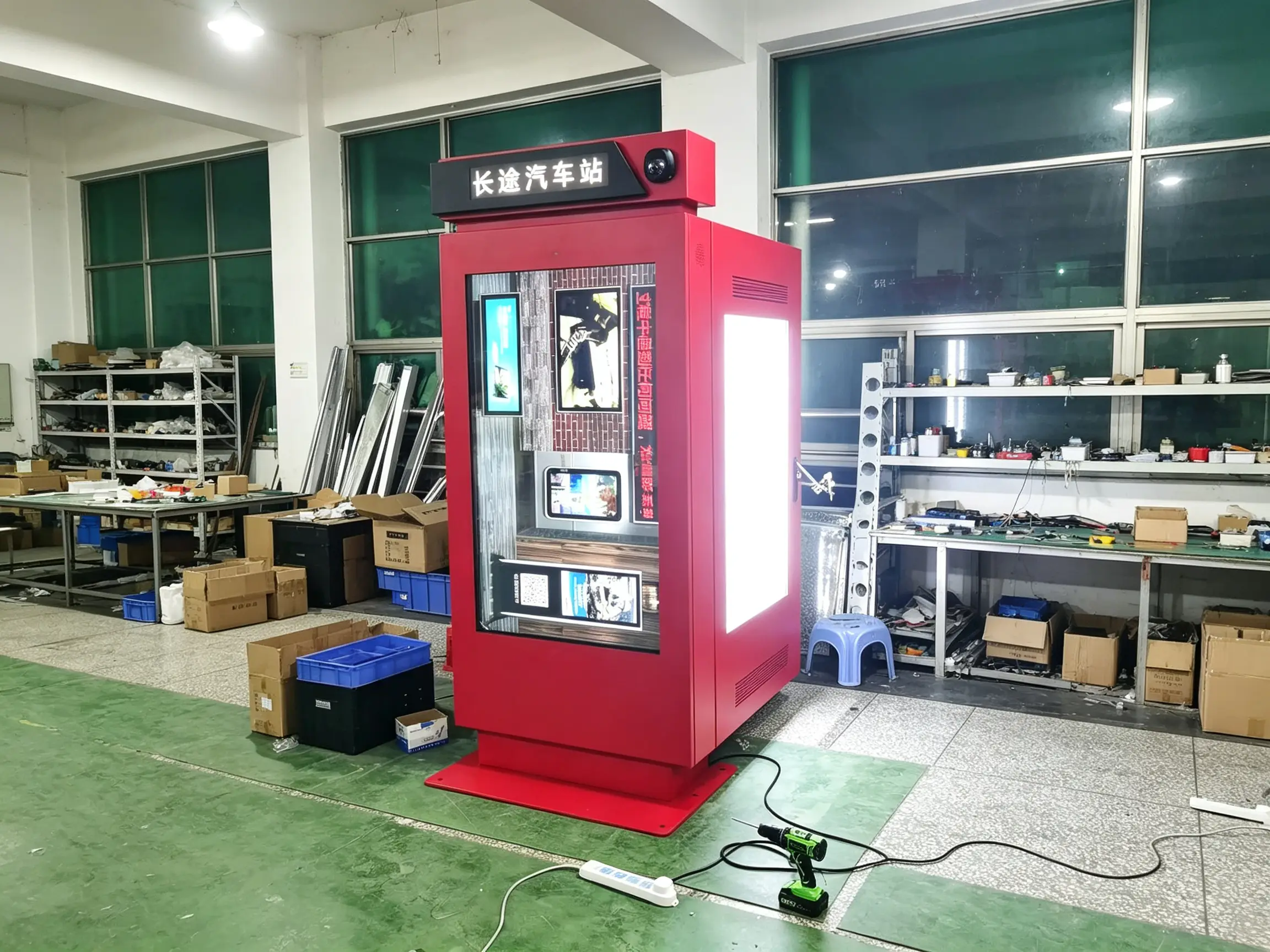
Smart bus stop digital signage kiosk with portrait outdoor display, top route signage and lower speaker/vent area for transit information and advertising.
Image shown for reference only. Final configuration, data integration and branding to be confirmed per project.
Why Replace Paper Timetables

One Outdoor Display for Passenger Information, Advertising and Public Services

Traditional bus stop signage shows fixed routes and printed timetables, and every update needs manual work. A smart bus stop display puts real-time transit information, advertising content, emergency notices, city services and passenger wayfinding into one remotely managed outdoor terminal.

Smart Bus Stop Digital Signage combines outdoor digital communication with transportation information delivery. It helps transit operators, municipalities and media operators provide clearer passenger guidance while creating a flexible channel for advertising, public announcements and local services.

The system can display scheduled information as a standalone screen or connect with a transit management platform to publish real-time arrival data, route changes and service alerts.

  • Reduce the cost and workload of replacing paper timetables and notices.
  • Publish one consistent message across multiple bus stops at the same time.
  • Give passengers clearer route, schedule and estimated-arrival information.
  • Increase the media value of each bus stop with a dedicated advertising area.
  • Push urgent notices quickly during emergencies or route changes.
  • Integrate smart-city, transit-data, public-safety and city-service content.
  • Configure screen, cabinet, network and power per site environment.
Need help understanding transit data integration? Our team can review your available data source and recommend a suitable display, CMS and network configuration without requiring you to manage the technical details alone.
VersionBest ForRecommended ConfigurationConfirm Before Ordering
Standalone Schedule Display Small sites without a real-time data feed Portrait high-brightness LCD, local CMS / USB, fixed timetable, advertising playback Power supply, network, update frequency
CMS-Managed Bus Stop Display Bus companies, campus shuttles, commercial projects Cloud CMS, timetable, announcements, advertising, remote publishing Number of stops, permissions, playback reports
API-Integrated Passenger Display Transit operators, smart-city projects Transit platform / API / GTFS-RT, ETA, delay, route-change display Data format, interface documentation, update frequency
Interactive Smart Bus Stop Kiosk City hubs, scenic areas, key stops PCAP touch, map search, transfer planning, QR / NFC, accessibility modules Software, waterproof openings, privacy compliance
Solar-Powered Bus Stop Display Sites without stable grid power Solar panel, battery backup, low-power display, 4G / 5G Sunlight conditions, power consumption, battery life, maintenance
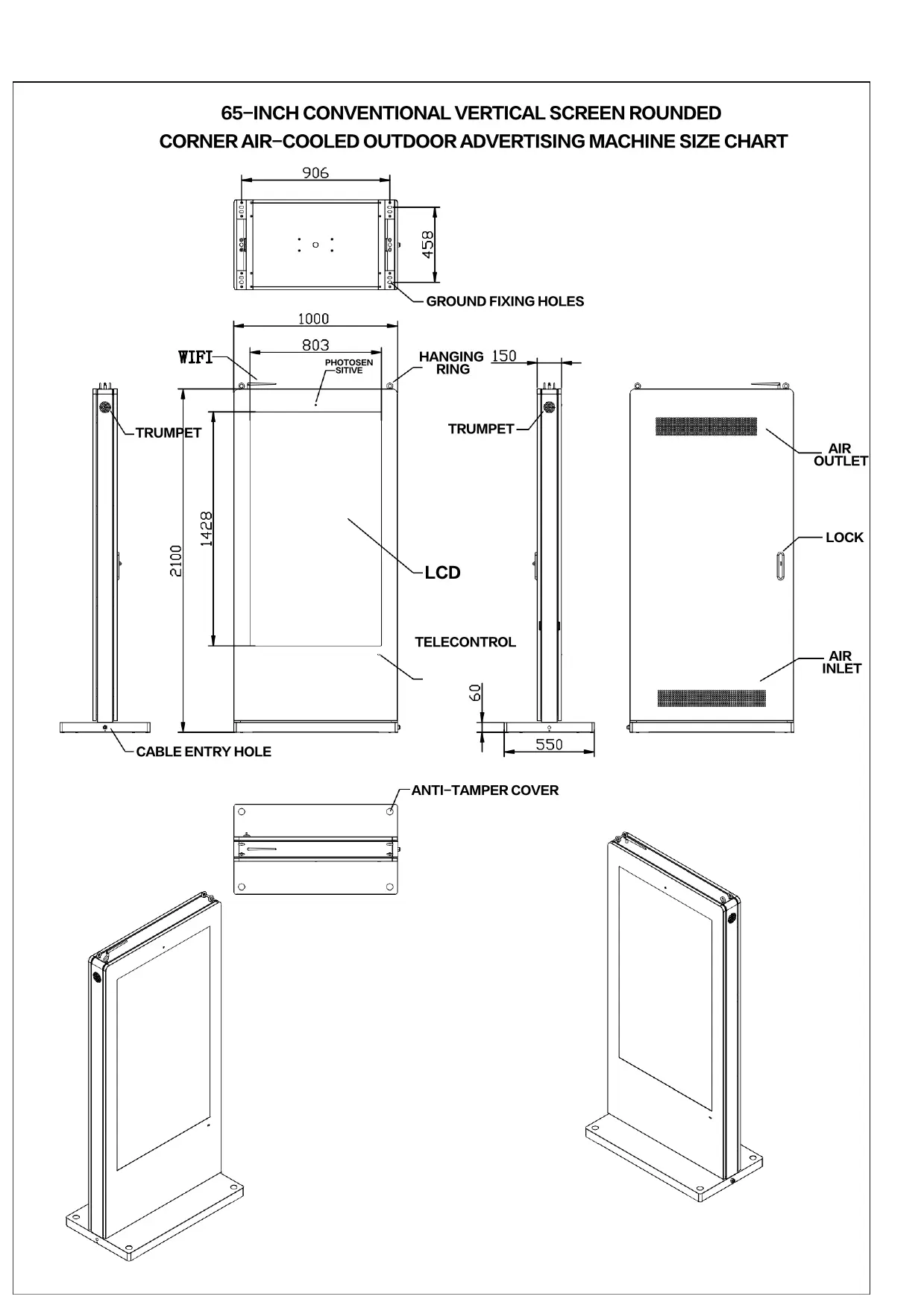
Technical dimension drawing of smart bus stop digital signage showing portrait screen size, cabinet height, base width and mounting points.
Sample technical dimension drawing. Final dimensions are confirmed against the selected screen size, mounting base and site layout.
Freestanding Outdoor Kiosk Design

Freestanding Outdoor Bus Stop Display Designed for Public Environments

The enclosure integrates the display, power system, controller, communication hardware and thermal components into one outdoor kiosk structure, ready to install beside a bus shelter, at a transit stop, in a public plaza or at other outdoor passenger-information points.

Portrait Display Format

The portrait screen is designed to show transit-focused content in a format passengers read naturally:

  • Bus routes and arrival information
  • Stop name and route identification
  • Digital advertising posters
  • City event and activity information
  • Maps and transfer guidance
  • Public-service messages
  • Emergency notices
  • QR-code service entry
  • Multi-language passenger information
Integrated Outdoor Kiosk Structure

The freestanding enclosure integrates the display, power system, controller, communication hardware and thermal components into one outdoor kiosk structure. It can be installed beside a bus shelter, at a transit stop, within a public plaza or at other outdoor passenger-information points.

Each deployment is configured per project: screen size, top signage, branding, peripherals and transit-data integration are confirmed before production.
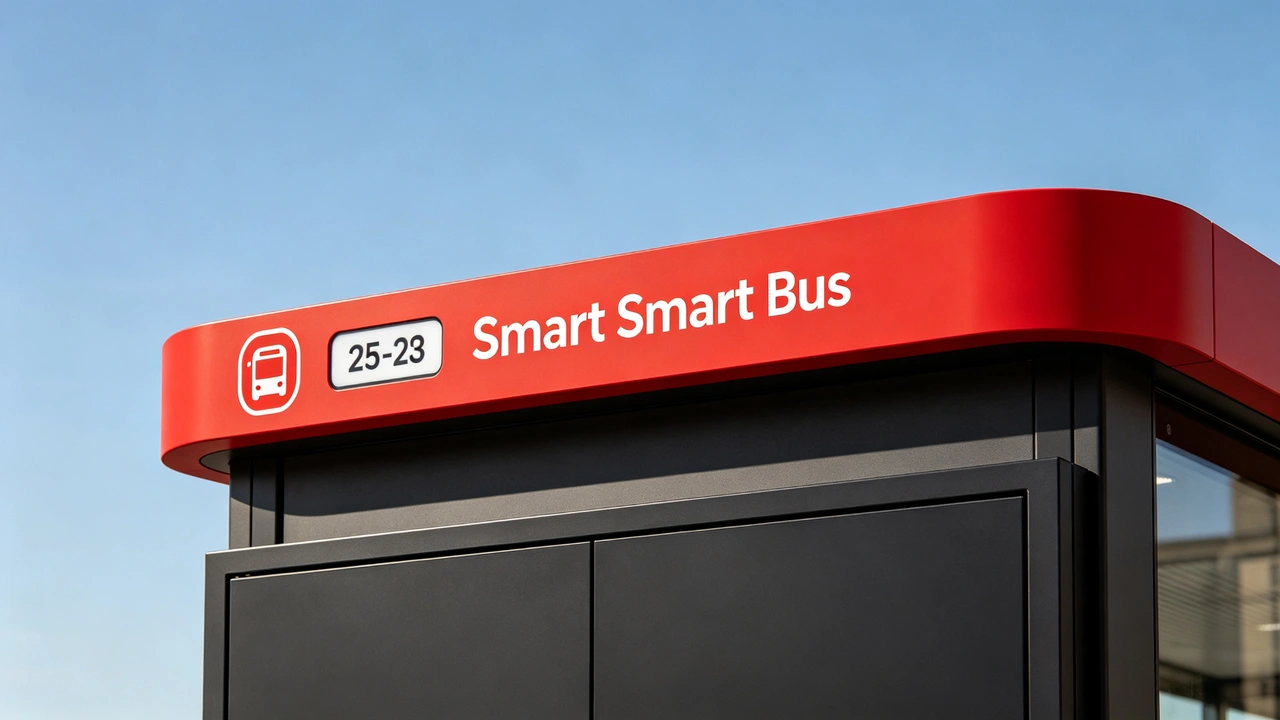
Customizable top signage area on smart bus stop digital signage for route number, city logo and transit operator branding.

Top Signage and Brand Area

A dedicated top signage area can be customized for stop identification, transit branding, municipal logos, route information or project-specific visual design. Typical content includes:
  • Bus stop name
  • Route identification
  • City logo
  • Transit operator logo
  • Shelter number and district information
  • Project branding
  • Advertising or sponsor identity
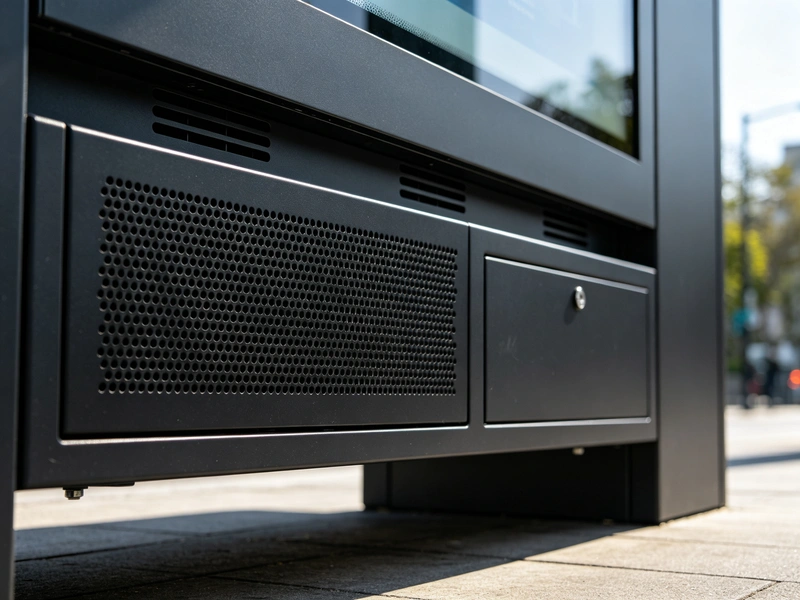
Lower speaker, ventilation and service access area of outdoor smart bus stop digital signage kiosk.

Lower Service and Audio Area

The lower grille area can carry speaker, thermal, control or maintenance hardware depending on the project design. Optional functions include:
  • Speaker and audio announcement
  • Ventilation opening
  • Environmental sensor
  • Service access
  • Accessibility button
  • Emergency call button
  • Intercom
  • QR code panel
  • NFC / RFID reader
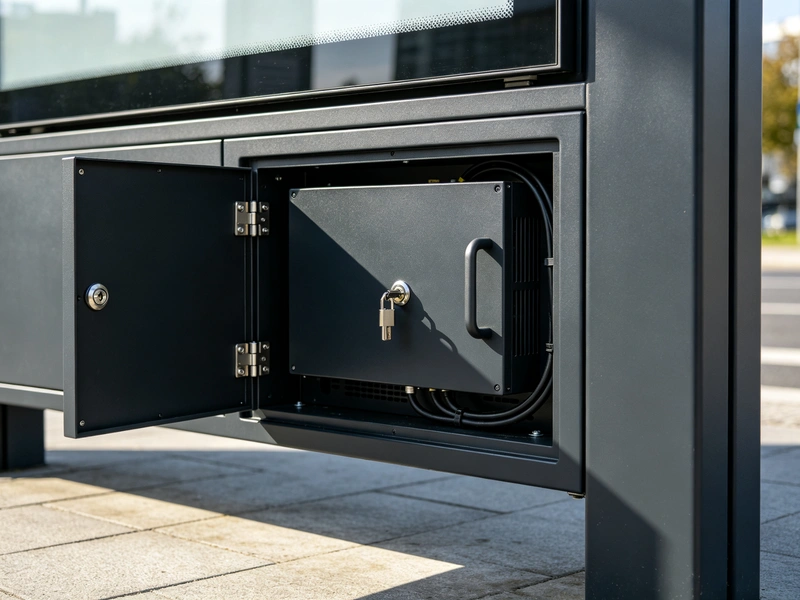
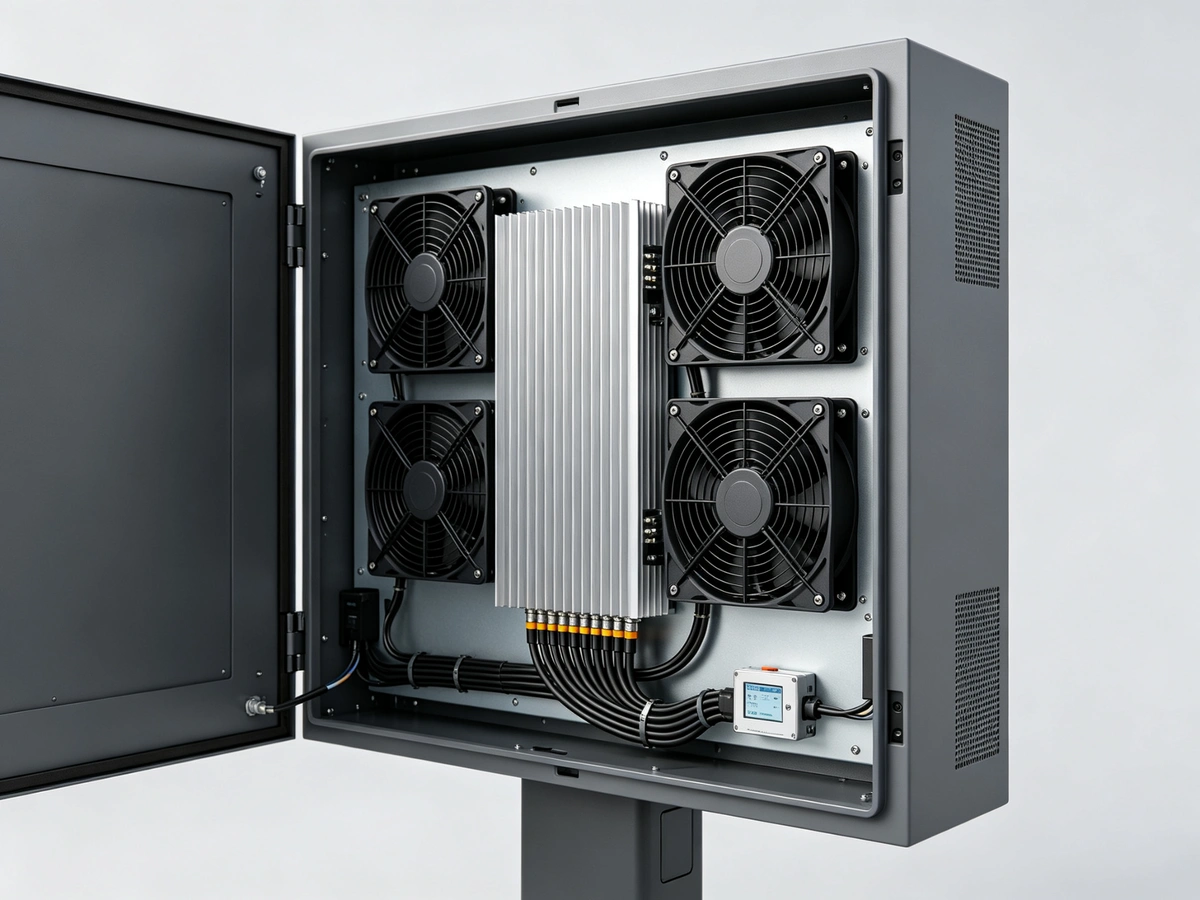
Rear maintenance access door of smart bus stop digital signage kiosk for power, network, media player and thermal system service.

Rear Maintenance Access

  • Lockable service-door design
  • Protected access to internal electronics
  • Easier maintenance for multi-site deployments
  • Optional front or rear service configuration
  • Cable-management design for power and network connections
Real-Time Passenger Information Display

Display Real-Time Passenger Information When Connected to Your Transit Platform

The display can be configured to receive and present real-time passenger information from a compatible transit management system, cloud platform or customer-provided API. Available content depends on the data source, communication method and software integration scope.
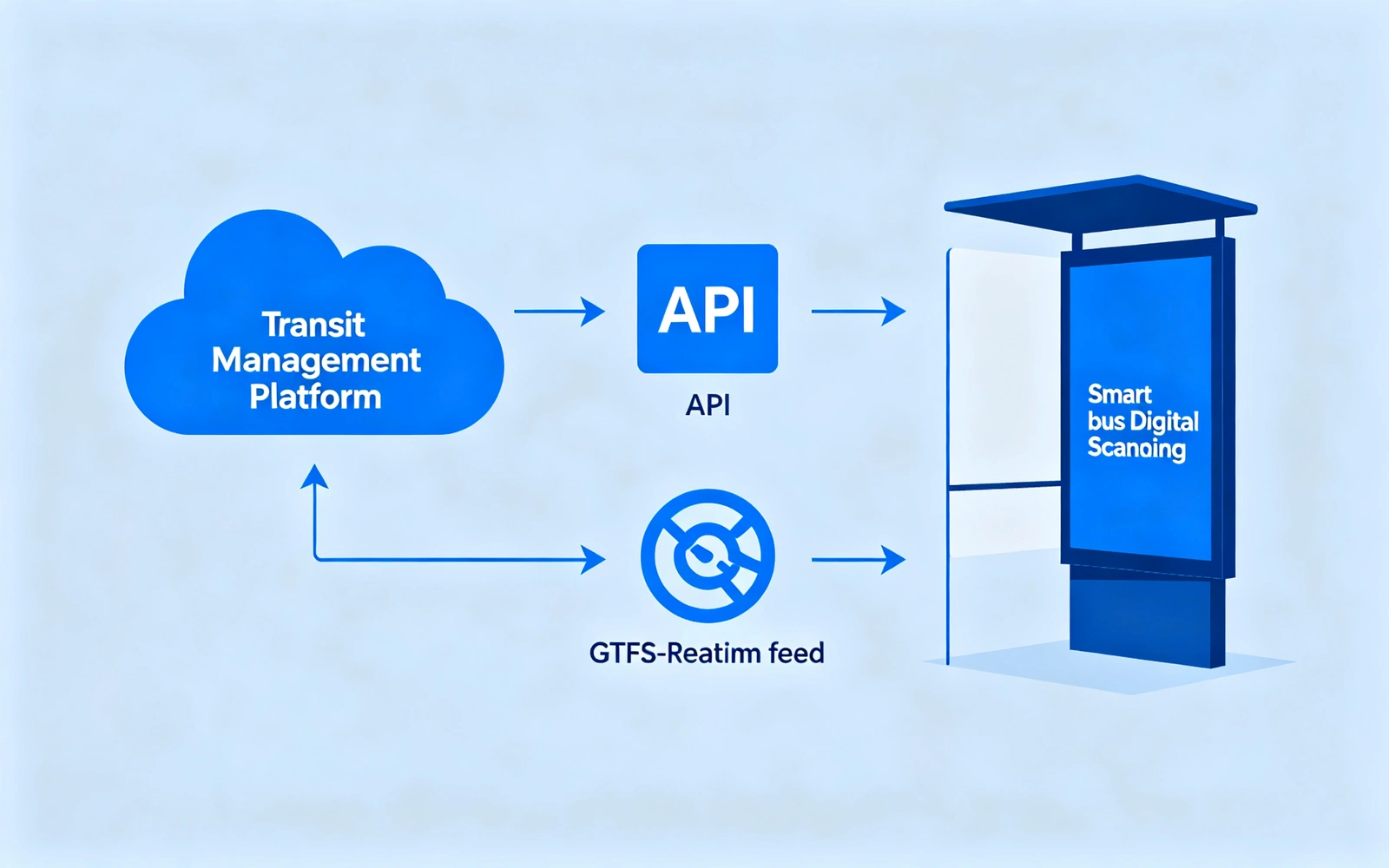
Real-time data note: Real-time passenger information requires integration with a compatible transit platform, API, GTFS/GTFS-Realtime feed or customer-provided data source. The display hardware alone does not generate real-time bus data.

Information the Display Can Show

  • Bus route number and route name
  • Destination and next departure time
  • Estimated time of arrival
  • Vehicle status and service delay information
  • Route diversion notice
  • Temporary stop closure
  • Transfer guidance and platform / stop identification
  • Service alerts
  • Emergency announcements

Data Connection Methods

Customer-provided transit API REST API GTFS / GTFS-Realtime feed Transit management platform Cloud data platform Central control system Local media player with scheduled timetable Third-party passenger information system
Transit data integration diagram showing bus management platform, API or GTFS-Realtime feed connected to smart bus stop digital signage.
ConfigurationData SourceDisplayable ContentBest Fit Customers
Standalone schedule display USB, CMS or local media player Fixed timetable, route map, advertising Small sites, projects without a data interface
CMS-managed bus stop display Cloud CMS or central server Timetable, announcements, advertising, event information Bus companies, campus shuttles, commercial projects
API-integrated passenger display Real-time transit platform, API or GTFS-RT ETA, vehicle status, delays, route changes Transit operators, smart-city projects
Interactive smart bus stop kiosk API, CMS, touch software and peripherals Route lookup, map, services and advertising City hubs, scenic areas, key stops
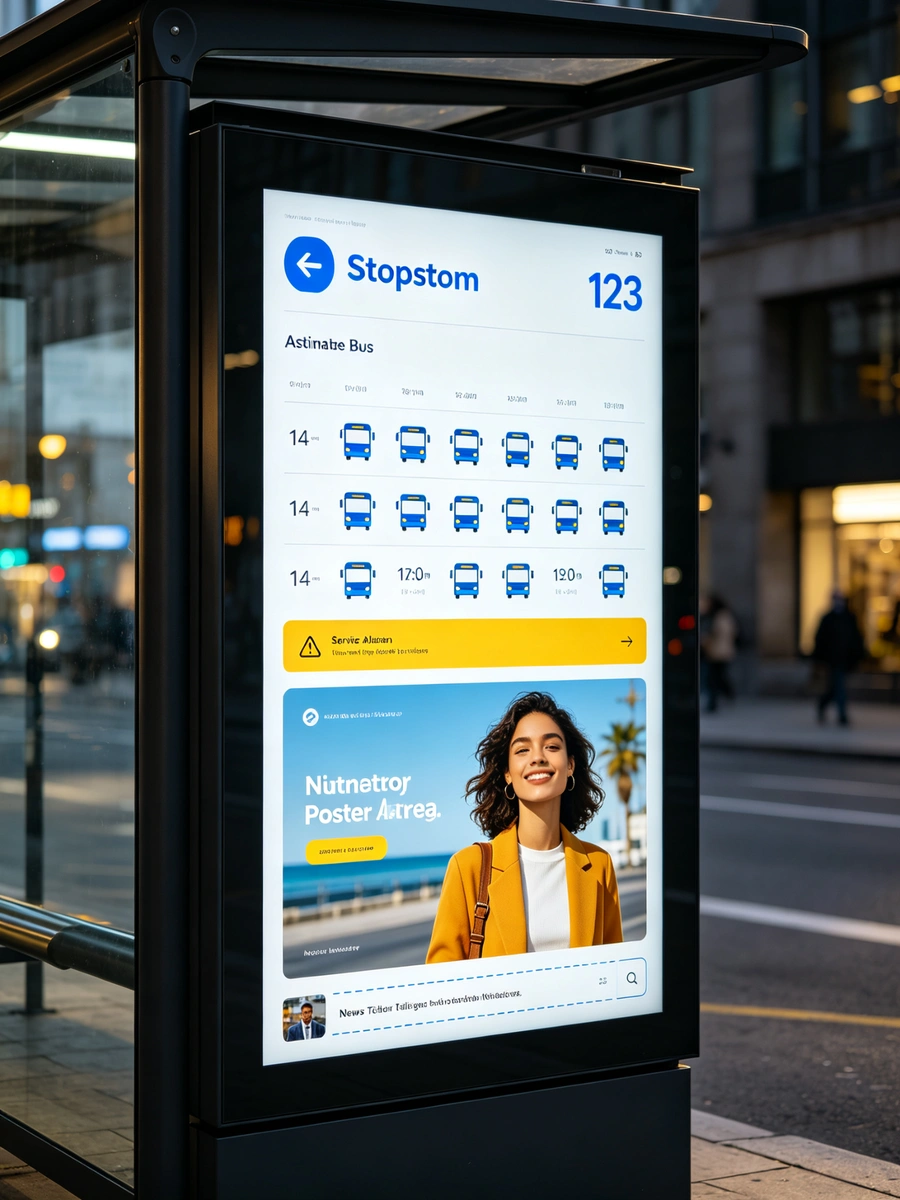
Portrait smart bus stop display layout showing bus route, estimated arrival time, service alert and advertising zones.
Example screen layout — final zones and content are defined in the CMS per project.
Not sure which data format your transit system provides? Share the available API documentation or data feed details with our team. We can help evaluate compatibility and recommend a suitable integration approach.
Built for Outdoor Visibility

Configured for Outdoor Visibility and Long-Term Deployment

Brightness, protection, thermal management and security are selected for the actual site — sunlight exposure, weather, temperature range and public-space risks. Nothing is fixed by default; every option is confirmed against your environment.
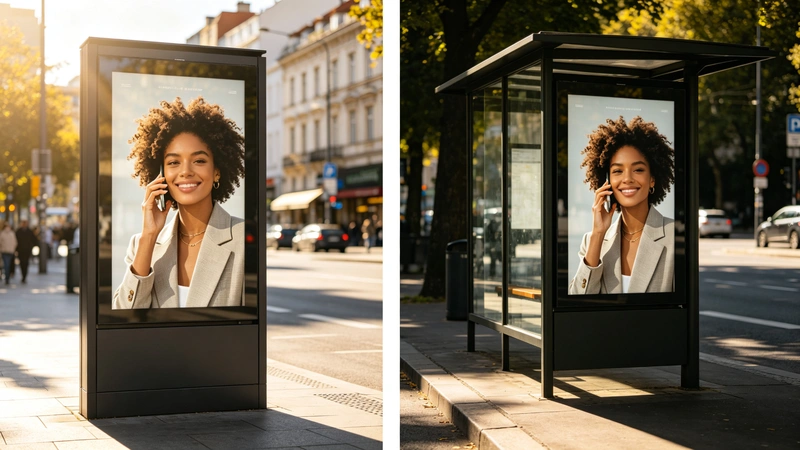
High-brightness outdoor bus stop display readability comparison in direct sunlight and shaded shelter conditions.

High-Brightness LCD Display

High-brightness LCD options can be selected for covered bus shelters, semi-outdoor transit areas or direct-sunlight locations. The final brightness should be determined according to sunlight exposure, display orientation, viewing distance and content readability requirements.
  • High-brightness LCD options for outdoor readability
  • Automatic brightness adjustment option
  • Ambient light sensor option
  • Full HD or 4K display options
  • Wide viewing angle
  • Anti-glare or anti-reflective glass options
  • Portrait layout for route information and digital advertising
Weatherproof IP-rated enclosure with sealed cable entries for outdoor smart bus stop digital signage.

Weatherproof Outdoor Enclosure

The outdoor enclosure can be configured with an appropriate protection level for dust, rain, humidity and public-space deployment. The final enclosure design should be selected based on local weather conditions, shelter coverage, cleaning practices and installation exposure.
  • IP-rated weatherproof enclosure options
  • Dust and water protection
  • Sealed cable-entry structure
  • Lockable maintenance access
  • Powder-coated metal housing
  • Optional corrosion-resistant treatment
  • Optional drainage and moisture-management design
Intelligent thermal management system with cooling fan, air conditioning and heater options for outdoor bus stop display.

Thermal Management

  • Intelligent cooling design
  • Fan-based cooling option
  • Air-conditioning option for high-heat environments
  • Heater option for cold regions
  • Internal temperature monitoring
  • Automatic over-temperature protection
  • Humidity and anti-condensation options
  • Remote equipment-status monitoring
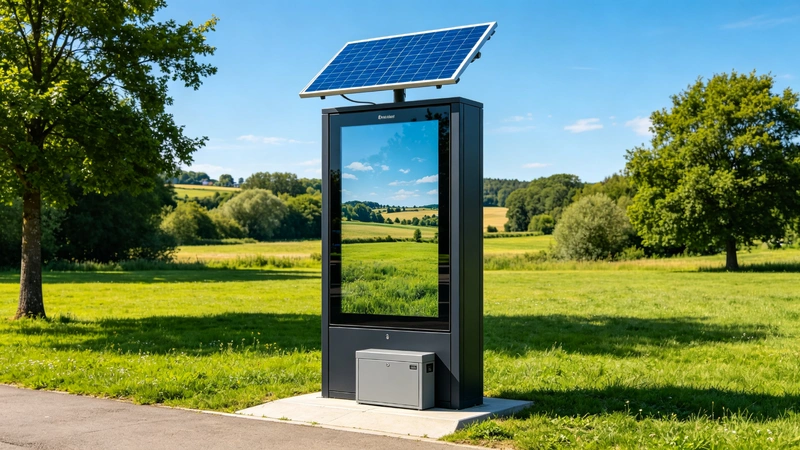
Solar panel and battery backup solution for smart bus stop digital signage in locations without stable grid power.

Power Options: AC, Solar and Battery Backup

Confirm the site power source before production. The display can be configured for AC power, a solar-panel and battery-backup solution, or a hybrid system where uninterrupted passenger information is required.

  • AC power configuration with surge protection
  • Solar panel and battery backup option
  • Low-power display mode for solar sites
  • Feasibility review per site: sunlight, brightness, operating hours

Public-Space Security

  • Tempered or laminated protective glass
  • Optional anti-vandal front protection
  • Lockable cabinet structure
  • Concealed cable routing
  • Secure floor anchoring
  • Optional security screws
  • Optional camera integration
  • Optional remote alarm / door-status monitoring
Monetize the Stop, Inform the Passenger

Use the Bus Stop Display as a Flexible Outdoor Media Channel

One outdoor digital bus stop display can carry commercial advertising and public-service content alongside passenger information — with clear priority rules managed by the operator.

Digital Advertising Playback

Brand advertisements Local business promotions Retail and restaurant campaigns City events Tourism promotion Public-service messages Sponsorship content Government announcements

Content Zoning

The screen layout can be configured to combine passenger information with commercial or public-service content. For example, the display can reserve a dedicated area for bus arrivals while using the main screen area for advertising, community information or destination promotion.
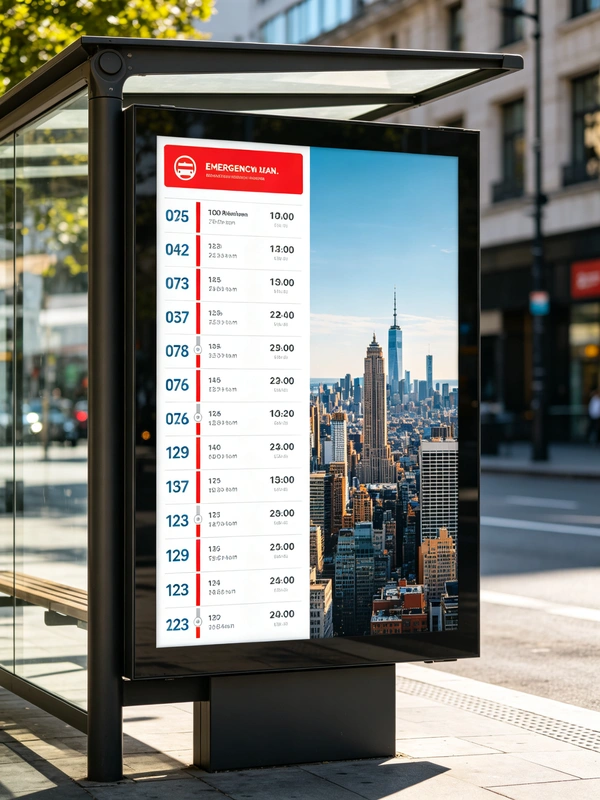
  • Top area: stop name or route ID
  • Main area: advertising video or image
  • Bottom area: ETA, next bus, alerts or news ticker
  • Side area: weather, QR code, sponsor logo or city information
Smart bus stop display screen layout combining real-time bus arrival information, emergency alert and digital advertising.
Content priority: For transportation projects, passenger information and emergency alerts should be prioritized over commercial advertising according to the operator's content policy and local public-service requirements.
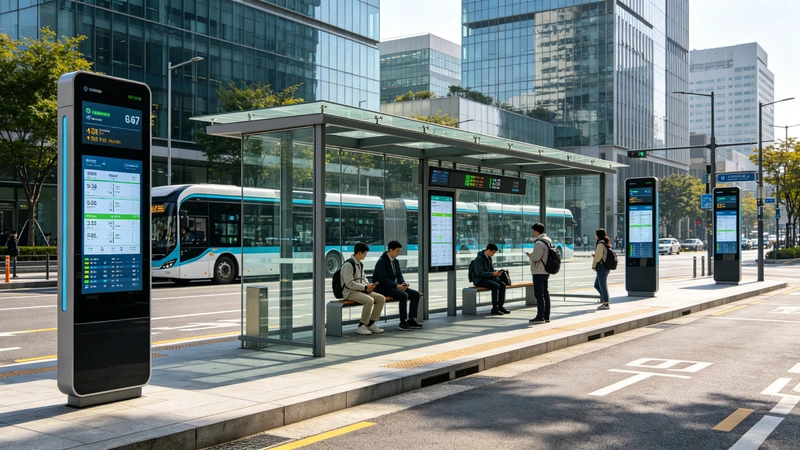
Smart bus stop digital signage installed at a transit hub showing real-time bus arrival and route information.

Transit Hub Application

At bus terminals, interchanges and transit hubs, the display gives waiting passengers live arrival, platform and route-change information while operators use the same network to publish service alerts.
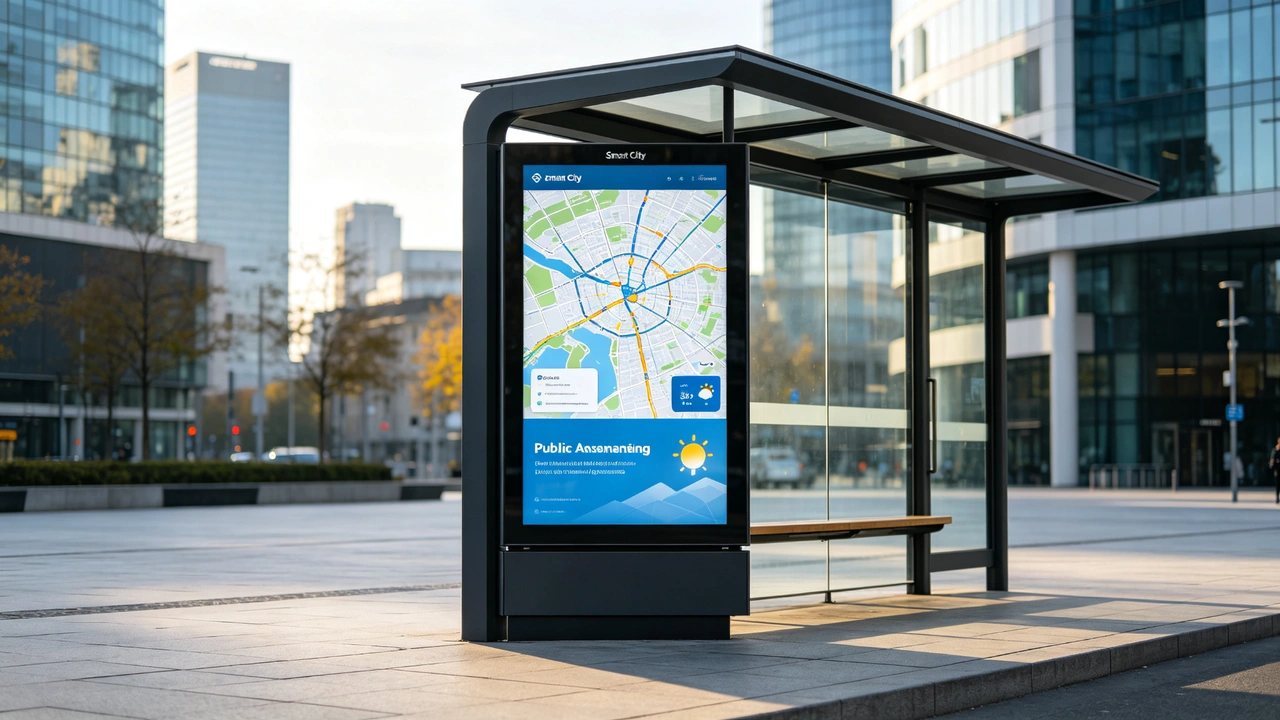
Smart city bus stop display showing city map, public announcement and weather information.

Smart City Public Information

Beyond transit, the same terminal can serve as a smart-city node for city maps, public announcements, weather information, emergency notifications and local services.

One Dashboard, Every Stop

Centralized Content Management for Multi-Stop Deployments

For multi-stop projects, centralized management helps operators publish content, monitor device status and respond to service changes without visiting every bus stop individually.

Remote Content Management

  • Remote content upload
  • Multi-site screen grouping
  • Advertising playlist scheduling
  • Timetable publishing
  • Daypart content control
  • Emergency message publishing
  • User-role management
  • Remote reboot and system-update management
  • Playback-status monitoring
  • Screenshot or proof-of-play options
  • Device online / offline alerts

Network Options

NetworkBest ForNotes
LANFixed shelters, hubs, city network projectsPlan cabling, waterproof joints, network permission
Wi-FiSites with stable coverageConfirm signal strength, security, offline strategy
4GScattered sites without wired networkConfirm operator, data plan, frequency bands
5GHigh-data or advanced smart-city projectsConfirm coverage, cost, module compatibility
USBSingle-site, low-frequency updatesNot for real-time info or large remote fleets
GPS / IoTProject device monitoring and locationConfirm platform, protocol, data management

Device Monitoring

Online / offline status Internal temperature Fan / thermal-system status Screen brightness Storage status Network signal Door-open status Power status Player status Content playback status
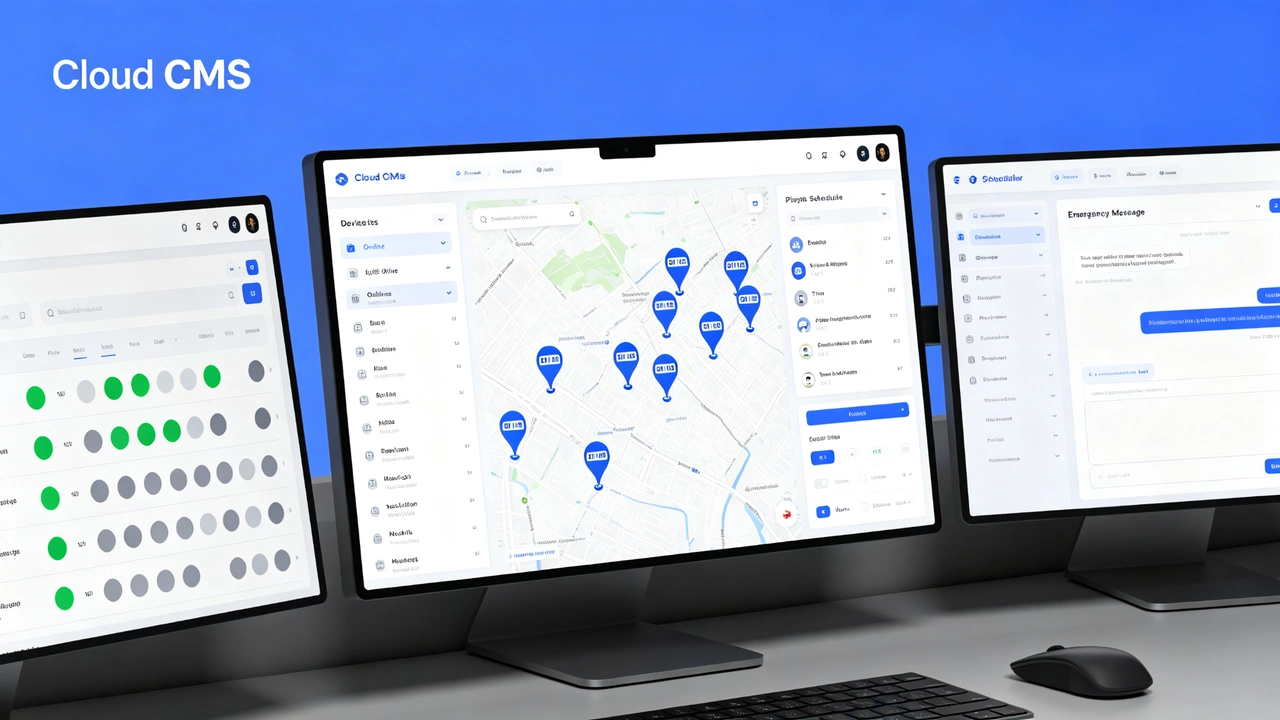
Central CMS dashboard for managing multiple smart bus stop displays, advertising playlists and emergency messages.
Sample CMS dashboard — the platform is selected or integrated per project.
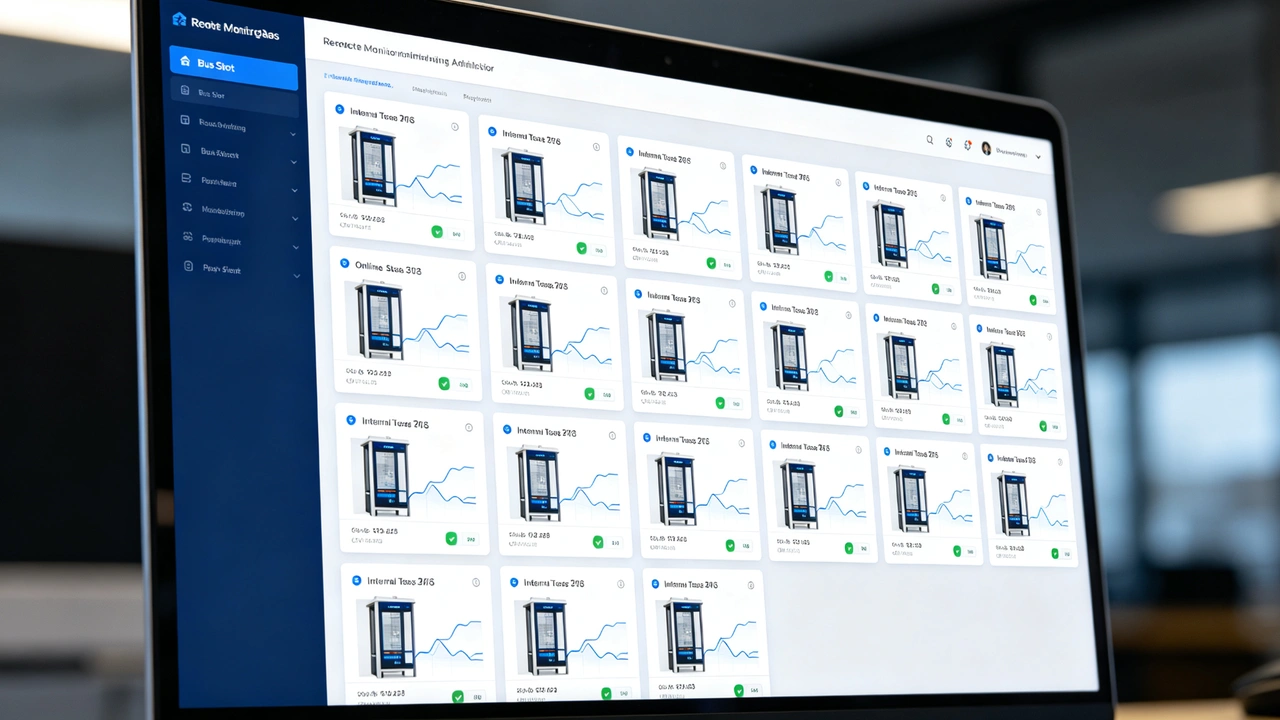
Multi-stop remote monitoring dashboard for smart bus stop digital signage showing device status, temperature and playback information.
Remote monitoring keeps multi-stop projects serviceable without site visits.
Optional Modules, Project-Specific

Optional Interactive and Accessibility Features

All interactive and peripheral modules below are optional and available upon project request. Software integration, enclosure protection, privacy requirements and local regulations should be reviewed during configuration.

Interactive Functions

  • PCAP touchscreen
  • Route search
  • Interactive city map
  • Transfer planning
  • Destination search
  • Service information lookup
  • Tourist information
  • QR code access to mobile services
  • Multi-language interface
  • Local business directory

Accessibility Options

  • Text-to-speech arrival announcement
  • Built-in speaker
  • High-contrast UI
  • Large-font content mode
  • Tactile or physical assistance button
  • Headphone jack
  • Wheelchair-height interface design
  • Screen-reader-compatible software design
  • Emergency call button

Optional Peripherals

QR code scanner Barcode scanner NFC / RFID reader Camera People-counting sensor Environmental sensor Emergency-call button Intercom Thermal printer USB charging port Wi-Fi hotspot module Solar-power solution Battery backup
Everything Is Configurable

Smart Bus Stop Display Configuration Options

Use this table to define your project configuration. Each item is confirmed before production — nothing is assumed.

Configuration ItemAvailable OptionsConfirm Before Ordering
Screen size32", 43", 49", 55", 65" or customViewing distance, shelter space, advertising formats
Display orientationPortraitContent design, shelter and stop layout
ResolutionFull HD / 4K / project-specificTransit-info density, advertising content, viewing distance
BrightnessSemi-outdoor / high-brightness / sunlight-readableSunlight, canopy, orientation, surrounding reflection
Enclosure protectionIP-rated optionRain, dust, humidity, cleaning, environmental exposure
GlassTempered / laminated / anti-glare / AR optionVandal resistance, reflection, clarity, safety requirements
Thermal systemFan / air conditioner / heater / integrated controlLocal max/min temperature, sunlight, humidity
Operating platformAndroid / Windows / external playerCMS, real-time data software, customer applications
ConnectivityLAN / Wi-Fi / 4G / 5G / USBSite network, data cost, backend requirements
Transit dataAPI / GTFS / GTFS-RT / custom integrationData format, permissions, interface, update frequency
CMSCloud CMS / local server / third-party CMSStop count, user permissions, advertising operation model
AudioSpeaker / audio announcementVoice announcements, ambient noise, time restrictions
TouchNon-touch / PCAP touchQuery needs, glass, maintenance, interface design
PeripheralsQR / NFC / camera / printer / intercomSoftware interfaces, environmental protection, privacy, compliance
Top headerStop name / route logo / city logo / brand areaVisual standards, dimensions, identification content
Cabinet finishCustom color / powder coating / printed graphicsCity image, branding, corrosion requirements
InstallationBase plate / anchor bolts / embedded foundationGround type, wind load, construction plan
Power supplyAC / solar / battery backup optionAvailable power, supply stability, energy strategy

Specifications are finalized on the project drawing. The images on this page are for reference only — final screen size, operating system, top signage, audio, camera, solar power and transit-data integration are confirmed per project.

Plan Before Production

Plan Installation, Power and Data Connectivity Before Production

Send us the site survey below and we will return a project configuration with installation, anchoring, power and data recommendations.

Site Survey Checklist

  • Bus stop, bus shelter, transit hub or public-space location
  • Number of deployment sites
  • Site dimensions and available installation footprint
  • Screen viewing direction and passenger-flow direction
  • Direct sunlight exposure
  • Rain, wind, snow, dust and humidity level
  • Local maximum and minimum temperature
  • Coastal or high-corrosion conditions
  • Ground material and foundation depth
  • Required anchor-bolt or embedded-frame design

Site Survey Checklist (continued)

  • Available AC power supply and solar-power feasibility
  • Earthing and surge-protection requirement
  • LAN, Wi-Fi, 4G or 5G coverage
  • Transit-data API availability
  • Maintenance-access space
  • Local municipal permit and advertising requirements
  • Accessibility and public-safety requirements
  • Power and electrical protection planning
  • Backup power where uninterrupted information is required
  • Maintenance responsibility and spare-parts plan

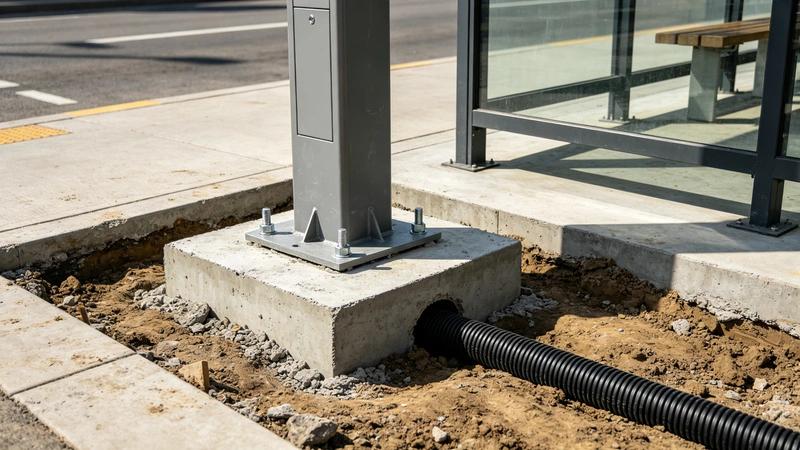
Foundation and Ground Anchoring

The kiosk should be secured to a suitable foundation or structural base. The final base plate, anchor bolts and embedded structure must be designed according to the product dimensions, total weight, local wind condition, ground structure and applicable installation requirements.
Power and Electrical Protection

  • Confirm local voltage and power capacity
  • Reserve protected cable routes in base or ground
  • Grounding, surge protection per local requirements
  • Backup power where uninterrupted info is required
  • AC, solar or hybrid power system decision

Maintenance Planning

  • Reserve access space for rear or side maintenance doors
  • Define responsibility for content, network, cleaning, hardware
  • Regular inspection of vents, filters, locks, seals, cable entries
  • Fault-response and spare-parts procedures for multi-stop projects
Installation guide showing foundation, anchor bolts, cable routing and bus shelter integration for smart bus stop digital signage.
Installation guidance is provided with each project — foundation, anchoring, cabling and shelter integration are confirmed on the drawing.
OEM / ODM for Transit Projects

Custom Smart Bus Stop Solutions for Transit and Smart-City Projects

We support hardware configuration, enclosure customization, network planning and software-integration coordination for bus stop, smart shelter and public-information projects. Share your site conditions, passenger-information requirements, data interface and deployment quantity to receive a project-based recommendation.

Who We Build For

Public transportation operators Bus companies Smart-city system integrators ITS solution providers Municipal project contractors Bus-shelter manufacturers Outdoor media operators DOOH advertising companies Urban-infrastructure suppliers Tourism and public-information operators Commercial property and industrial-park operators

Appearance & Structure Customization

  • Cabinet dimensions and portrait screen size
  • Top route-sign or city-logo area
  • Base plate and anchor-hole layout
  • Bus shelter integration structure
  • Cabinet colour and powder coating
  • Logo, municipal identity and sponsor branding
  • Front or rear maintenance design
  • Glass type and ventilation design
  • Cable-entry position
  • Custom advertising-panel layout

Hardware Customization

High-brightness LCD panel Android or Windows platform CPU, RAM and storage Network module 4G / 5G communication GPS Touchscreen Audio and speaker Camera QR scanner NFC / RFID reader Emergency button Intercom Solar-power system Battery backup Sensors and IoT modules

Software & System Integration

  • CMS integration
  • Transit API integration
  • GTFS / GTFS-Realtime compatibility assessment
  • Passenger-information software
  • Advertising playlist management
  • Emergency-alert publishing
  • Multi-language UI
  • City map and wayfinding interface
  • Remote device monitoring
  • User-permission management
  • Third-party application deployment
  • Custom data display layout
Tested Before Shipment

Quality Control and Delivery Support for Public Infrastructure Projects

Every display is inspected and tested before packaging, with test records available for project review.

Testing & Inspection

  • LCD-panel and image-quality inspection
  • High-brightness display test
  • Touchscreen test, if selected
  • Android or Windows boot test
  • CMS content-playback test
  • API data-display test, where integration is included
  • LAN, Wi-Fi, 4G or 5G connectivity test
  • Speaker and audio-announcement test
  • QR, NFC, camera and peripheral test, where applicable
  • Cooling, heating and temperature-monitoring test
  • Door-lock and maintenance-access test
  • Cabinet sealing and cable-entry inspection
  • Long-duration burn-in test
  • Base, mounting point and mechanical-dimension inspection
  • Packaging and transport-protection inspection

Delivery Process

Confirm site and application requirements
Define display size, brightness and enclosure protection
Confirm passenger-data source and integration method
Select CMS, network and optional interaction modules
Approve cabinet drawing, top signage and branding
Produce a sample or pre-production unit if required
Complete functionality and burn-in testing
Carry out pre-shipment inspection
Provide packing list, drawings and installation guidance
Support remote commissioning and project handover
About Qtenboard

Trusted by Transit Operators, Integrators and Smart-City Contractors

Qtenboard is a China-based manufacturer of digital signage, kiosks, interactive flat panels and LCD video walls, serving B2B customers worldwide as an OEM / ODM partner.

2005
Founded
20+
Years in Global Trade
3
Factories in China
1000+
Skilled Employees
100+
Countries Served

Qtenboard has been the trusted OEM / ODM partner for many well-known international brands, with over 20 years of experience in global trade. Our three factories in China cover a total area of 33,000 m² and employ around 1,000 skilled workers. Today, Qtenboard products are exported to more than 100 countries.

Production capabilities include automated SMT lines, metal fabrication, in-house testing platforms and export packaging — the same factory process used for our digital signage and kiosk product lines supports smart bus stop projects from drawing confirmation to remote commissioning.
  • OEM / ODM project experience for international brands
  • Project photos from bus stops, transit hubs, smart shelters and public-information deployments
  • Certificates: CE, FCC, RoHS, IP-related test reports, etc.
  • Global shipping and after-sales support
  • Based in Longhua District, Shenzhen, China
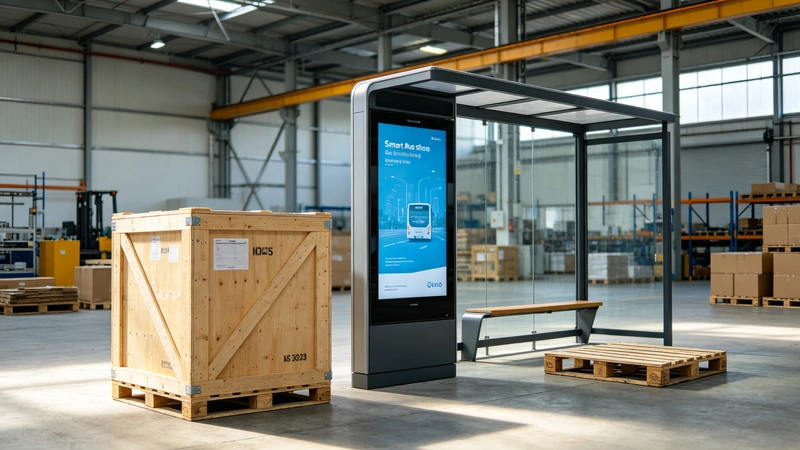
Certification, project reference and export packaging for smart bus stop digital signage kiosk.
Certifications, project references and export packaging — available on request.
Transit Operator

Real-Time Arrival Information Across Multiple Stops

Challenge: a transit operator needed to replace paper timetables and keep passengers informed about delays and route changes across dozens of stops.

Solution: API-integrated portrait displays with ETA, vehicle-status and alert zones, grouped and published from one CMS.

  • Remote content publishing for all stops
  • Delay and route-change notification
  • Advertising slots on the same screen

Representative project scenario — full case references are shared under NDA after requirements are confirmed.

Municipality / Smart City

Multi-Stop Public Information Network

Challenge: a municipality managed scattered legacy signs with no remote management or unified design.

Solution: 4G-connected, CMS-managed bus stop displays with device monitoring, emergency-alert publishing and city branding.

  • One dashboard for the whole network
  • Emergency and weather alert publishing
  • Fewer field visits with remote monitoring

Representative project scenario — full case references are shared under NDA after requirements are confirmed.

Shelter / Media Operator

Advertising and Passenger Wayfinding Kiosk

Challenge: a shelter and outdoor-media operator wanted to monetize shelter space while improving passenger guidance.

Solution: split-screen displays combining stop information with digital advertising, with optional touch, solar power and QR services.

  • New DOOH advertising inventory
  • Passenger info and ads in one screen
  • Optional solar and interactive modules

Representative project scenario — full case references are shared under NDA after requirements are confirmed.

B2B support from configuration to commissioning: we support smart bus stop projects from configuration and drawing confirmation to production, testing, export packaging and remote commissioning. Share your project requirements and our team will recommend a suitable outdoor display and integration approach.
Compliance, Terms & Support

Certification, Order Terms and After-Sales Support

Certification scope and commercial terms are confirmed with each project — the tables below show what is typically included.

CE FCC RoHS IP IK OEM ODM

Certification & Compliance

  • CE / FCC / RoHS options
  • IP-rated enclosure test report, where applicable
  • IK rating and safety glass certificate, project-specific
  • Local electrical and safety compliance to be confirmed
  • Payment terminal certification to be reviewed separately
  • Transit data privacy and public-information compliance to be confirmed

Order Terms

  • MOQ: sample order and batch order support
  • Lead time: depends on configuration, quantity and customization
  • Payment terms: T/T, LC or project-specific terms
  • Packaging: export wooden case or customized packaging
  • Shipping: sea, air or express according to project schedule
  • Warranty: standard warranty and extended warranty options
  • Spare parts: recommended spare-parts list for long-term deployment

After-Sales Support

  • Remote technical support
  • Installation guidance and commissioning support
  • CMS and transit-data integration coordination
  • Replacement parts supply
  • Batch-order and repeat-order support
  • Multi-stop maintenance planning support
Common Questions

Frequently Asked Questions

What is smart bus stop digital signage?
Smart bus stop digital signage is an outdoor display system used at bus stops, shelters and transit areas. It can publish bus schedules, real-time arrival information, route updates, public announcements, digital advertising and other passenger-facing content.
Can this bus stop display show real-time bus arrival information?
Yes, when it is connected to a compatible transit-management platform, cloud system or customer-provided API. Real-time arrival information depends on the availability, quality and format of the transportation data source.
Does the display support GTFS or GTFS-Realtime?
GTFS or GTFS-Realtime integration can be evaluated as part of the software project. Please provide the available data feed, API documentation, update frequency and required display format for compatibility review.
Can the screen also show advertising?
Yes. The display can divide screen space between passenger information, commercial advertising, city announcements and other content. Emergency and essential transit information can be prioritized according to the operator's content policy.
Is the smart bus stop display suitable for outdoor use?
The system is designed for outdoor or semi-outdoor deployment. The final protection level, brightness, glass type, thermal design and corrosion treatment should be selected based on weather exposure and the installation environment.
Can it be installed inside a bus shelter?
Yes. The device can be supplied as a freestanding unit or configured for integration with a bus-shelter structure. Please provide shelter dimensions, available power, network condition, mounting position and maintenance-access requirements.
Can the unit be powered by solar energy?
Solar power and battery-backup options may be available for sites without stable grid power. Feasibility depends on local solar conditions, display brightness, operating hours, power consumption and required data connectivity.
Can the bus stop display play audio announcements?
A built-in speaker and audio-announcement function may be available. Confirm the required languages, sound level, noise conditions, operation times and local public-noise rules before finalizing the configuration.
Can I add touch, QR code, NFC or a camera?
Yes. These modules may be integrated for route lookup, mobile-service access, passenger interaction, visitor services or other smart-city functions. Software integration, enclosure protection, privacy requirements and local regulations should be reviewed first.
Does the kiosk need a concrete foundation?
For permanent outdoor installation, a suitable foundation or structural base is normally required. The base design and anchoring method should be confirmed from the kiosk dimensions, weight, wind exposure, ground structure and local rules.
How can multiple bus-stop screens be managed?
A centralized CMS and device-management platform can group and monitor displays across multiple stops. Operators can remotely schedule advertisements, update public notices, publish alerts and monitor device connectivity.
What is needed for a quotation?
Please provide the screen size, quantity, installation location, city or country, weather conditions, brightness requirement, IP requirement, operating-temperature range, data-integration requirement, CMS requirement, network method, power source, interaction modules, branding details and target delivery date.

Configuration note: The images shown are for reference only. Final screen size, operating system, top signage, audio, camera, solar power and transit-data integration should be confirmed per project.

Real-time data note: Real-time passenger information requires integration with a compatible transit platform, API, GTFS/GTFS-Realtime feed or customer-provided data source. The display hardware alone does not generate real-time bus data.

Qtenboard · Longhua District, Shenzhen, China · info@qtenboard.com · +86 181 2471 3748
Send message:

Products