Walk through any retail floor, hotel lobby, or transit hall in Europe, North America, or Southeast Asia, and you will see rows of identical white payment terminals. For B2B distributors and channel partners, this is a structural problem: you cannot build brand equity, command premium pricing, or create customer loyalty on hardware that looks exactly like your competitor's.
A custom payment kiosk program solves this. By controlling housing color, brand logo placement, and enclosure tooling, you turn a commodity terminal into a branded asset that customers recognize and request by name. This guide covers the three customization tiers available to OEM payment terminal buyers, including Qtenboard's firmware-level branding capability that pure enclosure manufacturers cannot match.
Before comparing processes and costs, you need a single reference point. The table below maps every customization option available on a custom payment kiosk, organized by tier, with realistic MOQ, lead time, and cost expectations based on Qtenboard's production parameters. Industry benchmarks for OEM kiosk projects typically start at 50 units MOQ with 7–15 day sampling and 3–5 week mass production timelines.
| Customization Tier | What Changes | Process Options | MOQ | Sampling Time | Production Time |
|---|---|---|---|---|---|
| Level 1 — Housing Color | Shell color, surface finish, two-tone | Pantone matching, matte/gloss/frosted/sandblasted, ABS spray vs metal baking varnish | 50–100 units | 7–10 days | 25–35 days |
| Level 2 — Physical Logo | Silkscreen, pad printing, laser engraving, UV printing, metal nameplate | Per process limitations on min. font size, color count, abrasion resistance | 50–100 units | 7–10 days | 25–35 days |
| Level 2+ — Digital Logo (Qtenboard Exclusive) | Boot logo, boot animation, system UI theme, idle screensaver, receipt header logo | Firmware-level customization on self-developed motherboard — no third-party authorization fee | 1 unit for software-level OEM | 3–5 days | Same as base unit |
| Level 3 — Mold & Tooling | Enclosure structure, dimensions, port positions, thermal design, screen ratio, mounting structure | Non-standard structural design, reader/scanner/printer cutouts, wall-mount/floor-stand/desktop | 500–1,000 units | 15–20 days | 25–35 days |
Qtenboard's four-tier OEM/ODM model ranges from zero-MOQ software branding to full private mold development, with software-level customization at 1-unit MOQ and no mold fee. This structure means you can start with digital branding today and scale into housing and mold customization as order volume grows. Full technical specifications are available in the Qtenboard product catalogue.
Color is the fastest, lowest-risk way to differentiate your terminal. It requires no tooling investment, does not affect certification, and can be executed within the standard production cycle.
Qtenboard supports full Pantone code matching for custom payment kiosk housing. You provide the color reference, we produce a physical sample for approval before mass production. Surface finish options include matte, gloss, frosted, and sandblasted textures.
The choice of coating technology matters for different deployment environments:
| Coating Type | Abrasion Resistance | Outdoor Durability | Best For |
|---|---|---|---|
| ABS spray coating | Moderate | Indoor only | Retail self-checkout, QSR ordering |
| Metal baking varnish | High | Semi-outdoor | Hotel lobbies, parking terminals |
| Anodizing (aluminum) | Very high | Full outdoor | Transit stations, government service points |
For brands operating across multiple locations, two-tone and gradient color schemes can align the kiosk with your store interior and corporate VI. Qtenboard's payment self-ordering ticketing kiosk supports OEM/ODM housing customization with daily output of 200 units and 330,000 m² production facilities in Shenzhen and Guangzhou.
This is the tier where most OEM buyers find their real competitive advantage. But payment kiosk logo customization means two fundamentally different things depending on whether you are modifying the physical shell or the software interface. Understanding this distinction is critical for writing accurate specifications and avoiding miscommunication with your factory.
Physical branding puts your logo on the enclosure surface. Five processes are available, each with different trade-offs:
For a detailed comparison of how payment method selection affects terminal hardware design, see our payment kiosk payment methods guide covering cash, card, NFC, and QR configurations.
Digital branding is where Qtenboard fundamentally differs from enclosure-only manufacturers. Our self-developed motherboard supports firmware-level customization of the entire screen experience:
Digital branding at the firmware level carries no additional licensing fee, because the motherboard is Qtenboard's own design. Software-level OEM customization starts at 1-unit MOQ with no mold fee, making it accessible for pilot deployments before you commit to hardware volumes. For system integrators evaluating how branding integrates with back-end POS and ERP systems, our payment kiosk system integration guide covers API docking and joint debugging requirements.
When standard housing dimensions do not fit your deployment scenario, tooling customization gives you full control over the physical form factor. This is the highest-investment tier, but it creates hardware that no competitor can replicate.
Tooling investment and MOQ vary by structural complexity. The table below provides benchmark ranges for OEM custom payment kiosk projects:
| Parameter | Typical Range | Notes |
|---|---|---|
| MOQ | 500–1,000 units | Depends on mold complexity; higher volumes amortize tooling cost |
| Tooling cost | Quoted per structural complexity | Simple modifications lower; full enclosure redesign higher |
| Sampling | 15–20 days | Includes 3D rendering, structural drawing, and physical sample |
| Mass production | 25–35 days after sample approval | Includes full inspection and functional testing |
| Mold ownership | Negotiable | Customer-owned or shared arrangements available |
For buyers navigating compliance requirements alongside tooling decisions, our PCI DSS compliance guide explains how enclosure changes interact with payment certification scope. The Payment Kiosk Ultimate Guide 2026 provides a complete procurement roadmap covering module selection, compliance, and deployment planning.
The following case studies illustrate how OEM buyers in different markets have applied housing, logo, and tooling customization to solve specific deployment challenges.
A US-based QSR chain operating 120 locations needed to replace third-party ordering tablets with branded self-service terminals. The challenge was uniformity: every store had different tablet stands, and customers could not associate the ordering experience with the brand.
Qtenboard applied matte black housing with the chain's Pantone red accent bezel (Level 1), silkscreen logos on the front panel (Level 2), and custom boot animation with the brand's mascot sequence (Level 2+). The boot animation runs on every terminal startup, reinforcing brand identity at the point of order.
A German parking operator required semi-outdoor payment terminals for surface parking lots. Standard enclosures failed IP-rating requirements for rain exposure, and the existing reader position caused reachability issues for drivers in vehicles.
Qtenboard designed a custom enclosure with IP54-rated sealing, repositioned the EMV and NFC readers to driver-window height, and integrated a larger sun-shade canopy over the 21.5-inch touchscreen. The aluminum housing uses anodized surface treatment for UV and abrasion resistance.
An Australian retail chain wanted to launch its own branded self-checkout kiosk without the visibility of a third-party hardware brand. The terminal needed to match existing store fixtures in a specific wood-grain and grey color scheme.
Qtenboard produced custom housing in the retailer's exact Pantone colors, applied laser-engraved metal nameplates with the chain's logo, and customized the system UI theme to match the retailer's app design language. The receipt header was modified to include the chain's loyalty program call-to-action.
A Philippine system integrator bidding on a municipal utility bill payment project needed terminals that could handle cash, card, and QR payments (supporting the QRPH standard) in semi-outdoor community centers. The government tender required a customized enclosure with tamper-evident features and a specific blue-and-white color scheme matching the municipal logo.
Qtenboard provided custom tooling for a reinforced enclosure with integrated cash recycler, powder-coated housing in the required Pantone colors, and silkscreen municipal branding. The terminal runs a customized boot sequence displaying the city seal. The deployment in the Philippines aligns with the country's broader push toward financial inclusion, where 4,100+ 7-Eleven CLiQQ kiosks already accept Meralco bills, demonstrating proven demand for self-service utility payment infrastructure.
This is the question that stalls more OEM deals than any other. Integration buyers need to know: does customizing the housing or logo invalidate our payment certification?
The answer depends on which tier of customization you are applying:
| Customization Type | Certification Impact | Responsibility |
|---|---|---|
| Housing color change | No impact on EMV, PCI PTS, or PCI DSS | No action required |
| Silkscreen / laser logo | No impact — surface treatment only | No action required |
| Boot logo / UI theme | No impact — firmware layer separate from payment kernel | Qtenboard provides customization |
| Mold / tooling changes | Requires assessment if reader position or antenna layout changes | Joint assessment; Qtenboard provides compliance support |
PCI PTS certification is device-level and applies to the payment module, not the surrounding enclosure. EMV L1 certifies physical and electrical characteristics of the card interface; EMV L2 certifies the payment application kernel. Neither is affected by changing the color of the plastic shell around the module.
The current mandate is PCI DSS v4.0, effective 31 March 2024, with full enforcement from 31 March 2025. Any supplier still citing v3.2.1 as current is effectively non-compliant. Qtenboard provides compliance documentation for all customization projects.
The table below reflects Qtenboard's standard OEM customization workflow, with realistic timeframes for each stage:
Overall OEM customization project timelines typically run 6–10 weeks from requirement confirmation to delivery, depending on customization level and order quantity. For buyers who need to align kiosk branding with back-end reporting systems, our system integration guide covers POS and ERP docking requirements that may affect deployment scheduling.
Qtenboard's OEM payment terminal customization services serve five primary B2B buyer segments, each with distinct branding priorities:
The global self-service kiosk market was valued at USD 39.4 billion in 2024 and is projected to reach USD 82.1 billion by 2031, growing at a CAGR of 11.1%. Unattended POS terminals are expanding at 15.4% CAGR, making them one of the fastest-growing transaction sub-segments. For OEM buyers, this growth means the window for establishing a branded terminal presence is open now.
Send us your logo file and color reference. We will produce a free 3D rendering within 48 hours showing exactly how your branded payment kiosk will look.
Contact UsThree ways to start your custom payment kiosk project:
For a complete overview of payment kiosk hardware capabilities and deployment planning, visit our payment self-ordering ticketing kiosk product page. For the foundational definition of custom payment kiosk architecture and business models, see our payment kiosk definition guide. For cash vs. cashless configuration decisions that affect hardware design, our cash vs. cashless technical selection guide covers the full comparison.
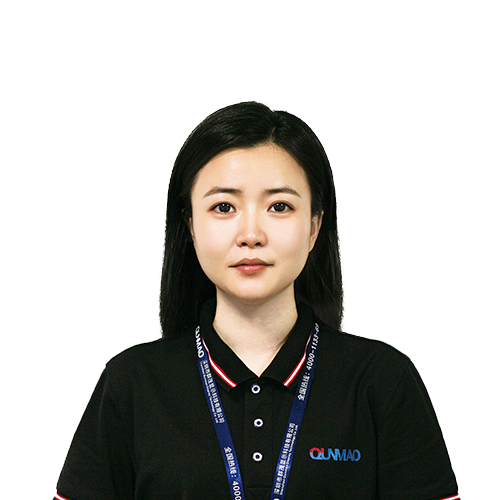
CEO | Interactive Display & Collaboration Solution Expert
I am the founder of Qtenboard, bringing over 17 years of hands-on expertise to the touch display industry. Drawing on the global management perspective gained through my EMBA studies at ShenZhen University, I lead my team in optimizing every stage of our operations—from product definition to high-efficiency supply chain management—ensuring our manufacturing capabilities remain at the forefront of the industry.
As the leader of Qtenboard, I specialize in providing tailored OEM/ODM solutions for interactive whiteboards, LCD video walls, digital signage, and industrial-grade touch terminals. Backed by our 330,000 m² modern industrial park in Shenzhen, we maintain full-lifecycle control over industrial design, precision manufacturing, and rigorous performance testing.
With nearly two decades of project experience, Qtenboard’s display solutions are now deployed in over 120 countries and regions, earned the trust of more than 15,000 enterprise customers worldwide. If you are seeking a responsive partner with a deep manufacturing foundation for your customized touch display projects, my team and I are ready to support your vision with professional excellence.
 ukr
ukr
 EN
EN  pt
pt  spa
spa  th
th  vie
vie  aze
aze  bel
bel  est
est  lav
lav  ru
ru