
















A customizable indoor self-service kiosk with 1D/2D barcode scanning, QR code reading, touchscreen interaction and optional payment peripherals. Available in wall-mounted and floor-standing configurations for retail, restaurants, hospitality, ticketing and access-control projects.


This barcode and QR code scanning kiosk is a working self-service terminal, not a screen that only displays a QR code. Its core job is to scan codes from the customer's phone or paper ticket and complete the self-service step: ordering, payment, check-in, ticket validation, membership recognition, visitor registration, access verification or information lookup.


Because a 2D imaging scanner reads most common barcodes as well as QR codes, this product is positioned as a QR code scanner kiosk and barcode scanning kiosk — not a QR code display kiosk. Confirm the scanner module and supported code types for your project at configuration stage.
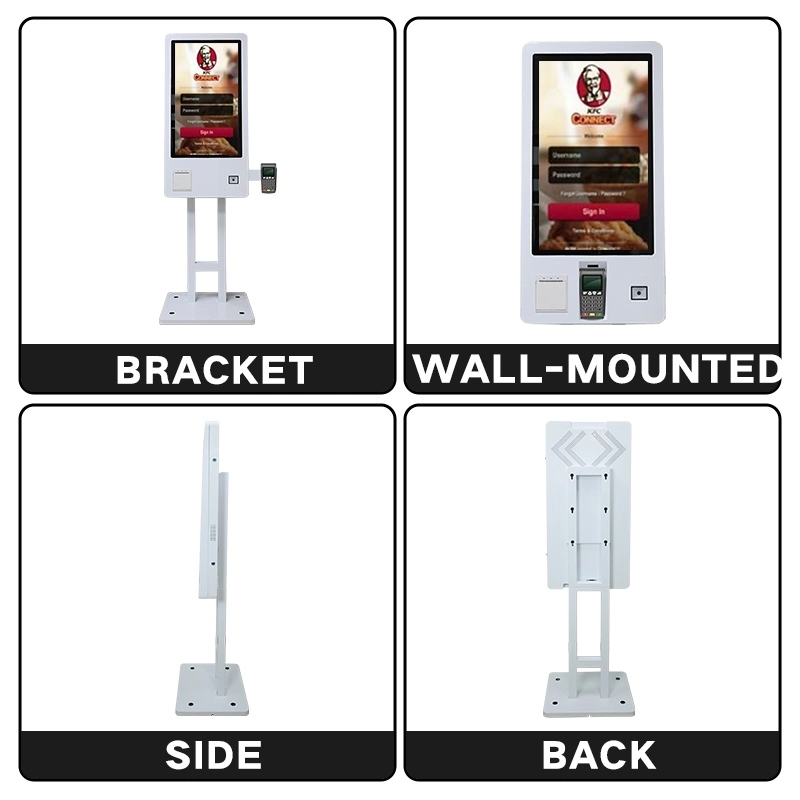
The same scanning, touchscreen and peripheral platform is available as a wall-mounted kiosk for fixed service points or a floor-standing barcode kiosk with bracket and base for flexible indoor placement. This is the key configuration decision for most projects — select before hardware and cabling are finalized.

The wall-mounted configuration is ideal for locations where floor space is limited or where the kiosk must stay in a fixed position. It provides a clean installation for check-in, QR code validation, access control, payment and ordering applications.

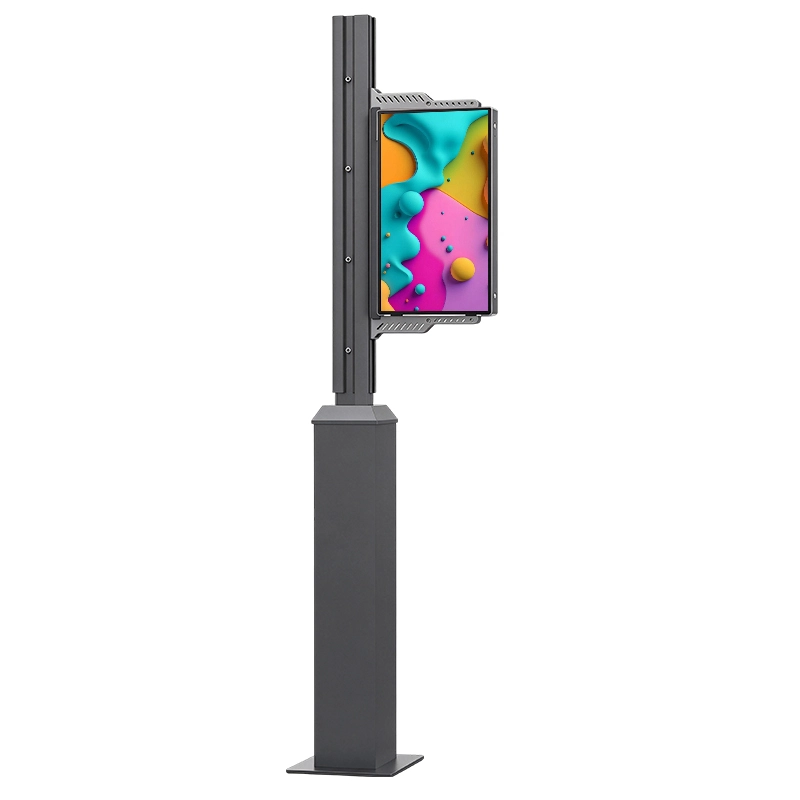
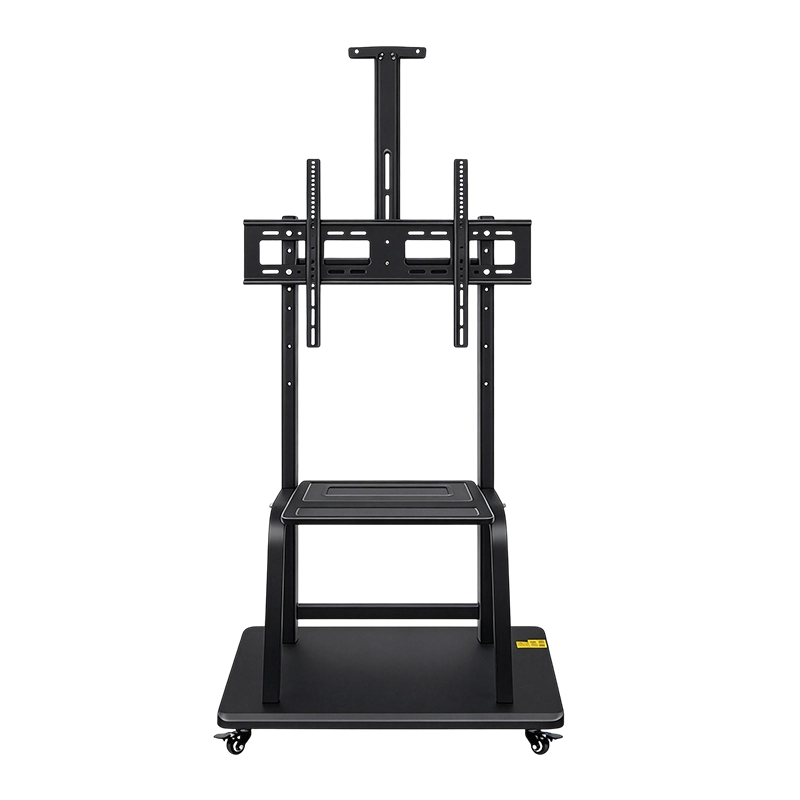
The floor-standing configuration combines the kiosk terminal with a stable support bracket and base. It can be placed in entrances, open corridors, event areas and other indoor locations where flexible positioning matters.
Wall mounting plate with concealed cable routing behind the kiosk housing.
Floor-standing bracket with weighted base and internal cable management.
| Comparison | Wall-Mounted Kiosk | Floor-Standing Kiosk |
|---|---|---|
| Installation | Fixed mounting on a wall | Mounted on bracket and base |
| Space footprint | Minimal — wall space only | Requires floor area |
| Mobility | Low — fixed position | High — relocatable |
| Best for | Fixed check-in, access control, payment points | Stores, restaurants, hotels, events, exhibitions |
| Installation work | Wall mounting required | Usually no wall work |
| Visual effect | Clean, integrated with interior | Standalone, guides traffic |
| Recommended for | System integrators, fixed venues | Retailers, restaurants, event projects |
| Cable management | In-wall routing | Internal bracket or base routing |
| Maintenance | Service from wall position | Front or rear access panels |
The integrated scanner is designed to read supported 1D barcodes and 2D codes from printed materials or mobile phone screens. Scanner model, interface and decoding performance are selected according to the application and confirmed at project stage.
| Scanner Parameter | Configuration |
|---|---|
| Scanning type | 1D / 2D imaging scanner |
| Scan source | Printed code / mobile phone screen |
| Scan distance | Confirmed with the selected module |
| Scanning window size | Confirmed with the housing design |
| Interface | USB / RS232 / UART |
| Supported code types | Per selected scanner specification |
| Scan indicator | LED / sound feedback |
| Low-light performance | Confirmed with the selected module |
| Payment QR support | Requires payment platform and software integration |


The scanner reads what the selected module supports. If the project requires specific symbologies, long scan distance or reading codes from glossy phone screens, share the code samples at configuration stage so the right barcode scanner or QR code scanner module is selected.

The touchscreen displays the operation flow, scan result, menu, order, payment page and confirmation message. The UI can be branded and tailored to your workflow, on web, Android or Windows software.
Touch technology (non-touch / PCAP / infrared), brightness and panel grade are confirmed at configuration. Standard commercial brightness ranges from ≥300 to ≥500 cd/m².
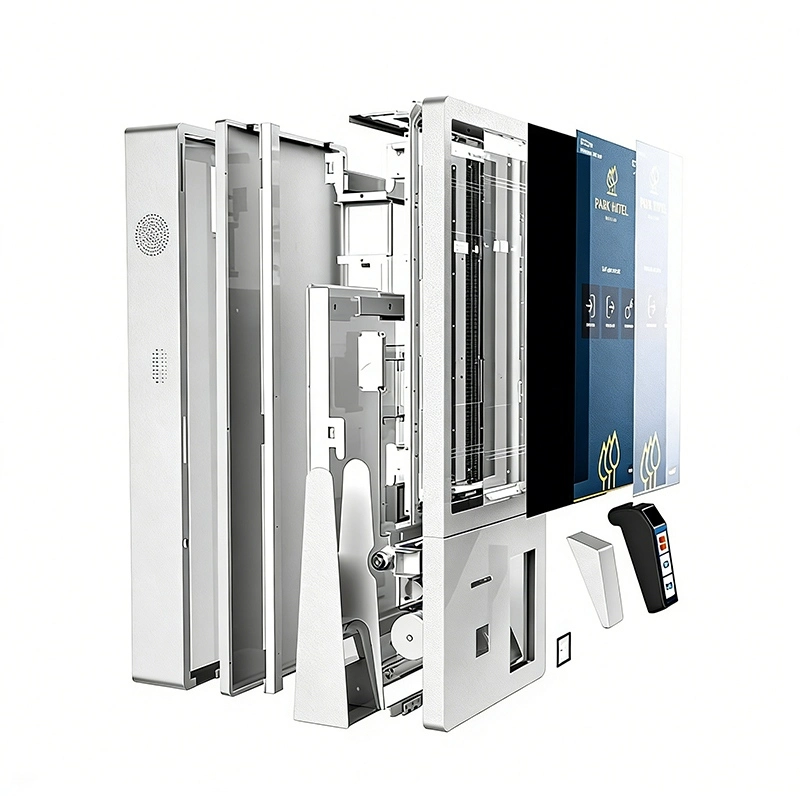
The kiosk platform reserves standard mounting space for payment, printing and identification modules, so the final machine is configured around the application rather than built as a fixed product.
Depending on the project, the QR kiosk can be equipped with:
Payment functionality depends on the selected payment terminal, certification requirements, payment provider and software integration. Confirm the required payment solution for your market before ordering.
An optional thermal printer outputs:
Printer type (thermal receipt or ticket printer), paper width and cutter options are selected at configuration.

The self-service scanning kiosk connects to the systems already running in your venue — POS, ordering, ticketing, membership, access control or a customer-developed platform — subject to interface and compatibility confirmation.
The kiosk can be integrated with third-party software, POS platforms, ticketing systems, access-control systems or customer-developed applications, subject to interface and compatibility confirmation. Interface protocols, SDK, USB, RS232 and network APIs are agreed in the early project phase; software debugging, payment onboarding and access-control integration require cooperation from the customer's backend team.
Every column of this table is a decision point for your barcode kiosk or QR code scanner kiosk project. Standard profiles exist; everything below can be customized for bulk and OEM orders.
| Configuration Item | Available Options |
|---|---|
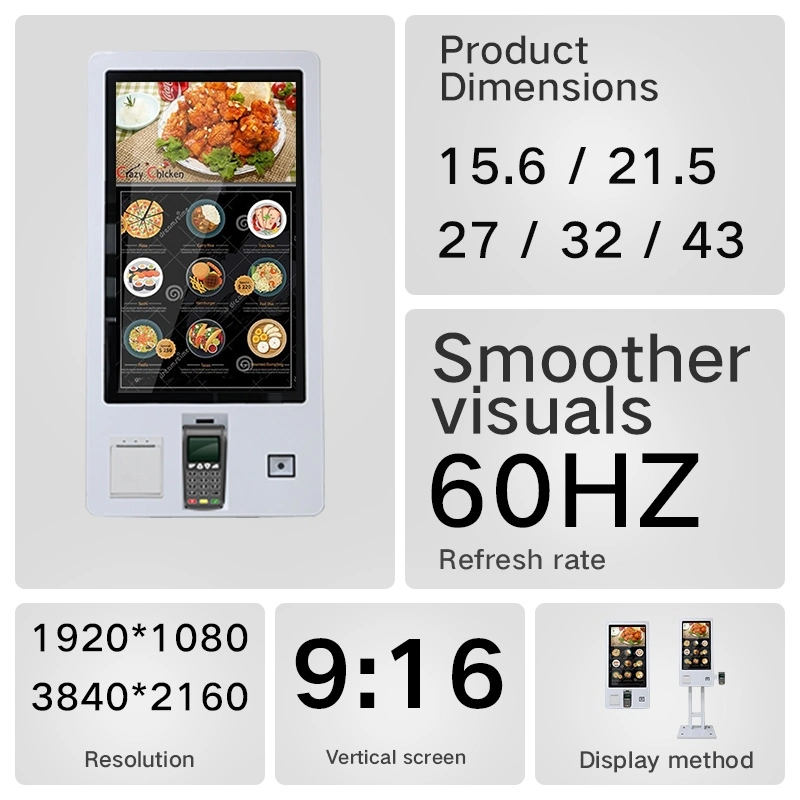
| Display size | 15.6" / 21.5" / 23.8" / 27" or customized |
| Resolution | 1920×1080 (FHD); 3840×2160 (4K UHD optional) |
| Brightness | ≥300 / 400 / 500 cd/m² |
| Display orientation | Portrait or landscape |
| Touchscreen | Non-touch / PCAP capacitive / infrared |
| Scanner | 1D barcode scanner / 2D barcode scanner / QR code scanner |
| Operating system | Android 11/13/14/16 · Windows 10/11 Pro · customized |
| Processor | Rockchip RK3566/RK3576/RK3588 · Intel i5/i7 options |
| Memory / storage | 2/4/8GB RAM · 16/32/64/128GB ROM |
| Network | Wi-Fi · Ethernet · 4G (optional) |
| Configuration Item | Available Options |
|---|---|
| Payment | Card reader · NFC · RFID · QR payment module |
| Printer | Thermal receipt printer / ticket printer |
| Camera | Optional front camera module |
| Audio | Built-in speaker / optional audio output |
| Installation | Wall-mounted or floor-standing |
| Housing | Aluminum / SPCC steel · standard or custom color |
| Protection | 3mm tempered glass · lockable service door options |
| Branding | Logo · boot animation · UI · label · packaging |
| Software | Customer software / third-party platform / custom app |
| Certification | CE / FCC / RoHS / PSE / UL optional · ISO 9001 / 14001 factory |

Certification options and project documentation can be discussed according to destination-market and project requirements. Additional options include 120Hz panels, 10-bit color, Wi-Fi 6, 4G/5G modules, card readers, RFID and NFC.
Click to download or view the full specification sheet (PDF).
The customer chooses ordering, check-in, payment, ticketing, validation or inquiry on the touchscreen.
The built-in scanner reads a barcode or QR code from a phone screen, paper ticket, membership card or order voucher.
Payment, identity check, order submission, ticket validation, access authorization or inquiry completes per your configuration.
The result shows on screen and can be printed as a receipt, ticket or voucher.

One scanning kiosk platform, configured per venue. The six deployment families below cover the majority of self-service scanning projects.

Self-ordering, membership QR recognition, coupon validation, QR payment, order confirmation and receipt printing for restaurants, fast food, cafes and food courts. Ordering usually connects to the POS, kitchen display or printing system.

Product barcode scanning, price and stock lookup, membership points recognition, coupon validation and self-checkout front-end operations for stores, malls and supermarkets.

E-ticket QR validation, barcode ticket recognition, on-site check-in, ticket voiding, entry voucher printing and event information display for exhibitions, cinemas, scenic areas and stadiums.

Self check-in, reservation confirmation, member recognition, QR access, service requests, event check-in and bill inquiry with payment for hotels, resorts, conference centers and serviced apartments.

Appointment check-in, patient QR recognition, visit-flow confirmation, queue number printing and self-payment for hospitals, clinics and pharmacies. Healthcare projects require separate hardware and software confirmation per the customer's security and data requirements.

Visitor QR validation, appointment check-in, employee QR recognition, temporary pass verification and visitor voucher printing for offices, campuses, schools and member venues. Controlling gates, doors or turnstiles requires integration with the customer's access system and interfaces.
Whether you need a compact wall-mounted QR kiosk for a fixed service point or a branded floor-standing barcode kiosk for retail and events, Qtenboard configures the hardware, peripherals and software interface around your application.


Every barcode kiosk and QR code scanner kiosk passes production-line testing before shipment, including a 48-hour aging and reliability run to verify stable 24/7 operation.

The final test procedure is adjusted according to the selected scanner, payment terminal, printer, operating system and software platform. Scanner, payment terminal and printer alone do not decide total product capability — actual function also depends on software, interface protocols, certifications and the customer's backend system.


48-hour aging test before shipment · packing and shipping inspection for every unit.
Qtenboard operates dual manufacturing hubs in Shenzhen and Guangzhou with automated production lines and a daily output capacity of up to 300 units, supplying system integrators, distributors and project contractors in 100+ countries. Certification options and project documentation can be discussed according to destination-market and project requirements.
Typical project types Qtenboard supports with system integrators, distributors and end customers across 100+ countries. Project references and documentation are available for qualified projects.
Wall-mounted QR ordering kiosks at counter lines and floor-standing units at entrance zones, connected to the chain's POS and kitchen display system.
Check-in and e-ticket validation kiosks at registration zones for conferences, exhibitions and entertainment venues.
Product barcode inquiry and self-checkout front-end kiosks inside stores, linked to the retailer's product database and inventory system.
Hotel self check-in and visitor access terminals integrated with the property management or access-control system.
A QR code scanner kiosk is a self-service terminal equipped with a QR code scanner. It allows users to scan codes from mobile phones or printed materials for ordering, payment, ticket validation, check-in, access control, membership identification or information retrieval.
Yes. The kiosk can be configured with a scanner that supports compatible 1D barcodes and 2D QR codes. The supported code types depend on the selected scanner module — confirm the required symbologies for your project.
Yes. The product can be supplied as a wall-mounted kiosk for fixed installation points where floor space is limited, such as check-in, access control and payment counters.
Yes. The floor-standing version uses a support bracket and base, making it suitable for retail stores, restaurants, hotels, exhibitions, event areas and open public spaces.
A suitable 2D scanner can be selected for reading QR codes displayed on mobile phones. Please confirm the required screen-scanning distance, code size and application environment before final configuration.
The kiosk may support QR payment through an integrated QR scanner or payment terminal. Payment availability depends on the payment provider, software integration, local regulations and required certifications.
Yes. Card readers, NFC/RFID readers and other payment peripherals can be integrated according to the project requirements and market certifications.
Yes. A thermal printer or ticket printer can be added for receipts, queue numbers, tickets, visitor badges or order confirmations.
The kiosk can be configured with Android, Windows or another suitable platform. Customer software and third-party applications should be checked for operating-system, interface and peripheral compatibility before ordering.
Yes. Customization may include the housing, color, logo, scanner position, payment-terminal position, startup screen, user interface, packaging and other project details, including CKD/SKD supply for local assembly.
The shown configuration is intended for indoor environments. If the project requires outdoor deployment, the enclosure, brightness, temperature range, waterproofing, vandal resistance and other specifications must be redesigned and confirmed separately.
As a kiosk manufacturer since 2005, Qtenboard provides a dedicated account manager, technical consultation, sample testing, budget and proposal assistance, a 1–3 year warranty, spare parts support, remote technical assistance and a multilingual sales team. MOQ, lead time and sample policy are confirmed at quotation according to configuration and order volume.

 EN
EN
 pt
pt  spa
spa  th
th  vie
vie  aze
aze  bel
bel  est
est  lav
lav  ukr
ukr  ru
ru