Quick‑service restaurants (QSR) are facing unprecedented pressure: peak‑hour queues drive customers away, labour costs continue to climb, and customer satisfaction scores are declining. In 2025, the global fast food self service kiosk market is projected to exceed USD 39 billion, yet many chains still rely on outdated manual ordering workflows that choke profitability.
To combat these challenges, QSR brands are rapidly adopting QSR ordering kiosk solutions. This shift is part of a broader global self‑service kiosk market growth that is redefining customer experience and operational efficiency. Self‑order terminals are no longer a novelty—they are becoming the new standard for modern fast‑food stores.
A fast food self service kiosk is an intelligent, unattended ordering terminal purpose‑built for quick‑service environments. Unlike generic tablets, it is engineered to handle high‑volume, rapid transactions with minimal user friction.
Standard tablets or all‑in‑one PCs lack the ruggedness and software depth required for QSR. A purpose‑built restaurant self service terminal features modular kiosk design for easy maintenance, splash‑proof enclosures, and an interface optimised for speed—not browsing.
Deploying self‑order kiosks reduces queue length by 20‑25%, significantly cutting abandonment rates. During lunch rushes, a single kiosk can process 40‑50 orders per hour, freeing staff to focus on food preparation and customer service.
Menus, combo deals, and prices can be updated in real‑time across all locations. This agility enables location‑based offers, seasonal specials, and A/B testing of promotions without IT delays.
This is the critical differentiator for QSR. Orders flow directly from the kiosk to the kitchen display system (KDS), with automatic routing to the appropriate station (grill, fry, beverage). Error‑prone handwritten tickets are eliminated, and order accuracy improves dramatically.
Self‑ordering reduces miscommunication errors to less than 1%. Simultaneously, the interactive interface suggests add‑ons and upgrades—boosting average ticket size by 15‑20%. Choosing the right touch screen is essential; learn more about capacitive vs resistive touch screen for QSR kiosks to ensure durability and responsiveness.
| Metric | Manual Ordering | Fast Food Self Service Kiosk |
|---|---|---|
| Staff per shift | 2‑4 cashiers | 1 guide |
| Peak capacity | Limited by counters | Scalable with additional terminals |
| Order error rate | 5‑10% | <1% |
| Average check | Baseline | +15‑20% |
| Table turnover | Baseline | +20‑25% |
| Initial investment | Ongoing labour cost | One‑time hardware + SaaS |
In‑store kiosks allow guests to browse the menu, customise toppings, and pay without queuing. Coupled with a pickup‑number system, they streamline the entire dine‑in journey.
Semi‑outdoor drive‑thru kiosks require high‑brightness displays (anti‑glare), wide operating temperatures (-20°C to +60°C), and IP65 ingress protection. For detailed guidance, see our indoor vs semi‑outdoor kiosk deployment guide.
In shared food courts, restaurant self service terminal units must support multi‑brand ordering or be customised for a single brand, depending on the lease agreement. Space‑saving pedestal designs are popular here.
Centralised cloud management enables consistent branding, menu updates, and performance monitoring across hundreds of stores. This is critical for franchise systems where operational uniformity drives customer trust.
Brand: Burger Express – a regional burger chain with 22 locations in the New York metropolitan area.
Challenge: Peak lunch queues averaged 8‑12 minutes, causing 18% of customers to leave without ordering. Labour turnover exceeded 70% annually, and order accuracy was only 91%.
After evaluating multiple vendors, Burger Express chose a QSR ordering kiosk solution with 4 terminals per high‑volume store. Key specifications included:
Installation was completed over two weekends, with staff training conducted via video tutorials.
These results align with industry retail self‑service kiosk ROI benchmarks, confirming that well‑planned deployments deliver strong returns.
Ensure the kiosk supports major POS brands (Oracle/Micros, Toast, Square) and KDS protocols (Epson, Boca). Check API openness for custom integrations.
Look for a platform that supports loyalty programs, coupon integration, and future add‑ons like facial recognition or voice ordering.
Global warranty coverage, spare parts availability, and responsive technical support are non‑negotiable. For detailed hardware specs, explore the QSR kiosk hardware specifications & customization page.
The fast food self service kiosk is far more than a checkout device—it is a strategic asset that reduces costs, improves accuracy, and drives incremental revenue. As AI recommendation engines and voice‑assisted ordering emerge, the future of QSR will be increasingly autonomous.
Whether you are a franchise owner or a multi‑location brand, a well‑chosen QSR ordering kiosk can transform your operations. Take the next step by exploring our resources or contacting our team.
Explore more insights in our self‑service kiosk resource hub.
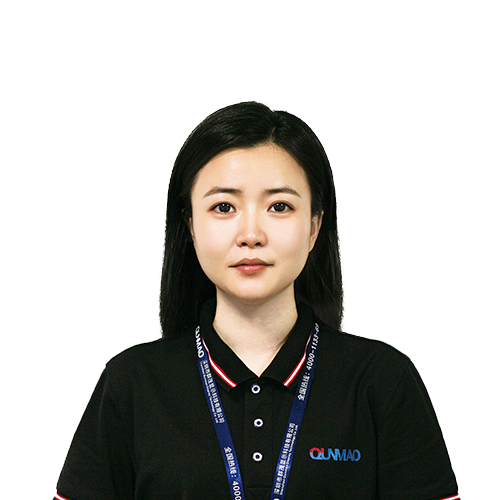
CEO | Interactive Display & Collaboration Solution Expert
I am the founder of Qtenboard, bringing over 17 years of hands-on expertise to the touch display industry. Drawing on the global management perspective gained through my EMBA studies at ShenZhen University, I lead my team in optimizing every stage of our operations—from product definition to high-efficiency supply chain management—ensuring our manufacturing capabilities remain at the forefront of the industry.
As the leader of Qtenboard, I specialize in providing tailored OEM/ODM solutions for interactive whiteboards, LCD video walls, digital signage, and industrial-grade touch terminals. Backed by our 330,000 m² modern industrial park in Shenzhen, we maintain full-lifecycle control over industrial design, precision manufacturing, and rigorous performance testing.
With nearly two decades of project experience, Qtenboard’s display solutions are now deployed in over 120 countries and regions, earned the trust of more than 15,000 enterprise customers worldwide. If you are seeking a responsive partner with a deep manufacturing foundation for your customized touch display projects, my team and I are ready to support your vision with professional excellence.

 EN
EN
 pt
pt  spa
spa  th
th  vie
vie  aze
aze  bel
bel  est
est  lav
lav  ukr
ukr  ru
ru