
 ukr
ukr
 EN
EN  pt
pt  spa
spa  th
th  vie
vie  aze
aze  bel
bel  est
est  lav
lav  ru
ru Most interactive whiteboard buyers only find out how a factory really works after something goes wrong — a batch of motherboards overheating in a hot classroom, a six-week wait for a replacement touch frame, or a "custom" unit that turns out to be a re-badged off-the-shelf model. This guide walks through what actually happens inside a factory that manufactures interactive whiteboards, so you know what to check before signing an OEM/ODM contract. It's part of our broader factory manufacturing overview, focused specifically on interactive whiteboard production.
Production Capacity — Can the Factory Scale With Your Order?
The first thing to verify isn't a sales deck — it's whether the physical space and equipment can absorb your order volume without pushing out every other client's timeline. A factory that looks busy on a video call can still be running at, or past, capacity. Ask for real numbers: floor area, number of active production lines, and how many buildings are dedicated to assembly versus testing versus warehousing.
Qtenboard's current campus, expanded in partnership with local government, spans 16 dedicated buildings for assembly, testing, R&D, and logistics. That separation matters more than the total square footage — a factory that runs whiteboard assembly and testing in the same cramped hall tends to bottleneck the moment two large orders land in the same week.
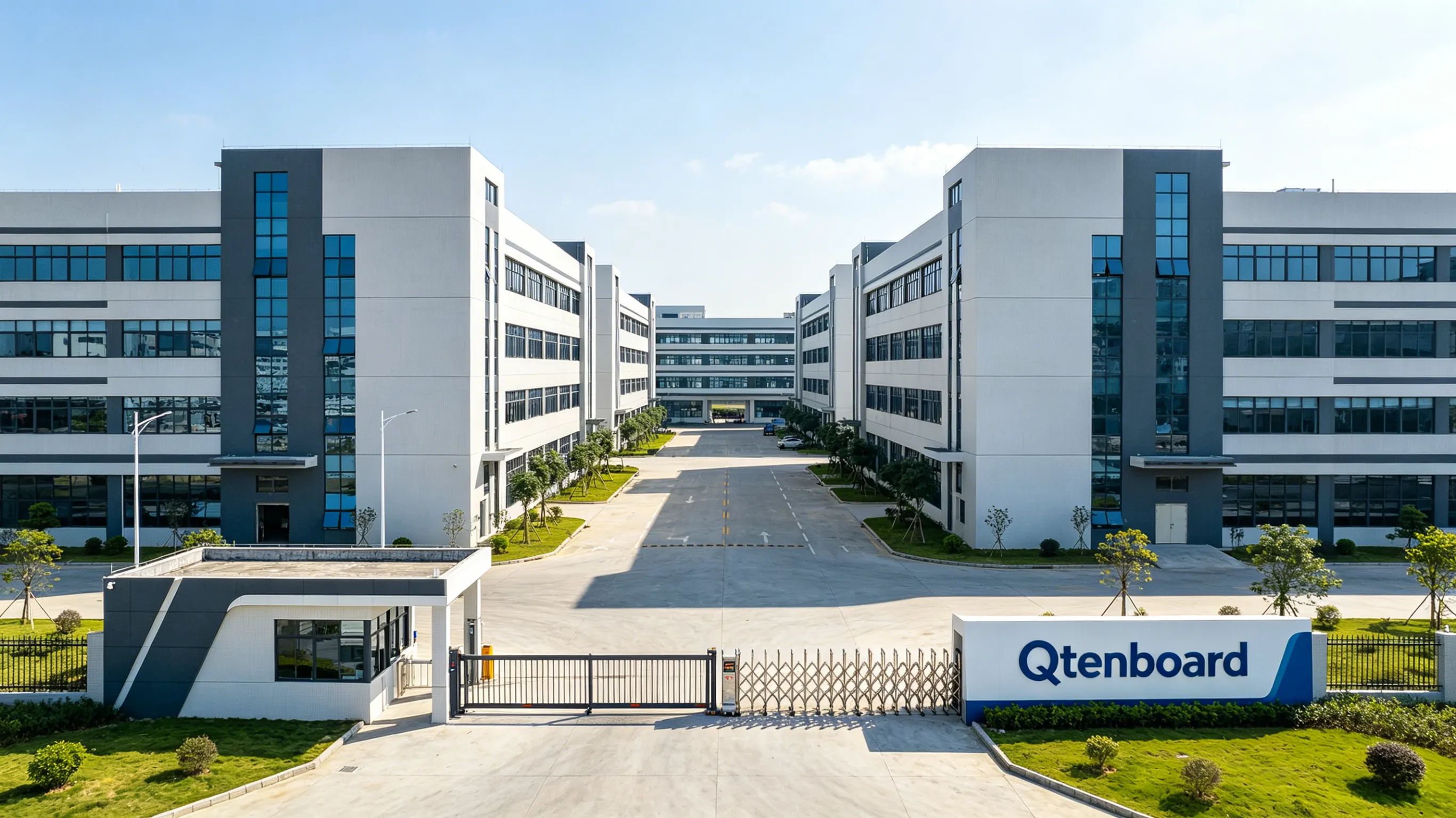
When you tour a factory (in person or over video), ask to see the line that will actually run your order — not a showroom line. A factory confident in its capacity will show you a live line without hesitation.
See how this capacity translates into OEM/ODM terms, MOQs, and customization options.
View OEM/ODM SolutionsMotherboard & Stress Testing — The Part Most Buyers Never See
A whiteboard can look flawless in a showroom and still fail in the field, because most real-world failures trace back to the motherboard — not the glass or the frame. This is the stage of the audit that separates a factory-direct manufacturer from a trading company reselling someone else's boards: does the factory actually control and test its own motherboard platforms, or is it assembling with whatever board a third party supplies that quarter?
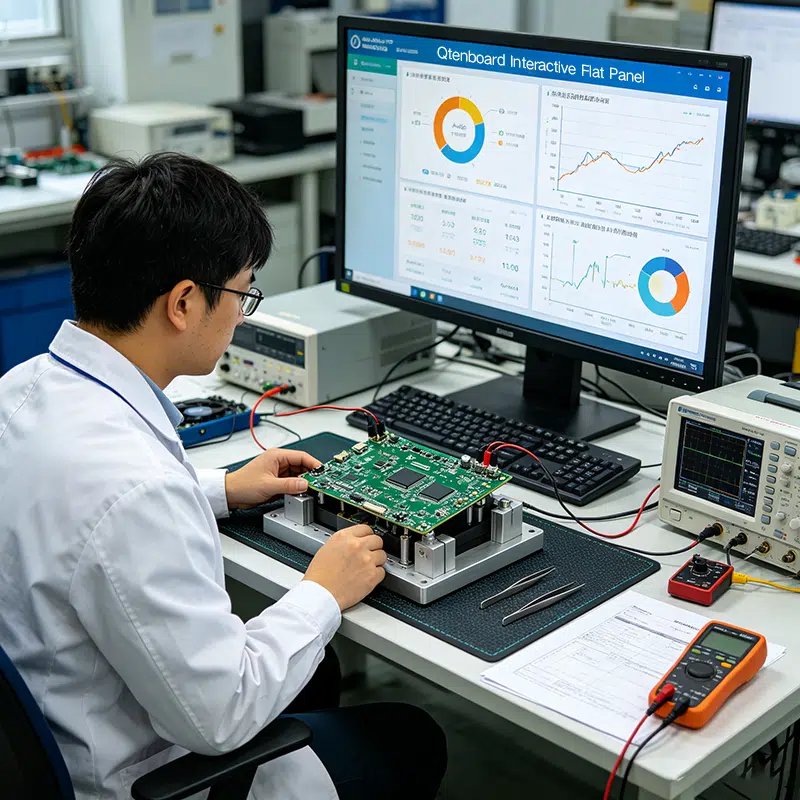
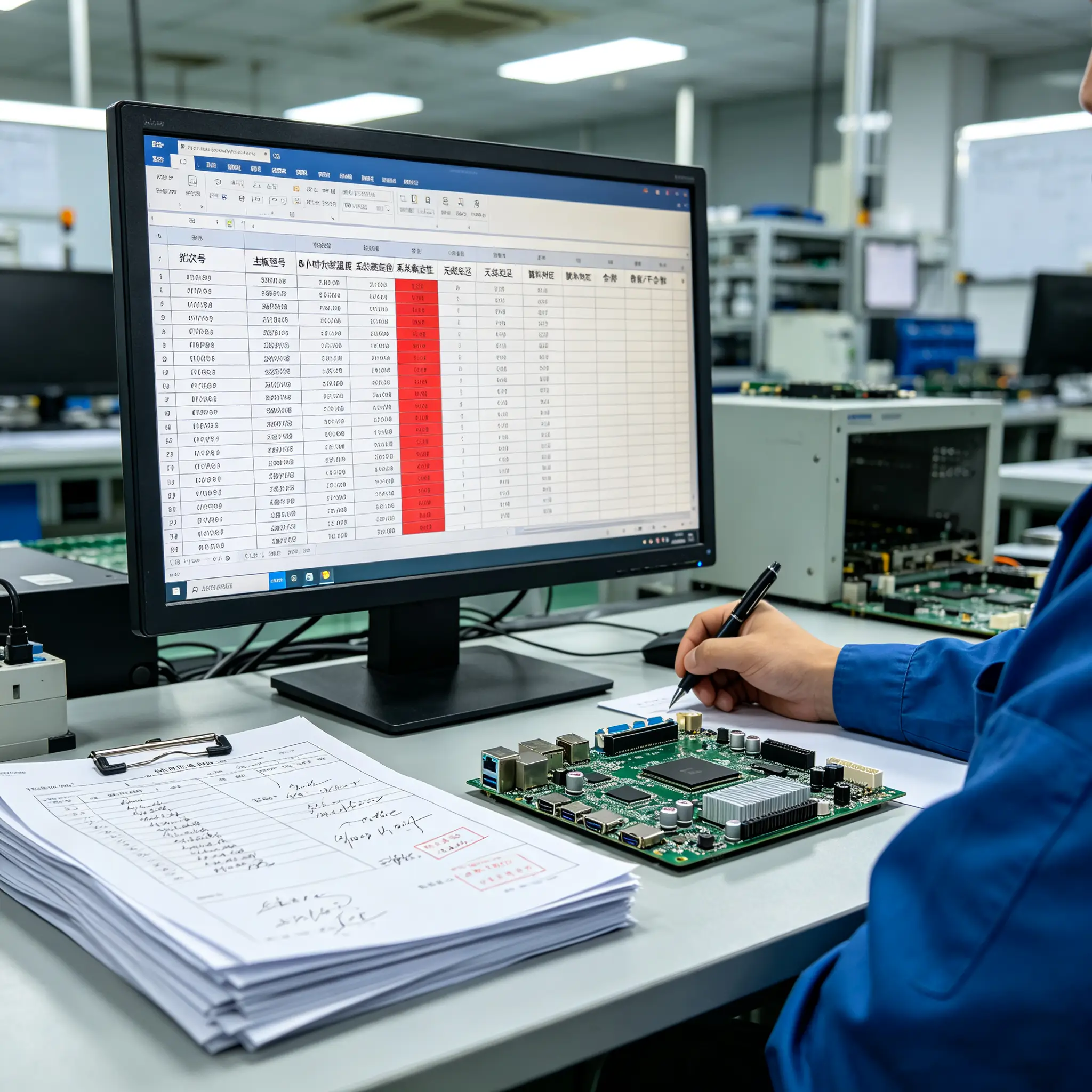
Qtenboard's testing platforms simulate high-load, multitasking environments to check three things engineers care about most: Android system stability under sustained use, AI algorithm responsiveness (voice control, wireless projection, meeting automation), and heat dissipation when a unit runs for hours without a break — the exact condition a classroom or boardroom display experiences every day.
| Test | What it checks | Why buyers should care |
|---|---|---|
| Sustained-load stability | Android OS behavior under 8+ hours of continuous use | Prevents freezing/crashing mid-lesson or mid-meeting |
| Heat dissipation | Internal temperature under intensive multitasking | Reduces long-term component failure and downtime |
| Wireless & AI response | Screen-share, voice recognition, projection latency | Directly affects daily user experience |
| Batch consistency | Comparing units within the same production run | Confirms QC isn't just done on samples |
Ask a prospective factory a direct question: "Which motherboard platforms do you manufacture and test in-house, versus source externally?" A factory with real testing infrastructure will answer with model numbers and test protocols. A trading company will answer with a brand name and a shrug.
See the interactive whiteboard models built on these tested platforms.
Explore Interactive WhiteboardsAssembly Line Touch Calibration for Education & Business Products
Testing the motherboard confirms the "brain" works. Touch calibration verifies the "hand" — the touch sensing layer — delivers precise, lag-free interaction as required. This independent quality control step is frequently overlooked, and it is the primary source of common customer complaints including writing delay, accidental false touches, and uneven touch sensitivity.
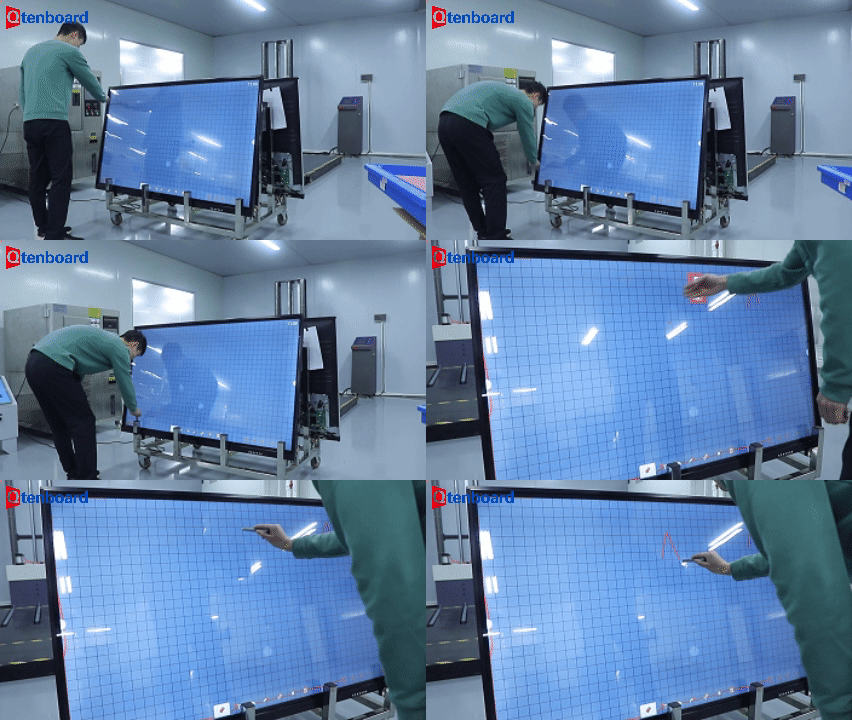
Every education and commercial interactive whiteboard undergoes full touch performance testing covering touch sensor accuracy, writing latency and anti-glare display adaption. Operators conduct real handwriting and multi-point touch validation under simulated classroom and office lighting environments, instead of relying on ideal dark factory bench conditions that mask real-world touch defects.
- Writing smoothness — no visible lag between pen movement and line rendering, tested at multiple writing speeds
- Touch accuracy — multi-point touch tested for false triggers and dead zones across the full panel
- Anti-glare performance — checked under bright overhead lighting, not just factory-standard lighting
- Optical bonding quality — no visible air gaps, bubbles, or color shift at the panel edges

If you're buying for a school district or a large corporate rollout, ask whether the factory can share calibration pass/fail rates by batch. A factory that tracks this data (rather than only final shipping counts) is one that catches problems before they reach your customers.
Looking specifically for classroom-ready models with EDLA/ministry compliance options?
See Education WhiteboardsSpare Parts & After-Sales Logistics — Why This Matters More Than Price
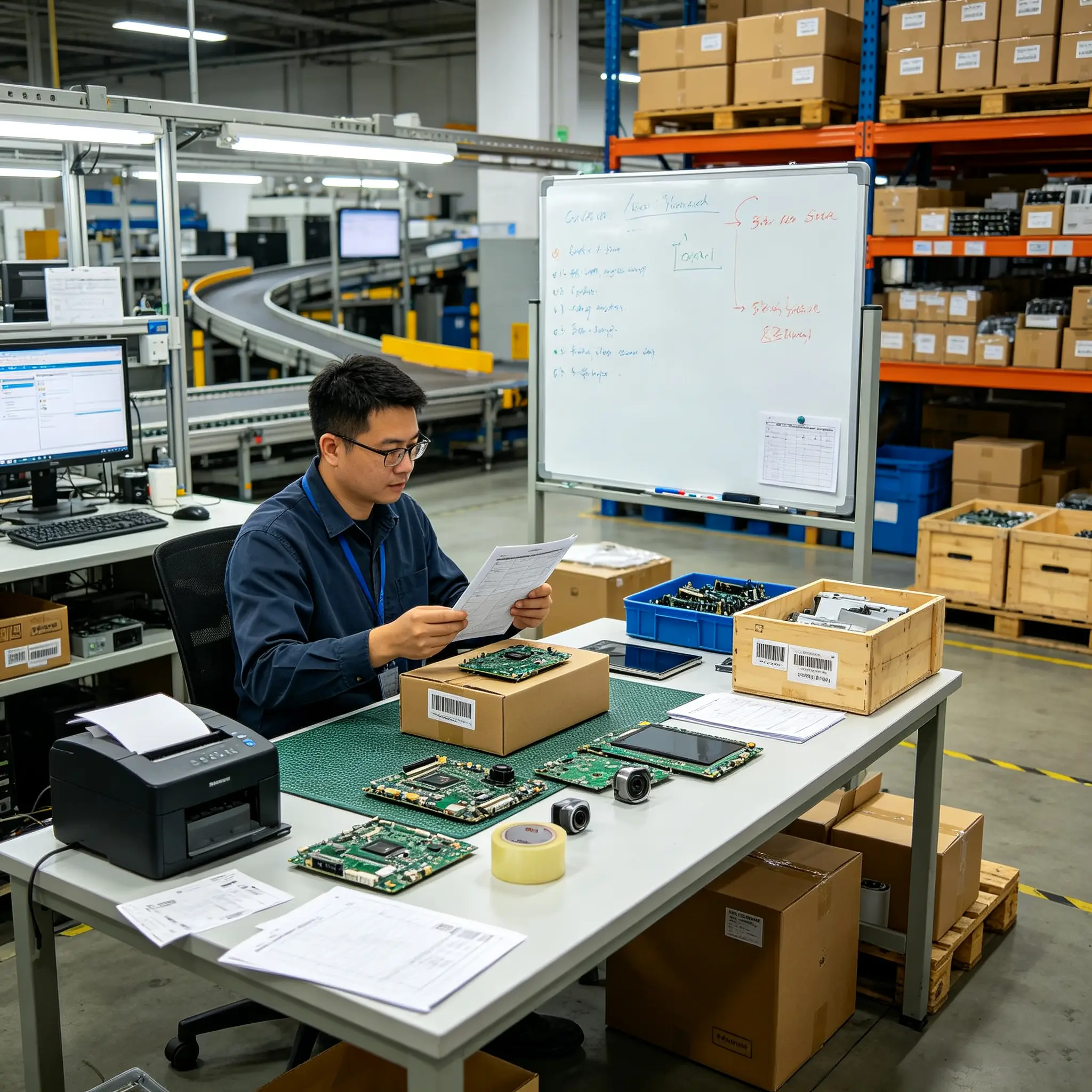
A cheaper unit price means very little if a failed touch frame or power board takes eight weeks to replace. This is the stage most price-focused buyers skip during due diligence, and the one that causes the most post-purchase regret.
| Question | Why it matters |
|---|---|
| Which components are stocked locally vs. made-to-order? | Determines real replacement lead time, not the quoted one |
| Is there a dedicated international shipping zone for parts? | Separates spare-parts logistics from new-unit production queues |
| What's the average replacement turnaround? | Directly affects your downtime and end-customer satisfaction |
| Is tracking/inventory data shared with distributors? | Lets you plan stock instead of reacting to failures |
Factories that treat spare parts as a core system — not an afterthought handled by whoever's free that week — maintain dedicated packing and shipping zones with tracked inventory for exactly this reason: predictable downtime is a selling point, not a support cost.
Ask about warranty terms and spare parts support before you order.
Support & Payment TermsA Quick Checklist Before You Choose an OEM/ODM Factory
If you take one thing from this guide, take this list. Bring it to your next factory call.
- Live line visibility — they'll show you the actual line running your product, not a showroom demo
- In-house motherboard testing — they can name the platforms they manufacture and describe the stress tests
- Calibration data by batch — not just a final shipping count, but pass/fail rates during assembly
- Documented spare parts logistics — a real answer on turnaround time, not "usually fast"
- Certifications on request — CE, FCC, RoHS, or region-specific compliance provided without delay
- References from similar-scale orders — a factory used to 50-unit school orders may not be ready for a 5,000-unit rollout
Ready to talk through your order requirements with a factory-direct team?
Request a Factory Consultation