A control room video wall runs different rules than an office display. It doesn't power off at 6pm, it can't drop a camera feed mid-shift, and the cable routing behind it has to survive a project acceptance inspection, not just look tidy on delivery day. If you're a system integrator or engineering contractor speccing a 24/7 monitoring wall, here's what actually needs to be right before you sign off on a supplier.
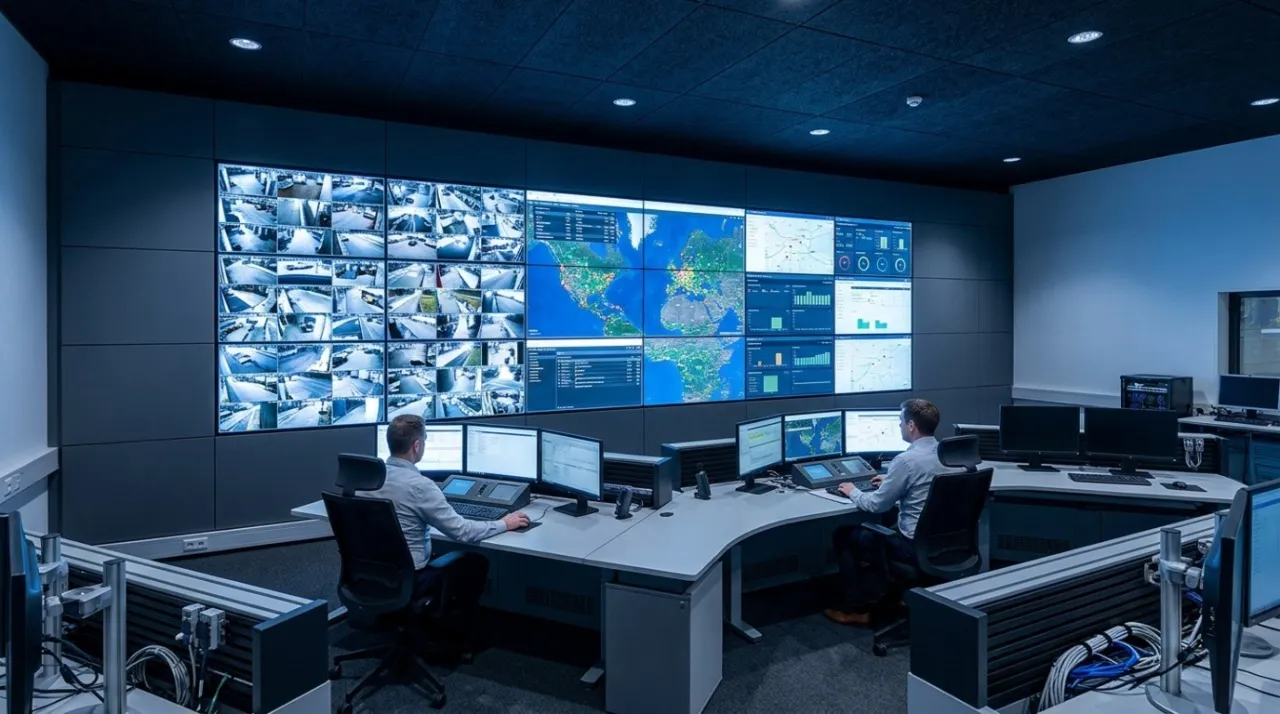
Control room video wall requirements shift depending on who's staring at the screen and what they're deciding from it. These four profiles cover most of the projects we quote, and each one changes the spec sheet in a specific way.
Operators monitor dozens of camera feeds in rotating shifts, often within 2 meters of the wall. Bezel width and signal switching speed matter more here than anywhere else on this list.
High feed count, real-time incident response, frequent full-screen and split-screen switching. Matrix processor throughput becomes the bottleneck if under-specced.
Mixed data sources: GIS mapping, IoT sensor dashboards, live feeds. Wide color gamut and consistent brightness across a large array matter for readability across data types.
Usually smaller arrays, tighter budgets, but the same 24/7 duty cycle requirement as a government command center. Don't let the smaller scope justify cutting panel grade.
A lot of video wall video wall quotes look similar on paper until you check what's actually driving the price. In a control room, four things aren't negotiable no matter what the budget line says.
Commercial-grade LCD panels are built for 8-12 hours of daily use. Push them to 24/7 monitoring control room video wall duty and backlight failure shows up early, often inside the first 18 months. Industrial-grade panels rated for continuous operation carry a meaningfully higher MTBF and are the only grade we'll quote for a room that never powers down.
Control room operators sit closer to the wall than almost any other video wall use case, which is exactly where bezel width stops being cosmetic and starts affecting whether a camera feed reads clearly across a panel joint. For sub-2-meter viewing, we spec 0.88mm as standard, not an upsell. For rooms with operators further back, 1.7mm holds up fine and costs less.
This is where a lot of quotes fall apart in practice. A control room wall needs to take in NVR outputs, IP camera streams, workstation feeds, and sometimes SCADA or GIS software, then switch or window them without a visible hitch. The matrix processor's channel count and switching latency matter more than the panel spec once you're running 20+ camera feeds with PIP/POP windowing. Under-speccing the processor to save budget on a project is the single most common mistake we see integrators inherit from a previous vendor.
A wall running continuously needs airflow clearance behind the array, typically a minimum of 10cm, and a power circuit rated for sustained draw rather than peak load. Skipping redundant power planning on a government or utility project is a common reason installs fail acceptance review after the fact rather than before.
This is the section most video wall suppliers skip, and it's usually where control room projects actually stall out at handover. A wall that looks fine on delivery day can still fail a formal acceptance inspection if the wiring behind it doesn't meet project standards.
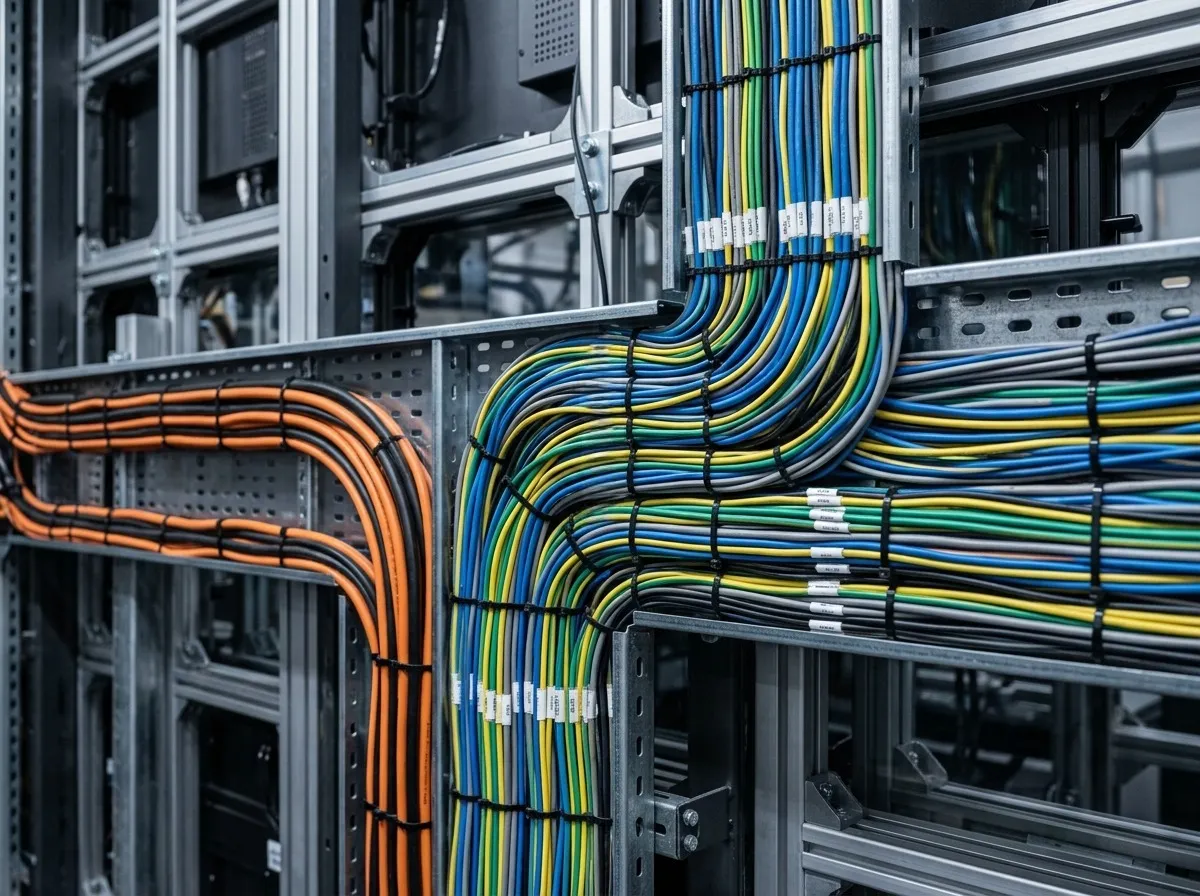
Government and utility projects in particular often require documentation alongside the physical work: as-built cable diagrams, load calculations, and a signed commissioning report. Suppliers who only sell hardware leave the contractor to assemble this paperwork after the fact, usually under deadline pressure right before inspection. We handle documentation as part of the install scope specifically because we've seen projects held up at handover over missing paperwork, not missing hardware.
A traffic dispatch center needed to replace an aging wall that had two dead panels and color drift bad enough that dispatchers were manually adjusting their own monitors to compensate during shift handover. The room ran three shifts, so downtime for the swap had to stay under a few hours per night.
Two things drove the spec here. Operators sit under two meters from the wall for full shifts, which put us at 0.88mm bezel without much debate. And the room runs 18 separate camera and workstation feeds through PIP/POP windowing during incident response, so the matrix processor's channel count and switching speed got as much attention in planning as the panels themselves.
Install ran across four nights instead of one continuous shutdown, since the dispatch center couldn't go dark during business hours. Cable routing followed the department's existing as-built documentation standard, with strong/weak current separation and labeled runs matched to their format so the project cleared acceptance review on the first inspection.
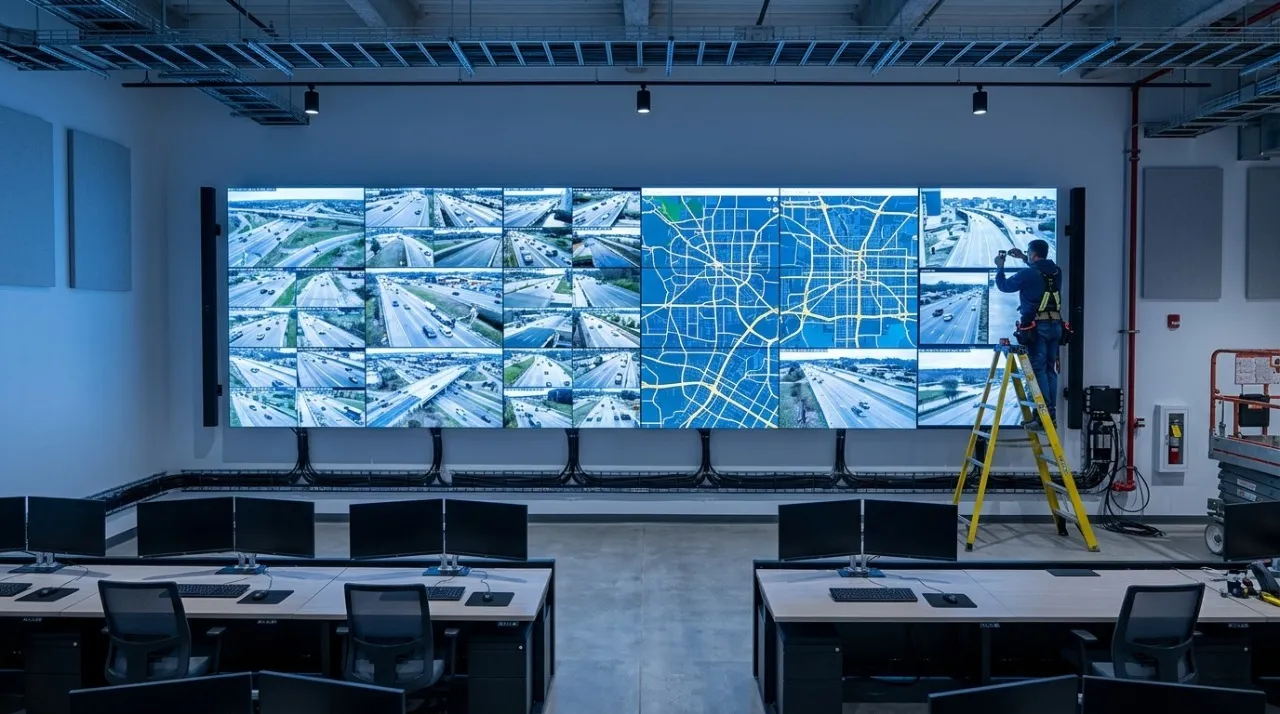
A control room video wall manufacturer that also runs the install crew and stocks spare panels locally solves a problem that a hardware-only reseller can't: when a panel fails at 2am in a 24/7 room, you need a replacement and a technician, not a support ticket routed through three time zones. Before committing to a supplier for a control room project, confirm they own production (not reselling mixed batches from different factories, which causes the color drift problem this whole page keeps coming back to), can produce certification documentation, and stock spares domestically rather than on a six-week import cycle.
See production line and quality documents.
Control room video wall manufacturer profileMatrix size, bezel grade, signal processor specced to your room.
Configure your control room wallCable management, load calculations, commissioning documentation.
Control room engineering guidelinesWe quote per project once we have room dimensions, matrix size, bezel grade, and signal input requirements, since installation, cable management, and matrix processor costs vary enough that a flat per-panel number is misleading. Send your specs for an itemized quote.
Yes, we regularly supply technical datasheets, certification documents, and compliance statements formatted for tender submissions. Let us know the tender requirements and we'll prepare the documentation alongside the quote.
A 3x4 to 4x4 array with full commissioning typically runs 3-5 days on-site, longer for rooms that require phased overnight installation to avoid shutting down live operations.
Yes, cable routing, strong/weak current separation, load documentation, and signal commissioning are included in our installation scope, not billed as a separate add-on.
Standard project warranty runs 2-3 years with spare parts stocked for immediate replacement. For continuous-operation rooms we recommend confirming spare panel stock and response time commitments before signing off on a supplier.
Send your room layout, feed count, and viewing distance. We'll return a configuration, itemized quote, and installation timeline within 24 hours, including documentation for tender submission if needed.
Request a Quote →
CEO | Interactive Display & Collaboration Solution Expert
I am the founder of Qtenboard, bringing over 17 years of hands-on expertise to the touch display industry. Drawing on the global management perspective gained through my EMBA studies at ShenZhen University, I lead my team in optimizing every stage of our operations—from product definition to high-efficiency supply chain management—ensuring our manufacturing capabilities remain at the forefront of the industry.
As the leader of Qtenboard, I specialize in providing tailored OEM/ODM solutions for interactive whiteboards, LCD video walls, digital signage, and industrial-grade touch terminals. Backed by our 330,000 m² modern industrial park in Shenzhen, we maintain full-lifecycle control over industrial design, precision manufacturing, and rigorous performance testing.
With nearly two decades of project experience, Qtenboard’s display solutions are now deployed in over 120 countries and regions, earned the trust of more than 15,000 enterprise customers worldwide. If you are seeking a responsive partner with a deep manufacturing foundation for your customized touch display projects, my team and I are ready to support your vision with professional excellence.

 EN
EN
 pt
pt  spa
spa  th
th  vie
vie  aze
aze  bel
bel  est
est  lav
lav  ukr
ukr  ru
ru