The global self-service kiosk market was valued at USD 39.4 billion in 2024 and is projected to reach USD 82.1 billion by 2031, growing at a CAGR of 11.1%. For B2B buyers — retail chains, QSR operators, system integrators, and OEM brands — the question is no longer whether to deploy payment kiosks, but where to source them. A custom payment kiosk manufacturer in China offers a combination of supply chain depth, engineering flexibility, and production scale that is difficult to replicate elsewhere. This article examines the concrete advantages of sourcing from a china kiosk factory, using Qtenboard as a reference point for what a mature OEM payment terminal supplier can deliver.
Procurement teams evaluating payment kiosk suppliers typically consider three categories. Each has trade-offs that directly affect project timelines, unit economics, and long-term serviceability.
| Sourcing Option | Cost Structure | Customization Depth | Supply Chain Completeness | Lead Time Risk |
|---|---|---|---|---|
| Local / Regional Supplier | High labor and overhead costs | Limited to catalog modifications | Dependent on imported components | Low logistics risk, high component risk |
| Southeast Asia Factory | Moderate labor costs | Basic hardware changes | Partial — key modules still imported | Moderate; capacity constraints in peak seasons |
| China OEM Manufacturer | Competitive at scale | Full OEM/ODM including software | Complete in-house from sheet metal to assembly | Low; large factories maintain material safety stock |
China remains the epicenter of global self-service kiosk manufacturing. The integrated supply chain across Shenzhen, Guangzhou, and surrounding regions enables manufacturers to deliver both standard and highly customized solutions efficiently. For B2B buyers, this translates into faster turnaround times, lower component costs, and quicker response to design changes — advantages that matter when launching time-sensitive projects. For a complete overview of payment kiosk procurement, including PCI compliance and deployment frameworks, see the Payment Kiosk Ultimate Guide 2026.
The term "custom" is used loosely in the kiosk industry. A genuine custom payment kiosk manufacturer should offer customization across hardware, software, and branding — not just a logo sticker on a standard enclosure.
Qtenboard's indoor self-service payment kiosk platform demonstrates this customization depth in practice — integrating barcode/QR scanning, touchscreen interaction, and optional payment peripherals into a single configurable terminal for retail, restaurant, and ticketing applications.
For B2B buyers placing bulk orders, a supplier's production capacity is a risk-management metric. Can they handle a 500-unit rollout without delaying other clients? Do they hold inventory of critical components, or will a single delayed shipment from a sub-supplier halt your project?
Qtenboard operates two large-scale manufacturing bases with fully controlled production processes. From sheet metal fabrication and plastic injection to final assembly, all critical processes are kept in-house. This vertical integration means orders are not dependent on subcontractor capacity or quality — a common failure point in fragmented supply chains.
Key production advantages for B2B buyers include:
For system integrators evaluating factory capacity, a practical audit checklist and sourcing framework are detailed in the factory news section.
Payment kiosks are not generic hardware. They process sensitive financial data and operate in regulated environments. A credible OEM payment terminal supplier must hold both product certifications and system-level compliance documentation.
Beyond certificates, a china kiosk factory serving global markets must adapt to local requirements: voltage and plug standards, language interfaces, payment gateway protocols, and data encryption regulations. These are configuration-level decisions that should be confirmed at the specification stage, not after shipment.
Delivery delays are one of the most cited pain points in cross-border kiosk procurement. A structured production workflow directly compresses the timeline from order confirmation to shipment.
For buyers requiring faster turnaround, existing safety stock of core components and dedicated pilot lines can accelerate the front end of the timeline. The key is early engagement — sharing target deployment dates and customization requirements during the quotation phase allows the factory to allocate capacity accordingly.
"Exporting to 100+ countries" is a claim that requires evidence. Qtenboard's global payment kiosk supply record spans Europe, North America, the Middle East, Asia-Pacific, and Africa, with documented deployments across retail, banking, transportation, healthcare, and government sectors.
In 2024, Qtenboard collaborated with Barclays Bank UK to deploy over 200 customized digital bank kiosks across major cities. Each terminal featured biometric verification, a localized payment interface, and a secure Android-based operating system. The project improved branch efficiency by 40% and reduced average customer wait times by half.
The BMW Experience Center in Munich installed Qtenboard self-service parking kiosks. Visitors use the touchscreen to obtain parking tickets and complete payment independently, reducing daily administrative workload for staff by 30%.
A recent deployment at a Dubai airport used Qtenboard self-service kiosks to streamline check-in and payment processes. The kiosks were customized with local payment gateways and security certifications to meet regional compliance requirements, improving passenger flow through the terminal.
A fast food chain in New York deployed 156 units of Qtenboard self-ordering and payment terminals across multiple locations. The deployment supported the chain's transition to contactless ordering and reduced front-counter congestion during peak hours. Project completion: August 2026.
A supermarket chain in Toronto installed 72 units of Qtenboard self-service checkout kiosks for streamlined shopping. The terminals integrated barcode scanning, card and NFC payment, and receipt printing into a compact floor-standing form factor. Project completion: March 2026.
A railway station project in Tokyo deployed 130 units of Qtenboard smart ticketing and queue management kiosks. The system combined self-service ticket purchase with intelligent queue calling, improving passenger throughput during peak commuter hours. Project completion: December 2025.
These cases share a common pattern: the kiosks were not shipped as unmodified catalog products. Each deployment required configuration changes — biometric modules for banking, localized payment gateways for the UAE, high-throughput ticketing logic for Tokyo — that a competent custom payment kiosk manufacturer must be able to execute at production scale.
Factory-direct sourcing eliminates the margin layers of trading companies, but it also means the buyer relies directly on the manufacturer's quality systems. A structured QC process and a responsive after-sales team are what separate a reliable OEM payment terminal supplier from a transactional vendor.
For buyers requiring IP protection, NDA execution, mold ownership documentation, and factory audit support (including live video tours and third-party inspection coordination) are standard parts of the engagement process. A detailed sourcing guide for system integrators covers these procurement safeguards in depth: Kiosk Sourcing Framework.
Selecting a custom payment kiosk manufacturer is a multi-variable decision. The following table summarizes how Qtenboard compares across the dimensions that matter most to B2B procurement teams.
| Dimension | Typical China Factory | Qtenboard |
|---|---|---|
| Customization Depth | Hardware modifications only | Full OEM/ODM: hardware, software, branding, payment module integration |
| Production Capacity | Variable; dependent on subcontractors | 330,000㎡ in-house; 8 automated lines; 200+ units/day; material safety stock |
| Certifications | CE/FCC basic; ISO optional | CE, FCC, RoHS, ISO 9001; PCI DSS-ready; regional certifications on request |
| Lead Time Reliability | Often extended by component shortages | Structured workflow; dedicated pilot lines; bulk inventory of critical parts |
| Global Service | Limited English support; no spare parts program | 24/7 multilingual support; spare parts supply; remote CMS; documented deployments in 100+ countries |
This comparison is not theoretical. The Barclays UK rollout, the BMW Munich installation, the Dubai airport deployment, and the Tokyo railway ticketing project each required a manufacturer capable of translating a specification into a production-ready kiosk — on schedule, with certification documentation, and with post-deployment support. That is the definition of a mature OEM payment terminal supplier.
China's payment kiosk manufacturing ecosystem offers B2B buyers a combination that is difficult to match: competitive unit economics, deep customization capability, complete supply chain control, and a mature export infrastructure. But not every china kiosk factory operates at the same level. The difference lies in production scale, certification depth, engineering resources, and the ability to support global deployments after the shipment leaves the dock.
Qtenboard has been manufacturing commercial self-service terminals since 2005, with 330,000㎡ of production space in Shenzhen and Guangzhou, 1,000+ employees, and documented deployments in over 100 countries. The company functions as a full-scope custom payment kiosk manufacturer — from industrial design and hardware engineering to software integration and after-sales support.
Ready to discuss your payment kiosk project?
Request a Quotation & SampleWhether you are a system integrator sourcing terminals for a multi-site rollout, a retail chain evaluating self-checkout, or an OEM brand developing a white-label payment kiosk, the starting point is the same: define your specification, verify the factory's capabilities against your requirements, and request a sample or pilot production run. The kiosk buyer's resource center provides additional guidance on procurement planning and vendor evaluation.
MOQ depends on the level of customization. For standard configurations with minor branding changes, Qtenboard can support trial orders as low as 10–50 units. For fully custom enclosures or new hardware designs, the MOQ typically starts at 100 units to justify tooling and engineering investment. The exact MOQ is confirmed at the quotation stage based on your specification.
For a standard configuration, mass production takes approximately 15–25 business days after design approval. Custom projects with new enclosures or complex payment module integration may require 25–40 business days. Prototype and sample production typically takes 7–15 business days. A detailed project timeline is provided with every quotation.
Yes. As a global payment kiosk supply partner, Qtenboard adapts voltage, plug standards, language interfaces, payment gateway protocols, and security certifications to meet local requirements. Deployments in the United Kingdom, Germany, the UAE, the United States, Canada, and Japan each required country-specific configuration, and those adaptations are part of the standard OEM/ODM process.
Qtenboard payment kiosks carry CE, FCC, and RoHS product certifications, along with ISO 9001 system certification. For payment-related deployments, the hardware is designed to support PCI DSS-ready configurations. Additional regional certifications such as UKCA, RCM, PSE, or KC can be obtained on request for specific market entries.
Yes. Qtenboard offers a minimum 1–3 year warranty, with extended coverage available for bulk orders. A structured spare parts program supports ongoing fleet maintenance, and 24/7 multilingual remote technical support is available. For major markets, on-site support can be arranged through local distributors or third-party service partners.
Yes. Qtenboard's engineering team supports SDK integration, localized payment interfaces, tax-system compliance, and remote CMS deployment. Whether your project requires EMV, NFC, QR, biometric verification, or a custom payment application, the software integration is handled during the customization phase — not after shipment.
The process begins with a specification review. Share your target market, required payment methods, deployment environment, and estimated order volume. Qtenboard will respond with a quotation, recommended configuration, and estimated lead time. From there, you can request a sample, schedule a factory video tour, or proceed to prototype development.
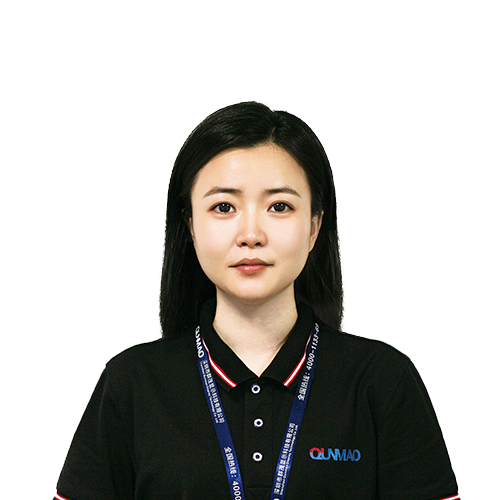
CEO | Interactive Display & Collaboration Solution Expert
I am the founder of Qtenboard, bringing over 17 years of hands-on expertise to the touch display industry. Drawing on the global management perspective gained through my EMBA studies at ShenZhen University, I lead my team in optimizing every stage of our operations—from product definition to high-efficiency supply chain management—ensuring our manufacturing capabilities remain at the forefront of the industry.
As the leader of Qtenboard, I specialize in providing tailored OEM/ODM solutions for interactive whiteboards, LCD video walls, digital signage, and industrial-grade touch terminals. Backed by our 330,000 m² modern industrial park in Shenzhen, we maintain full-lifecycle control over industrial design, precision manufacturing, and rigorous performance testing.
With nearly two decades of project experience, Qtenboard’s display solutions are now deployed in over 120 countries and regions, earned the trust of more than 15,000 enterprise customers worldwide. If you are seeking a responsive partner with a deep manufacturing foundation for your customized touch display projects, my team and I are ready to support your vision with professional excellence.

 EN
EN
 pt
pt  spa
spa  th
th  vie
vie  aze
aze  bel
bel  est
est  lav
lav  ukr
ukr  ru
ru