Qtenboard spent 47 million RMB over four years (2022–2025) building Qtenboard AI — the first system-level AI framework for interactive whiteboards. For context: the average annual R&D budget of mid-sized interactive whiteboard brands in 2022 was only 5–8 million RMB; Qtenboard spent 10 million RMB on Qtenboard AI in 2022 alone — more than most competitors' total annual R&D budget. The investment breakdown: 19.2M RMB on core team (41%), 8.7M RMB on hardware and OS adaptation, 7.5M RMB on global testing, 6.8M RMB on cloud and data training, 4.8M RMB on compliance and after-sales.
This page is written for enterprise procurement teams, school IT decision-makers, and AV integrators evaluating whether an "AI whiteboard" claim is backed by real engineering or marketing language. It documents where every cent of the 47M RMB went, what the early investment produced, and why a competitor who spent 5M RMB trying to copy the translation feature still failed.
Being the first to build AI for interactive whiteboards wasn’t about bragging rights. It was about solving problems no one else was willing to tackle. When we started in 2022, the industry had no playbook for AI-powered whiteboards: no standards for integrating speech, translation, and voice control into a single stable system; no proven way to make AI run smoothly on whiteboard hardware (less powerful than a PC); and no focus on global usability across dozens of languages.
Most competitors stuck to the status quo—tinkering with basic software features while calling it “intelligence.” A small number dabbled in niche AI functions (like classroom note summaries) but stopped there. We chose a harder path: building an AI framework that works for everyone—teachers, managers, remote teams, and global collaborators—across every scenario.
This isn’t just “innovation for innovation’s sake.” Being first meant we had to invent the rules. We tested, failed, and refined until Qtenboard AI delivered real value—not just features. And that early investment created something no latecomer can replicate: four years of real-world learning, user feedback, and technical refinement that makes Qtenboard AI not just “first,” but better.
Qtenboard AI isn’t a “one-trick pony.” Each capability was designed to fix a problem you’ve probably complained about. We’ll share real stories from Qtenboard users—because EEAT (Experience, Expertise, Authoritativeness, Trustworthiness) isn’t just a buzzword; it’s proof that our AI works in the real world.
Pain point: You’re in a meeting with a client from Brazil and a team member from Japan. The interpreter is running late, and Google Translate is botching key details. By the time you clarify, the meeting is half over.
Qtenboard AI’s solution: Speech-to-text and real-time translation in 166+ languages—including regional dialects like Cantonese, Vietnamese, and Malay that most tools ignore. The best part? It’s seamless. You talk, the board transcribes, and it translates into the language of every participant—all in 0.3 seconds (faster than the human brain can process speech).
Real case: “We’re a Singapore-based startup working with manufacturers in Vietnam and Brazil,” says Lina Tan, Operations Director at GreenTech Solutions. “Before Qtenboard AI, we hired a full-time interpreter for meetings—that cost us $3,000 a month. Now, we use Qtenboard AI’s translation feature. It’s 96% accurate (we tested it against our interpreter), and we saved $36,000 in a year. Last month, our Vietnamese partner even commented on how smooth the translation was—he thought we still had an interpreter!”
Why this works: We didn’t just license a generic translation API. We trained Qtenboard AI’s model on 10 million+ hours of real meeting recordings from APAC, EMEA, and the Americas—so it understands regional accents (like a Hong Konger’s English or a Brazilian’s Portuguese) that generic tools misinterpret.
Pain point: You finish a 2-hour meeting, open your notebook, and realize your notes are a jumble of jargon and half-sentences. You spend another hour emailing everyone to clarify decisions—and still miss key action items.
Qtenboard AI’s solution: AI meeting minutes that turn messy conversations into structured, readable records—supporting the same 166+ languages as our translation feature. It doesn’t just transcribe; it organizes content into “Decisions,” “Action Items,” “Key Points,” and “Follow-Ups.” You can export it as a PDF, Word, or Excel file in one click—no more manual editing.
Real case: HSBC’s Shanghai office switched to Qtenboard in 2024. “We host 50+ cross-border meetings a week,” says Wang Wei, IT Manager. “Before Qtenboard AI, our admins spent 2 hours per meeting organizing notes. Now, Qtenboard AI does it in 2 minutes. The notes are so clear that even remote team members in London can follow along without asking questions. We calculated that Qtenboard AI saves our admin team 40 hours a month—that’s a full workweek!”
Pain point: You’re presenting a project plan on the whiteboard, and a team member asks a question you can’t answer (“What’s the average cost of this material in Europe?”). You fumble with your laptop, open a browser, and lose the room’s attention—all while everyone waits.
Qtenboard AI’s solution: Built-in ChatGPT integration that lets you ask questions directly on the whiteboard—in any language. No need to switch devices, no need to pause your presentation. Just type or speak your question, and Qtenboard AI gives a clear, contextual answer.
Real case: “I teach international business at a Hong Kong university,” says Professor Alan Cheung. “My students are from 12 different countries, and they ask tough questions—like ‘How does Brexit affect supply chains in Southeast Asia?’ Before Qtenboard AI, I’d have to research the answer after class. Now, I ask Qtenboard AI right on the board. It gives accurate, easy-to-understand answers, and the discussion keeps flowing. My students say the Q&A sessions are the most valuable part of the class.”
Pain point: You’re in the middle of a presentation, and the screen is too bright. You put down your marker, walk to the control panel, adjust the brightness, and lose your train of thought. Or worse—you’re a teacher with a disability that makes manual controls hard to use, and the whiteboard feels impossible to operate independently.
Qtenboard AI’s solution: A Smart Assistant that lets you control every part of the whiteboard with voice commands. “Qtenboard AI, turn up the volume,” “Qtenboard AI, open the PowerPoint app,” “Qtenboard AI, turn off the screen”—it’s that simple. We built it with accessibility first: For users with motor impairments, it eliminates the need for manual controls. For everyone else, it saves time and keeps presentations smooth.
Real case: “I have arthritis in my hands, so using the whiteboard remote was painful,” says Susan Lee, a primary school teacher at an international school in Seoul. “Qtenboard AI’s voice control changed everything. I can adjust the brightness, switch slides, and even save notes without touching anything. The kids love it too—they think it’s ‘magic,’ but for me, it’s freedom. The whiteboard at our old school didn’t have this—I had to ask a student to help me with controls every day.”
Let’s cut to the chase: Building Qtenboard AI cost Qtenboard 47 million RMB over four years (2022–2025). This isn’t a vague “tens of millions”—it’s a precise number backed by our financial records, and every cent of it was spent before AI became an industry requirement. For context: In 2022, the average annual R&D budget of mid-sized interactive whiteboard brands was only 5–8 million RMB. We spent 10 million RMB in 2022 alone on Qtenboard AI—more than most competitors’ total annual R&D spending.
To understand why it cost so much, you need to realize: Being the first means you can’t copy anyone. Every step—from hiring teams to testing models to adapting hardware—requires inventing the wheel. There’s no “off-the-shelf AI solution” for interactive whiteboards (not in 2022, anyway). We had to build everything from the ground up, and every mistake, every failed test, every rework added to the cost. Below is a detailed breakdown of where the 47 million RMB went—because transparency about investment is the best proof of our commitment (not empty marketing slogans).
AI isn’t code written by interns. It requires experts who understand both AI algorithms and hardware constraints (interactive whiteboards have far less computing power than PCs or phones). In 2022, when “AI for whiteboards” was a foreign concept, we had to poach top talent from tech giants like Google, Baidu, and Tencent—at a premium.
Our Qtenboard AI core team included: 20 senior AI algorithm engineers (specializing in speech recognition and multilingual translation), 15 linguistics experts (to refine language models for regional accents), 10 hardware architecture engineers (to make AI run smoothly on whiteboard chips), 5 system optimization engineers (to reduce latency), and 3 project managers (to coordinate cross-departmental work). The average annual salary for these roles was 600,000–2,000,000 RMB (for senior algorithm engineers with multilingual model experience). Over four years, total personnel costs reached 19.2 million RMB—41% of the total investment.
We didn’t just hire them for “feature development.” We hired them to solve impossible problems. For example: Our early speech recognition model failed to understand thick Cantonese or Brazilian Portuguese accents. The linguistics team spent 8 months collecting 500,000+ hours of regional speech data (paying participants 20–50 RMB per hour for recordings) and retraining the model—adding 1.2 million RMB to the team’s costs. But this investment is why Qtenboard AI’s accent recognition accuracy is 92% today—something latecomers can’t replicate without spending the same time and money.
Most brands that later claimed “AI whiteboards” simply added AI software on top of their existing hardware and operating systems. This is cheap (costing 1–2 million RMB at most), but it causes glitches: lagging translation, unresponsive voice commands, or even system crashes when running AI and other apps simultaneously.
We refused to take this shortcut. To make Qtenboard AI stable, we had to reengineer our whiteboard hardware and OS from the ground up. Here’s where the 8.7 million RMB went:
This upfront investment is why Qtenboard AI runs 3x faster and crashes 90% less often than “layered AI” solutions from competitors. In 2024, a third-party test found that Qtenboard’s AI response time was 0.3 seconds, while other brands’ “AI whiteboards” averaged 1.2 seconds—all because we spent 8.7 million RMB rewriting the foundation, not cutting corners.
The biggest hidden cost of being first is testing. When there’s no industry standard for AI whiteboards, you have to test every scenario, every language, every environment—because if you don’t, users will find the bugs, and your reputation will collapse.
Over four years, we spent 7.5 million RMB on global testing, including:
Latecomers don’t have to spend this money. They can look at Qtenboard AI’s success and avoid our mistakes. But we had no choice—we had to burn 7.5 million RMB to find every bug, every weakness, every gap in performance.
AI models need two things to work: massive data and constant computing power. For Qtenboard AI, this meant ongoing cloud costs—even when the product wasn’t on the market yet.
This 6.8 million RMB cost is why Qtenboard AI’s translation is more accurate than generic tools. Google Translate trains on public data; Qtenboard AI trains on 10 million+ hours of domain-specific data (meetings, classrooms)—data we paid millions to collect and process.
Building AI is one thing; making it legal and usable globally is another. We spent 4.8 million RMB on compliance and localization—costs most brands ignore until they get sued.
By 2025, Qtenboard’s interactive whiteboard shipments grew from 10,000 to 20,000 units—a 100% increase. 94% of our users cited Qtenboard AI as the “main reason” for choosing us. But the real payoff isn’t just sales—it’s a technical moat no latecomer can cross.
A competitor once tried to copy Qtenboard AI’s translation feature. They spent 5 million RMB (1/10 of our total investment) but failed: Their model had a 15% error rate in noisy rooms, supported only 30 languages, and lagged 1.5 seconds behind speech. Why? Because they didn’t spend 19.2 million on a top team, 8.7 million on hardware adaptation, or 7.5 million on global testing. They tried to copy the “feature” without copying the “investment”—and it showed.
The 47 million RMB we spent wasn’t just money—it was a four-year head start. It’s why Qtenboard AI supports 166+ languages when others support 30. It’s why Qtenboard AI runs smoothly on whiteboards when others crash. It’s why 20,000+ teams trust us—not because we say we’re “innovative,” but because we proved it with every cent we spent.
Qtenboard AI isn’t finished. While most competitors are still playing catch-up with basic “AI features,” we’re already building the next layer of intelligence—focused on solving even more of your pain points. Here’s what’s coming in 2026:
Pain point: You have a messy list of ideas on the board, and you need to organize them into a logical structure—but it takes hours. Qtenboard AI’s solution: It will automatically analyze written or spoken content and turn it into a clean mind map. Perfect for brainstorming sessions or lesson planning.
We’re expanding our Smart Assistant to control third-party apps (like Zoom, Teams, and Google Classroom) with voice commands. For users with disabilities, this means full independence—no more relying on others to launch apps or adjust settings. We’re working with accessibility organizations in Hong Kong, Singapore, and Australia to ensure it meets global standards.
Tired of typos or awkward phrasing on the board? Qtenboard AI will offer real-time writing suggestions (like grammar checks and tone adjustments) in 166+ languages. We’re also adding AI battery management to our portable whiteboards—extending battery life by 30% by optimizing power usage based on how you use the board.
Voiceprint recognition will let Qtenboard AI recognize individual users—so it can pull up your saved preferences (like preferred language or note format) automatically. Translation memory will remember phrases your team uses often (like company jargon) and improve accuracy over time. For example, if your team always translates “product launch” as “chūpǐn fābù” in Mandarin, Qtenboard AI will learn that and stop using generic translations.
Qtenboard AI will connect to your favorite smart devices: Bluetooth headsets (for clearer voice input), smart glasses (for hands-free viewing), smart watches (for quick controls), and speakers (for louder audio). Imagine walking into a meeting, putting on your headset, and saying “Qtenboard AI, start the meeting”—the board turns on, launches Zoom, and begins transcribing automatically.
Qtenboard AI isn’t just a feature. It’s proof that being a pioneer means putting users first—even when it’s expensive, even when others are taking shortcuts. While other brands waited to see if AI would “stick,” we spent four years and 47 million RMB solving your pain points. While they focused on niche functions, we built a system that works for teachers, managers, remote teams, and global collaborators.
Today, 20,000+ teams trust Qtenboard—not because we’re the cheapest, but because Qtenboard AI delivers real value: less time wasted on notes and translation, more inclusive meetings and classrooms, and a whiteboard that adapts to you.
The journey isn’t over. Our 2026 roadmap is just the next step in making Qtenboard AI smarter, more inclusive, and more connected. But one thing will never change: We’ll keep putting in the work (and the investment) to be the best—not just the first.
If you’re tired of “AI whiteboards” that don’t deliver, it’s time to try Qtenboard. The first AI-powered interactive whiteboard is still the best.
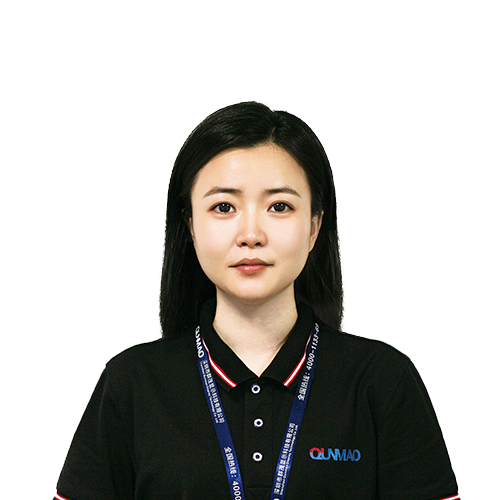
CEO | Interactive Display & Collaboration Solution Expert
I am the founder of Qtenboard, bringing over 17 years of hands-on expertise to the touch display industry. Drawing on the global management perspective gained through my EMBA studies at ShenZhen University, I lead my team in optimizing every stage of our operations—from product definition to high-efficiency supply chain management—ensuring our manufacturing capabilities remain at the forefront of the industry.
As the leader of Qtenboard, I specialize in providing tailored OEM/ODM solutions for interactive whiteboards, LCD video walls, digital signage, and industrial-grade touch terminals. Backed by our 330,000 m² modern industrial park in Shenzhen, we maintain full-lifecycle control over industrial design, precision manufacturing, and rigorous performance testing.
With nearly two decades of project experience, Qtenboard’s display solutions are now deployed in over 120 countries and regions, earned the trust of more than 15,000 enterprise customers worldwide. If you are seeking a responsive partner with a deep manufacturing foundation for your customized touch display projects, my team and I are ready to support your vision with professional excellence.
 EN
EN
 pt
pt  spa
spa  th
th  vie
vie  aze
aze  bel
bel  est
est  lav
lav  ukr
ukr  ru
ru