Subtitle: One unified hardware ecosystem for chain store digital signage, self-checkout kiosks, shelf displays and countertop menu boards, managed via a single HQ CMS without replacing your existing POS, ERP or ESL stack
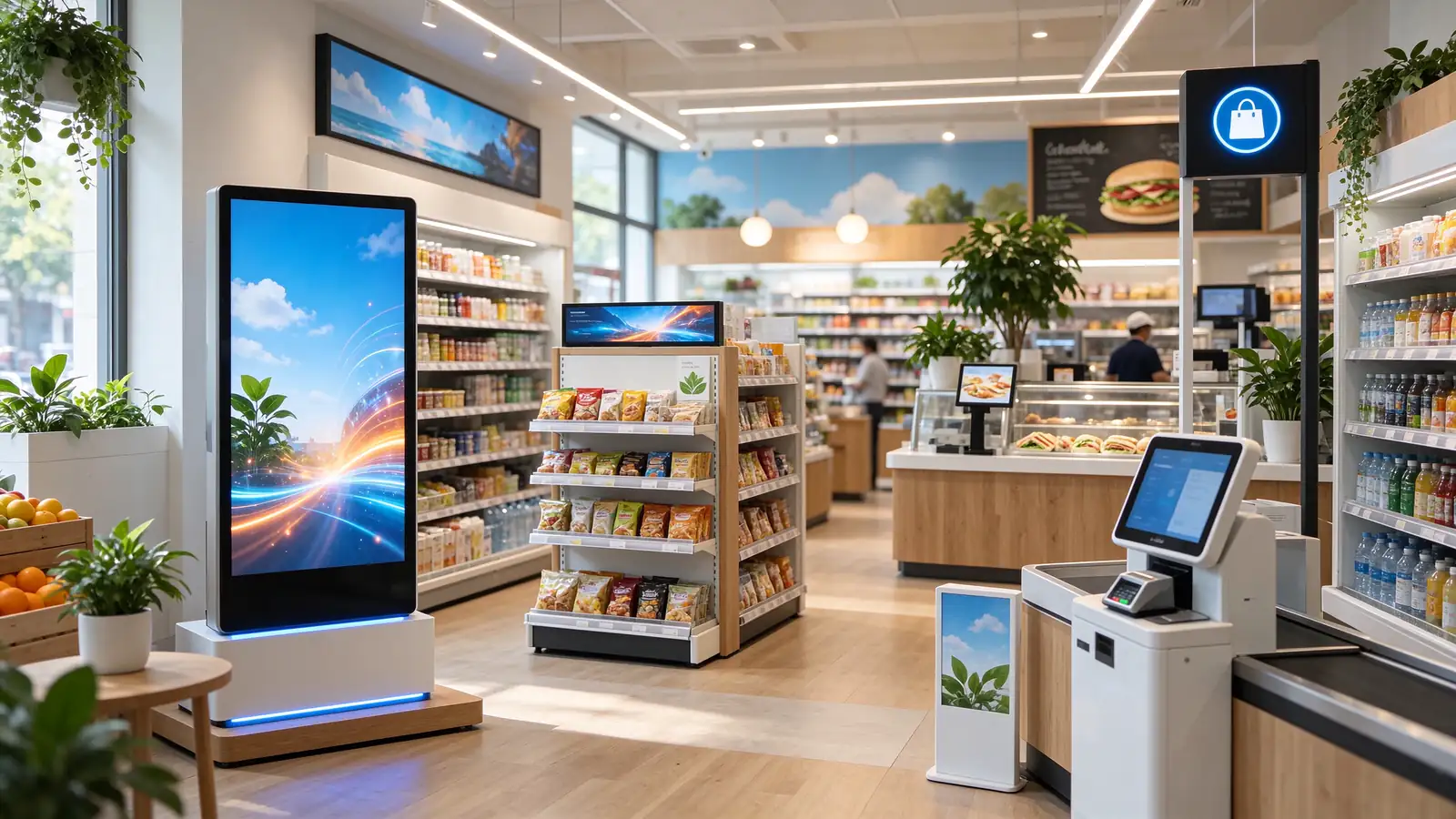
Retail chain digital deployments are frequently fragmented. Most operators source self-checkout terminals, entrance signage, shelf displays and counter menu boards from separate vendors. Each hardware line comes with its own backend, separate login portals, independent firmware schedules and isolated alert workflows. When headquarters rolls out a national promotion, inconsistent content delivery, mismatched shelf pricing and fragmented support tickets become common pain points. While retail media networks are growing into a viable incremental revenue stream for grocery and convenience operators, disjointed hardware stacks make coordinated ad scheduling nearly impossible at scale.
The core thesis for this deployment model is simple: the purchasing unit for a multi-location grocery or convenience network is the entire store, not individual screens. Qtenboard delivers a homologous hardware matrix covering four core in-store display nodes, controllable under one unified HQ CMS. The platform integrates with your current POS, ERP and electronic shelf label systems rather than forcing a full rip-and-replace of your established retail software stack. This solution reduces vendor management overhead, streamlines promotion rollout and creates a stable foundation for retail media monetization across every customer touchpoint.
By the end of this page, retail IT leaders, chain operations directors, franchise stakeholders and system integrators can map their required hardware combination, define data integration boundaries, plan a POC pilot and collect the information needed to request a chain bundle quotation.
Target keywords: convenience store chain signage, supermarket chain digital signage, multi-store display deployment, retail media network signage
Every display node sits along the natural shopper flow. Each hardware type serves a distinct merchandising, operational or loss-control purpose, and all report back to the same central management platform.
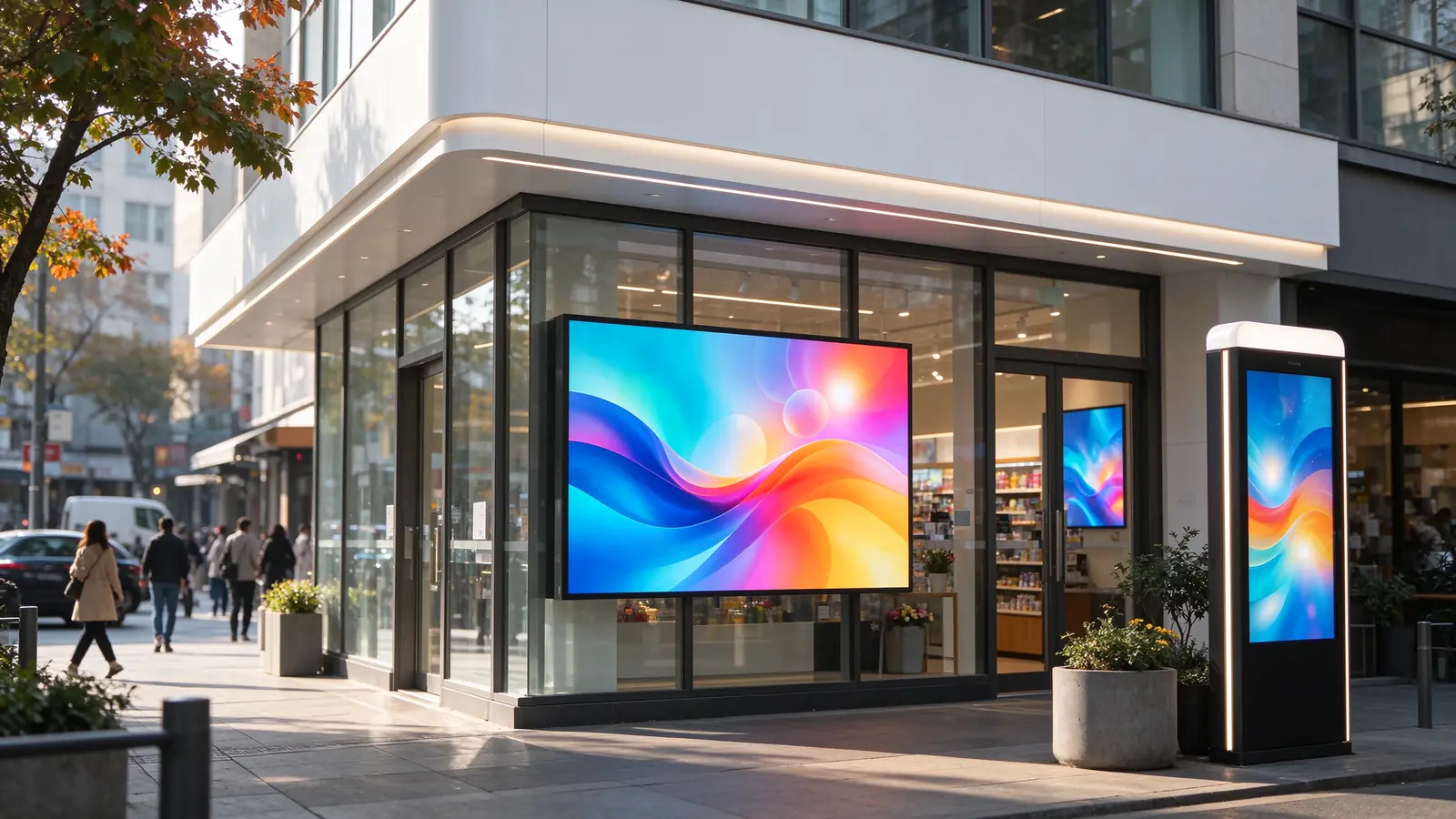
Storefront and window signage must compete with direct sunlight, capture passing foot traffic and deliver consistent brand messaging across hundreds of locations. Standard indoor panels wash out under daylight, forcing operators to limit content to after-dark hours. Disparate signage vendors often require store-level manual updates, creating brand drift across franchise locations.
Qtenboard high brightness window digital signage and wall/freestanding totem displays are built for retail storefront deployment. Panel options reach 2500–5000 nits, with automatic brightness sensing, optional IP54 ingress protection and offline cache playback. The HQ CMS groups screens by territory, store format or opening hours, so headquarters can push region-specific promotions without overriding local approved content. This hardware line sits within our full digital signage portfolio: view full signage product overview.
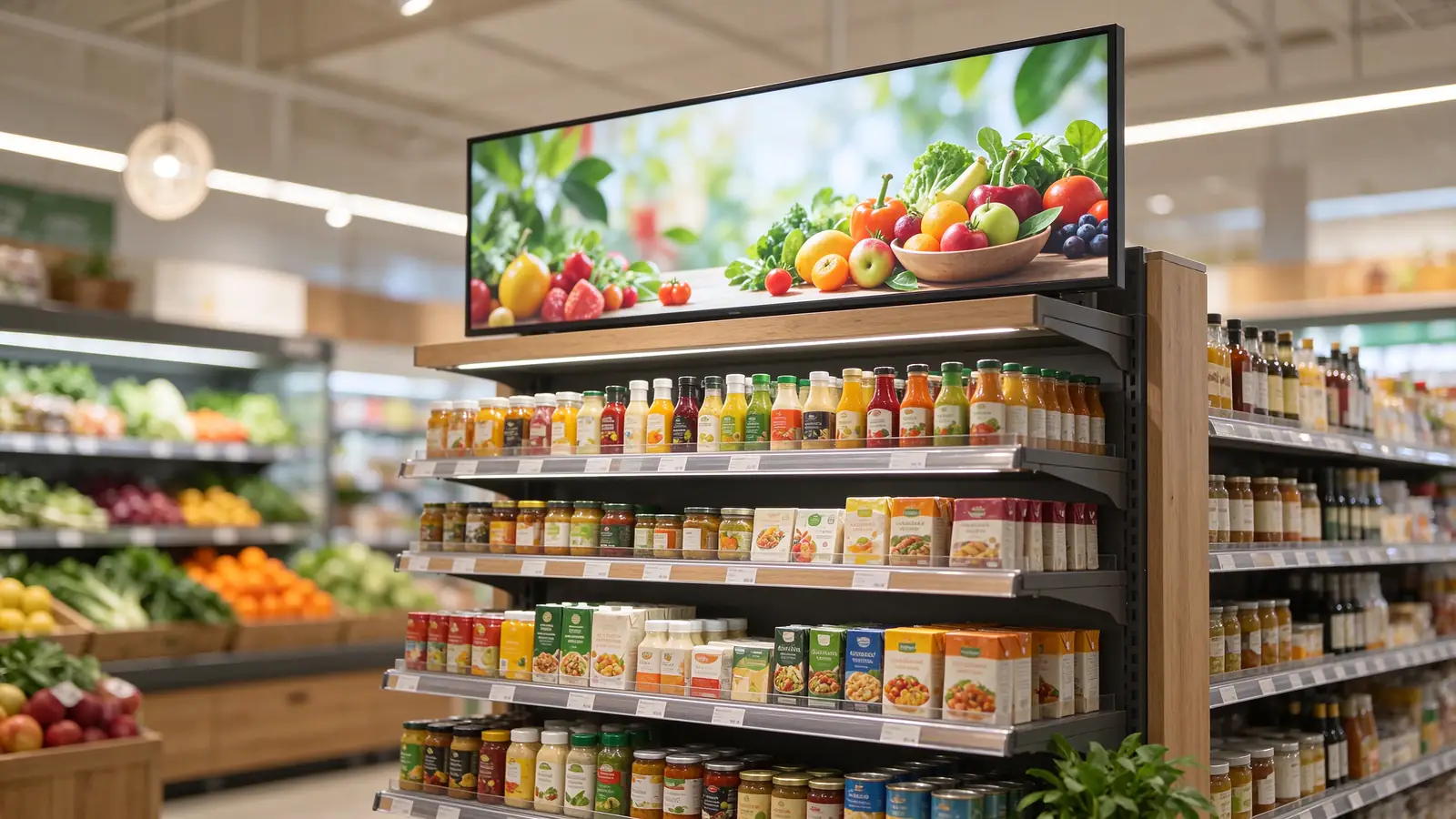
Mismatched shelf pricing and checkout pricing erodes shopper trust and creates compliance risk. Static printed shelf cards are slow to refresh, and endcap promotional messaging is rarely updated in sync with ERP price changes. Many chains want to activate retail media inventory on high-traffic shelf zones without replacing their existing ESL platform.
Qtenboard ultra-thin shelf signage displays are designed for endcap and shelf-side mounting. These commercial-grade 24/7 panels support anti-glare coating and template-based dynamic rendering. The hardware and CMS are API-ready to receive price, discount and inventory feeds from your ERP, POS or ESL provider such as Hanshow or PDI. Qtenboard does not replace electronic shelf label software; it adds visual merchandising and ad capacity on shelf zones that ESL cannot cover.
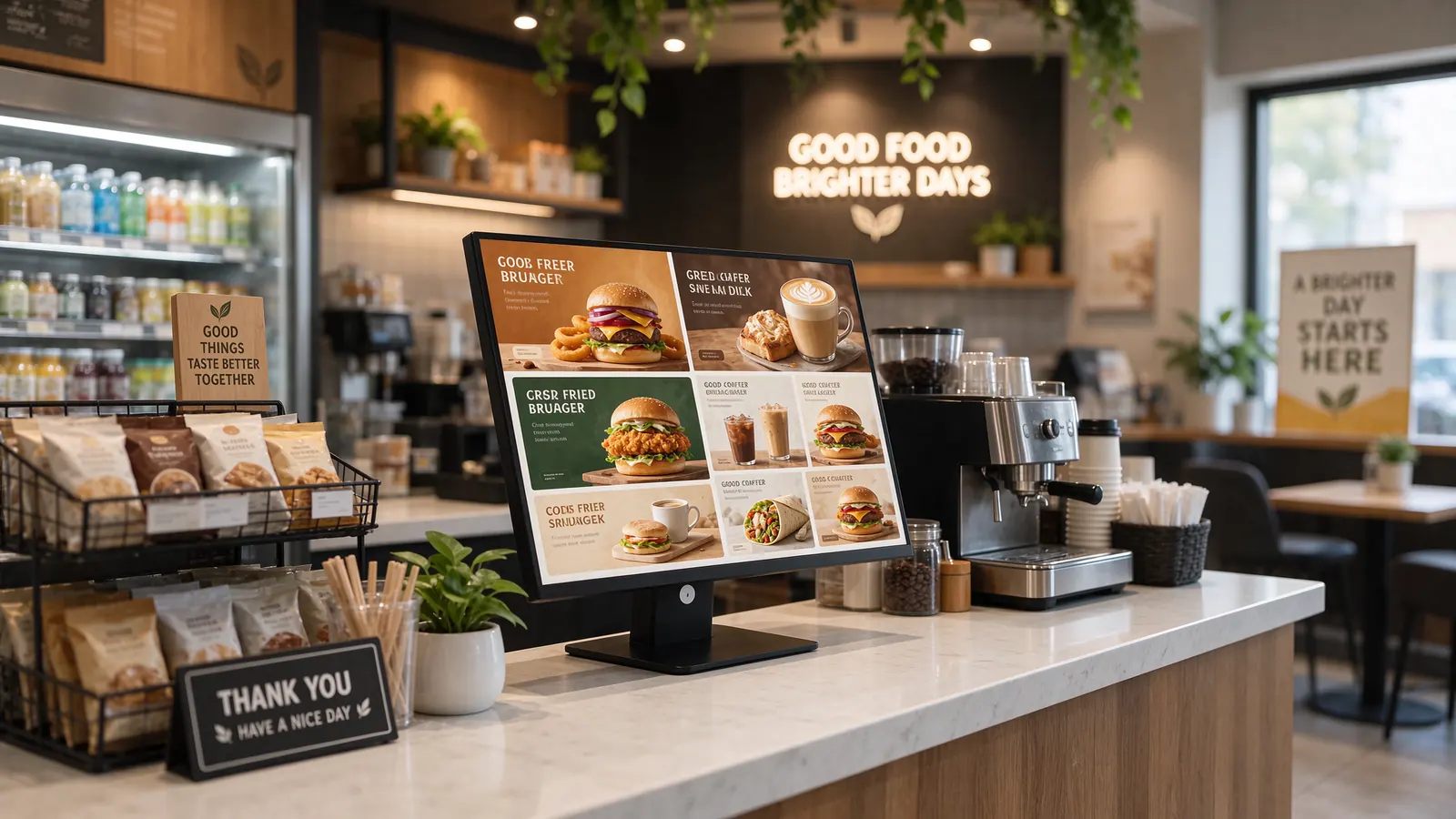
Convenience store hot food, coffee and ready-to-eat counters rely on time-sensitive menus. Static printed menus cannot automatically rotate for breakfast, lunch and evening windows, and sold-out items remain visible until staff manually remove posters. This missed upsell opportunity compounds across every checkout queue.
Qtenboard countertop digital menu boards support daypart scheduling, flexible split-screen layouts, multi-language templates and vandal-proof front glass. The platform is built for POS coordination, so sold-out SKUs can be hidden automatically when inventory is depleted. This product is purpose-built for retail counter deployment: countertop digital menu board hardware page.
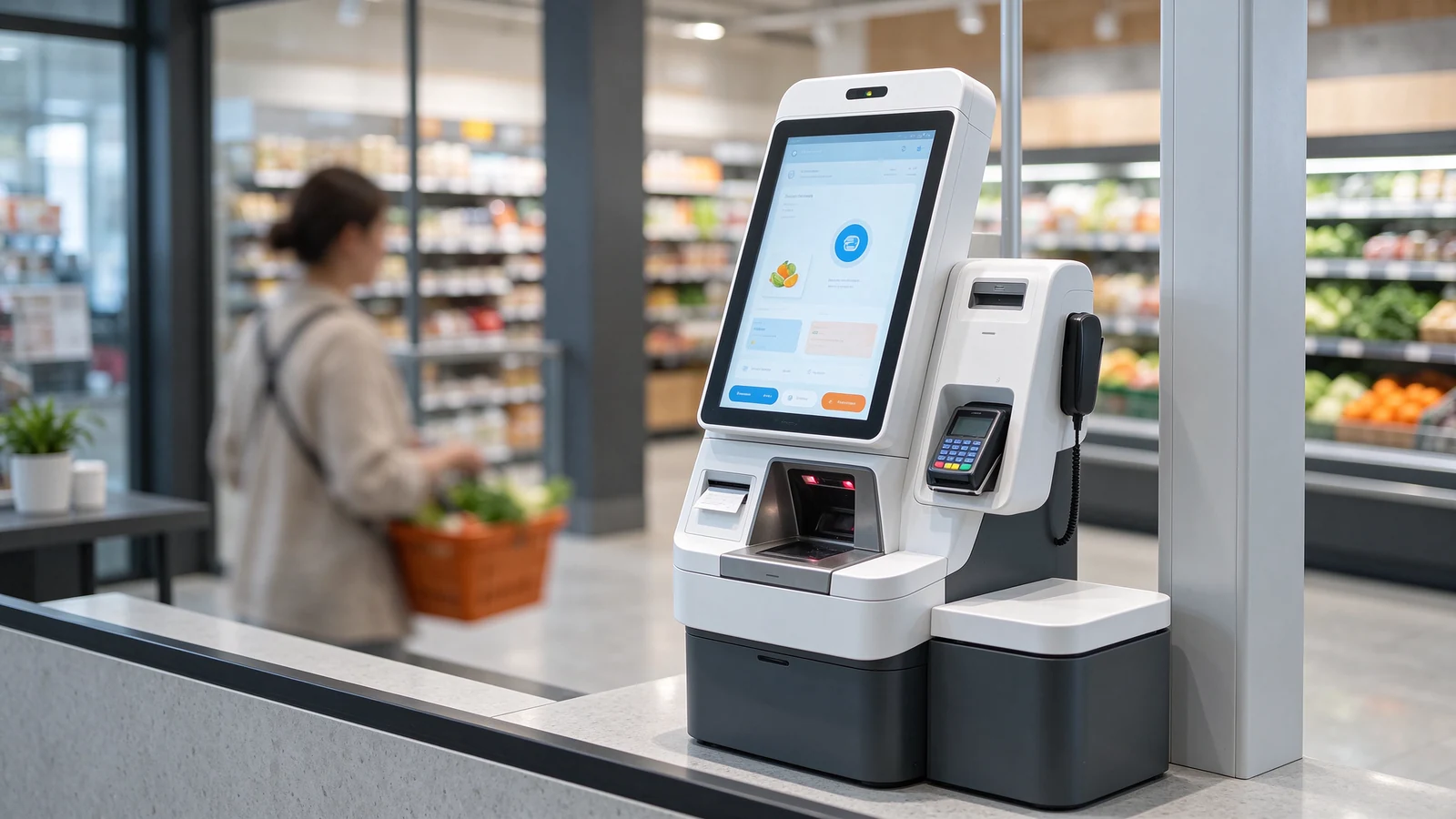
Long checkout queues drive basket abandonment. Self-checkout lanes reduce cashier dependency, but fragmented deployments often create a separate hardware ecosystem disconnected from the rest of the store’s digital signage. Poor scanner performance, incompatible payment brackets and unreliable printing increase shrinkage and customer frustration.
Qtenboard self-checkout kiosk hardware covers 15.6″ through 32″ form factors, with high-speed 2D barcode scanning, integrated thermal receipt printing, custom POS mounting brackets and your choice of Android or Windows operating system. Every unit completes a 72-hour burn-in aging test before shipment. We supply the hardware chassis, display, scanner and printer assembly, while your checkout software partner manages item databases, weighing logic, anti-shrink AI and POS reconciliation. Review full specifications: self-checkout kiosk hardware for grocery retail.
The central CMS is the operational backbone of this unified signage narrative. A single-store deployment only needs simple playback; a retail chain requires hierarchical governance, data feed orchestration and remote fleet monitoring.
The CMS supports differentiated access for corporate stores and franchise locations. Headquarters retains control over brand assets, national campaigns and retail media ad inventory. Regional managers can approve local promotions, while individual store users are locked into limited editable zones such as same-day markdowns. The platform also includes content approval workflow before scheduled publication, eliminating unauthorised off-brand content.
All dynamic pricing, discount and inventory values originate from your existing ERP, POS or ESL system. The Qtenboard CMS hosts visual templates and renders incoming data, but we do not build retail transaction or inventory software. Our engineering team coordinates API documentation and joint lab testing with your ISV or software partner to stabilise feeds before mass rollout.
Dispersed convenience networks rarely have on-site IT staff. The CMS delivers offline playback capability, automatic offline alerts, remote reboot, scheduled power cycling and uptime reporting. For multi-region rollouts, we support regional spare part planning to reduce field service lead time.
Target keywords: retail chain CMS, multi-location digital signage management, offline playback for retail signage
Transparent scope definition prevents misalignment during POC and rollout. This separation is critical for B2B retail system integration projects.
Client Profile: Regional convenience chain with 42 operating locations, mix of corporate and franchise stores.
Original Pain: Three separate vendors supplied self-checkout hardware, window signage and shelf displays. Each fleet required separate support tickets, promotion deployment took 7 calendar days, and store IT labour was heavily tied to manual screen updates.
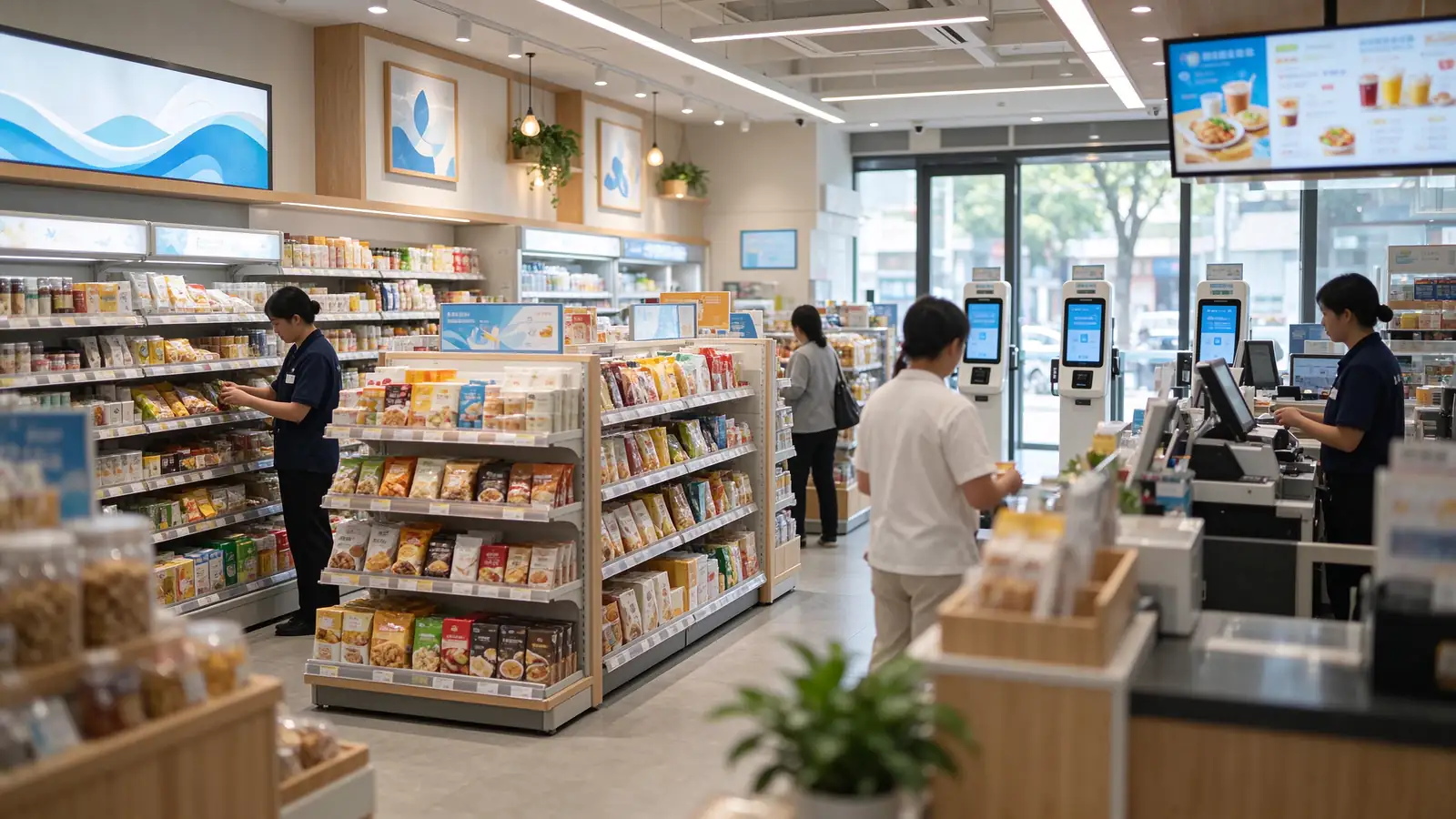
Qtenboard Solution: Bundled hardware package including entrance high-brightness totems, endcap shelf displays, POS-linked counter menu boards and compact self-checkout kiosks. All devices managed under one HQ CMS, integrated with their existing POS and third-party ESL platform.
Measured Outcomes: National promotion rollout cycle reduced from 7 days to 4 hours; screen maintenance labour cut by 62%; retail media advertising slots activated on entrance and shelf displays for incremental recurring revenue.
Chain deployment works best in phased stages to control risk and lock configuration before mass production.
Total cost of ownership gains come from reduced vendor management overhead, fewer costly site visits, unified spare stock and consistent brand presentation across all shopper touchpoints.
Before submitting your inquiry, prepare these details to accelerate your custom bundle proposal:
Request a site evaluation, POC sample arrangement or custom chain bundle quotation.
Q Özüxidmət kassası | Countertop Digital Menu Board | Full Digital Signage Product Overview
Qtenboard — unified signage & self-checkout hardware platform for convenience & supermarket chains.
| Keyword | Target Placement |
|---|---|
| convenience store chain signage | Page title, opening, core journey section, CTA |
| supermarket chain digital signage | Page title, opening, self-checkout section, CTA |
| multi-store display deployment | Opening, CMS section, case study, CTA |
| self-checkout kiosk retail | Self-checkout node, why Qtenboard, CTA |
| shelf display supermarket | Shelf display node, FAQ, case study |
| digital menu board convenience store | Countertop node, FAQ, CTA |
| HQ CMS retail chain | CMS section, FAQ, CTA |
| retail media signage | Opening, entrance & shelf display sections |
| grocery chain digital signage | Opening, ROI roadmap |

İEO | Interaktiv Display və Koleyt Solution Müəyyət
Mən Qtenboard şirkətinin təsisçisi olaraq, sensorlu displey sənayesində 17 ildən artıq praktiki təcrübəm var. ShenZen Universitetində EMBA öyrənmələrim vasitəsilə qazanmış qlobal idarəçi təhlükəsizlikdən istifadə edir. Mənim əməkdaşlarımızın hər bir mərhəməti təhlükəsizliyindən güclü ehtiyatlı təmində zəncir idarə edir. Müxtəlif qabiliyyətlər industrinin önündə qalır.
Qtenboard lideri kimi, interaktiv ağ bordlar üçün müntəzəm OEM/ODM həlllər təqdim etməkdə xüsusiyyət edirəm, LCD video divarları, rəqtəsi simaları və industriya rəftarın terminalları. Shenzhendəki müasir industriya parkirlərimizin 330 000 m m. və sərt əməl sınaqlar.
Təxminən iki il proyiey təcrübə ilə Qtenboardın nümayişləri 120 ölkə və ərazilərdə istifadə edilib. Bütün dünyada 15 000 - dən çox əməkdaşlarının etibarına qazanmışdı. Əgər siz mütləq rəftar proyüsləriniz üçün dərin faydalı təsdiqləyən əməkdaşı axtarırsınızsa, Mənim qrupam və mən sizin görünüşünüzü dəstəkləyəcək.
 aze
 EN
 spa
 pt
 vie
 th
 est
 lav
 ukr
 bel
 ru