Reliable front-end hardware for retail and grocery checkout: high-speed 2D scanning, a universal POS terminal slot, 80mm auto-cut receipt printing, and 15.6″–32″ Full HD touch terminals — built and factory-tested by Qtenboard since 2005.
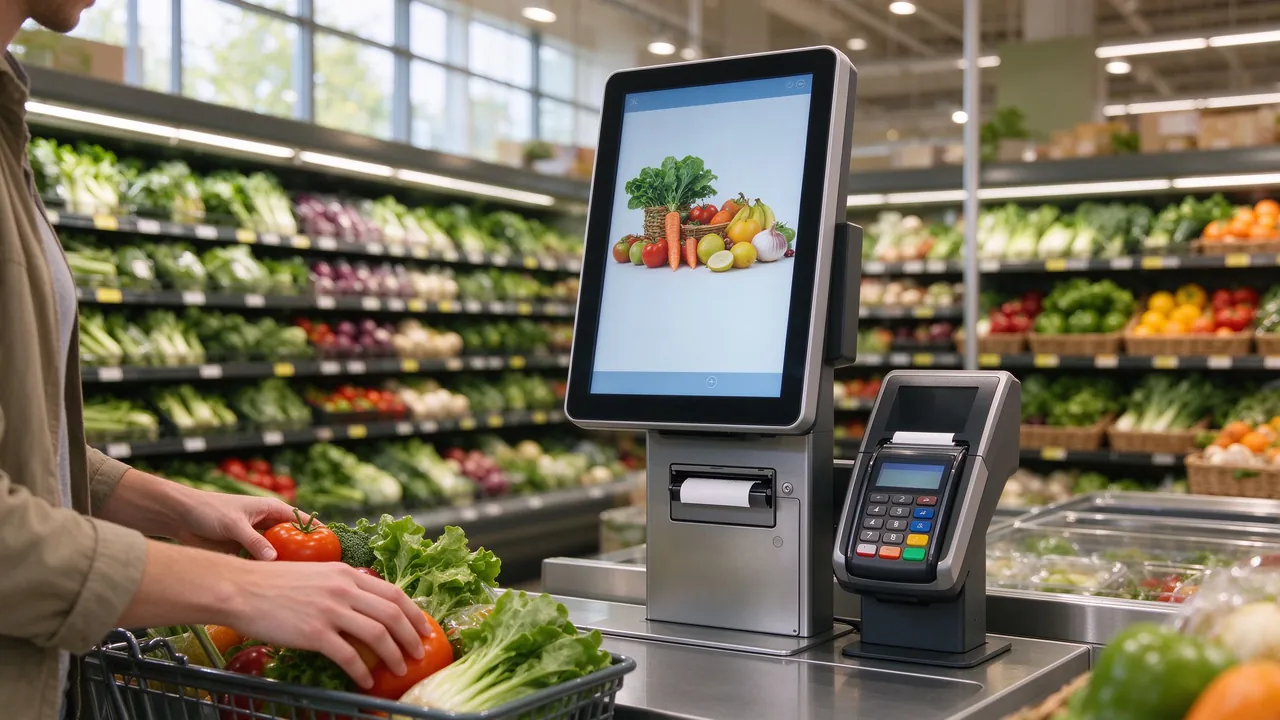
Failed scans mean repeated operations, frustrated shoppers, and lost items at the end of the lane.
One cashier lane equals one transaction stream. Queues grow exactly when your store is busiest.
Bundled payment hardware forces you to accept a specific acquirer, terminal model, or upgrade cycle.
Qtenboard hardware does not replace your checkout software. It makes your checkout front-end reliable, replaceable, and ready for mixed staffed and self-checkout lanes — the model most grocery chains now run.
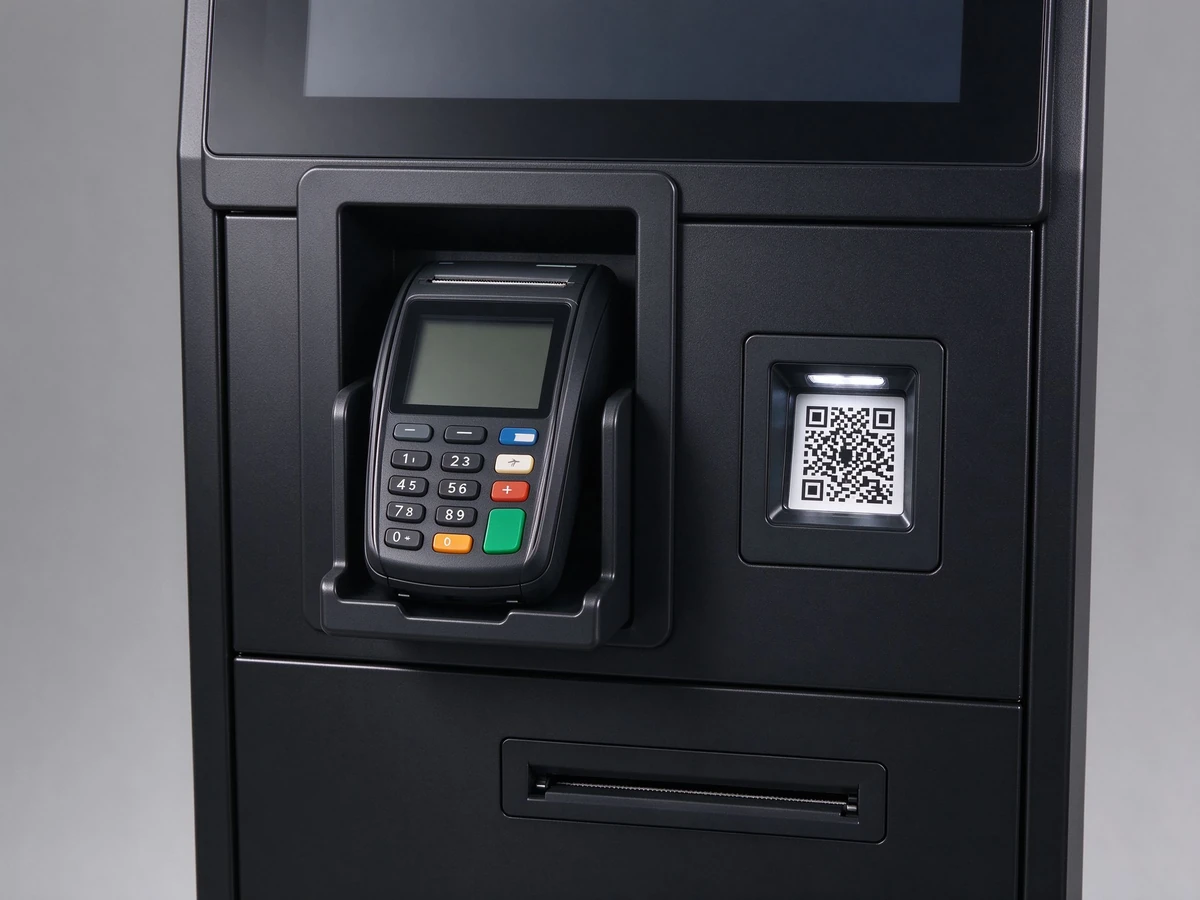
| Front-End Requirement | Qtenboard Configuration | Why It Matters |
|---|---|---|
| Item scanning | High-speed 2D QR scanner, reads phone screens and printed barcodes | Fewer failed scans, faster customer flow |
| Payment | Universal POS bracket slot for standard bank card terminals (EMV chip / swipe / contactless) | Keep your existing terminal and processor |
| Contactless | Integrated NFC support for mobile wallets and membership codes | Covers QR, NFC tap, and card payments |
| Receipts | 80mm/58mm auto-cut thermal printer | Instant receipt after payment, fewer assistance calls |
| Screen | 32″ Full HD original panel; 15.6″–32″ options | Item list and prompts reduce operator errors |
| Touch | 10-point PCAP capacitive touch | Responsive interaction under heavy use |
| System | Android / Windows selectable | Matches your integrator’s software stack |
| Form factor | Floor-standing, wall-mounted, or countertop | Fits store footprint and lane layout |
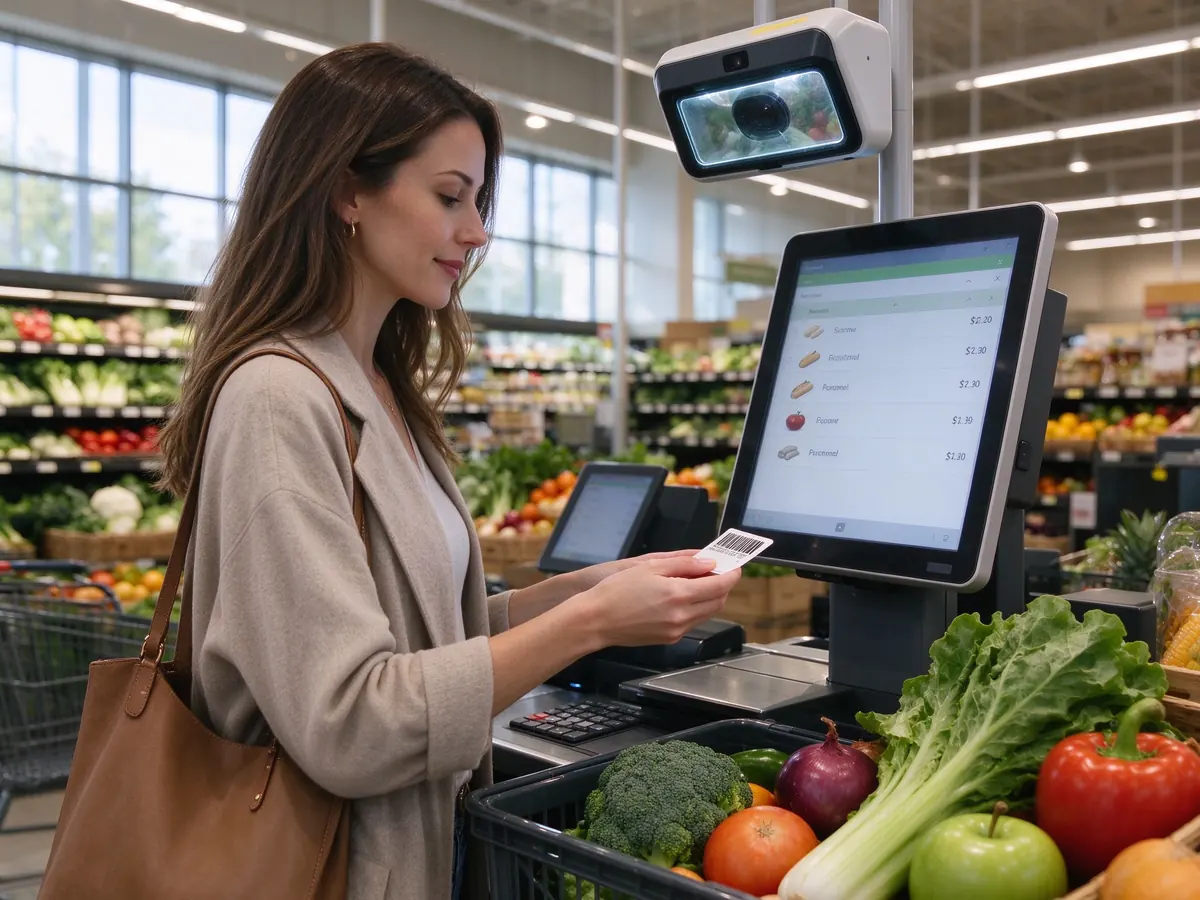
Recommended: 32″ floor-standing kiosk with POS slot. A large screen shows the item list and price in real time, guiding shoppers through small-basket transactions and reducing mis-scans. Ideal for the “10 items or fewer” model many chains now operate.
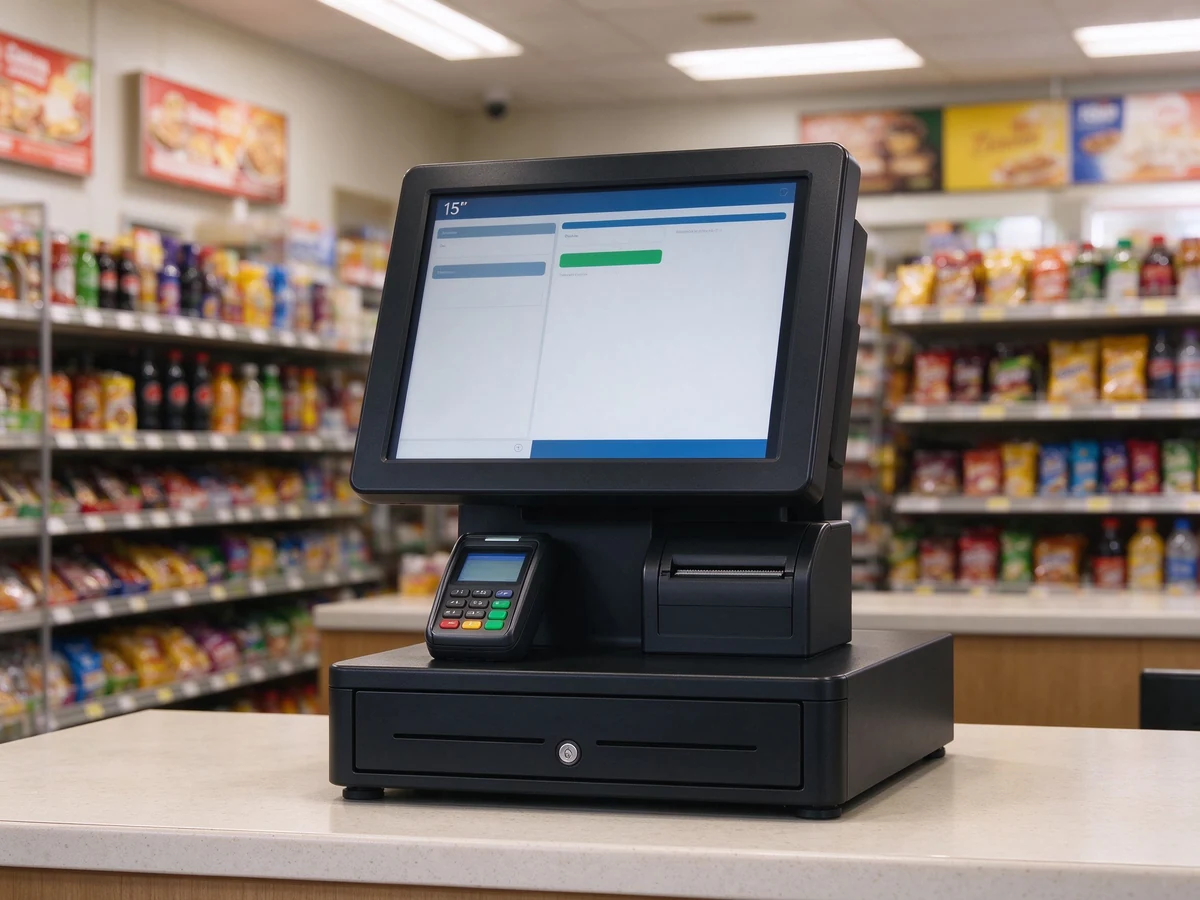
Recommended: 15.6″–21.5″ compact terminal. Limited counter space, simple transactions — scan, pay, print. Wall-mounted or countertop to keep walkways clear.
| Store Format | Recommended Terminal | Buyer Outcome |
|---|---|---|
| Supermarket / grocery (small basket) | 32″ floor-standing POS-slot kiosk | Large-screen guidance lowers mis-scans; staffed lanes handle large baskets |
| Convenience store | 15.6″–21.5″ compact terminal | Fits small spaces; fast scan-pay-print flow |
| Apparel / home / general retail | Kiosk with product lookup + membership | Price check, member ID, and payment in one device |
| Multi-site retail chain | Standardized 32″ + OEM branding | One hardware platform cuts spare parts and training cost |
The effective interventions in the market — exit gates, personal display monitors, missed-scan detection, staff supervision — run on top of the hardware. Qtenboard provides the reliable platform those systems are built on, without overpromising an all-in-one security machine.
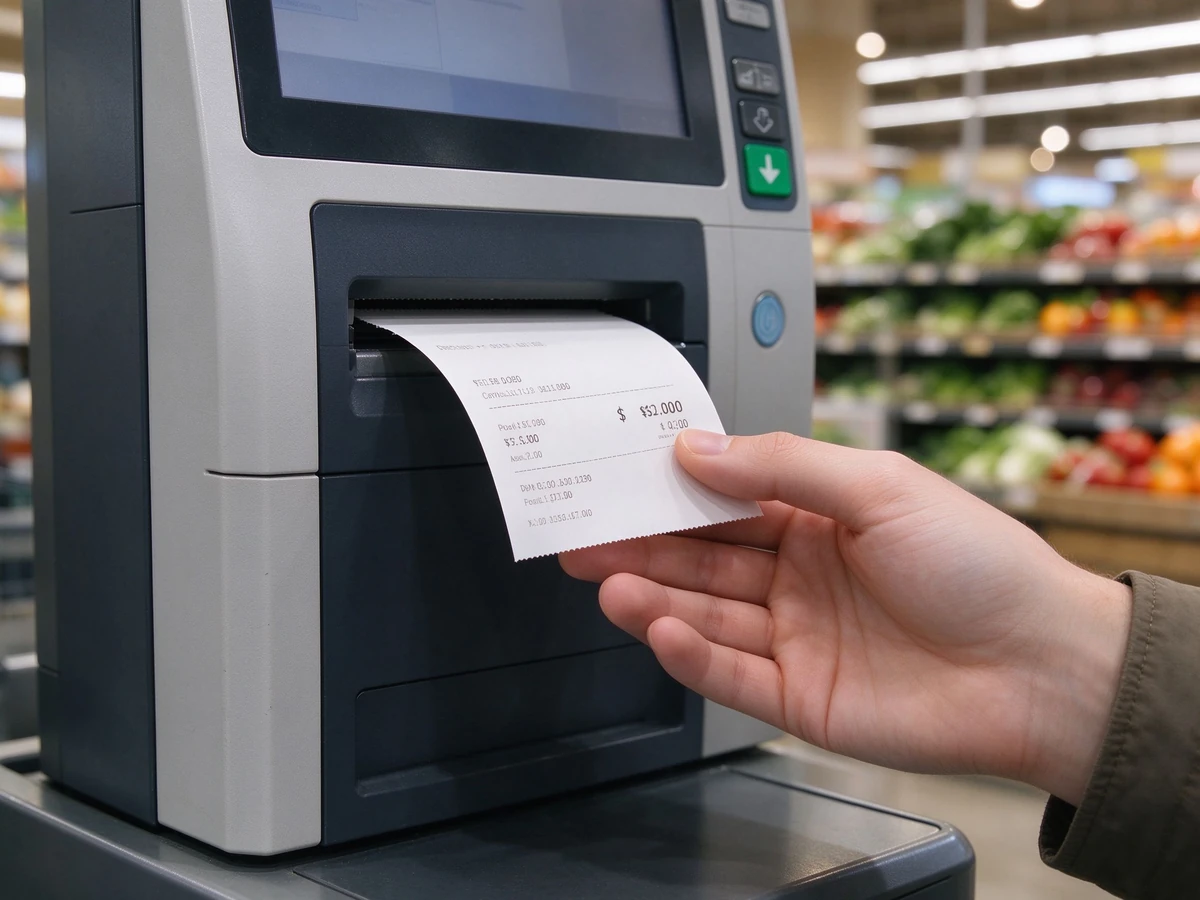
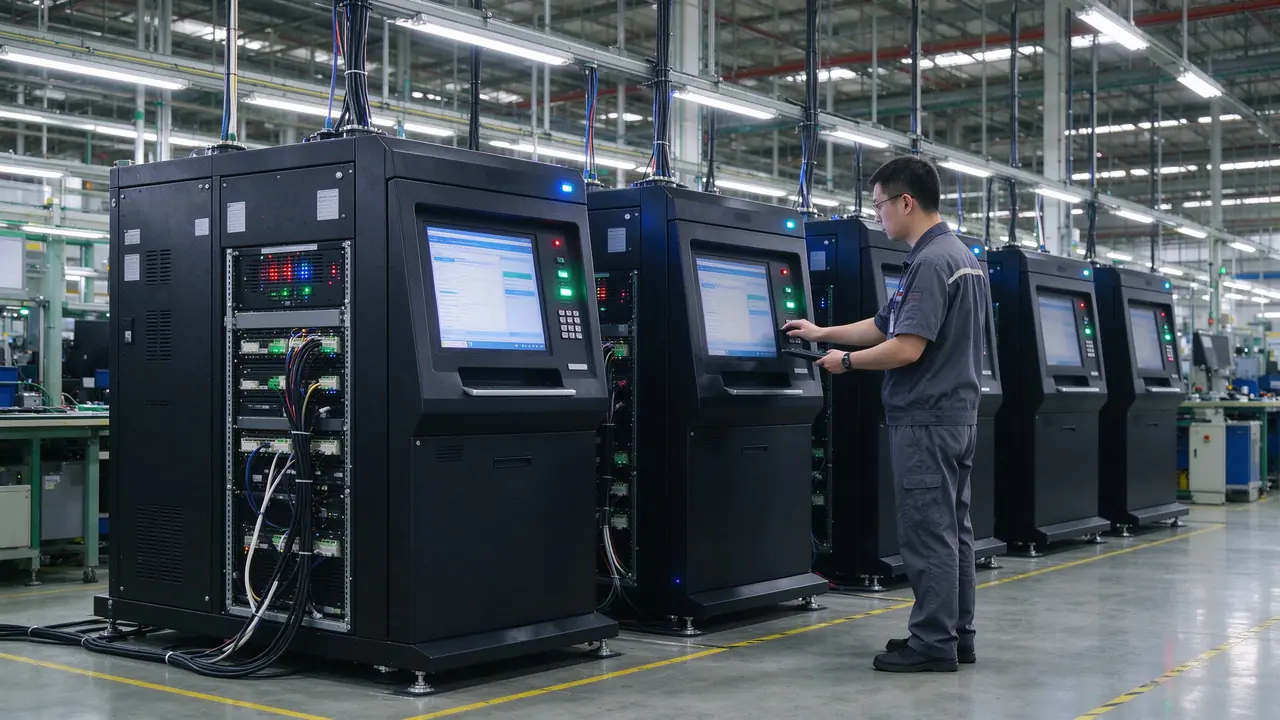
Every kiosk passes functional checks before shipment: scanner recognition, payment terminal connection, printer feed, touch response, and network boot — then 72-hour power-on aging. A checkout terminal that fails mid-shift means queues and unhappy shoppers, so factory testing matters more than screen specifications.
Certificates are available for client verification. OEM/ODM scope: POS bracket customization, scanner and printer positioning, sheet-metal color, brand logo, system selection, and CKD/SKD supply for local assembly.
These deployment patterns are documented in Qtenboard’s supermarket self-checkout implementation guide. Each shows what the hardware must support in a real checkout lane.
A major U.S. retailer worked with the National Federation of the Blind to add tactile controllers, high-contrast buttons, and headphone jacks to self-checkout. The accessible stations are deployed in 200 stores and expanding to all locations.
A New York convenience chain deployed computer-vision checkout that identifies items without barcode scanning, integrated with a unified payment and loyalty framework. After a five-store pilot it expanded to more than 100 locations.
A regional supermarket chain deployed a modular self-checkout platform to adapt to different store sizes, with local POS integration partners, then expanded after a successful pilot.
Independent grocers deployed self-checkout alongside cashier lanes; one chain reported labor savings roughly four times higher per employee at self-checkout versus cashiered lanes, with a 6–12 month customer adjustment period.
Yes. Terminals ship with Android or Windows so your integrator’s application runs on the kiosk. Qtenboard supplies the hardware front-end — scanner, display, payment terminal mounting, and printer — and confirms interface and peripheral compatibility at project stage.
Yes. The universal POS bracket slot accepts standard bank card terminals — EMV chip, swipe, and contactless — so you keep your current terminal and processor, and replace or upgrade the terminal independently of the kiosk.
Most grocery chains use self-checkout for small baskets and staffed lanes for large ones. A 32″ POS-slot kiosk with a large item list handles the small-basket flow; using the same payment terminal family on both lane types simplifies reconciliation and maintenance.
PCI DSS applies to any unattended card-accepting kiosk. Qtenboard’s hardware supports EMV chip, contactless NFC wallets, PIN debit, and the mounting space for a certified PIN entry device. Canada deployments should also plan for Interac acceptance. Compliance scope is confirmed with your payment terminal and software partners.
Yes, with the right configuration: a certified PIN entry device and POS integration that validates SNAP-eligible items against the transaction. Qtenboard provides the hardware mounting and integration support for the PIN pad and payment terminal.
Every unit is checked for scanner recognition, payment terminal connection, printer feed, touch response, and network boot, followed by a minimum 72-hour power-on aging per production batch — with 99.8% batch pass rate and under 14 days standard lead time.
Yes. OEM/ODM scope includes POS bracket design, scanner and printer position, sheet-metal color, brand logo and UI startup screen, system selection, and CKD/SKD supply for local assembly. Share your store layout and software plan and Qtenboard engineers will confirm the configuration.
Send your store format, lane plan, and software stack. You will receive a terminal configuration recommendation, POS bracket and scanner confirmation, sample and OEM quote, and a factory test and delivery schedule — typically under 14 days from order confirmation.
Planning self-checkout lanes, or matching hardware to a self-checkout software platform? Send your store scenario and software plan, and Qtenboard will respond with a buildable hardware configuration.

CEO | Interactive Display & Collaboration Solution Expert
I am the founder of Qtenboard, bringing over 17 years of hands-on expertise to the touch display industry. Drawing on the global management perspective gained through my EMBA studies at ShenZhen University, I lead my team in optimizing every stage of our operations—from product definition to high-efficiency supply chain management—ensuring our manufacturing capabilities remain at the forefront of the industry.
As the leader of Qtenboard, I specialize in providing tailored OEM/ODM solutions for interactive whiteboards, LCD video walls, digital signage, and industrial-grade touch terminals. Backed by our 330,000 m² modern industrial park in Shenzhen, we maintain full-lifecycle control over industrial design, precision manufacturing, and rigorous performance testing.
With nearly two decades of project experience, Qtenboard’s display solutions are now deployed in over 120 countries and regions, earned the trust of more than 15,000 enterprise customers worldwide. If you are seeking a responsive partner with a deep manufacturing foundation for your customized touch display projects, my team and I are ready to support your vision with professional excellence.

 EN
 spa
 pt
 vie
 th
 est
 lav
 aze
 ukr
 bel
 ru