Transit hub display solutions · Airport · Metro · Rail
From AODB and GTFS-Realtime feeds to platform-edge panels: 21.5–98 inch high-brightness terminals, IP65/IP66 enclosures, Android or Windows endpoints, CMS and transit-API integration — specified, built and burn-in tested before it reaches your station.
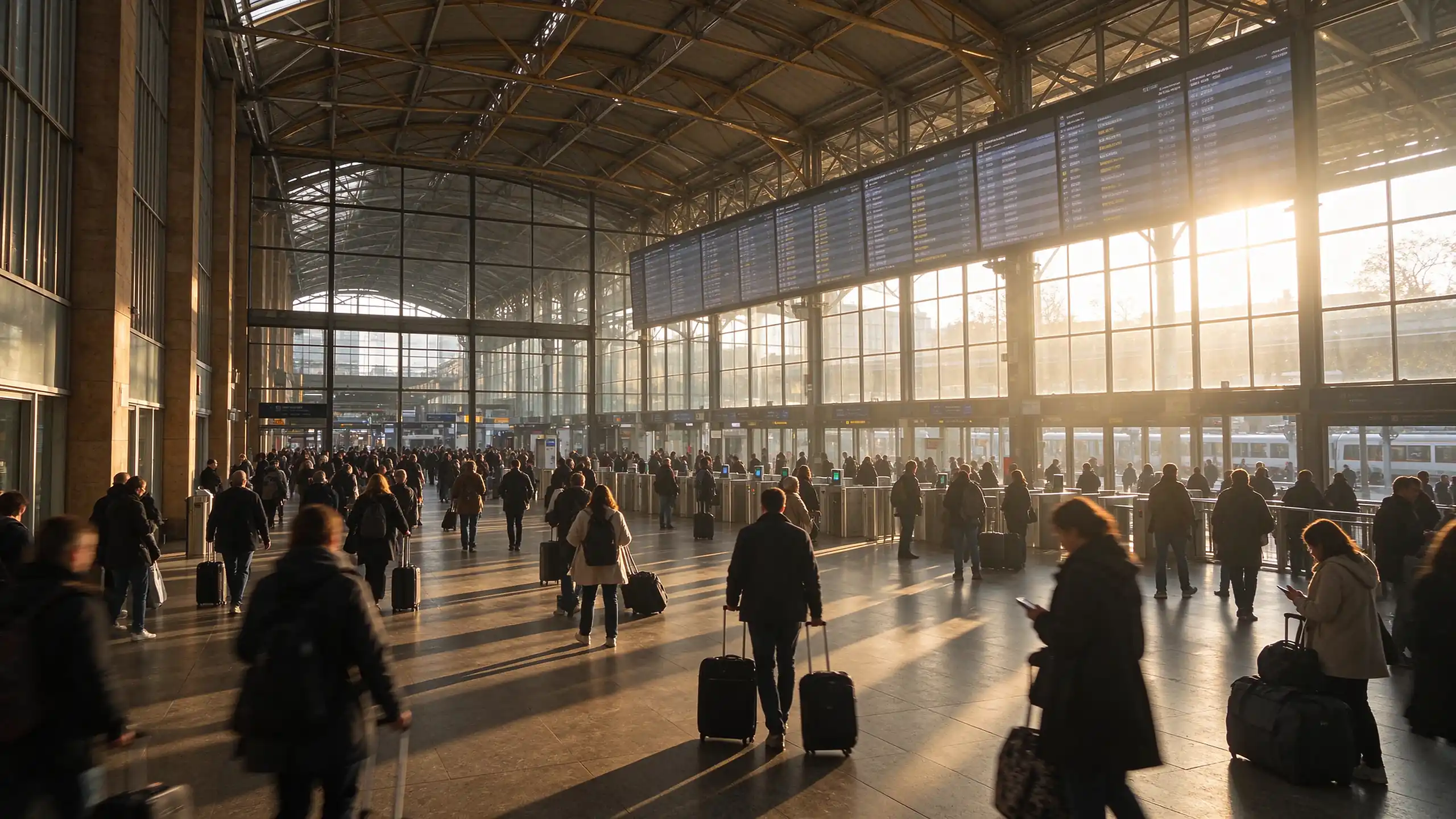
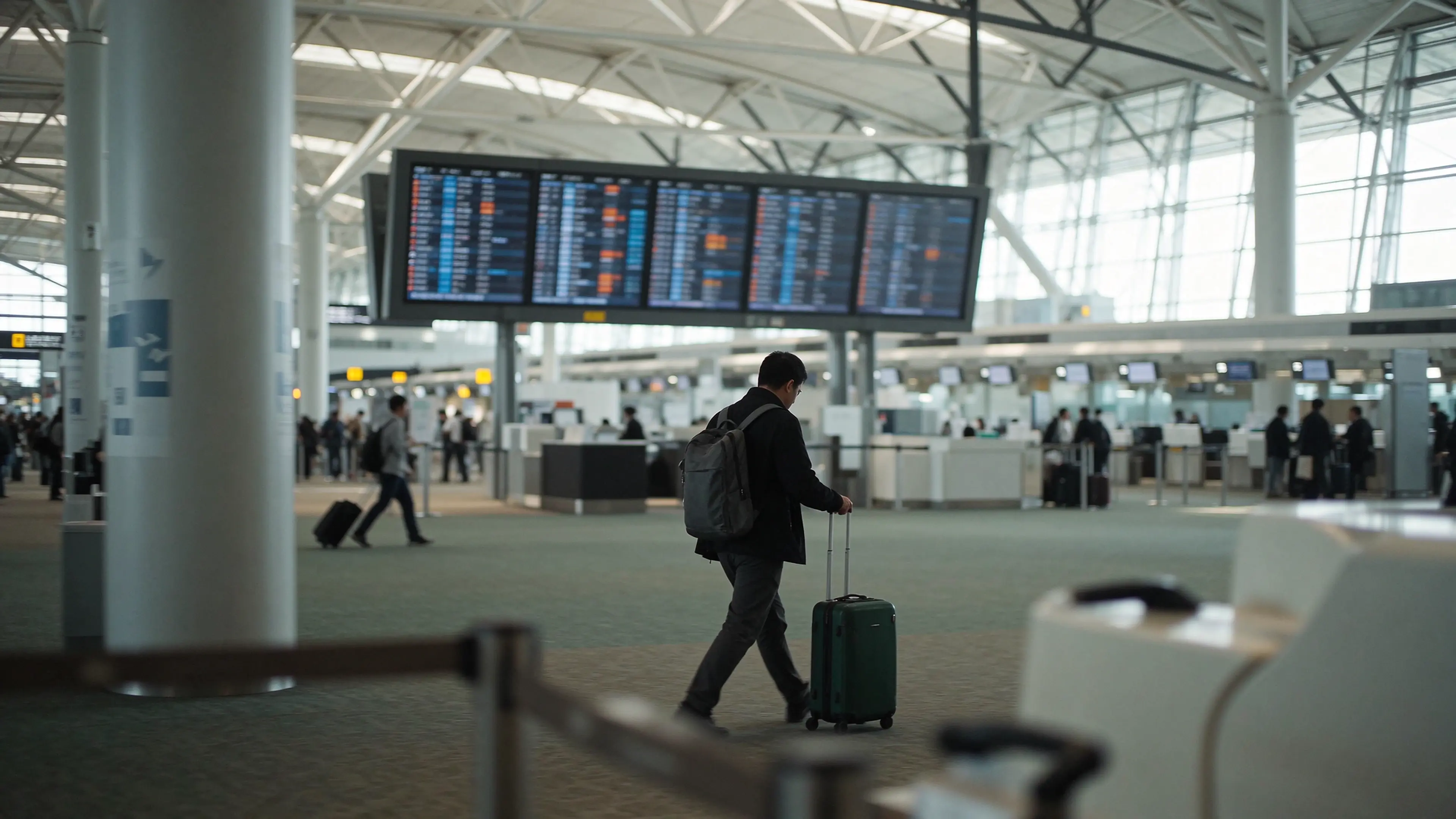 Airport FIDS bank above a check-in hall: the panel is the last link in the AODB chain, not a standalone media player.
Where the budget goes
None of these failures appear in the factory. All three are decided in the specification phase, usually by whoever wrote the purchase order first — and they surface at site acceptance, when the timetable is already published.
A screen bought on price has a fixed EDID and a fixed input set. The existing FIDS player or video matrix expects a timing mode the panel does not accept, or the installation assumes an HDMI path where the cabinet only offers VGA.
Cost at site: a replacement matrix or a replacement panel batch — plus the recabling that goes with either.An indoor 500-nit panel is specified for an elevated platform because the tender said "high brightness" without a number. Passengers read the backlight reflection, not the arrival time. The complaint arrives in summer, not at commissioning. Cost at site: panel swap on live platforms at night, with possession windows and re-testing.
The screens work. The paperwork does not: no IP report for that exact cabinet, no impact rating, no fire classification for the installed materials. The integrator cannot hand the asset over. Cost at site: delayed payment milestone, and a certificate nobody can produce retroactively.
Every section below exists to close one of those three gaps before the purchase order is issued — not to add features to a quotation.
Scenario matrix
Airport, metro and rail passenger information display projects share a display technology and share almost nothing else. The upstream data source decides the terminal count, the mounting position decides the enclosure, and the operator decides the acceptance route.
| Hub type | Data source & integration path | Terminal positions | Environment class | What we specify most often |
|---|---|---|---|---|
| Airport FIDS Flight information display system | AODB → FIDS server → player or video matrix; display receives a rendered video feed or a documented API payload | Departure and arrival banks, gate podium, check-in row, baggage carousel, staff room, curb-side | Indoor hall, plus semi-outdoor gate pier | 55–85 inch, 700–1,000 nits, anti-glare glass, 24/7 rated panel, landscape layout |
| Metro PIS Passenger information system | ATS / CBTC plus central PIS → station server or playback controller; per-station remote management | Platform edge, concourse, passageway, lift lobby, elevated platform, depot notice board | Indoor platform, plus elevated and canopy zones | 43–65 inch slim profile, IP65, heater, dual-network endpoint, high refresh for next-train rows |
| Rail PIDS Passenger information display system | CTC or central passenger information system → station server; timetable and platform allocation | Platform, passageway, concourse, ticket gate line, waiting area, park-and-ride | Semi-outdoor and fully open platform | 55–75 inch, IP66, IK10 laminated glass, heater plus anti-condensation, wide viewing cone |
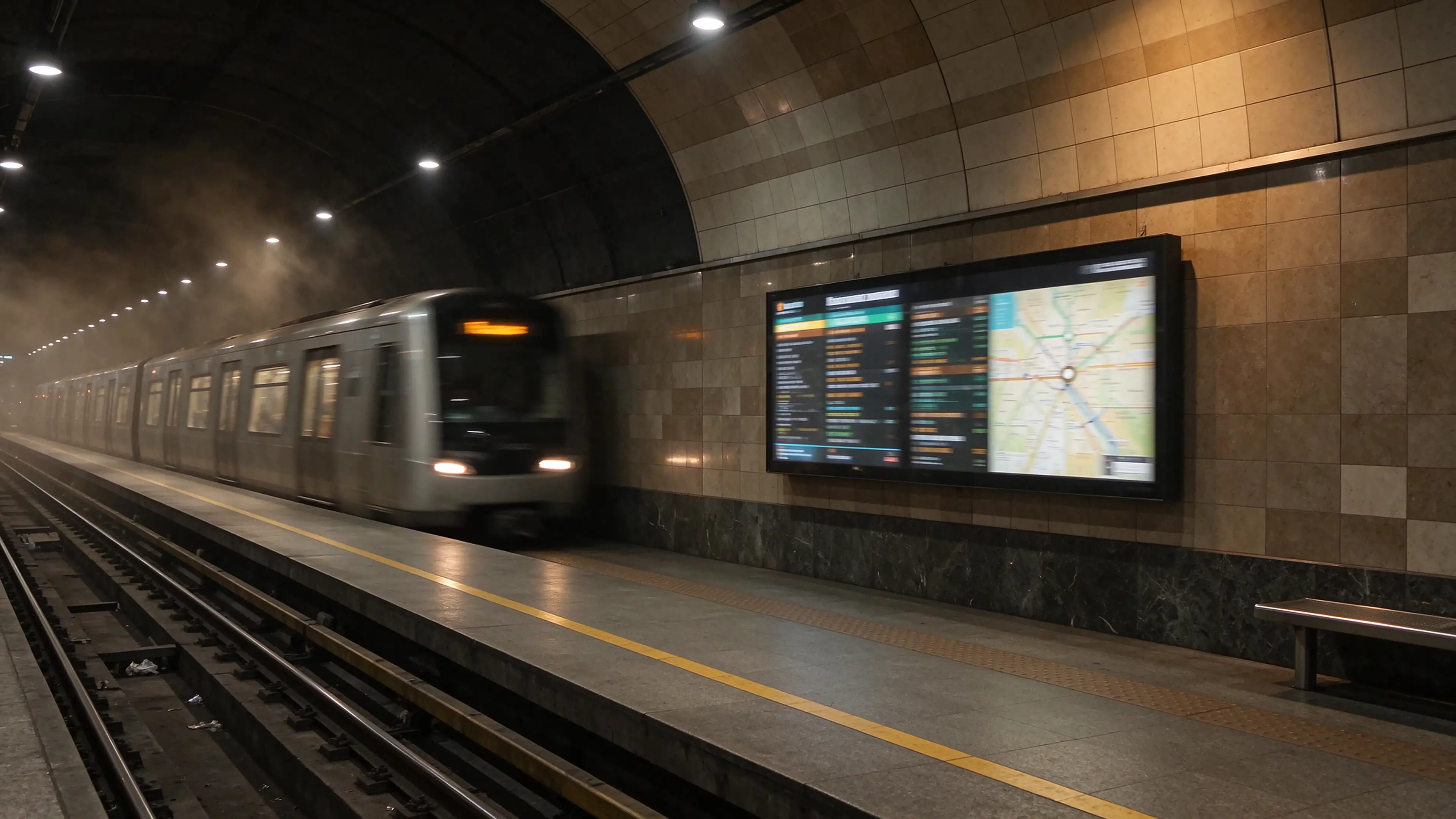 Metro platform installation: next-train rows, destination and interchange guidance share one slim panel mounted clear of the train envelope.
The same 43 inch panel can serve a metro platform and a small regional terminal. What changes is the enclosure, the brightness band, the mount and the acceptance package — not the product family.
Decision one
This single choice determines the interface list, the software owner, the failure path and the price. It should be answered before the tender, because it cannot be changed after the cabinet drawing is approved.
The operator already owns a FIDS player or video matrix. The display is a pure sink.
Each panel is an addressable device on the station network, with no local PC in the riser.
Service alerts must beat advertising even when the network is down.
Typeface, right-to-left layout, multi-language rows and content priority are rendered by the player or the CMS — not by the panel. What the panel owes you is faithful reproduction: full colour range, no scaling artefacts, and a backlight that still holds its level after 50,000 hours. Any supplier who tells you the screen handles language rendering is selling you a software problem as hardware.
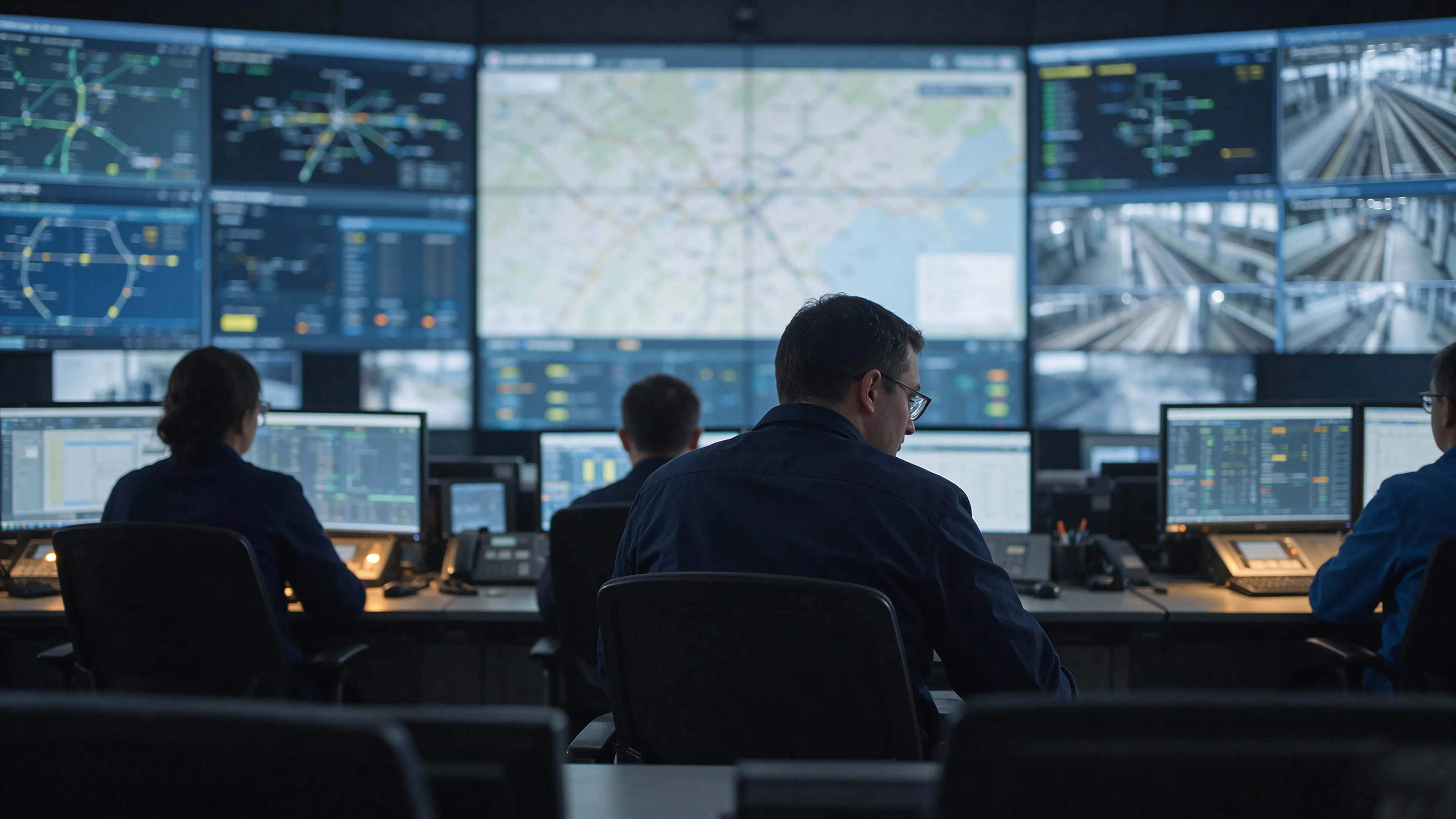 Control room view: one CMS console should show every station, every panel state and every failed update — without a site visit.
Specification bands
Use these bands to sanity-check a tender before you send it. The final numbers still have to come from a sun-path and viewing-distance study on the actual platform — a west-facing panel at 40°C needs a different answer from a covered concourse.
| Installation class | Typical locations | Brightness | Ingress | Glass & impact | Thermal |
|---|---|---|---|---|---|
| Indoor, controlled24/7 duty | Terminal hall, concourse, staff areas, ticket office | 500–700 nits | IP40, filtered intake | Anti-glare, IK07 where public | Fanless, L70 ≥ 50,000 h |
| Semi-outdoorCanopy, elevated | Gate pier, elevated metro platform, passageway, shelter | 1,000–1,500 nits | IP54 to IP65 | Anti-glare plus laminated, IK08 | Fan plus heater, anti-condensation |
| Full outdoorOpen platform | Platform edge, bus interchange, park-and-ride, depot yard | 1,500–2,000 nits | IP65 to IP66 | Anti-reflective laminated, IK10 | Air-conditioning or heater, ISO 9227 salt fog for coastal |
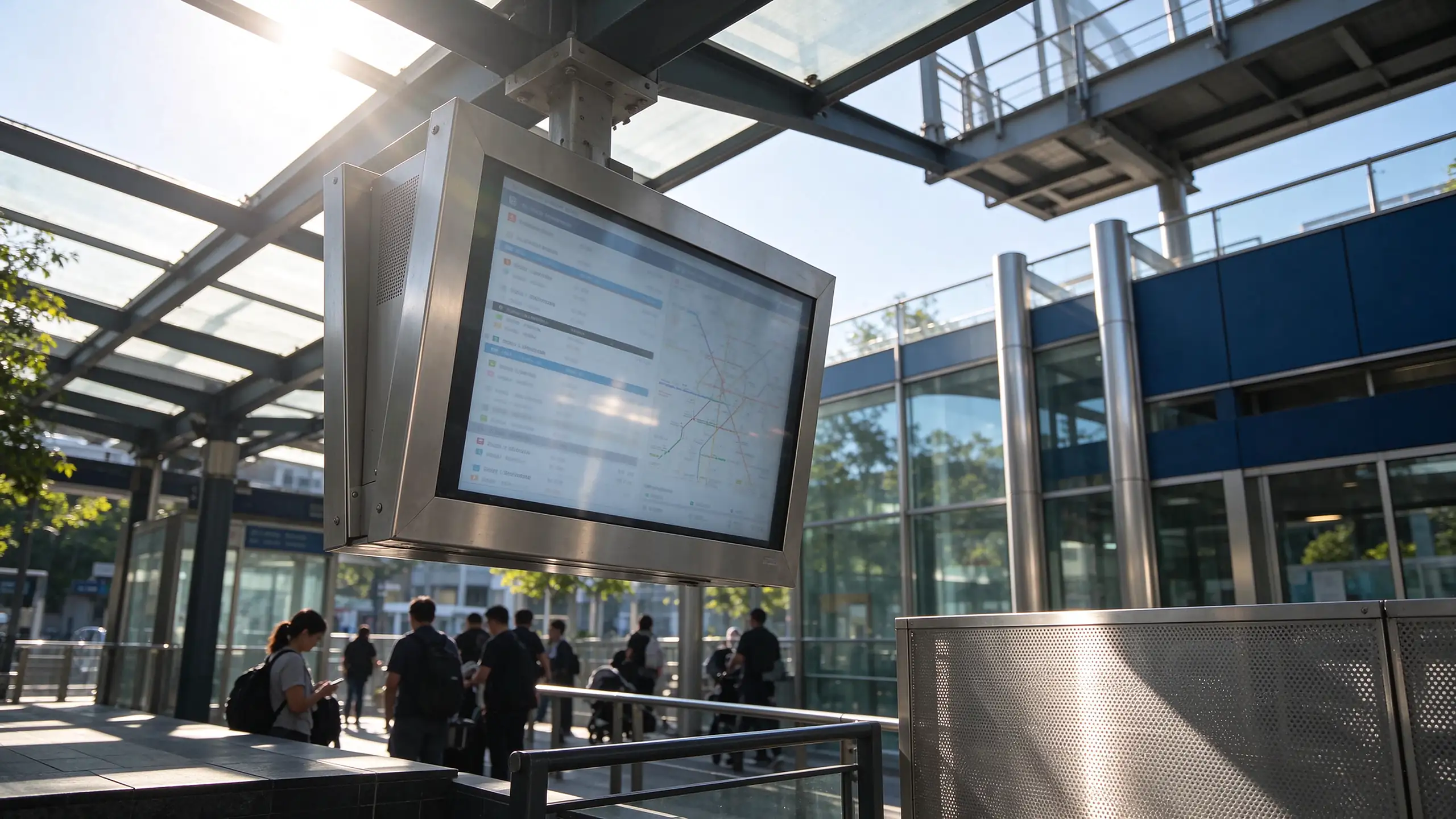 Semi-outdoor enclosure under canopy: the housing, bracket and glass stack decide survival, not the panel specification sheet alone.
Brightness is not the whole answer. Contrast ratio under glare, glass haze level and the viewing cone at 15 metres decide whether a passenger can actually read a departure row from the queue.
Compliance
Transit projects are audited on evidence, not on claims. We separate the two columns below in every quotation, so nobody discovers the gap during handover.
Component and enclosure evidence, report per order.
We flag these in writing; the integrator and the authority commission them.
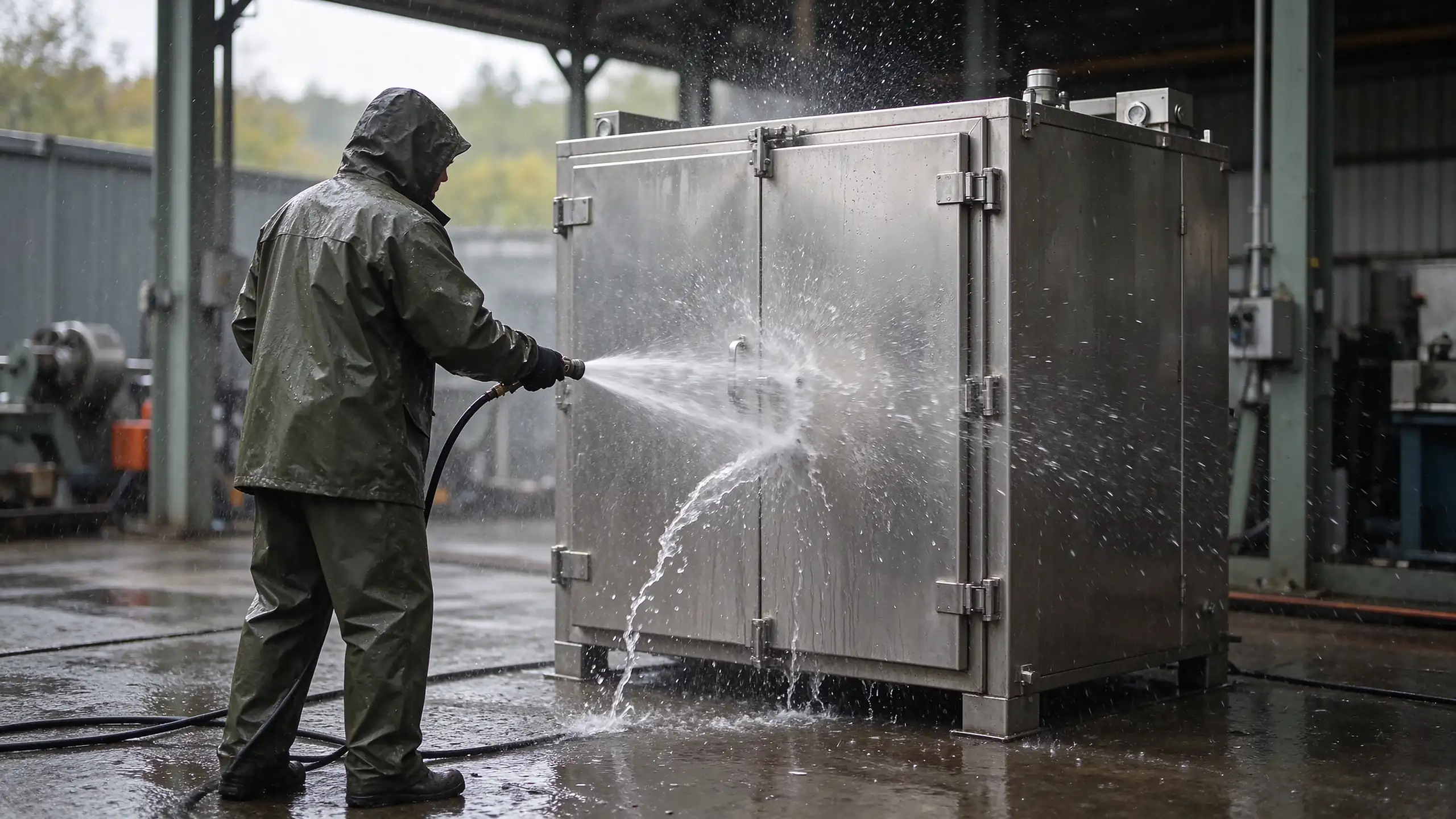 Sealing test on an outdoor cabinet: the IP claim has to survive the jet, the cable gland and the door gasket — not just the panel.
Qtenboard supplies component and enclosure evidence. System-level approval belongs to the integrator and the authority having jurisdiction. We will not tell you otherwise to win a purchase order — an approval you cannot produce is a payment milestone you cannot invoice.
Delivery
Nine gates, each with a document you can attach to a project file. A station list with a target opening date can be quoted from gate two; a cabinet drawing is released at gate five.
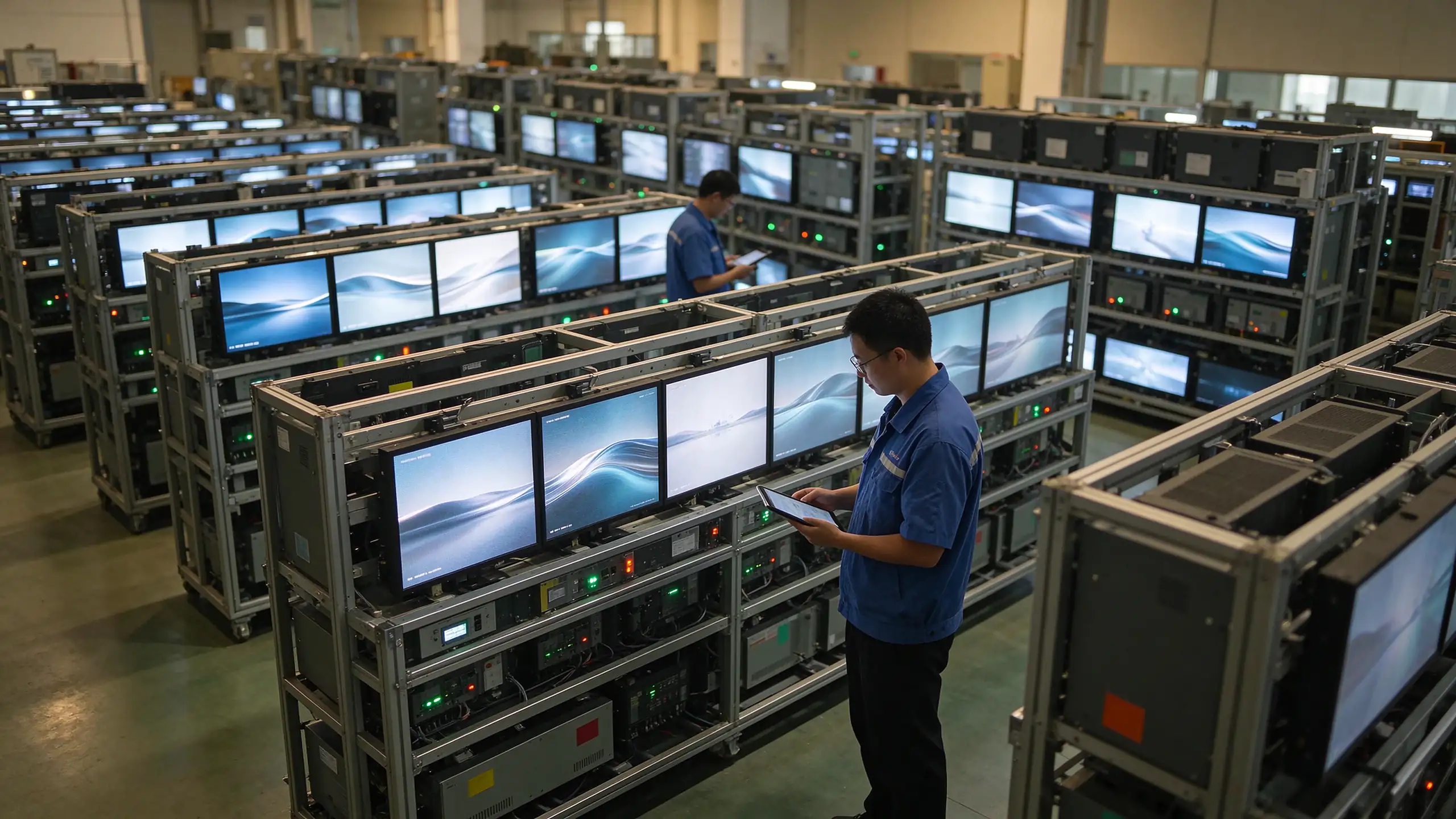 Burn-in rack: every unit runs a long-duration cycle before packing, so early failures happen in our factory rather than on your platform.
| Work package | Operator | Platform / PIS software vendor | Integrator | Qtenboard |
|---|---|---|---|---|
| AODB / ATS / CTC feed | Owns the data | Exposes the interface | Requests access | Documents what the panel can display |
| CMS and content logic | Approves content policy | Owns PIS content rules | Configures | Supplies CMS licence, or the endpoint to run yours |
| Panel, enclosure, mount | Approves drawing | — | Installs | Designs, builds, tests, ships |
| Integration test | Witnesses | Runs the data side | Coordinates | Joins, with a test unit or remote support |
| Acceptance and asset handover | Signs off | Signs off data scope | Signs off installation | Supplies test records and certificates |
Project evidence
Client names are withheld under NDA. What we can share is the configuration, the problem that appeared after commissioning, and the change we now write into every similar quotation.
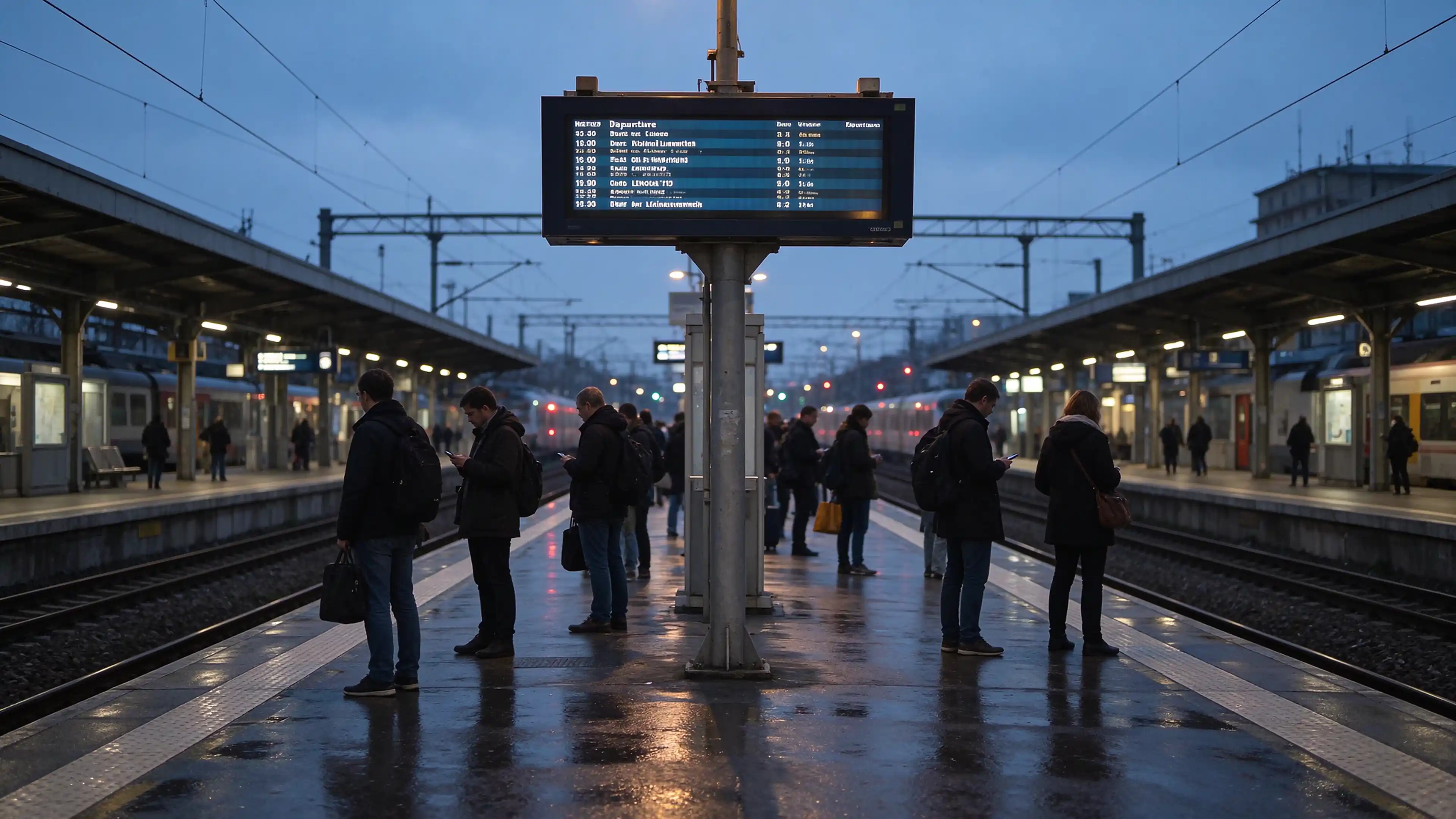
43 inch slim PIS panels, IP65, heater and dual-layer glass on open elevated platforms. Commissioned in autumn, the failure appeared at 6 a.m. in the first cold snap: fog on the inner glass, timetable unreadable for 40 minutes.
Change adopted: heater duty cycle tied to dew-point sensor, anti-fog inner glass as standard on coastal elevated sites.
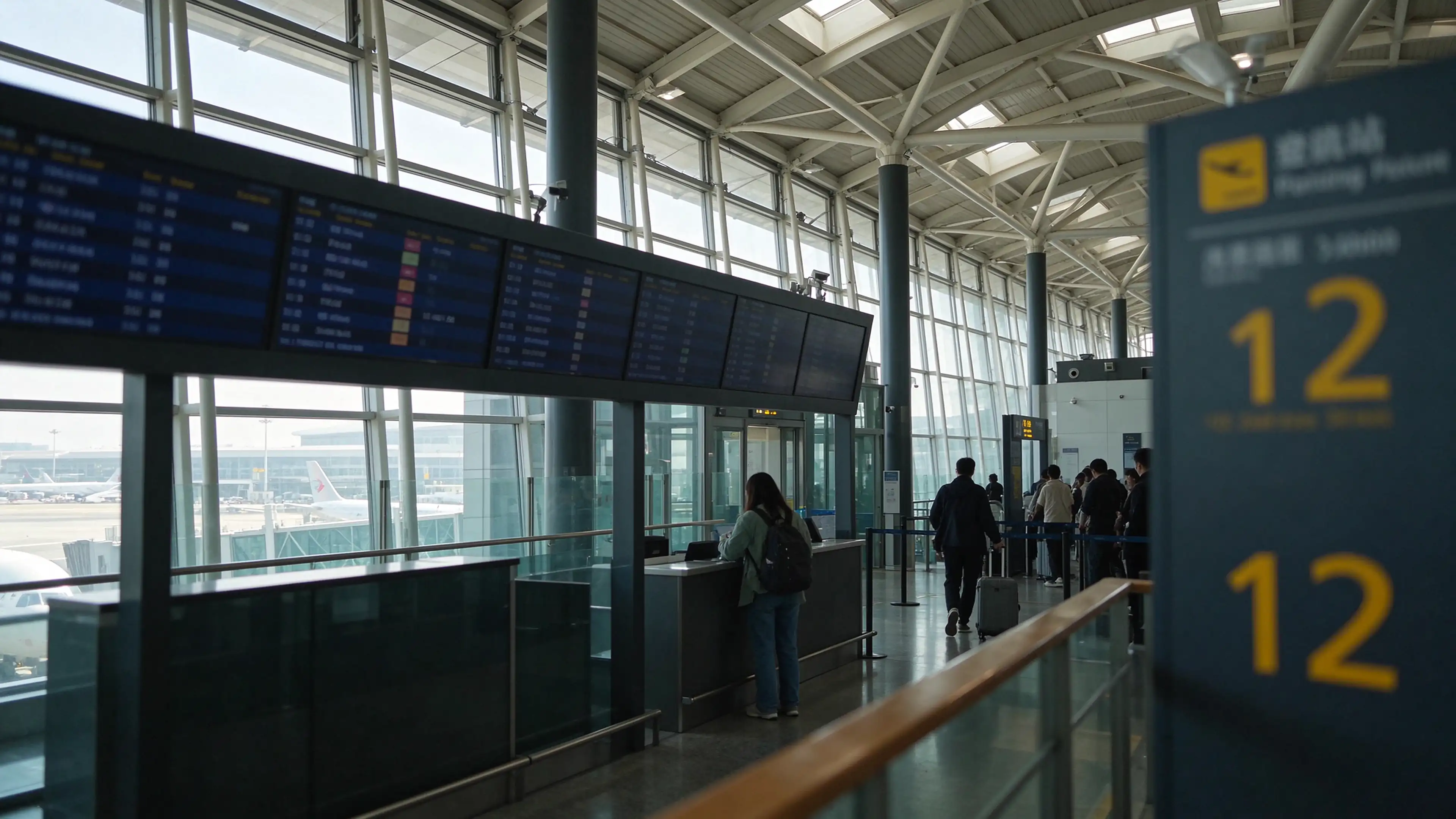
75 inch departure and arrival banks, Type A matrix-driven endpoints at 1,000 nits. The operator refused a new software licence, so the panels were specified against the EDID and timing mode of the existing player, with a test unit sent to the operator's lab first.
Outcome: no additional CMS licence, no change to the AODB contract, commissioning inside the original closure window.
55 inch panels at 700 nits, 3.5 mm bezel, video wall controller plus a Type C dry-contact override. During the evacuation drill the network was deliberately isolated; the wall switched to the emergency source with no operator input.
Outcome: override sequence tested at FAT and re-tested on site, written into the operator's drill procedure.
Reference calls and project files are released after a mutual NDA. We do not publish client logos or site photography without written permission, and we do not present stock imagery as a delivered project.
OEM / ODM
Transit cabinets are almost never catalogue items. The list below is what we can lock before production; anything outside it should be confirmed in writing rather than assumed from a brochure.
MOQ and lead time follow the configuration, not the catalogue. A pilot station is usually the fastest way to prove a specification before a line-wide order — confirm the pilot slot before the tender closes, not after award.
Procurement tool
Copy this list into your RFQ. A supplier who answers all ten in writing, with documents, is a supplier who has delivered a hub project before. One who answers with adjectives has not.
Frequently asked
Mechanically yes, operationally no. FIDS runs 24/7 with a fixed layout for years, so the panel needs a duty rating, a stable backlight and a defined EDID path. A consumer panel will usually survive the first year and then drift in brightness or colour, which is visible when two banks sit side by side.
No. The panel receives a rendered video signal (Type A) or content pushed by a CMS or PIS client (Type B). Data parsing, business rules and message priority live upstream. What the panel must do is accept that feed reliably and reproduce it without scaling artefacts.
Most elevated platforms land between 1,000 and 1,500 nits with anti-glare glass. Below 1,000 nits, midday readability at 10 to 15 metres becomes a complaint in summer. Above 2,000 nits you start paying for thermal management and power that the site may not have.
The player or the CMS. Font coverage, right-to-left layout and message priority are content-layer functions. The hardware contribution is character-safe rendering at the right resolution and a hardware override path when emergency content must beat the network.
Ask for CE and FCC scope, RoHS, ISO 9001, an IEC 60529 IP report for the exact cabinet, an IK report for the glass, and a safety-glass certificate. For trackside cabinets, ask the integrator for the EN 50121-4 position — that one is a system approval, not a panel certificate.
By freezing the configuration at the drawing stage and versioning the firmware per project, not per shipment. Repeat orders reference the original project code, so a station added in year three ships as a match to year one rather than as the current catalogue item.
Specify ISO 9227 neutral salt-spray evidence and a stainless or correctly coated cabinet, then check the fastener and bracket material too. Corrosion failures in coastal stations are usually brackets and cable glands, not the display housing.
A pilot unit is supported as a sample or pre-production unit, so a single station can be validated before a line-wide order. Confirm the pilot slot and the drawing approval date early: the pilot is usually the critical path, not the volume production.
Next step
We quote a hub project from a site schedule, not from a product code. Give us the items below and you will receive a preliminary BOM, an enclosure proposal and a pilot timeline — the drawing follows once the integration type is agreed.
Configuration questions, drawing review and tender specification support. One working day for a first response on a complete brief.
Email info@qtenboard.com Phone +86 181 2471 3748 Based Longhua District, Shenzhen, China Since 2005 · OEM / ODM · CKD / SKDQtenboard is a China-based manufacturer of digital signage, kiosks, interactive flat panels and LCD video walls: three bases, 840,000 m² of total facility footprint and around 1,000 staff, exporting to more than 110 countries. Certification scope and commercial terms are confirmed per project.
Related configurations

CEO | Interactive Display & Collaboration Solution Expert
I am the founder of Qtenboard, bringing over 17 years of hands-on expertise to the touch display industry. Drawing on the global management perspective gained through my EMBA studies at ShenZhen University, I lead my team in optimizing every stage of our operations—from product definition to high-efficiency supply chain management—ensuring our manufacturing capabilities remain at the forefront of the industry.
As the leader of Qtenboard, I specialize in providing tailored OEM/ODM solutions for interactive whiteboards, LCD video walls, digital signage, and industrial-grade touch terminals. Backed by our 330,000 m² modern industrial park in Shenzhen, we maintain full-lifecycle control over industrial design, precision manufacturing, and rigorous performance testing.
With nearly two decades of project experience, Qtenboard’s display solutions are now deployed in over 120 countries and regions, earned the trust of more than 15,000 enterprise customers worldwide. If you are seeking a responsive partner with a deep manufacturing foundation for your customized touch display projects, my team and I are ready to support your vision with professional excellence.
 EN
 spa
 pt
 vie
 th
 est
 lav
 aze
 ukr
 bel
 ru