Elegir un Fabricante elegante del OEM del whiteboard Rara vez se decide por el precio unitario. Los propietarios de marcas, distribuidores e integradores de sistemas realmente están eligiendo un socio de producción de varios años: uno cuya ingeniería de productos, calidad táctil y de visualización, profundidad de personalización, control de producción, certificaciones, tiempo de entrega y soporte postventa protegerán una línea de productos o drenarán silenciosamente el margen. Un precio de compra bajo puede convertirse en la línea más costosa en la hoja de cálculo una vez que aparecen retrabajos, envíos retrasados, brechas de certificación y firmware no compatible.
Dos trampas más se sientan detrás de la comparación de precios. Primero, OEM, ODM, etiqueta blanca, CKD y SKD no son servicios intercambiables: tienen una profundidad de personalización, costo de herramientas, MOQ y tiempo de comercialización muy diferentes. En segundo lugar, un proveedor que puede cotizar rápido no es necesariamente un fabricante. La distinción entre producción interna, subcontratación parcial y una empresa comercial cambia todo lo relacionado con la consistencia de la calidad, la velocidad de personalización y la responsabilidad.
Esta guía está escrita para propietarios de marcas, distribuidores y mayoristas, integradores de sistemas, contratistas de proyectos AV, compradores gubernamentales y educativos, y socios de ensamblaje locales. Construye un marco de evaluación de proveedores ejecutable: qué comparar, qué auditar, cómo funcionan realmente los niveles de personalización y cómo se ve un proceso de proyecto defendible. Qtenboard ofrece programas interactivos OEM, ODM, CKD y SKD de panel plano que cubren software, apariencia, estructura, hardware y personalización completa para proyectos B2B globales.
| Área de evaluación | Preguntas para hacer | Por qué importa |
|---|---|---|
| Cartera de productos | 55-110 ", 4K, opciones táctiles, opciones de SO | Cubre diferentes mercados y necesidades de proyectos |
| Profundidad de personalización | Software, apariencia, estructura, molde privado | Decide la diferenciación de la marca y el tiempo de comercialización |
| Control de fabricación | Inyección interna, montaje, SMT, prueba de envejecimiento | Afecta la consistencia de la calidad y el tiempo de entrega |
| Control de calidad | QC, IPQC, OQC, envejecimiento, trazabilidad del lote | Disminuye el riesgo de lote y el costo de postventa |
| Certificaciones | CE, FCC, RoHS, ALCANCE, EDLA, energía | Decide acceso al mercado |
| Entrega | MOQ, plazo de ejecución, capacidad, CKD/SKD | Afecta el inventario y los planes locales de la asamblea |
| Apoyo | Piezas de repuesto, firmware, documentos técnicos, RMA | Afecta la cooperación a largo plazo y la estabilidad del proyecto |
| Términos comerciales | Propiedad de herramientas, software IP, garantía | Protege los activos y el margen de la marca |
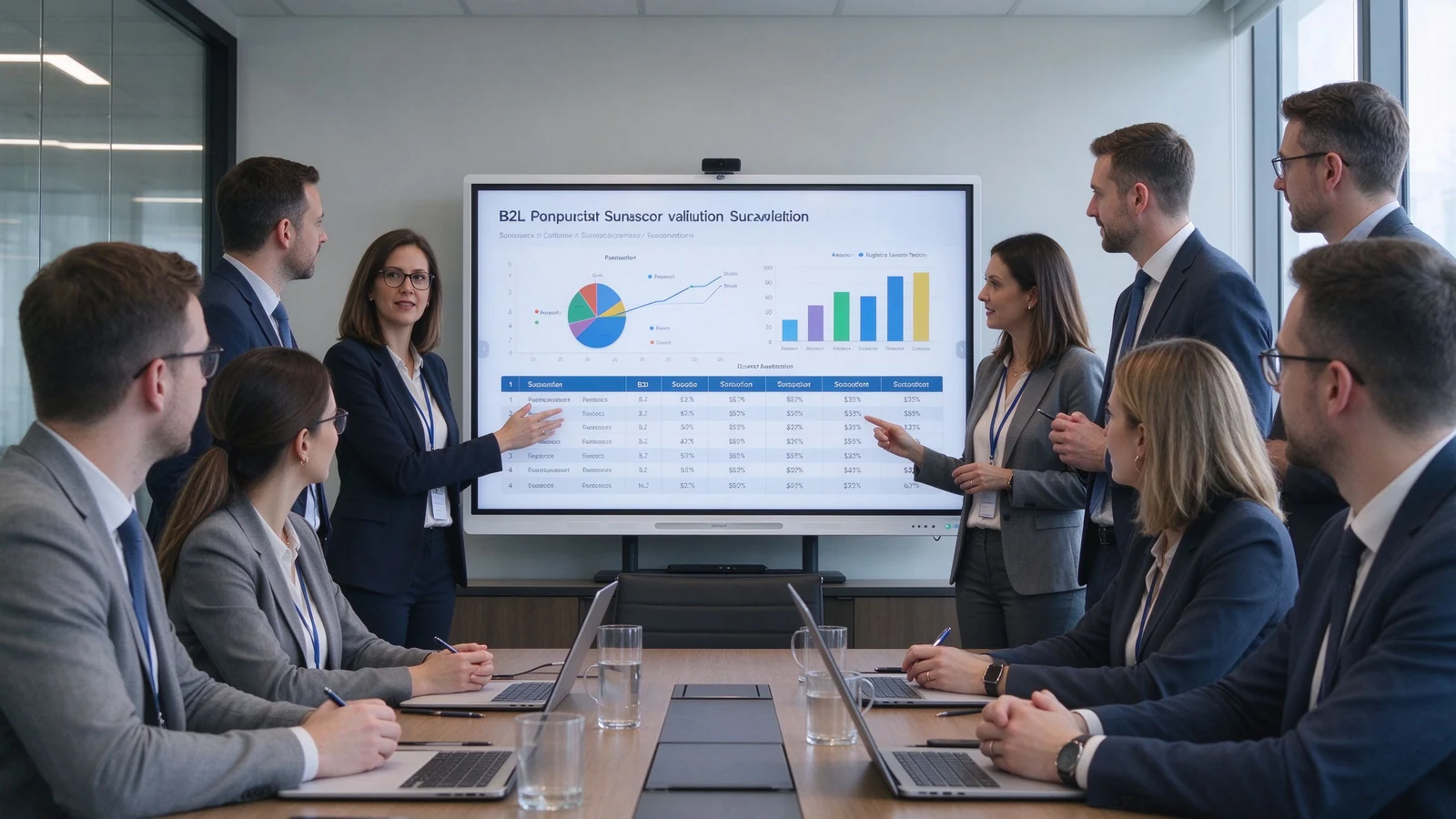
En una relación OEM, el comprador suministra la marca o la especificación del producto y el fabricante construye a esa especificación acordada. El producto se envía bajo la marca del comprador, el embalaje y los canales de venta, con hardware, software y apariencia ajustados al proyecto. Esto se adapta a marcas establecidas con especificaciones maduras, distribuidores que expanden una línea de productos rápidamente, compañías que venden bajo su propia marca e integradores de proyectos de volumen que saben exactamente lo que necesitan.
En una relación ODM, el fabricante proporciona una plataforma existente o un diseño de producto, y el comprador selecciona de ella y solicita ajustes: apariencia, sistema, puertos, logotipo, empaque y software. Esto se adapta a las empresas sin un equipo interno completo de I + D que aún necesitan un producto de marca propio. El límite entre OEM y ODM no es tanto legal o técnico como comercial: quién posee el diseño, quién paga por las herramientas y qué se puede cambiar.
| Modelo | El comprador proporciona | El fabricante proporciona | Mejor para | Soporte técnico de Qtenboard |
|---|---|---|---|---|
| Marca blanca | Nombre de marca y requisitos básicos | Producto existente, cambios limitados | Rápida entrada al mercado | Logotipo de arranque, embalaje, aplicaciones preinstaladas |
| OEM | Especificación detallada del producto | Fabricación según la especificación acordada | Marcas establecidas | Personalización completa de hardware y software |
| ODM | Concepto de producto o necesidad de mercado | Plataforma del producto, ingeniería, fabricación | Marcas que necesitan productos a medida | Molde público, opciones estructurales, privadas del molde |
| Enfermedad renal crónica | Requisitos del producto y montaje | Componentes desmontados y soporte técnico | Proyectos de asamblea local | Componentes desmontados y soporte técnico |
| SKD | Plan de entrega regional y de producto | Kits semi-derribados | Producción local de lotes pequeños | Kits semi-desmontadas para el montaje local |
Qué modelo encaja depende de su equipo. Si la capacidad de ingeniería es delgada, ODM más una marca cuidadosa lo lleva al mercado más rápido. Si la protección de la marca importa y el volumen lo justifica, OEM con molde privado construye un activo que los competidores no pueden copiar en una temporada. CKD/SKD es una decisión de logística y regulatoria, no una decisión de producto: elíjalo cuando el volumen de envío, el deber o las reglas de contenido local hacen que el ensamblaje local sea más barato que importar unidades terminadas.
Cada comprador en esta lista tiene un modo de falla diferente. Los siguientes perfiles traducen cada uno en lo que debe probarse, documentarse y negociarse antes de una OP, por lo que no se está comparando con una hoja de especificaciones genérica.
Necesita pizarras interactivas de 55-110 pulgadas, software educativo y plataformas en la nube, logotipos de pantalla de arranque, certificación del mercado educativo, entrega por lotes, posventa local y soporte de instalación. También necesitan un proveedor que no desaparezca entre cohortes.
Necesita pantallas interactivas en la sala de reuniones, 4K, videoconferencia, transmisión inalámbrica, compatibilidad con Teams / Zoom / Google Meet, combinaciones de cámara-micrófono-altavoz y administración de dispositivos empresariales, a menudo junto con las líneas de productos existentes que distribuyen.
Preocuparse por el precio de compra, gama de productos, MOQ, stock y tiempo de entrega, embalaje, protección del territorio, repuestos, postventa y diferenciación del mercado. Su margen vive de la consistencia y la capacidad de respuesta del proveedor, no de los descuentos puntuales.
Necesita puertos, módulos OPS, sistemas de red y control, integración de cámaras y audio, compatibilidad de dispositivos, configuración de proyectos, documentación técnica y soporte de implementación por lotes. Un producto que no se puede integrar es un proyecto que falla en el sitio.
Necesita certificación, seguridad de datos, estabilidad del proveedor, consistencia del proyecto, entrega por fases, garantía y mantenimiento, repuestos a largo plazo, documentación del proyecto y criterios de aceptación. Su riesgo no es una unidad defectuosa, es un proveedor que no puede estar detrás de miles de unidades durante cinco años.
Necesita un volumen de envío reducido, ensamblaje local, cumplimiento de la política local o las normas fiscales, y un servicio local y capacidad de producción. CKD/SKD existe exactamente para este grupo, pero solo con un proveedor que enviará el kit correcto, no solo una caja de piezas sueltas.
Una gama de 55, 65, 75, 86, 98 y 110 pulgadas, más mesas interactivas y, cuando corresponda, tamaños especiales, es importante por una razón concreta: los distribuidores necesitan niveles de precios en todas las salas, los proyectos empresariales necesitan una marca en diferentes espacios, los integradores necesitan un proveedor para salas mixtas, Y los grandes compradores reducen el recuento de proveedores. Pregunte si la misma familia de configuración está disponible en todos los tamaños y si la tecnología táctil puede diferir según el tamaño.
Comprenda la fuente del panel LCD, la resolución 4K, el brillo, el antideslumbramiento y los ángulos de visión. Al tacto, distinga infrarrojos de PCAP, puntos táctiles, latencia, rechazo de palma, reconocimiento de dedo/lápiz/borrador y escritura simultánea. No se detenga en "cuántos puntos": precisión de prueba, escritura rápida, operación multiusuario y comportamiento idéntico en Android y Windows, además de compatibilidad con el software táctil que planea enviar.
Mainboard, CPU and RAM, storage, operating system, OPS module, camera, microphone, speaker, port combination, Wi-Fi/Bluetooth, structure, power system, stand and mounting. Useful questions:
Boot logo, boot animation, UI, pre-installed apps, whiteboard software, casting app, enterprise apps, language packs, device lock, OTA updates, remote device management, AI transcription and meeting summaries, enterprise cloud integration. Confirm who maintains the software, whether updates are charged, whether custom features carry an MOQ, whether source or SDK is available, whether API integration is supported, whether localized language development is possible, and whether technical support continues after the project.
Bezel width, rear cover design, logo position, button layout, camera position, wall-mount structure, thermal design, material and color, packaging and shipping protection, and private mold development. A supplier that molds its own housings can change bezel, venting, and camera placement without buying from a third-party casing vendor — which means faster, cheaper, more reliable customization.
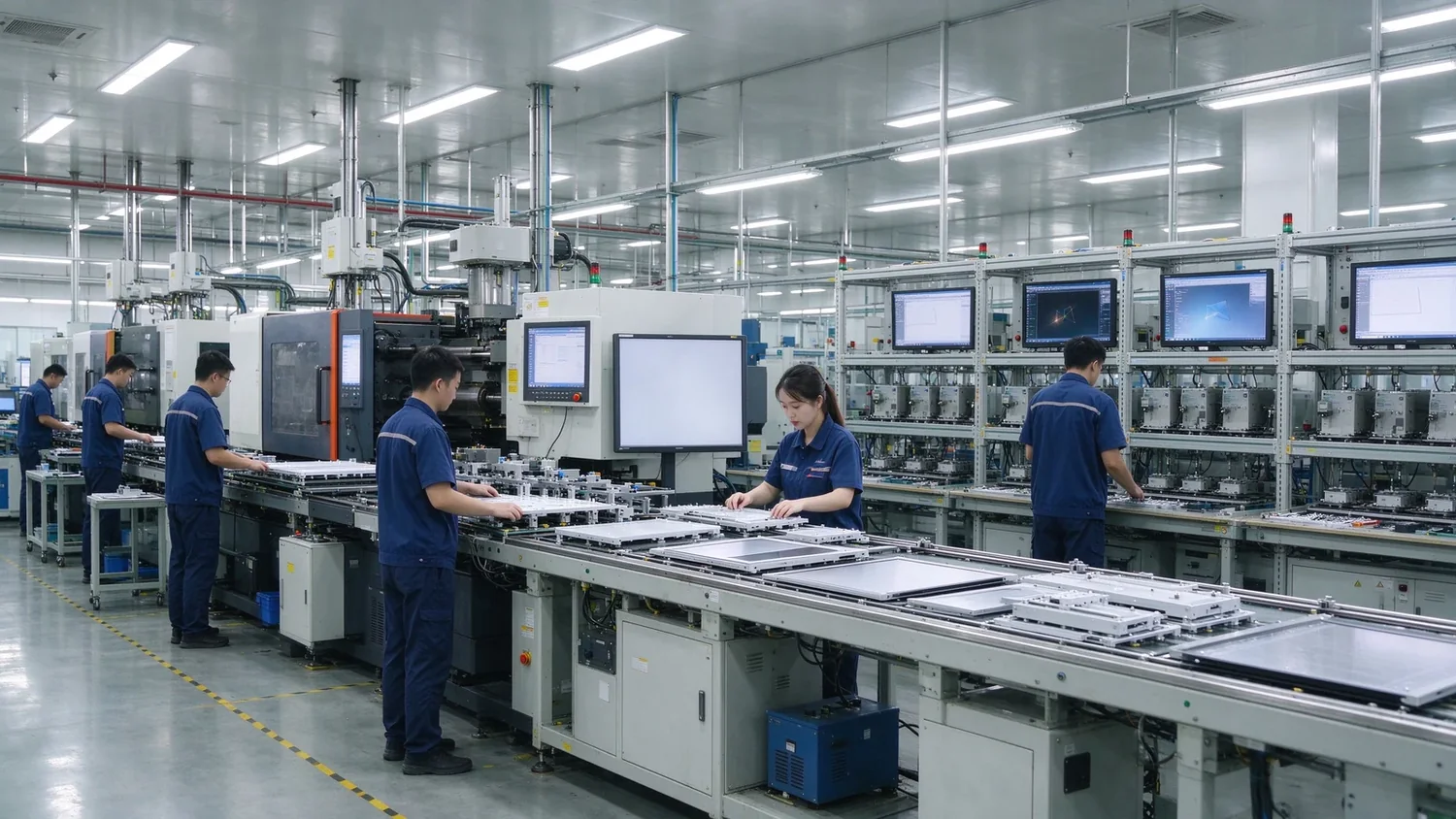
Classify the supplier honestly: true manufacturer, partial in-house with outsourcing, pure trading company, or rebranding agent. Ask how LCD and touch components are procured, whether injection lines are owned, whether assembly and SMT capability exist, whether an aging-test line and reliability lab exist, whether key components are controlled, whether production batches are tracked, and whether batch-to-batch consistency is guaranteed. Answers that cannot be followed by a video audit or sample comparison are answers to discount.
A usable QC picture has four layers. Incoming quality control inspects LCD panels, touch frames, mainboards, power, camera, microphone, speaker, glass, housing, cables, and connectors. In-process control checks screen assembly, touch calibration, mainboard fitting, power safety, firmware burning, port testing, and audio-video testing. Finished-product testing covers brightness and uniformity, touch accuracy, multi-touch, wireless casting, audio and camera, Wi-Fi/Bluetooth/LAN, long-run aging, and packaging drop protection. Batch-delivery control includes first-article approval, sample-vs-mass-production comparison, pre-shipment sampling, defect logging, serial-number and batch traceability, inspection reports, and RMA and replacement processes.
Expect CE, FCC, RoHS, REACH, Energy Star, Google EDLA, Microsoft Teams / Zoom certification where relevant, regional plug and voltage, rules of origin, and data-security compliance. Ask for target-market certification files, test reports, packaging and labeling rules, and product-liability and recall processes. A product that cannot enter your market on paper is not a cheaper product — it is a blocked shipment.
Ask which of these tests are routine and which are one-off certifications. Routine aging — running every unit for a fixed period before packing — is the single strongest signal of a supplier serious about reliability, and the easiest to fake in a marketing deck. Ask to see the actual aging room during a factory visit or video audit.
Customization has a second layer that pricing never shows: who owns what after the project ends. Three commercial points deserve a written answer, not a verbal one.
When you pay for a private mold, confirm whether the tooling belongs to you, to the supplier, or jointly — and where it physically lives. If it stays at the factory and you later switch suppliers, you may pay for the same mold twice. If it ships to you, plan storage and future production runs.
Custom boot screens, pre-installed apps, whiteboard skins, and integrations with your cloud platform: who owns the code, who maintains it, can it be transferred, and what happens if the relationship ends? Suppliers who retain all software IP can legally continue shipping products that carry your own customization, while owning none of it for you.
Is your market protected? Can the supplier sell the same customized product to a competitor in your territory? How long will this configuration stay in production, and what migration path exists when components are discontinued? These clauses cost nothing to write and are expensive to discover missing.
| Área de evaluación | Preguntas para hacer |
|---|---|
| Producto | Does the supplier offer the sizes and configurations required? |
| Personalización | Can it customize software, appearance, structure, and hardware? |
| Manufactura | Is production controlled in-house or outsourced? |
| Quality | What inspections and aging tests are performed? |
| Certificaciones | Can the supplier provide market-specific documents? |
| Entrega | What are MOQ, lead time, capacity, and shipment options? |
| Apoyo | Are spare parts, firmware updates, and technical support available? |
| Términos comerciales | Are pricing, tooling, ownership, and warranty clearly defined? |
| Supplier type | Advantages | Risks or limitations |
|---|---|---|
| Factory-direct manufacturer | Better control of cost, production, customization, lead time | Buyer must manage technical evaluation |
| Trading company | May offer multiple brands and easier communication | Weaker control over product changes and quality |
| OEM integrator | Can bundle product and service | Some core components may be outsourced |
| Local distributor | Local support and stock | Higher price, limited customization |
Do not over-generalize. A trading company is not automatically bad. The real tests are transparency about the factory, consistent technical documentation, willingness to take after-sales responsibility, a stable supply chain, and credible project experience.
A practical shortlist is three to five: one factory-direct candidate matching your core configuration, one offering deeper customization or better volume pricing, and one backup for risk. Request samples from the top two — samples cost far less than a wrong first container. Evaluate them on the same test script: same drawing, same person, same room, same duration. Judgment made from showroom demos is unreliable; judgment made from a week of internal use is not.
Qtenboard produces interactive whiteboards, LCD video walls, digital signage, kiosks, totem displays, and CMS/DMS software. For distributors and integrators who need more than one commercial display line, one supplier simplifies specification, procurement, certification, and spares.
The customization program runs in four tiers: (1) software and firmware customization, (2) public-mold appearance customization, (3) public-mold structural customization, and (4) private mold or full customization. Software customization can start from lower quantities; structural and private-mold work is confirmed by quantity, tooling, and development investment.
Own-brand logo, boot screen, pre-installed apps, system language, hardware ports, camera and audio, touch points, size and appearance, packaging and manuals, and local assembly options.
For partners needing local assembly, projects needing reduced shipping volume, companies with local factories or service networks, and markets with local-production policy requirements. Before signing, confirm how the kit is packed, which components ship loose versus pre-assembled, and what local-assembly instructions and after-sales documentation are included — a CKD project fails when the kit arrives missing something no one listed.
Samples, specification confirmation, OEM branding, packaging design, batch delivery, technical documentation, certification files, after-sales and spares, and multi-market project coordination.
Typical OEM/ODM programs buyers configure:
| Buyer priority | Qtenboard value proposition |
|---|---|
| Cartera de productos | Interactive whiteboards, video walls, signage, kiosks |
| Profundidad de personalización | Software, public mold, structural, private mold |
| Control de fabricación | In-house injection, assembly, aging test |
| Global support | Samples, certifications, spare parts, project coordination |
| Local assembly | CKD/SKD options |
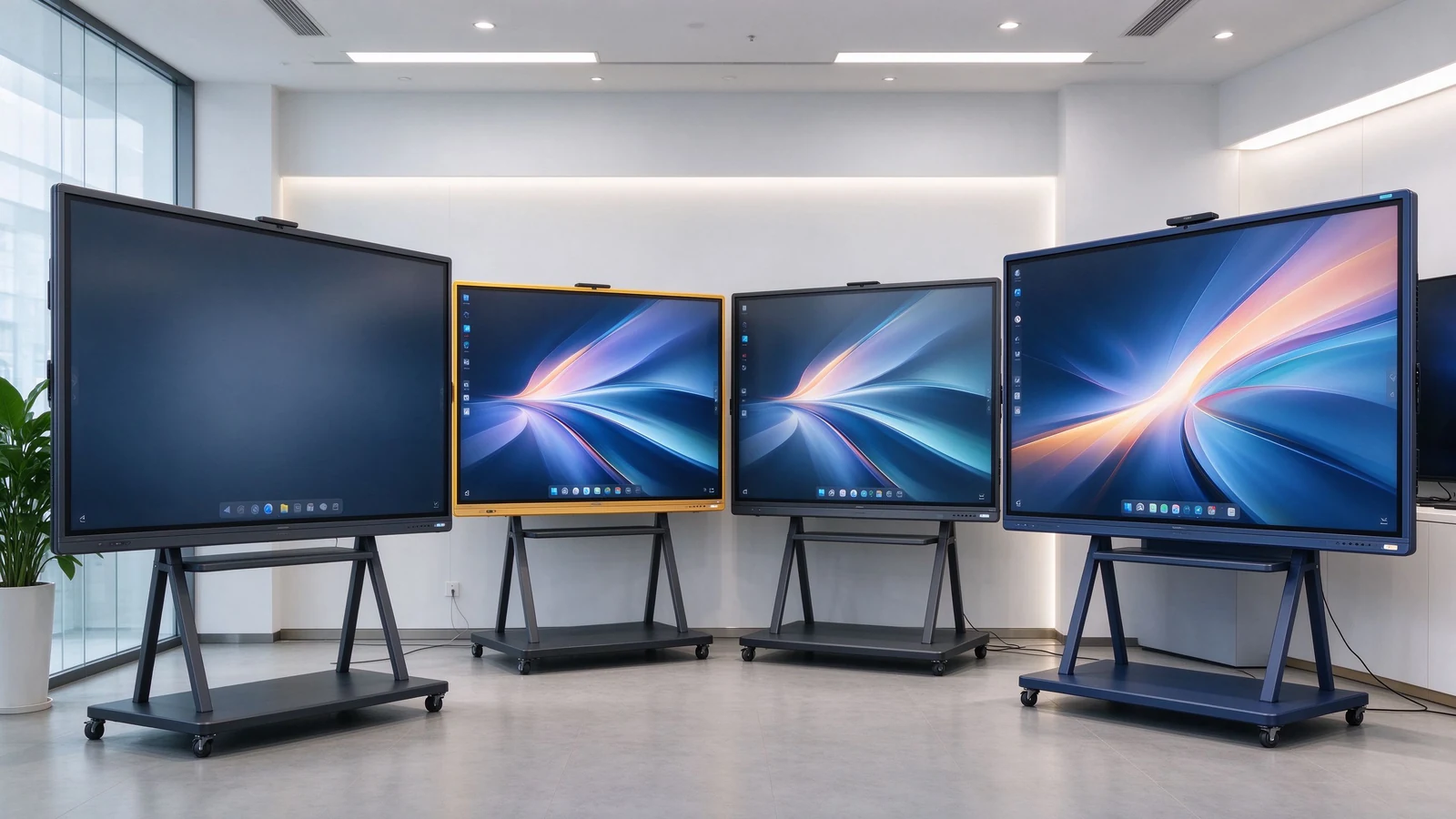

No fixed number should be quoted without a project scope. The cost stack is: screen size, display panel grade, touch technology and points, mainboard and system, camera/microphone/speaker, appearance and structural development, tooling, software customization, packaging, certification, MOQ, shipping and local assembly, and after-sales spares. Compare suppliers on this complete picture, not on an ex-works panel price.
| Customization type | Typical cost impact |
|---|---|
| Boot logo and pre-installed apps | Bajo |
| Packaging and label customization | Low to moderate |
| Public-mold appearance changes | Moderado |
| Structural changes | Moderate to high |
| Private mold and full product design | High initial investment |
TCO = tooling + software customization + certification + unit cost + packaging + shipping + duty + after-sales spares + software maintenance.
Volume tiers move unit price, but they also move what a supplier will invest in. At low quantities, expect a standard product with logo and packaging changes; the supplier protects margin by limiting engineering. At mid volume, structural changes and dedicated firmware become realistic. At high volume, private mold, dedicated software, and territory agreements come to the table — and the supplier becomes more invested in your success, because your failure costs them too.
Negotiation levers beyond unit price: tooling amortization across batches, sample cost credited at PO, warranty extension, spare-part pricing for years one and two, and a price-freeze clause for the first reorder. Ask for these in writing; they are normal B2B terms, not special favors.
Before any PO, ask for a complete data room. A supplier who cannot produce these documents quickly is telling you something about their processes:
This package also makes comparison honest: five quotes become comparable only when they carry the same documentation behind them.
OEM usually builds to the buyer’s specification; ODM provides the product platform, engineering, and manufacturing, after which the buyer brands or customizes functions. The difference is who owns the design and who pays for its development.
Evaluate product and size range, touch and display technology, software and hardware customization, factory production capability, quality control, certification, MOQ and lead time, after-sales, spares, and lifecycle support.
Some suppliers offer Android, Windows, or dual-system configurations with pre-installed apps, logo, UI, language, and device management. Exact development scope, compatibility, and cost are project-confirmed.
MOQ depends on customization tier. Logo, pre-installed apps, or packaging may work at lower quantities; structural, private-mold, and full product development usually require higher quantities or a long-term commitment.
Prefer suppliers who allow sample testing and golden-sample approval. The sample should be tested for touch, display, software, casting, audio and video, ports, and long-run operation.
Qtenboard offers OEM, ODM, CKD, and SKD programs across brand, software, appearance, structure, hardware, and local assembly tiers, confirmed per project.
Qtenboard supports boot logo, pre-installed apps, packaging, and hardware configuration customization for distributors, system integrators, and brand owners running private-label programs.
Qtenboard operates injection-molding capability and produces housings for interactive whiteboards, digital signage, and kiosks — relevant when custom appearance or structural changes are on the project list.
Request: full specification sheet, certification files, test reports, packaging dimensions, installation guide, user manual, software version information, warranty terms, spares list, and inspection standard.
Software-level customization — boot logo, packaging, pre-installed apps — can move within weeks after golden-sample approval. Structural changes typically add several weeks beyond sample. Private mold and full product design run on tooling and development cycles measured in months, confirmed per project. Ask for a written timeline at quotation, not a verbal estimate.
Different partners take different next steps:
| Role | Recommended next step |
|---|---|
| Brand owner | Request an OEM/ODM consultation |
| Distribuidor | Request a private-label catalog and sample |
| System integrator | Request project configuration support |
| Gobierno/Educación | Download the supplier audit checklist |
| Local assembly | Discuss a CKD/SKD project |
Tell us your target market, screen sizes, required touch points, operating system, customization needs, estimated quantity, and delivery plan. Qtenboard can recommend an OEM, ODM, CKD, or SKD solution for your brand or project. Start through the contact page or explore the OEM/ODM program.
Required: name, company, email, country, business type, product type, estimated quantity, message.
Opcional: preferred screen sizes, required touch points, operating system, hardware requirements, software requirements, branding needs, packaging requirements, need for CKD/SKD, expected delivery date.
Request an OEM/ODM Consultation Get a Smart Board Supplier Quote Ask for a Sample Discuss a Private-Label Project
CEO | Experto en soluciones interactivas de visualización y colaboración
Soy el fundador de Qtenboard y aporto más de 17 años de experiencia práctica a la industria de las pantallas táctiles. Basándome en la perspectiva de gestión global obtenida a través de mis estudios de EMBA en la Universidad de ShenZhen, dirijo a mi equipo en la optimización de cada etapa de nuestras operaciones, desde la definición del producto hasta la gestión de la cadena de suministro de alta eficiencia, asegurando que nuestras capacidades de fabricación permanezcan a la vanguardia de la industria.
Como el líder de Qtenboard, me especializo en el abastecimiento de las soluciones adaptadas de OEM/ODM para los whiteboards interactivos, las paredes video del LCD, la señalización digital, y los terminales del tacto del industrial-grado. Con el respaldo de nuestro moderno parque industrial de 330.000 m² en Shenzhen, mantenemos el control del ciclo de vida completo sobre el diseño industrial, la fabricación de precisión y las rigurosas pruebas de rendimiento.
Con casi dos décadas de experiencia en proyectos, las soluciones de visualización de Qtenboard ahora se implementan en más de 120 países y regiones, y se ganaron la confianza de más de 15.000 clientes empresariales en todo el mundo. Si está buscando un socio receptivo con una base de fabricación profunda para sus proyectos personalizados de pantallas táctiles, mi equipo y yo estamos listos para respaldar su visión con excelencia profesional.
 spa
spa
 EN
EN  pt
pt  th
th  vie
vie  aze
aze  bel
bel  est
est  lav
lav  ukr
ukr  ru
ru