Un marco de decisión estructurado para los equipos de compras, antes de que se bloquee el presupuesto y se coloque el pedido.
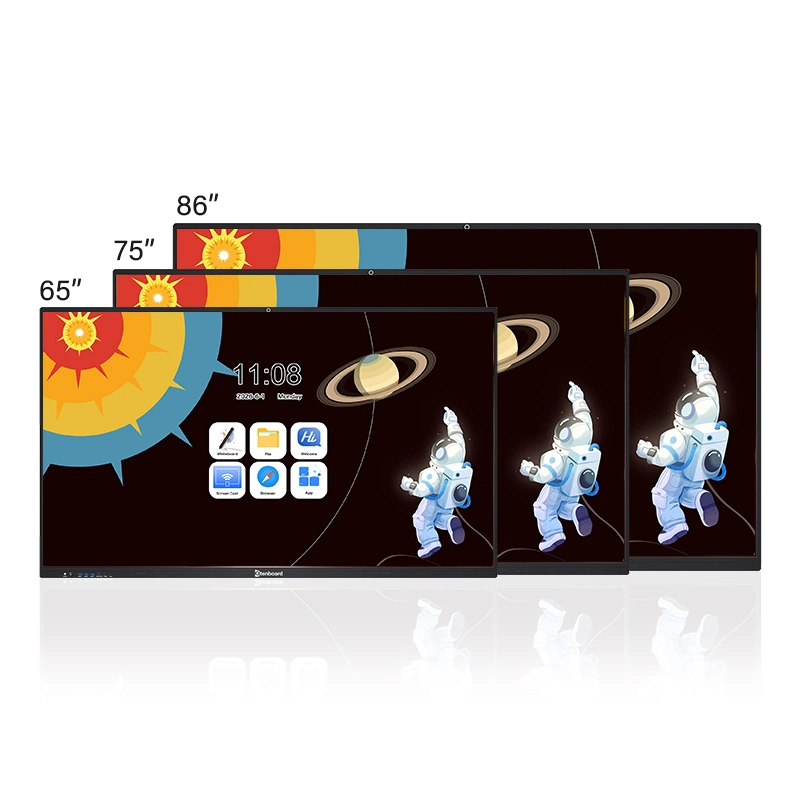
Esta guía de selección de tamaño está escrita para oficinas de educación, equipos de adquisición escolar y gerentes de instalaciones empresariales que evalúan pizarras interactivas de 65 ", 75", 86 "y 98" para instalación fija.Explica por qué la selección de tamaño es una decisión de adquisición en lugar de una decisión de visualización, luego aplica un marco de cuatro variables (profundidad de la sala, recuento de usuarios, frecuencia de interacción, condiciones de instalación) a cada nivel de tamaño. La guía incluye tres casos de implementación de Qtenboard verificados que resolvieron especificaciones de gran tamaño, campus de especificaciones mixtas y despliegues de 98 "estancados, una matriz de decisión de referencia para informes de adquisiciones, una nota de costo total de propiedad para adquisiciones a nivel de distrito y Qtenboard & #039; servicio de la evaluación del sitio de la pre-compra de s.
Las pizarras interactivas son herramientas de instalación fija, de uso de alta frecuencia, no dispositivos de visualización, por lo que un error de juicio de tamaño en las superficies de etapa de especificación solo después de la instalación, cuando los costos de corrección rara vez se limitan al equipo en sí.
El punto de partida más común para los compradores institucionales es sencillo: "Tenemos el presupuesto. Vamos & #039;s ir con la opción más grande disponible. En la electrónica de consumo, esta lógica es defendible. En la adquisición de pizarra interactiva comercial, es uno de los caminos más confiables para los excesos de presupuesto, los retrasos en la instalación y la fricción operativa a largo plazo.
Una pizarra interactiva no es un dispositivo de visualización. Es una herramienta educativa o profesional de instalación fija y uso de alta frecuencia con tres características de uso que la separan fundamentalmente de los televisores de consumo:
A través de los proyectos institucionales que hemos entregado, el patrón de sobrecosto más común y más evitable es este: una especificación de 86 "se escribe en el resumen de adquisición sin una evaluación previa de carga de la pared, los costos de refuerzo surgen después de la adjudicación, y el presupuesto del proyecto requiere una revisión de emergencia en una etapa en la que los cambios en el alcance conllevan la máxima interrupción. No es un problema de equipamiento. Es un problema del proceso de especificación, uno que un marco estructurado de precompra elimina por completo.
El marco correcto para la selección de tamaño se basa en cuatro variables, no en una: profundidad de la sala, recuento de usuarios, frecuencia de interacción y condiciones de instalación. Cada sección de esta guía aplica ese marco a un tamaño específico, estructurado como: parámetros técnicos → punto de dolor en el mundo real → valor medible entregado.
Para salas de 4m de profundidad o menos con 30 usuarios o menos, una pizarra interactiva de 65 "es la especificación óptima, no una concesión de nivel de entrada, y generalmente se instala sin refuerzo de pared.
Los equipos de adquisiciones con frecuencia tratan 65 "como la opción de nivel de entrada, una concesión a las restricciones presupuestarias en lugar de una especificación deliberada. Esta percepción conduce a mejoras innecesarias en habitaciones donde 65 "es, de hecho, la elección correcta y óptima.
En aulas con una profundidad de sala de 4m o menos, las selecciones de gran tamaño producen consistentemente el mismo resultado: las distancias de visualización de primera fila se comprimen por debajo de umbrales cómodos, la zona táctil superior excede la altura de escritura de pie de la mayoría de los maestros y una porción medible de la superficie de la pantalla no se usa en la práctica diaria. El panel más grande no expande el área de trabajo utilizable, la reduce.
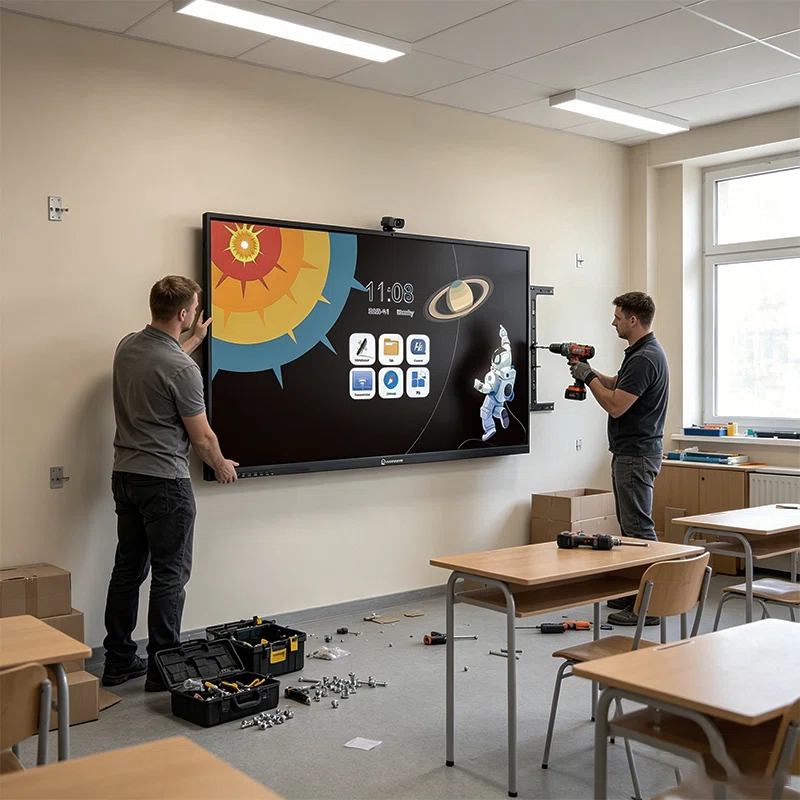
El 65 "whiteboard interactivo es la especificación apropiada cuando la profundidad del sitio no excede los 4m y la cuenta del usuario es 30 o menos. En estos entornos, ofrece una utilización completa de la superficie de la pantalla, una altura táctil cómoda para los usuarios de pie y una densidad de píxeles óptima a la distancia de visualización de trabajo real.
Desde el punto de vista de la instalación, las unidades de 65 "no requieren refuerzo de pared bajo la construcción estándar de paneles de yeso, una ventaja significativa para los proyectos de renovación que operan bajo plazos de construcción ajustados o donde la modificación estructural requeriría un ciclo de aprobación separado. Para las instituciones educativas que administran implementaciones escalonadas, aula por aula, esto se traduce directamente en velocidad de implementación y reducción de la complejidad del proyecto por unidad.
Con una resolución 4K, el panel de 65 "ofrece aproximadamente 68 PPI, suficiente para una legibilidad de texto claro a una distancia de visualización de 1,5 m sin requerir tamaños de fuente ampliados que reduzcan la densidad de información de los materiales de enseñanza. La sustitución de una configuración de proyector por una pizarra táctil interactiva elimina la latencia de conmutación de contenido que promedia entre 30 y 45 segundos por transición en las aulas dependientes del proyector. El consumo de energía de funcionamiento en las posiciones de la gama 120-180W 65 "como la opción a largo plazo más baja del coste de la energía dentro de la gama de tamaño estándar.
Este límite de especificación (4m de profundidad de sala, 30 usuarios, no se requiere refuerzo de pared) es una salida directa de los datos de medición del sitio que Qtenboard ha acumulado en implementaciones de aulas pequeñas en proyectos de renovación K12. No es un umbral teórico; es donde los datos de rendimiento del mundo real constantemente dibujan la línea.
El tamaño de 75 "se ha convertido en la especificación de aula estándar K12 global porque es el tamaño mínimo en el que los diseños de enseñanza de doble columna se vuelven completamente viables, y porque el suministro de paneles en este nivel de tamaño es el más estable para la adquisición por lotes a nivel de distrito.
El mercado mundial de educación K12 se ha movido constantemente hacia 75 "como la especificación estándar de aula. Esto refleja dos realidades convergentes.
Por el lado de la oferta, los paneles de 75 "se encuentran actualmente dentro del rango de volumen de producción central de los principales fabricantes de paneles. El suministro estable de paneles se traduce directamente en tiempos de entrega predecibles, una consideración material para las oficinas de educación que administran proyectos de adquisición por lotes de varias escuelas con nodos de entrega semestral fijos. Las interrupciones del suministro en este nivel de tamaño son sustancialmente menos frecuentes que en los extremos del rango de tamaño.
En el lado de la demanda, 75 "es el tamaño mínimo en el que los diseños de enseñanza estándar en el aula, específicamente los formatos de doble columna donde los conjuntos de preguntas y las soluciones trabajadas se muestran simultáneamente, se vuelven completamente viables sin compromisos de tamaño de fuente que sacrifiquen la densidad de información.

En un aula estándar de 30-50 estudiantes con una profundidad de sala de 7-9m, una pizarra interactiva de 65 "crea un problema de instrucción específico y recurrente: los estudiantes de la fila trasera no pueden leer de manera confiable el texto de tamaño estándar, y los profesores que trabajan en diseños de doble columna encuentran que el ancho disponible por columna es insuficiente para la materia que requiere densidad visual-matemáticas, Pasajes de lectura anotados, datos estructurados.
El área de escritura efectiva de un panel de 75 "es aproximadamente 33% más grande que la de una unidad de 65". Este es el umbral en el que un profesor puede mostrar simultáneamente un conjunto de problemas completo en un lado de la pantalla y una solución paso a paso en el otro, a un tamaño de fuente que permanece legible desde la última fila de un aula estándar de 9m de profundidad.
Para las adquisiciones en todo el campus o a nivel de distrito, la estandarización de especificaciones es un argumento financiero y operativo tanto como uno técnico. Un campus que se estandariza en 75 "en todas las aulas estándar opera con un solo inventario de piezas de repuesto, un protocolo de mantenimiento unificado y un estándar de aceptación consistente, todo lo cual reduce los costos operativos posteriores a la entrega y simplifica el seguimiento de la auditoría financiera.
El estándar de referencia de 75 "reflejado aquí es uno Los equipos de proyectos de Qtenboard & #039; han aplicado y refinado en implementaciones institucionales a gran escala. El patrón es consistente: los campus de especificaciones mixtas que llevan inventarios paralelos de 65 "y 86" llevan una sobrecarga operativa estructuralmente más alta, y las superficies de diferencia son confiables en el primer ciclo de mantenimiento anual.
Se requiere una pizarra interactiva de 86 "en dos escenarios: salas de conferencias de 50-80 estudiantes con profundidad de sala de 6-10m y salas de juntas empresariales donde la calidad del entorno de presentación es en sí misma parte de cómo se perciben las decisiones, pero se deben verificar dos condiciones del sitio antes de realizar el pedido.
Los paneles de calidad comercial utilizados en las pizarras interactivas de 86 "están clasificados para una vida útil de diseño de aproximadamente 50.000 horas de operación. Los paneles de grado de consumo, incluidos los que se encuentran en televisores de gran formato que a veces se reutilizan como soluciones de visualización, generalmente tienen una calificación de 30.000 horas. Con ocho horas de operación diaria, esa diferencia se traduce en más de seis años de vida útil adicional.
En el caso de los equipos de adquisiciones institucionales que presentan una adquisición de equipo para su aprobación financiera, no se trata de una nota técnica a pie de página. Es un argumento del ciclo de vida de los activos: el mayor costo por unidad de una pizarra interactiva de 86 "de grado comercial ofrece un costo anualizado más bajo durante el período de implementación en comparación con una alternativa de panel de consumidor de menor costo de tamaño equivalente.
Dos entornos requieren consistentemente 86 "para cumplir con sus especificaciones funcionales.
El primero es la gran sala de conferencias de la universidad o aula escalonada de 50-80 estudiantes con una profundidad de sala de 6-10m o más. En espacios de esta profundidad, la distancia de visualización máxima recomendada de un panel de 75 "es excedida por las posiciones de asientos de la fila trasera, lo que significa que una parte significativa de la audiencia no puede leer de manera confiable el contenido instructivo estándar en tamaños de fuente normales.
El segundo es la sala de juntas de la empresa o el espacio de reuniones ejecutivas. En este contexto, el requisito de especificación no es puramente funcional. La calidad del entorno de presentación visual es en sí misma un componente de cómo se comunican y perciben las decisiones. Un panel de 75 "en una gran sala de juntas se lee como de tamaño insuficiente en relación con la sala; el desajuste crea una impresión involuntaria de que el entorno profesional ha sido insuficiente.
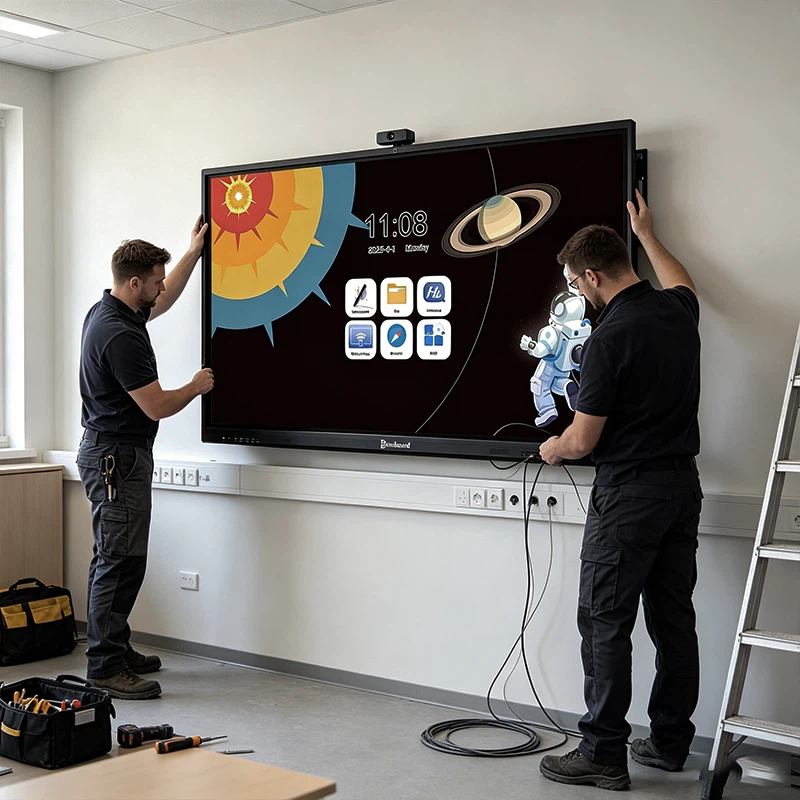
Se deben confirmar dos condiciones del sitio antes de especificar una pizarra interactiva de 86 ", no después.
La capacidad de carga de la pared es la primera. Una unidad de 86 "tiene un peso neto de aproximadamente 65-80kg; el hardware de montaje se suma a esta cifra. La construcción de paneles de yeso estándar no soporta esta carga sin refuerzo. El refuerzo de la pared es un elemento del alcance de la construcción: requiere una contratación separada, un presupuesto separado y, en la mayoría de los entornos institucionales, un ciclo de aprobación separado. Los proyectos que llegan a la etapa de instalación antes de que se verifique esta condición se enfrentan rutinariamente a una suspensión de varias semanas mientras se diseña, aprueba y ejecuta el refuerzo.
La anchura clara de la pared frontal es la segunda. Después de instalar el panel y el hardware de montaje, el ancho libre restante en cada lado debe cumplir con los estándares locales de salida de incendios. Esta medición es fácil de verificar por adelantado y casi imposible de remediar después de la instalación sin quitar el equipo.
A través de los 86 "proyectos que Qtenboard ha entregado, omitir estas dos verificaciones previas a la compra es el predictor más consistente de la demora del proyecto, no la falla del equipo, no el error de especificación, sino los descuidos evitables de la condición del sitio que una encuesta estándar previa a la implementación elimina en menos de dos horas.
Una pizarra interactiva de 98 "se justifica solo para salas de conferencias con 200 asientos, centros de comando del gobierno o espacios de exhibición institucionales con requisitos formales de exhibición pública, y debe estructurarse como un proyecto de capital independiente, no anexado a una línea de presupuesto estándar para el aula.
Hay entornos donde 98 "no solo es apropiado sino necesario: grandes salas de conferencias universitarias con capacidad para 200 o más, centros de comando y operaciones del gobierno y espacios de exhibición institucionales diseñados para exhibición pública formal. Estos entornos comparten una característica común: tienen requisitos de visualización que no pueden cumplir los tamaños más pequeños o las configuraciones estándar de varias unidades, y generalmente tienen una infraestructura de ingeniería capaz de admitir la instalación de gran formato.
El proceso de adquisición para pizarras interactivas de 98 "debe incluir una evaluación del sitio físico que cubra tres condiciones antes de realizar el pedido.
Una adquisición de 98 "debe estructurarse como un proyecto de capital independiente, no anexado a una línea presupuestaria de equipo de aula estándar. El documento de aprobación interna debe abordar tres preguntas explícitamente: por qué este lugar específico requiere una configuración de 98 "en lugar de una configuración alternativa; qué condiciones del sitio se han verificado antes de la compra; y qué muestra la comparación dual de 86" en términos de costo, línea de tiempo y rendimiento de visualización.
Los tres casos a continuación muestran cómo el marco de cuatro variables resuelve situaciones que la comparación de especificaciones estándar no puede anticipar, desde la especificación de un despliegue de distrito de gran tamaño hasta la recuperación de un despliegue universitario de 98 "estancado.
Los siguientes tres casos se extraen de los proyectos entregados por los equipos de proyecto y especificación de Qtenboard & #039;.
Una oficina de educación contrató a Qtenboard para una renovación inteligente del aula que abarcaba 42 aulas de grupos pequeños, cada una con una profundidad de sala de 3,5-4m y un tamaño de clase de 25-30 estudiantes. El resumen de adquisiciones original había especificado 86 "pizarras interactivas uniformemente en todas las aulas, basadas en un enfoque de" tamaño máximo dentro del presupuesto "aplicado sin evaluación previa del sitio.
Nuestro equipo de proyecto realizó una encuesta previa a la implementación en todo el inventario del aula antes de confirmar cualquier pedido. La encuesta identificó que las paredes de placas de yeso estándar en estas aulas no podían soportar pesos unitarios de 86 ", y que la especificación de gran tamaño comprimiría las distancias de visualización de la primera fila y empujaría la zona táctil superior más allá de la cómoda altura de escritura de pie, lo que significa que una parte significativa de cada pantalla estaría estructuralmente inactiva en el uso diario.
Recomendamos retener las unidades de 86 "en las seis aulas con profundidades superiores a 6m, y especificar las 36 aulas restantes con unidades de 65" que no requieren refuerzo de pared. El costo de refuerzo adicional en todo el proyecto se redujo en un 22% en relación con la especificación original. La utilización de escritura a pantalla completa en las aulas especificadas aumentó del 62% al 98%. El proyecto ajustado completó la implementación antes de la apertura del semestre sin más excesos de presupuesto o problemas de equipo posteriores a la instalación.
Una escuela secundaria municipal clave contrató a Qtenboard para una renovación de equipos multimedia en todo el campus que cubre 54 aulas estándar de 30-50 estudiantes cada una, con profundidades de 6-8m. La instalación existente era un despliegue mixto de 65 "y 86" unidades adquiridas sin un estándar de selección consistente en dos ciclos presupuestarios separados.
Nuestra evaluación identificó dos problemas operacionales compuestos. En las aulas con unidades de 65 ", los maestros no podían implementar diseños de enseñanza de doble columna en tamaños de fuente legibles, lo que requería el cambio de cursos que consumía 30-60 segundos de tiempo de instrucción por transición. En las aulas con unidades de 86 ", los modelos de repuestos incompatibles requerían que el equipo de mantenimiento de la escuela almacenara dos inventarios paralelos y operara dos flujos de trabajo de mantenimiento, un acuerdo que aumentaba los costos operativos anuales y producía documentación inconsistente en las auditorías financieras y las revisiones de aceptación de proyectos.
El equipo del proyecto de Qtenboard & #039; recomendó la estandarización completa del campus a 75 ", con reserva unificada de repuestos, protocolos de mantenimiento estandarizados y una sola calibración de aceptación aplicada en todas las habitaciones 54. El mantenimiento anual del equipo y el costo de la reserva de piezas se redujeron en un 18%. El proyecto autorizó la auditoría financiera y la revisión de aceptación sin remediación. El ahorro promedio de tiempo de cambio de cursos por clase superó los 40 segundos, se recuperó directamente como tiempo de instrucción en cada día de enseñanza durante todo el año académico.
Qtenboard fue traído para resolver un despliegue estancado en una universidad integral que había adquirido ocho pizarras interactivas de 98 "para grandes salas de conferencias y espacios de exposiciones académicas, con entrega programada para un horario de apertura de semestre fijo.
La adquisición original se había completado sin una evaluación previa del sitio de compra. Cuando el equipo llegó al campus, nuestro equipo de proyecto se comprometió a evaluar la situación: el edificio de enseñanza más antiguo & #039;s ascensor ancho claro y el radio de giro del corredor no podían acomodar las unidades empaquetadas 98 ", y las paredes estándar de las salas de conferencias carecían de la capacidad estructural para montaje directo. El proyecto se había suspendido con equipo in situ y ya se había acumulado un retraso de 21 días.
Nuestro equipo realizó una evaluación lugar por lugar e implementó una resolución diferenciada. Para los lugares donde las restricciones de paso eran el problema vinculante, la especificación se convirtió a configuraciones duales de 86 "de lado a lado, que podían llevarse a través de pasajes estándar e instalarse contra estructuras de pared convencionales sin fabricación estructural. Para los espacios de exposición con una infraestructura de ingeniería adecuada y requisitos de exhibición formal que realmente justificaban 98 ", conservamos la especificación original y administramos la construcción de la estructura de acero y la preparación del pasaje antes de la colocación del equipo.
El problema del equipo varado se resolvió completamente. La configuración dual de 86 "brindó una cobertura de pantalla de formato ancho equivalente, acortó el ciclo de construcción en 10 días en comparación con el plan de instalación original de 98" y redujo el costo total del proyecto en aproximadamente un 15%. Todos los requisitos de enseñanza y exhibición se cumplieron dentro de la línea de tiempo revisada, y la estabilidad operativa posterior a la instalación fue consistente en ambas configuraciones.
La matriz a continuación está diseñada para ser referenciada directamente en los informes de factibilidad y la documentación de adquisición interna: asigna cada tamaño a la profundidad de la sala, el recuento de usuarios, las verificaciones previas a la instalación y la estabilidad de la adquisición por lotes.
Profundidad de la habitación Es el límite inferior duro en la selección de tamaño. Determina la distancia máxima de visualización desde la pantalla hasta el asiento más alejado, que establece el tamaño mínimo de visualización requerido para la legibilidad del contenido en tamaños de fuente estándar.
Recuento de usuarios Determina el requisito de densidad de información. Los grupos más grandes requieren áreas de escritura efectivas más grandes para admitir la gama de formatos de contenido de instrucción y presentación utilizados en entornos profesionales.
Frecuencia de interacción Influye en los requisitos de grado del panel. La interacción táctil diaria de alta frecuencia crea un estrés térmico y mecánico para el que los paneles de grado comercial están diseñados y los paneles de grado consumidor no.
Condiciones de instalación -Estructura de la pared, anchura clara de la pared delantera, y dimensiones del paso de dirección-son las variables más constantemente pasadas por alto en el planeamiento de la pre-compra y el más constantemente responsable de retrasos del proyecto de la poste-adjudicación.
| Artículo | 65" | 75" | 86" | 98" |
|---|---|---|---|---|
| Profundidad de la habitación recomendada | ≤ 4m | 4–7m | 6–10m | 10 metros |
| Recuento de usuarios | ≤30 | 30–50 | 50–80 | 80+ |
| Ambiente típico | Aula pequeña/sala de reuniones pequeña | Aula estándar/sala de formación | Sala de conferencias/sala de juntas | Auditorio/sala de exposiciones |
| Comprobaciones previas a la instalación | Bajo | Bajo | Medio (ancho claro de carga) | Alto (estructura de paso) |
| Estabilidad de adquisición por lotes | Alto | Más alto | Alto | Proyecto por proyecto |
| Encuesta del sitio de Qtenboard | Comprobación estándar previa a la implementación | Comprobación estándar previa a la implementación | Evaluación obligatoria del ancho de carga | Evaluación completa estructural y de pasaje |
El costo de adquisición por unidad es un componente de la inversión total. El cálculo del TCO completo para los compradores institucionales debe incluir las tarifas de instalación profesional, los costos de modificación estructural, el seguro de transporte y manejo, y las diferencias anualizadas de consumo de energía a lo largo de la vida útil de la implementación. Para una adquisición a nivel de distrito que cubra 100 aulas, un error de especificación por unidad multiplicado en todo el alcance de la implementación puede producir una variación de TCO que exceda el 15-20% del presupuesto inicial del equipo, completamente evitable con una especificación inicial precisa y una evaluación previa del sitio de compra.
El compromiso de Qtenboard comienza en la etapa de planificación del proyecto, no en el punto de pedido, porque la fase previa a la compra es donde se evitan los errores de especificación, se identifican los riesgos de instalación y la documentación de adquisiciones se basa en datos verificados del sitio en lugar de suposiciones.
Antes de que cualquier especificación se comprometa con la documentación de adquisiciones, el equipo del proyecto de Qtenboard lleva a cabo una evaluación estructurada del sitio que cubre las cuatro variables de decisión: mediciones de profundidad de la sala, recuento de usuarios y análisis de diseño, requisitos de frecuencia de interacción y verificación de la condición de instalación, incluida la capacidad de carga de la pared, ancho claro de la pared frontal, y manipulación de las dimensiones del paso para unidades más grandes.
El resultado es una recomendación de especificación escrita con formato para uso directo en informes de factibilidad, informes de adquisiciones internas y documentación formal de compras. Este documento incluye el lenguaje de parámetros técnicos apropiado para los procesos institucionales de adquisición y proporciona una justificación clara para cada recomendación de tamaño vinculada a las condiciones verificadas del sitio.
Este servicio es gratuito para los proyectos institucionales. La evaluación se realiza antes de realizar cualquier compromiso de compra, sin obligación de proceder con el equipo Qtenboard.
Qtenboard proporciona el paquete de documentación completo requerido para las revisiones de calificación de adquisiciones institucionales: informes de prueba de terceros, certificaciones de productos relevantes y hojas de especificaciones técnicas formateadas para la presentación formal de ofertas. Para los procesos de compras de la oficina de educación y del gobierno con requisitos de cumplimiento específicos, nuestro equipo de documentación prepara los materiales de apoyo en el formato requerido por la autoridad de adquisiciones correspondiente.
Para proyectos de adquisición por lotes a nivel de distrito o de todo el campus, Qtenboard proporciona una gestión de proyectos dedicada que cubre la fase de pedidos, la coordinación del cronograma de entrega y la programación de la instalación alineada con los nodos de entrega de proyectos o de apertura semestral. Los pedidos por lotes se respaldan con estructuras de precios independientes y priorización de la cadena de suministro para proteger los compromisos de entrega en proyectos institucionales con plazos fijos.
Para instituciones educativas, compradores empresariales y socios de canal con requisitos de especificación de marca, Qtenboard admite la personalización completa de OEM, incluida la marca de panel, la configuración de la interfaz y el embalaje. La protección de canal a nivel de proyecto está disponible para los socios que gestionan procesos de licitación competitivos.
Las pizarras interactivas de calidad comercial de Qtenboard llevan términos de garantía claramente definidos y compromisos de respuesta de servicio estructurados para los requisitos de gestión de activos institucionales. La documentación de la garantía se proporciona en el formato requerido para el registro de activos institucionales y el cumplimiento de la auditoría financiera.
No. Una pantalla más grande puede reducir la facilidad de uso y aumentar el riesgo si la habitación no es adecuada. Cuando el tamaño de la pantalla excede la distancia de visualización práctica de la habitación, la distancia de visualización de la primera fila se comprime por debajo de los umbrales cómodos, la zona táctil superior se eleva más allá del alcance de los usuarios de pie, y los paneles más pesados con frecuencia requieren refuerzo de la pared antes de la instalación. El tamaño correcto está determinado por la profundidad de la sala, el recuento de usuarios, la frecuencia de interacción y las condiciones de instalación, no por un principio de tamaño máximo dentro del presupuesto.
Comience con la profundidad de la sala, que establece el límite inferior duro en la medida de tamaño desde la pantalla hasta el asiento más alejado para determinar el tamaño de visualización mínimo requerido para la legibilidad de la fuente estándar. A continuación, aplique el recuento de usuarios (que determina el área de escritura efectiva requerida), la frecuencia de interacción (que determina los requisitos de grado del panel) y las condiciones de instalación (estructura de pared, ancho libre de pared frontal y dimensiones de paso de manejo para unidades más grandes).
El área de escritura efectiva de un panel de 75 pulgadas es aproximadamente un 33% más grande que una unidad de 65 pulgadas. Esa diferencia se vuelve decisiva en las aulas estándar: en las salas de 30-50 estudiantes, un panel de 65 pulgadas obliga a los estudiantes de la fila trasera a perder la legibilidad del texto de tamaño estándar y bloquea los diseños de enseñanza de doble columna. Para habitaciones de 4m de profundidad o menos con 30 usuarios o menos, 65 pulgadas es la especificación óptima y no requiere refuerzo de pared.
65 pulgadas, 75 pulgadas y 86 pulgadas, dependiendo del tamaño de la habitación y el uso. El tamaño de 75 pulgadas se ha convertido en la especificación de aula estándar K12 global porque equilibra el costo, el área de escritura efectiva, la estabilidad del suministro y la estandarización de la adquisición por lotes en las implementaciones a nivel de distrito.
Indirectamente, sí. Los paneles más grandes son más sensibles al calor, la manipulación y las condiciones de instalación. Un panel de gran formato que funciona en un ambiente de alta temperatura, polvoriento o mal ventilado se degrada más rápido que una unidad de tamaño apropiado en las mismas condiciones. La selección correcta del tamaño, junto con la elección de paneles de calidad comercial clasificados para operación diaria continua, es la palanca principal para extender la vida útil.

CEO | Experto en soluciones interactivas de visualización y colaboración
Soy el fundador de Qtenboard y aporto más de 17 años de experiencia práctica a la industria de las pantallas táctiles. Basándome en la perspectiva de gestión global obtenida a través de mis estudios de EMBA en la Universidad de ShenZhen, dirijo a mi equipo en la optimización de cada etapa de nuestras operaciones, desde la definición del producto hasta la gestión de la cadena de suministro de alta eficiencia, asegurando que nuestras capacidades de fabricación permanezcan a la vanguardia de la industria.
Como el líder de Qtenboard, me especializo en el abastecimiento de las soluciones adaptadas de OEM/ODM para los whiteboards interactivos, las paredes video del LCD, la señalización digital, y los terminales del tacto del industrial-grado. Con el respaldo de nuestro moderno parque industrial de 330.000 m² en Shenzhen, mantenemos el control del ciclo de vida completo sobre el diseño industrial, la fabricación de precisión y las rigurosas pruebas de rendimiento.
Con casi dos décadas de experiencia en proyectos, las soluciones de visualización de Qtenboard ahora se implementan en más de 120 países y regiones, y se ganaron la confianza de más de 15.000 clientes empresariales en todo el mundo. Si está buscando un socio receptivo con una base de fabricación profunda para sus proyectos personalizados de pantallas táctiles, mi equipo y yo estamos listos para respaldar su visión con excelencia profesional.

 spa
spa
 EN
EN  pt
pt  th
th  vie
vie  aze
aze  bel
bel  est
est  lav
lav  ukr
ukr  ru
ru