Mesmo 4K, mesmo tamanho, até 30-50% de diferença no preço. A diferença é geralmente um componente que a maioria das especificações nunca menciona.
A classe do painel LCD é a explicação mais comum para uma diferença de preço de 30-50% entre dois painéis planos interativos com especificações de manchete idênticas. A classe do painel (A /A/B) é determinada no estágio de classificação de fábrica-com base na contagem de defeitos, localização do defeito e uniformidade de cor/brilho-e quase nunca aparece em uma folha de especificações. Isso não afeta se um painel de poderes. Ele determina se o painel ainda parece e executa a maneira que fez no primeiro dia, três anos em uma implantação.
Uma figura MTBF sem uma classe declarada do painel é apenas meio ponto de dados. MTBF é uma média estatística de testes populacionais-útil para classificar os fornecedores em relação uns aos outros, não para prever a data de serviço de uma única unidade. A fonte original vs do painel recondicionado é um risco separado e mais silencioso: os painéis recondicionados entram na cadeia de suprimentos com uso anterior não documentado e a cobertura da garantia do componente do painel é frequentemente anulada ou fortemente limitada.
Dois painéis planos interativos podem ficar lado a lado em uma comparação, ambos anunciados como um quadro interativo de 86 "4K, ambos citando brilho e resposta ao toque semelhantes-e ainda carregam uma diferença de preço de 30% a 50%. Pergunte ao fornecedor por que, e a resposta é quase sempre a mesma: "usamos painéis originais de grau A". Sem um vocabulário compartilhado para o que essa afirmação realmente significa, as equipes de compras são deixadas avaliando apenas o preço.
Este é um problema distintamente B2B. Um painel plano interativo Implantado em uma sala de aula ou sala de reuniões não é usado como uma televisão doméstica é usada. Ele funciona de seis a dez horas por dia, às vezes em várias sessões, durante anos, na frente de usuários finais que nunca vêem-e nunca deveriam ter que pensar-o que está acontecendo dentro da tela. O componente que decide silenciosamente se essa promessa é válida é o próprio painel LCD: sua classificação, sua classificação MTBF, seu histórico de fornecimento e, cada vez mais, sua engenharia de conforto ocular.
Este artigo aborda quatro coisas que um comprador de compras ou de TI deve avaliar antes de assinar um pedido de compra Lousa interativa Ou IFPDFrota: como a classificação do painel (A /A/B) realmente funciona, como ler uma figura MTBF sem excesso ou falta de confiança, por que "Painel Original" e "Painel Recondicionado" não são intercambiáveis em uma folha de especificação idêntica, e porque características do painel-nível como a baixa emissão clara azul pertencem em um RFP comercial, Não apenas um folheto TV consumidor.
Mantenha essas duas tabelas à mão na próxima vez que você comparar cotações de fornecedores para um painel plano interativo-elas cobrem as duas variáveis que mais frequentemente explicam uma diferença de preço entre duas unidades com especificações de título idênticas.
| Critérios | Um Grau | Um Grau | Grau B |
|---|---|---|---|
| Tolerância do defeito (pontos brilhantes/escuros) | Perto de zero; bin mais apertado no processo de classificação | Muito baixo; dentro tolerância comercial padrão | Maior tolerância; defeitos possíveis, especialmente bordas próximas |
| Cor Condicional (Delta E) | ΔE ≤ 3, correspondência apertada lote a lote | ΔE ≤ 5, aceitável para o uso mais comercial | ΔE pode exceder 5; deriva visível em instalações de várias unidades |
| Uniformidade do brilho | Tipicamente ≥ 85% através do painel | Tipicamente 75-85% | Pode cair abaixo 75%; pontos quentes visíveis |
| Decaimento do brilho sobre a vida avaliado | Curva de decaimento mais linear e mais suave | Decaimento moderado, dentro das especificações para horas avaliadas | A decadência precoce da vida é comum |
| Posicionamento típico do MTBF | Maior nível para o tamanho/tecnologia do painel | Nível médio; ainda atende a limiares comerciais | Nível inferior; muitas vezes perto de números de grau do consumidor |
| Aplicação típica | IFPD comercial emblante, salas de controle, espaços de alta visibilidade | Salas comerciais standard e salas reuniões | Dispositivos de nível básico/orçamento, ciclos curtos de substituição |
As notas refletem como um painel é classificado na fábrica, não se ele é acionado-um painel de grau B exibirá uma imagem no primeiro dia de forma tão confiável quanto um painel A.
| Critérios | Painel original | Painel Recondicionado/Reciclado |
|---|---|---|
| Backlight vida restante | Vida útil nominal completa desde a primeira utilização | Desconhecido; horas anteriores do uso tipicamente indocumented |
| Ligação camada toque | A lamentação dos pontos brilhantes, as lamentações dos pontos brilhantes. | Muitas vezes re-ligado; maior risco de offset toque ou delaminação ao longo do tempo |
| Taxa escondida do defeito | Controlado pela classificação fábrica QC | Superior; defeitos de uso prévio podem não surgir imediatamente |
| Rastreabilidade | Rastreabilidade completa do lote e fábrica | Frequentemente proveniente de canais de mercado aberto sem histórico de lotes |
| Cobertura garantia | Garantia completa do fabricante no painel | Muitas vezes excluídos ou muito limitados no componente do painel |
| Custo total de propriedade | Previsível, alinhado com MTBF nominal | Maior risco de falha precoce, chamadas de serviço e substituição |
Uma folha de especificações de manchete interativa de tela plana é construída em torno de resolução, pontos de contato, brilho e processador-as coisas que são fáceis de alinhar entre as marcas em uma comparação de cotações. A classe do painel quase nunca aparece nessa folha, mas é o único componente mais responsável por saber se a unidade ainda parece e executa a maneira que fez no primeiro dia, três anos em uma implantação.
Painel fabs produzir grandes folhas "mãe vidro" que são cortadas em painéis individuais. Cada painel é então inspecionado para pontos brilhantes (um sub-pixel preso permanentemente), pontos escuros (um sub-pixel morto), uniformidade de cor em toda a superfície e vazamento de luz de borda. Painéis são classificados-"binned"-em notas com base em quantos defeitos são encontrados e onde eles caem: um ponto perto do centro da tela é marcado muito mais duramente do que um dobrada perto da moldura, porque ele & #039;s o que um espectador realmente percebe durante o uso real.
A representa o compartimento mais apertado: o menor número de defeitos tolerados e o limite mais estrito. Um grau permite uma tolerância a defeitos mais ampla, mas ainda comercialmente aceitável. Grau B permite visivelmente mais defeitos, ou coloca-los mais perto da borda do que & #039;s considerado aceitável. Nada disso determina se o painel é acionado-um painel de grau B acende e exibe uma imagem tão confiável quanto um painel A no primeiro dia. A diferença não é se funciona. It & #039;s como consistentemente ele continua trabalhando, e como graciosamente envelhece, ao longo dos anos um painel plano interativo é realmente esperado para servir uma sala de aula ou sala de reunião.
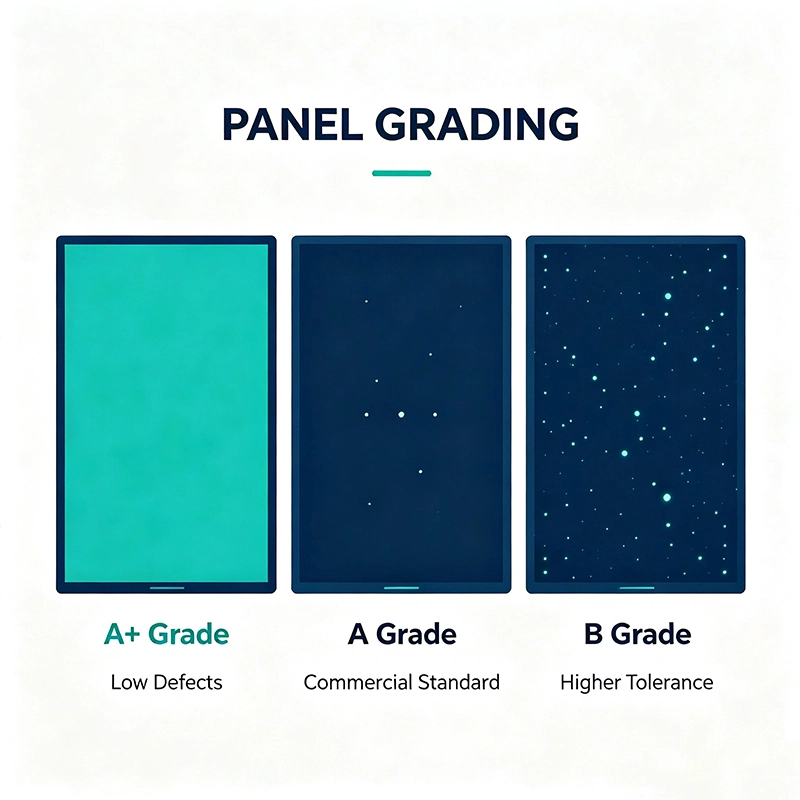
A marca do painel informa sobre a capacidade de fabricação a montante-ela estabelece um piso, não o veredicto final sobre qualidade. A BOE é uma das maiores produtoras de LCD do mundo, enviando uma ampla gama de tamanhos e classes. LG Display tem uma reputação de longa data para o desempenho de cores e linhas de painel de nível comercial. AUO e Innolux, ambos com sede em Taiwan, estão bem estabelecidos em segmentos de exibição industrial e comercial, incluindo painéis comumente usados em painéis planos interativos de médio a grande formato.
O detalhe compradores frequentemente perder: Cada uma dessas fábricas envia vários graus das mesmas linhas de produção.Perguntar "qual marca" sem perguntar "qual grau, qual lote" só lhe dá metade da imagem. Uma questão de aquisição mais útil é: "Qual fab, qual nota e você pode fornecer o código do lote?"-porque uma marca sozinha não garante que o painel por trás dele seja A em vez de B.
4K descreve a contagem de pixels (3840 × 2160) -nada mais. Não diz nada sobre gama de cores, relação de contraste ou uniformidade de brilho, razão pela qual dois "quadros interativos 4K" podem parecer visivelmente diferentes lado a lado. A gama de cores (geralmente expressa como cobertura NTSC ou sRGB) determina a precisão com que as cores na tela correspondem ao conteúdo de origem-relevante sempre que uma sala de reunião estiver revisando recursos da marca, modelos de design ou dados codificados por cores. A relação de contraste e a uniformidade afetam a forma como traços de tinta nítidos e pequenos textos aparecem em toda a superfície, não apenas no centro.
Vendo o ânguloImporta mais na implantação comercial do que em quase qualquer outro lugar, porque a maioria dos espectadores em uma sala de aula ou sala de reuniões não estão sentados diretamente na frente do painel-eles & #039;re 30 a 45 graus fora do eixo, às vezes mais, a partir da terceira linha ou ao lado de uma mesa de conferência. Um painel com desempenho de ângulo de visão estreito mostra mudança de cor e queda de brilho nesses ângulos, o que significa que "a mesma imagem 4K" pode parecer significativamente diferente para um aluno na fileira de trás do que para um na frente. É aqui que a classe do painel e a tecnologia do painel se cruzam: tecnologias de painel grande angular combinadas com uma cor de retenção de grau mais alto e consistência de brilho muito mais fora do eixo do que um painel padrão de grau inferior.
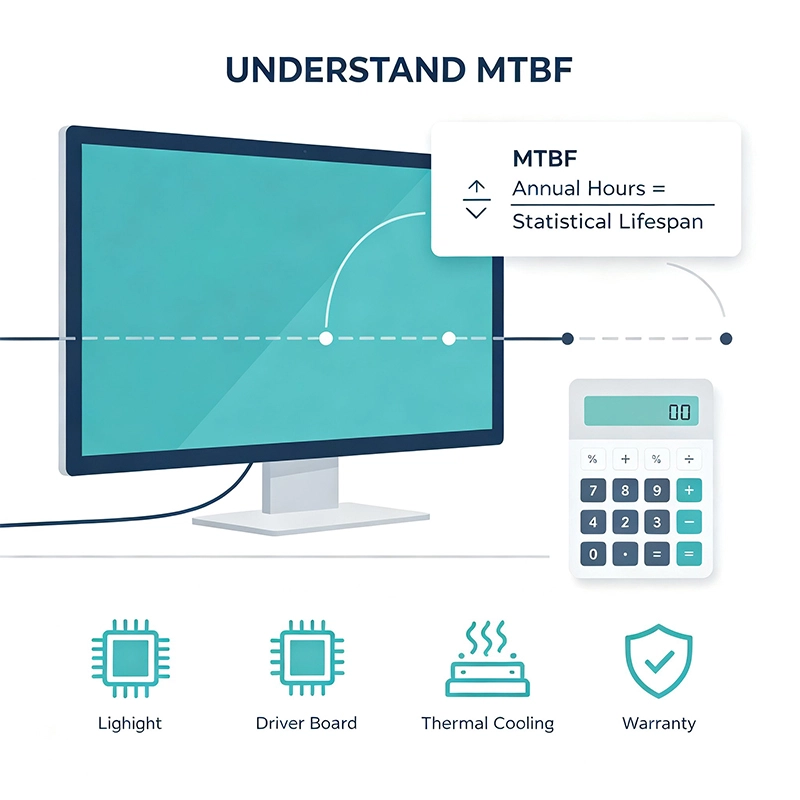
O MTBF (Mean Time Between Failures) é uma média estatística extraída do teste de uma população de unidades sob condições padronizadas-não é uma garantia para uma única unidade. Tratá-lo corretamente significa usá-lo como um Relativa Ferramenta para comparar fornecedores, não como um relógio de contagem regressiva para uma exibição específica.
Exemplo: uma instalação que executa uma tela plana interativa 8 horas/dia, 5 dias/semana registra aproximadamente 2.080 horas operacionais por ano. Dividir um número MTBF declarado por um fornecedor por esse uso anual dá uma sensação aproximada e comparável de onde um painel se senta em relação a uma cotação concorrente-útil para classificar fornecedores, não para prever o dia exato em que uma unidade específica precisará de serviço.
O MTBF não é produzido apenas pelo painel-reflete o efeito combinado da classe do painel, qualidade da luz de fundo, design da placa de motorista e engenharia de dissipação térmica/térmica. Uma alta reivindicação MTBF anexada a um grau de painel não especificado é apenas metade de um ponto de dados; peça os dois juntos.
Em salas de aula de 6 a 8 horas por dia ou salas de controle operando quase continuamente, a temperatura de cor fria fixa e a emissão de luz azul padrão contribuem para a fadiga visual durante um dia ou turno escolar completo. A Tela plana interativa luz quente Permite que a tela mude para uma temperatura de cor mais quente para uso de baixa intensidade, como lições pesadas de leitura ou longas sessões de revisão, reduzindo a tensão nos olhos durante sessões prolongadas.
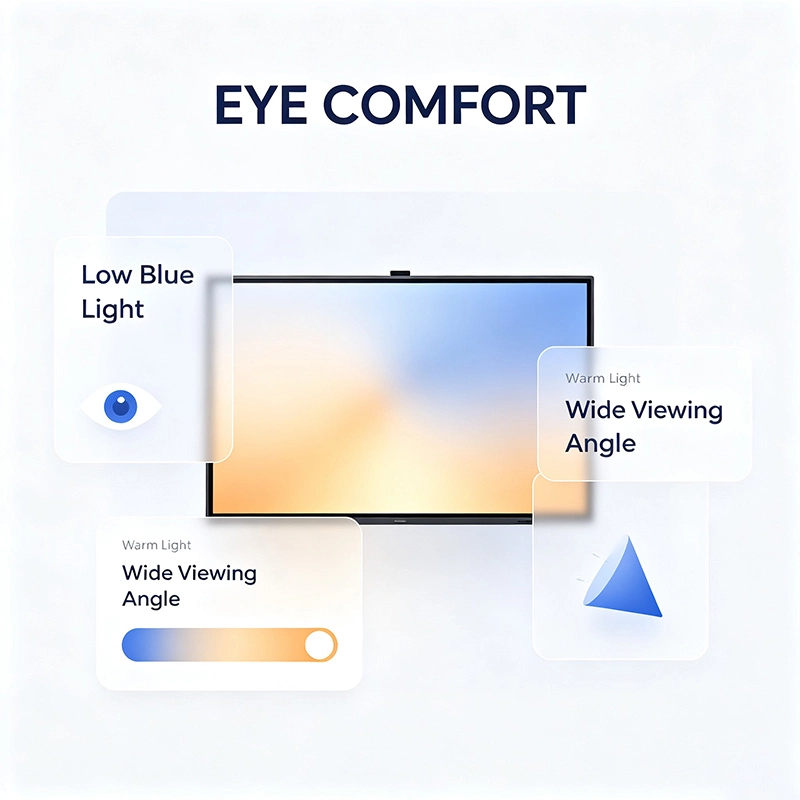
Vale a pena perguntar aos fornecedores sobre a distinção: Lousa interativa luz azul baixaReduz a emissão de comprimento de onda azul no nível da luz de fundo/painel, enquanto um filtro de "modo noturno" apenas por software simplesmente muda a renderização de cores na tela-ele muda a aparência da imagem sem alterar a luz real emitida. Apenas uma implementação em nível de hardware reduz a exposição real à luz azul. É também por issoConforto ocular IFPD As características são escritas cada vez mais na educação e nas especificações da proposta do governo um pouco do que tratadas como um agradável-à-ter, e porque o tópico conecta de volta à categoria do painel: os painéis da baixo-categoria com uniformidade mais fraca do brilho precisam frequentemente uma saída mais alta do luminoso de compensar regiões escuras, que pode aumentar a luz total e a exposição clara azul através da sala.
Uma diferença de preço significativa entre dois painéis planos interativos similarmente especificados geralmente remonta a um ou mais de: um grau de painel inferior e não especificado; estoque de painel recondicionado em vez do original; ICs de driver de especificação reduzida; ou um projeto mais fino do thermal/heat-dissipação que corte o custo material mas encurta a vida componente sob o uso sustentado.
O preço de compra é apenas uma linha na equação do custo real. O custo total de propriedade (TCO) também inclui a frequência de chamadas de serviço, o custo do painel de substituição, o tempo de inatividade durante o reparo e-para compradores educacionais e corporativos-o custo de uma tela com desempenho visivelmente baixo na frente dos próprios alunos, estagiários ou clientes que a sala foi construída para impressionar. Como ilustração direcional: se uma frota comprada a granel exigir serviço relacionado a painéis em uma parcela visivelmente maior de unidades nos primeiros 18 meses do que a baixa taxa de um dígito normalmente esperada de painéis A/A devidamente classificados sob reivindicações normais de garantia, O custo de trabalho e substituição sozinho pode compensar todo o desconto ganho na compra-antes de contar o valor do tempo instrucional ou reunião perdido para o tempo de inatividade.
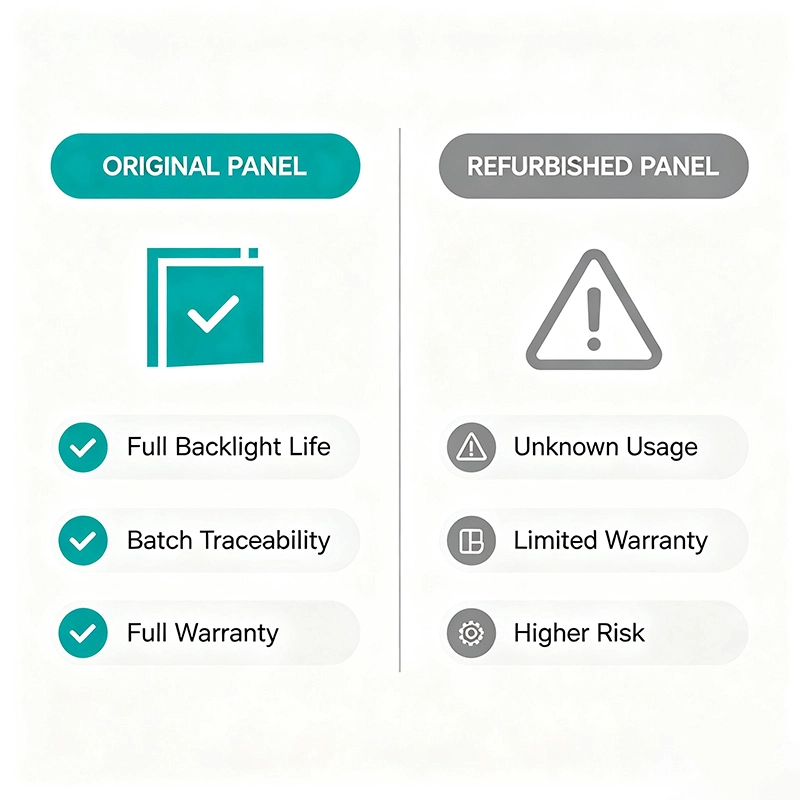
Painéis recondicionados normalmente entram na cadeia de suprimentos por meio de unidades desativadas, estoques não vendidos em canais não oficiais ou componentes retirados do estoque devolvido e relabelados. Os riscos aumentam silenciosamente: horas de luz de fundo já consumidas antes do painel chegar ao comprador, problemas de realinhamento da camada de toque que surgem meses após a instalação e não no desencaixotamento e deriva de cores de lotes incompatíveis montados na mesma ordem. A cobertura de garantia no próprio componente do painel é frequentemente anulada ou fortemente limitada nesses casos, mesmo quando o restante da unidade possui uma garantia padrão.
A salvaguarda prática é processual, não visual: solicite um certificado de classificação do painel, rastreabilidade de fábrica e lote e termos de garantia que nomeiam explicitamente o componente do painel-não apenas a unidade montada-antes de assinar uma cotação que pareça extraordinariamente atraente para a especificação.
Painéis de consumo são projetados em torno de um padrão de uso doméstico de TV: algumas horas por dia, desligamentos completos frequentes, distâncias e ângulos de visualização casuais. Painéis de nível comercial construídos para aplicações interativas de tela plana são projetados para tempo de execução diário prolongado, muitas vezes quase contínuo, gerenciamento térmico mais robusto para evitar a degradação de pixels relacionada ao calor e revestimentos antienvelhecimento que resistem ao brilho e à deriva de cor sob iluminação sustentada. Quando um padrão de educação ou compras do governo especifica um requisito mínimo diário de horas de operação, confirmar que uma reivindicação de "nota comercial" é respaldada por documentação-em vez de um painel de consumidores novamente rotulado-é um item de linha legítimo e específico a ser solicitado por qualquer fornecedor.
O padrão abaixo aparece em tipos de compradores muito diferentes-uma instituição de treinamento e um campus corporativo-mas a causa raiz e a correção são as mesmas em ambos os casos.
Um centro de treinamento vocacional no Quênia equipou mais de 40 salas de aula com telas planas interativas como parte de uma iniciativa de educação digital apoiada pelo governo. Durante a aquisição, a avaliação concentrou-se principalmente no preço de compra e nas principais especificações, incluindo resolução 4K, capacidade multitoque e brilho. No entanto, os documentos do concurso não especificaram os requisitos de classificação do painel LCD, fornecimento do painel ou consistência do lote.
Após aproximadamente 18 meses de uso regular em sala de aula, a equipe de manutenção observou diferenças notáveis entre os monitores. Várias unidades desenvolveram brilho irregular e ligeira variação de cor ao redor das bordas do painel, enquanto outras continuaram a funcionar normalmente sob condições operacionais semelhantes.
Durante a revisão da garantia, o fornecedor não conseguiu fornecer a documentação completa confirmando que todas as unidades foram fabricadas usando os mesmos painéis LCD de nível comercial. Embora os produtos compartilhassem o mesmo número de modelo, o fornecimento de painéis variou entre os lotes de produção, dificultando a manutenção do desempenho visual consistente em toda a implantação.
O projeto destacou uma importante lição de aquisição: especificações idênticas nem sempre garantem desempenho idêntico a longo prazo. Para projetos educacionais envolvendo dezenas ou centenas de monitores, definir a classificação do painel, a consistência do lote e a rastreabilidade da qualidade na especificação de aquisição pode reduzir significativamente os riscos futuros de manutenção.
A segunda rodada de compras escreveu uma classificação documentada do painel e rastreabilidade do lote diretamente no contrato de compra. Os tickets de serviço relacionados a brilho e cor caíram para uma pequena fração da taxa original no ano de implantação seguinte-reforçando que a lacuna na especificação, e não na tecnologia de painel subjacente, foi a causa raiz.
Uma empresa regional de serviços financeiros nos Emirados Árabes Unidos atualizou mais de 60 salas de reuniões com telas inteligentes de grande formato. Para reduzir os custos iniciais de aquisição, o projeto selecionou telas orientadas ao consumidor cujas especificações-incluindo resolução 4K, capacidade de toque e tamanho da tela-pareciam comparáveis às alternativas comerciais.
Durante a operação normal, no entanto, as áreas de reunião mais movimentadas mantinham regularmente os monitores funcionando por 10 a 12 horas por dia, com reuniões consecutivas e tempo ocioso mínimo. Esse padrão operacional excedeu o perfil de uso diário típico para o qual os monitores do consumidor geralmente são projetados.
No segundo ano de implementação, a equipe de suporte de TI observou uma clara diferença nos registros de manutenção entre salas de reunião de alta utilização e aquelas usadas com menos frequência. Displays em salas muito reservadas eram mais propensos a exibir reduzida uniformidade da luz de fundo, degradação gradual do brilho e inconsistência de cor perceptível durante a operação prolongada, enquanto salas de menor uso permaneceram comparativamente estáveis.
Uma revisão técnica subsequente indicou que o problema não eram as especificações de exibição em si, mas sim a incompatibilidade entre o ambiente de implantação e o ciclo de trabalho pretendido pelo produto. Embora os displays comerciais e de consumo compartilhassem especificações semelhantes, eles foram projetados para diferentes condições operacionais, requisitos de gerenciamento térmico e expectativas de confiabilidade a longo prazo.
A equipe de compras revisou seus padrões para implantações futuras, exigindo painéis LCD de nível comercial e produtos projetados especificamente para operação diária estendida, em vez de avaliar os displays apenas no preço de compra e nas folhas de especificação.
Substituir a asa de alto uso por painéis planos interativos de nível comercial-classificados para operação diária prolongada em vez de um ciclo de trabalho doméstico-trouxe a taxa de ingressos da asa de volta à linha com o resto do piso. A lição espelha o primeiro caso de um ângulo diferente: a folha de especificações visível parecia comparável no momento da compra, mas o painel & #039;s grau subjacente e classificação do ciclo de trabalho foram o que realmente determinou se ele realizou-se sob a sala & #039;s padrão de uso real.
A fonte do painel é a primeira porta da qualidade em nosso processo de produção, não uma reflexão tardia segurada no conjunto final. Cada painel plano interativo que construímos é especificado em relação a um grau de painel documentado, proveniente de lotes rastreáveis e inspecionado contra uniformidade definida e limites de pixels mortos antes de chegar à linha de montagem.
Na Qtenboard, acreditamos que uma exibição comercial deve ser julgada não apenas pelo desempenho quando sai da fábrica, mas pela confiabilidade com que atende os clientes anos após a instalação.
É por isso que nos concentramos em painéis LCD de nível comercial, fornecimento estável de componentes, inspeção rigorosa de qualidade e consistência de produtos a longo prazo. Nosso objetivo não é simplesmente construir monitores com especificações impressionantes, mas ajudar nossos parceiros a entregar projetos confiáveis com custos de manutenção mais baixos, menos chamadas de serviço e maior confiança durante todo o ciclo de vida do produto.
Na prática, esse padrão aparece em decisões específicas e verificáveis, em vez de uma reivindicação de marketing:
Uma lista de verificação estruturada para gerentes de compras, líderes de TI e projetos avaliando um fornecedor interativo. Cada item deve ser confirmado. Pré-contrato, Não após a entrega-porque os modos de falha descritos ao longo deste artigo são quase sempre invisíveis no estágio de demonstração.
Bottom line para aquisição: Os dois modos de falha mais comuns em implantações de frota de tela plana interativa-cor de lote misto e desvio de brilho e incompatibilidade de ciclo de trabalho do painel de nível do consumidor-são detectáveis na documentação antes O pedido de compra está assinado. Solicite o certificado de classificação do painel, registros de rastreabilidade do lote, MTBF com classificação do painel e termos de garantia do componente do painel como pacote de documentação padrão. Se um fornecedor pré-selecionado não puder produzir todos os quatro, trate a cotação como não verificável no desempenho a longo prazo, independentemente de quão atraente o preço principal pareça.
P1O que "painel de grau A" realmente significa, e como é diferente de A?
Ambas as categorias vêm do mesmo processo de classificação da fábrica baseado na contagem do defeito, lugar do defeito, e uniformidade da cor/brilho. A fica na caixa mais apertada com os limites mais estritos; A nota permite uma tolerância mais ampla, mas ainda comercialmente aceitável. Nenhum afeta se o painel se liga-a diferença aparece na consistência de longo prazo.
P2A categoria do painel afecta tipicamente a cobertura da garantia?
Em geral, os termos de garantia específicos do painel sim geralmente estão vinculados ao grau e ao fornecimento do componente. It & #039;s vale a pena pedir a qualquer fornecedor para soletrar os termos da garantia do painel separadamente da garantia total da unidade antes de fazer um pedido, uma vez que os dois don & #039;t sempre correspondem.
Falha do sinal:Se o documento de garantia do fornecedor cobrir "a unidade" sem nomear separadamente o componente do painel, assuma que o painel não está coberto até que se prove o contrário-especialmente em cotações com preços abaixo da média do mercado de grau A.P3Como devo interpretar um número MTBF em um fornecedor & #039;s citação?
Trate-o como uma média estatística de testes populacionais, não uma garantia para uma unidade. It & #039;s mais útil para comparar fornecedores em relação ao outro, juntamente com o grau do painel e design térmico por trás do número-uma figura MTBF sem um grau de painel declarado é apenas metade da imagem.
Falha do sinal: Um valor MTBF apresentado sem um grau de painel correspondente ou pressuposto do ciclo de trabalho não é uma especificação comparável. Peça os dois juntos ou trate o número como linguagem de marketing.P4Para um grande pedido de várias salas, o que devo pedir aos fornecedores para reduzir o risco de unidades inconsistentes?
Pergunte se o pedido será proveniente de um único lote documentado ou especificação de grau e se essa especificação pode ser escrita no contrato de compra. Esta é a proteção mais eficaz contra diferenças visíveis de cor ou brilho que aparecem em um grande lançamento.
Pergunta 5O que & #039;s a diferença prática entre um painel original e um recondicionado?
Um painel original tem sua vida útil nominal completa à frente e vem com rastreabilidade padrão de fábrica. Um painel recondicionado & #039;s uso anterior é tipicamente indocumentado, razão pela qual defeitos como desalinhamento de toque ou desnivelamento luz de fundo pode surgir somente após meses de uso, em vez de na instalação.
Falha do sinal: Uma cotação que é 20% + abaixo da média do mercado para o grau do painel indicado-sem documentação em lote-é o sinal mais comum de estoque recondicionado. O desconto não é uma vitória de negociação; é um sinal de que o componente do painel pode não estar coberto pela garantia.Pergunta 6Um recurso de "pouca luz azul" sempre implementado no hardware?
Não necessariamente-alguns produtos aplicam apenas um filtro de cor, que muda a aparência da imagem sem reduzir a luz real emitida. It & #039;s uma pergunta justa perguntar a qualquer fornecedor diretamente, uma vez que as duas abordagens são & #039;t intercambiáveis em termos de benefício olho-conforto real.
P7Qual classificação de horas de operação devo procurar em um painel de "nível comercial"?
Procure um painel classificado para uso diário estendido que corresponda ao seu padrão de implantação real-uma sala de aula compartilhada ou uma sala de reunião durante todo o dia é muito diferente de uma exibição pessoal do escritório. Peça ao fornecedor para confirmar o horário de funcionamento diário por escrito, em vez de confiar apenas na palavra "comercial".
Falha do sinal:"Grau comercial" reivindicado sem uma classificação diária documentada de horas de operação é um painel do consumidor relabeled até prova em contrário. Peça o ciclo de trabalho avaliado em horas/dia, por escrito.P8Quais informações devo ter prontas ao relatar um problema relacionado ao painel?
Tendo a unidade & #039;s número de série, lote de compra, e uma descrição de quando o problema aparece (e.g., apenas em certos ângulos, somente após longo tempo de execução) ajuda um fornecedor a diagnosticar se ele & #039;s um problema de grau de painel, um defeito unidade one-off, Ou um fator de instalação/ambiente-e acelera qualquer que seja o processo de resolução.
P9Entre notas A e A, como um comprador consciente do orçamento deve decidir?
Para ambientes de alta visibilidade e longas horas-auditórios principais, salas de controle, salas de reuniões emblemáticas-A se paga em consistência. Para salas de aula padrão e salas de reuniões, a nota A atende aos limites comerciais com confiabilidade a um custo menor. O que nós & #039;d cautela contra, em qualquer nível de orçamento, é um grau indocumentado ou não especificado, que é onde a maioria dos riscos a longo prazo realmente se senta.
P10Que documentação os compradores devem exigir de um fornecedor do painel antes de assinar um contrato?
Exigir quatro documentos antes de assinar: (1) um certificado de painel mostrando a caixa A /A/B exata e os limites de teste aplicados; (2) registros de rastreabilidade de fábrica e lote para a produção exata; (3) uma figura MTBF emparelhada com uma classificação do painel declarada e descrição do projeto térmico-não apenas MTBF; E (4) termos de garantia que nomeiam explicitamente o componente do painel separadamente da unidade montada. Uma citação que não pode produzir todos os quatro é estruturalmente inverificável no desempenho a longo prazo.
Pergunta 11Como um painel recondicionado entra na cadeia de suprimentos?
Painéis recondicionados normalmente entram na cadeia de suprimentos por três canais: unidades descomissionadas de implantações anteriores, estoque não vendido em canais não oficiais e componentes retirados do estoque devolvido e relabelados. Em todos os três casos, as horas de uso anteriores normalmente não são documentadas, os problemas de realinhamento da camada de toque podem surgir meses após a instalação, e a cobertura da garantia do componente do painel é frequentemente anulada ou limitada-mesmo quando o restante da unidade possui uma garantia padrão.
Resolução e resposta ao toque são fáceis de comparar porque eles & #039;re impresso em cada citação. Grau de painel, derivação MTBF, rastreabilidade de sourcing e implementação de luz azul raramente são-e é exatamente por isso que eles estão onde a maior parte do custo a longo prazo e a maior parte do risco a longo prazo realmente vivem em uma compra interativa de tela plana. À medida que os requisitos do IFPD se tornam mais comuns em concursos educacionais e governamentais, a engenharia em nível de painel está rapidamente se movendo de uma nota de rodapé técnica para um item de linha que os compradores devem especificar pelo nome.
Um painel de grau A com sourcing documentado é normalmente suficiente. Evite classes não especificadas e estoque recondicionado independentemente do orçamento.
Painel de grau A, amplo ângulo de visão e recursos de conforto ocular no nível do hardware são a base prática para o uso diário de várias horas.
Um design térmico de grau, MTBF de nível superior e de nível comercial vale o prêmio onde o tempo de inatividade ou defeitos visíveis não são uma opção.
Explore a linha de quadros interativos de nível educacional da Qtenboard, baixe o catálogo completo de produtos ou fale com nossa equipe sobre a documentação de classificação e fornecimento do painel para seu projeto.

CEO | Display interativo e solução colaboração Expert
Eu sou o fundador da Qtenboard, trazendo mais de 17 anos de experiência prática para a indústria de telas sensíveis ao toque. Com base na perspectiva de gestão global adquirida através dos meus estudos EMBA na ShenZhen University, lidero minha equipe na otimização de todas as etapas de nossas operações-desde a definição do produto até o gerenciamento da cadeia de suprimentos de alta eficiência-garantindo que nossas capacidades de fabricação permaneçam na vanguarda do setor.
Como líder da Qtenboard, sou especialista em fornecer soluções OEM/ODM personalizadas para quadros interativos, paredes de vídeo LCD, sinalização digital e terminais de toque de nível industrial. Apoiados por nosso parque industrial moderno de 330.000 m² em Shenzhen, mantemos controle de ciclo de vida completo sobre design industrial, fabricação de precisão e testes rigorosos de desempenho.
Com quase duas décadas de experiência em projetos, as soluções de exibição da Qtenboard estão implantadas em mais de 120 países e regiões, conquistando a confiança de mais de 15.000 clientes corporativos em todo o mundo. Se você está procurando um sócio responsivo com uma fundação profunda da fabricação para seus projetos personalizados da exposição do toque, minha equipe e eu estamos prontos para apoiar sua visão com excelência profissional.

 pt
pt
 EN
EN  spa
spa  th
th  vie
vie  aze
aze  bel
bel  est
est  lav
lav  ukr
ukr  ru
ru