Sama 4K, sama suurus, kuni 30-50% eraldi hinnaga. Erinevus on tavaliselt komponent, mida enamik spec lehte ei maini.
LCD paneeli kvaliteet on kõige tavalisem selgitus kahe interaktiivse tasapinna vahel, millel on ühesugune pealõhe, mis on 30–50%. cs. Paneeli kvaliteet (A /A/B) määratakse tehase sorteerimise etapis, mis põhineb defektide arvu, defektide asukohal ja värvi / heledus ühtsus - ja peaaegu kunagi ei ilmu spec lehel. See ei mõjuta seda, kas paneel lülitub sisse. See määrab, kas paneel näeb välja ja töötab endiselt nii nagu esimesel päeval, kolm aastat pärast paigaldamist.
MTBF näitaja ilma märgitud paneeli tasemeta on ainult pool andmepunkti. MTBF on statistiline keskmine, mis põhineb kogumiku testimisel – see on kasulik tarnijate omavaheliseks paremusjärjestuseks, kuid mitte üksiku seadme töökindluse tähtaja ennustamiseks. Originaalne vs renoveeritud paneeli hankimine on eraldi, vaiksema risk: taastatud paneelid sisenevad tarneahelasse dokumentideta eelneva kasutusega; ja paneeli-komponent garantiikaalu on sageli tühistatud või järsult piiratud.
Kaks interaktiivset lameda paneelit võivad istuda kõrvuti võrdluses, mõlemad reklaamitakse kui 86" 4K interaktiivne valgeplaan, nii tsiteerides sarnase heleduse ja puudutuse reageerimise - ja ikka veel 30% kuni 50% hinnaerinevus. Küsi tarnijalt, miks ja vastus on peaaegu alati sama: "me kasutame originaal A-klassi paneele." Ilma jagatud sõnavara, mida see väide tegelikult tähendab, jäävad hankimisrühmad hinna üksi.
See on selgelt B2B probleem. A Interaktiivne lamepanel Klassiruumis või juhatusruumis ei kasutata kodumajapidamistelevisiooni kasutamise viisil. See töötab 6-10 tundi päevas. lõppkasutajate ees, kes ei näe kunagi - ja ei peaks kunagi mõtlema - mis toimub ekraanis. Komponent, mis vaikselt otsustab, kas see lubadus kehtib on LCD paneel ise: selle hinne, selle MTBF hinnang, oma hankimise ajalugu, ja üha enam, oma silma-mugavuse inseneri.
See artikkel läbib neli asja, mida hanke või IT-ostja peaks olema võimeline hindama enne ostu tellimuse allkirjastamist on Interaktiivne valgeplaad Või IFPDLaevastik: kuidas paneeli liigitamine (A/B) tegelikult toimib, kuidas lugeda MTBF-i arvu ilma selle üle usaldamata või selle ala usaldamata; miks ei ole samasuguse spetsifikatsioonilehe juures vahetatav „Originaalpaneel” ja „refurbiseeritud paneel”; ja miks paneeli taseme omadused nagu madala sinise valguse heite kuuluvad kaubanduslikku RFP, Mitte ainult tarbijatelevisiooni brošüür.
Hoia need kaks laua käes järgmine kord, kui sa ' võrreldes interaktiivse lamepaneeli tarnijaid - need hõlmavad kahte muutujat, mis seletavad kõige sagedamini kahe ühiku vahelist hinnaerinevust identsed pealkirjad.
| Kriteeriumid | A aste | A aste | B aste |
|---|---|---|---|
| Defektide taluvus (valged/ tumedad punktid) | Null; sorteerimisprotsessis kõige rangem | Väga madal; standardhälbe piires | Kõrgem sallivus; võimalikud defektid, eriti lähedal servades |
| Tingimuslik värv (Delta E) | ΔE ≤ 3, kitsas partiist partiini sobitamine | ΔE ≤ 5, aktsepteeritav enamiku kaubanduslikuks kasutamiseks. | ΔE võib ületada 5; nähtav triivimine mitmeühikuga paigaldatud |
| Heledus ühtsuses | Tavaliselt ≥ 85% kogu paneelil | Tavaliselt 75-85%. | Võib langeda alla 75%; nähtavad kuumad punktid |
| Heledus lagunemine arvutatud eluea kohale | Aeglasem, lineaarsem lagunemiskõiv | Mõõdukas lagunemine arvutatud tundide piires | Kiirem varajase elu lagunemine on levinud |
| Tüüpiline MTBF positsioneerimine | Kõrgeim tase paneeli suurus/tehnoloogia | Keskmise tasemega; siiski vastab kaubanduslikud künnised | Alumine tasandil; sageli lähedal tarbijatasemele. |
| Tüüpiline rakendus | Lippulaev kaubanduslik IFPD, kontrollruumid, suure nähtavusega ruumid | Standard klassiruumid ja koosolekuruumid | Eelarve- ja sisenemisvahendid, lühikesed asendustsüklid |
Hinnangud peegeldavad, kuidas paneeli sorteeritakse tehases, mitte, kas ta jõuab - B-klassi paneel näitab pilti esimesel päeval sama usaldusväärselt kui paneel.
| Kriteeriumid | Originaalne paneel | Ümberkorraldatud / ringlusse võetud paneel |
|---|---|---|
| Tagavalguse elu jäänud | Täielik hinnatud eluiga esimese kasutuse all | Teadmata; eelnevad kasutustundid on tavaliselt dokumenteeritud |
| Puutekihi ühendamine | Valedad kohad, valgedad täpid. | Sageli uuesti kinnitatud; suurem puutehingu offset või delaminatsiooni oht aja jooksul; |
| Varjatud defektide kiirus | Kontrollitakse klassifitseerimisvabrikuga QC | Kõrgemad; eelkasutamise defektid ei või kohe ilmuma |
| Jälgitavus | Täielik partii ja tehase jälgitavus | Sagedaselt hangitud avatud turu kanalitest ilma partii ajalugua |
| Garantii kattus | Täielik tootja garantii paneelil | Sageli välistatud või tugevalt piiratud paneeli komponenti |
| Kogu omandimaksud | Prognoositav, joondatud nimiväärtusega MTBF-ga | Suurem oht varajase ebaõnnestumise, teeninduskõnede ja asendamise oht |
Interaktiivne lamepaneel 's pealeht on ehitatud resolutsiooni, puutepunktide, heleduse ümber, ja protsessor - asju, mis on lihtne rita üle kaubamärgid tsitaat võrdlus. Peaaegu kunagi ei ilmu sellele lehele, Kuid see on üks osa, mis vastutab kõige rohkem selle eest, kas üksus ikka näeb välja ja toimib nii, nagu see tegi esimesel päeval, Kolm aastat.
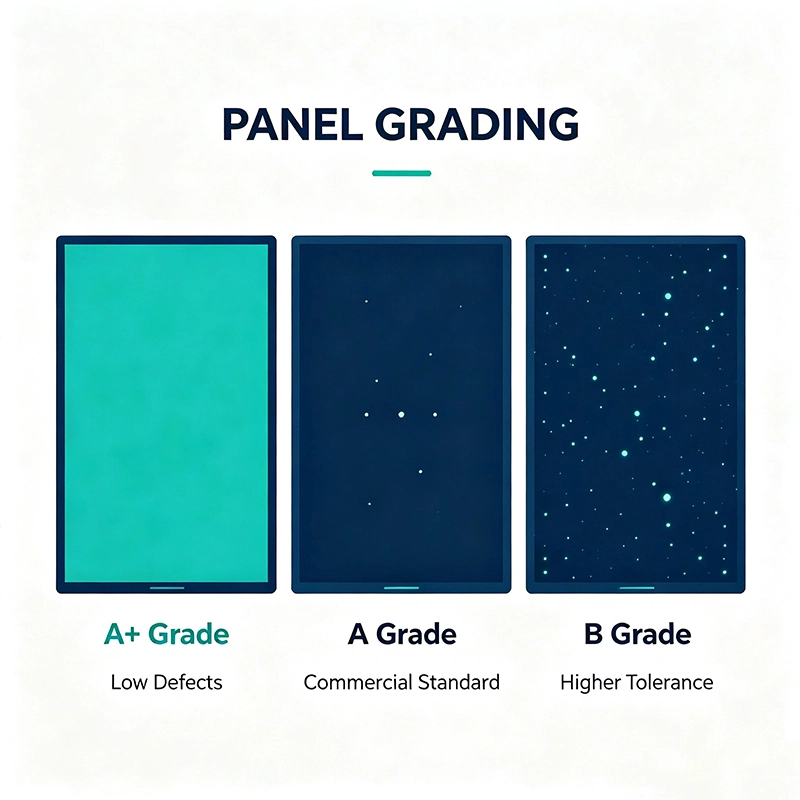
Panel fabs tootvad suured "ema klaas" lehed, mis on lõigatud üksikpaneelid. Seejärel kontrollitakse iga paneeli ereda täppide (alapiksel jääb püsivalt kinni), tumedat punktid (surnud sub- piksli), värvi ühtsus pinnal, ja serva valguse lekke. Paneelid sorteeritakse - "bined" - klassi, mis põhinevad mitmete puuduste alusel ja kus need langevad: punkti lähedal keskel ekraani on skooritud palju karmilt kui üks paigutatud lähedal, sest see' s mida vaataja tegelikult märkab reaalse kasutamise ajal.
A kujutab endast kõige tihedamat kasti: kõige vähem talutavaid defekte ja rangemat ühtsuse läve. Klass võimaldab laiema, kuid siiski äriliselt vastuvõetava, defektide sallivust. B klass võimaldab nähtavalt rohkem defekte või asetab need lähemale, mida's peetakse vastuvõetavaks. Miski sellest ei määrata, kas paneel võimsus on sisse - B-klassi paneel süttib ja kuvab pilti sama usaldusväärselt, A paneel esimesel päeval. Vahe ei ole selles, kas see töötab. See's kui järjekindlalt see töötab, ja kui graatsiliselt ta vananeb, aastate jooksul eeldatakse, et interaktiivne korterpaneel teenindab klassiruumi või koosolekuumi.
Panel brändi räägib teile ülesvoolu tootmise võime - seab põranda, mitte lõplik otsus kvaliteedi kohta. BOE on üks suurimaid LCD-tootjaid maailmas, saadab laia suurused ja hinded. LG Display on pikaajaline maine värvitõhususe ja kommerts- kvaliteediga paneeli jooned. AUO ja Innolux, mis asuvad Taiwanis, on tööstuslikud ja kaubanduslikud kuvad, kaasa arvatud tavaliselt kasutatavad keskmise suurusega vormingus interaktiivsed lamedad paneelid.
Detailid ostjad sageli puuduvad: Igaüks neist fabs saadetakse mitu klassi samadest tootmisliinidest.Küsib " milline kaubamärgi" ilma küsida " milline klass, milline partii" annab teile ainult poole pildi. Kasulisem hanke küsimus on: ja saate anda partii koodi?" - sest kaubamärgi üksi doesn' t garanteerida paneel selle taga on pigem A kui B.
4K kirjeldab piksli arvu (3840 × 2160) - ei midagi enamat. Siin ei öelda midagi värvi, kontrasti suhe või heleduse ühtsusest, mis on põhjus, miks kaks "4K interaktiivne whiteboards" võivad näha märkimisväärselt erinevad külje kõrval. Värv gamut (tavaliselt väljendatakse NTSC või sRGB katvusena) määrab, kui täpselt sobivad ekraani värvid allika sisuga - asjakohasel juhul, kui koosolekuruum vaadatab varad, disainimootorid või värvilised andmed. Kontrastsuhe ja ühtsus mõjutavad seda, kuidas karikad valgeplaadi tinti ja väike tekst ilmuvad kogu pinnal. Mitte ainult keskel.
VaatenurkOn kaubandusliku kasutuselevõtu valdkonnas rohkem kui peaaegu kõikjal mujal, sest enamik vaatajaid klassiruumis või juhatusruumis ei istu otse paneeli ees - nad' 30 kuni 45 kraadi väljaspool telje, mõnikord rohkem, kolmandast reast või konverentsilaua küljest. Kitsa vaatamisnurga paneel näitab värvi vahetust ja heledust langemist nendes nurkades, See tähendab "sama 4K pilt" võib üliõpilasele erineda üliõpilasele tagareas kui ees. Siin lõikuvad paneeli kvaliteedi ja paneeli tehnoloogia: lain standardpaneel.
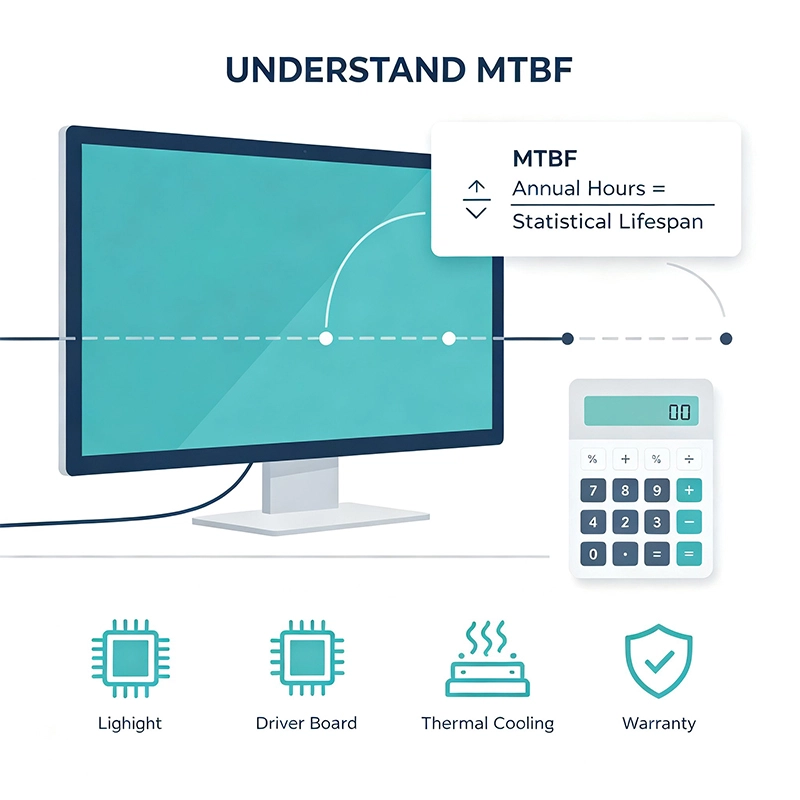
MTBF (keskmine aeg rikete vahel) on statistiline keskmine, mis võetakse standarditud tingimustes ühikute katsetamisest - see ei ole garantii ühelegi ühikule. Selle korrektselt kohtlemine tähendab seda kasutada kui a Suhtelised Tööriist tarnijate võrdlemiseks, mitte ühe konkreetse ekraani loenduskellina.
Näide: interaktiivset lamepaneeli kasutav rajatis 8 tundi päevas; 5 päeva/nädala palgi umbes 2 080 töötunni aastas. Tarnija 's märgitud MTBF arv selle aastase kasutusega annab raskeks, võrreldav mõte sellest, kus paneel istub konkureeriva tsitaadiga, mis on kasulik tarnijate järjekorras; mitte ennustada täpset päeva, mil konkreetne üksus vajab teenust.
MTBF ei ole toodetud üksi paneel - see peegeldab paneeli kvaliteedi, taustvalgusti kvaliteedi, juhi-laua disain kombineeritud mõju, ja soojus-/soojushajutamise tehnika. Kõrge MTBF nõue, mis on seotud määratlemata paneeli tasemega, on ainult pool andmepunktist; küsige mõlemat koos.
Klassiruumides, mis töötavad 6-8 tundi päevas, või kontrollruumides, mis töötavad peaaegu pidevalt, fikseeritud külmvärvi temperatuur ja standard sinise valguse emissioon soodustavad visuaalset väsimust kogu koolipäeva või vahetus. Üks Sooja valgus interaktiivne lamepanel Võimaldab ekraani nihkuda soojema värvitemperatuuri suunas madalama intensiivsusega kasutamisel, näiteks lugemise raskeid õppetundeid või pikka läbivaatamise sessioonid, vähendades silmade pinge pikendatud sessioonide jooksul.
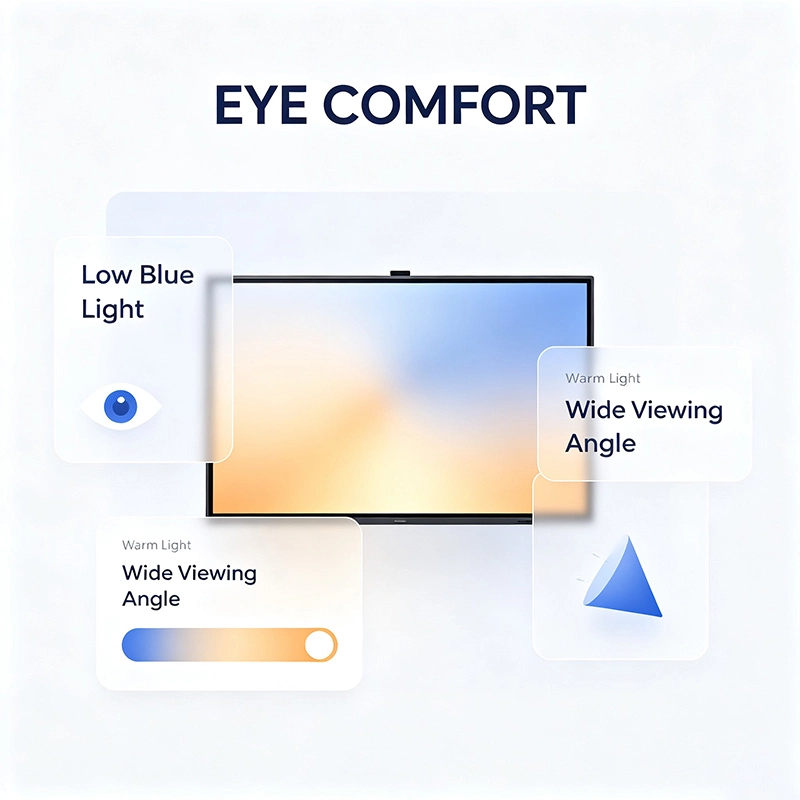
Eristamine, mida väärib küsida tarnijatelt: eht Madal sinine valgus interaktiivne valgeplaadVähendab sinise lainepikkuse heidet taustal/paneeli tasemel; samas tarkvara ainult "öörežiim" filter lihtsalt nihutab ekraani värvi renderdamise - see muudab, mida pilt välja näeb ilma pilt muuta tegelikku valgust. Ainult riistvara taseme rakendamine vähendab tõelise sinise valguse kokkupuudet. Seepärast on ka põhjustSilma mugavus IFPD silmal Omadusi kirjutatakse üha enam haridus- ja valitsuse pakkumisnõudeid pigem kui neid käsitletakse kenasti, ja miks teema ühendab tagasi paneeli klassi: nõrgema valguse ühtsusega madalama kvaliteediga paneelid vajavad sageli kõrgemat taustväljundit, et kompenseerida hämide piirkondade eest; mis võib suurendada üldist valguse ja sinise valguse kokkupuudet kogu ruumis.
Märkimisväärne hinnaerinevus kahe sarnaselt määratletud interaktiivse lamepaneeli vahel jääb tavaliselt tagasi ühe või mitme: määratlemata paneeli klass; originaali asemel renoveeritud paneeli varud; vähendatud liiki juhi IC; või õhukem soojus-/soojushajutamise projekt, mis vähendab materjalikulusid, kuid lühendab komponentide eluiga jätkuva kasutamise korral.
Ostuhind on ainult üks reaalne kuluvõrrandis. Omandi kogukulu (TCO) hõlmab ka teenuskõnede sagedust, asenduspaneeli maksumust, parandamise ajal katkestamist; ja - hariduse ja ettevõtte ostjate jaoks - ekraani hind, mis on nähtavalt ebaõnnestunud üliõpilaste ees, Praktika või kliendid, kelle ruum ehitati muljet avaldama. Suunamine näiteks: kui ostetud laevastik nõuab paneeliga seotud teenust märgatavalt suurema osa üksustest esimese 18 kuu jooksul; kui tavapäraste garantiinõuete alusel tavaliselt eeldatavasti eeldatav ühekohaline määra, Töö- ja asenduskulu üksi saab kompenseerida kogu soodustust saadud ostudes - enne väärtuse loendamist õpetaja või Kohtumise aeg kadunud.
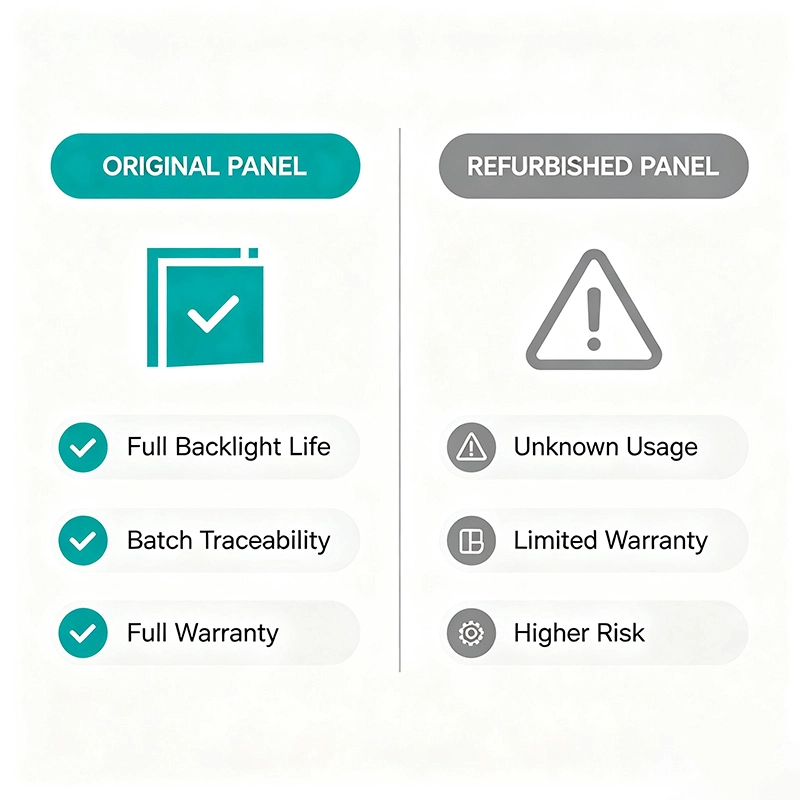
Uuendatud paneelid sisenevad tavaliselt tarneahelasse kasutamisest kõrvaldatud üksuste kaudu, mitteametlikes kanalites, või osad, mis on välja võetud tagasisaatmisest ja uuesti eemaldatud. Riskid ühendavad vaikselt: taustatulgus juba enne, kui paneel jõuab ostja, puutekihi ümberkorraldamise probleemid, mis pindavad kuud pärast paigaldamist, mitte mitte lahustamisel; ja värvi drift mittevastamatu partiid ühendatud samasse järjekorda. Paneeli komponenti tagatis on sellistel juhtudel sageli tühistatud või järsult piiratud; isegi siis, kui ülejäänud üksusel on standardgarantii.
Praktiline kaitse on menetluslik, mitte visuaalne: nõuda paneeli klassi sertifikaati, tehase ja partii jälgitavust; ja garantiitingimused, mis selgesõnaliselt paneel komponent - mitte ainult kokku pandud üksus - enne allakirjutamist tsitaat, mis näeb ebatavaliselt at spetsiaalsuse jaoks.
Tarbijapaneelid töötatakse ümber majapidamistelevisiooni kasutamise muster: paar tundi päevas, sagedased täisvõimsused, vaatamiskaugused ja nurgad. Interaktiivsete lamepaneelide jaoks ehitatud kommertspaneelid on laiendatud; sageli pidev igapäevane sõiduaeg, tugevam soojusjuhtimine, et vältida soojusega seotud pikslite lagunemist; ja anti- vananemise pinnakatted, mis vastutavad heleduse ja värvi triivimise püsiva valgustuse all. Kui haridus- või riigihankestandardis on sätestatud minimaalne igapäevase töötunni nõue, kinnitada, et nn kaubanduslikku väidet toetatakse dokumentidega, mitte taaskasutatud tarbijakomisjoniga, on õiguspärane, konkreetne rida igalt tarnijalt.
Allpool esitatud muster näitab väga erinevate ostjatüüpide - koolitusasutus ja ettevõtte ülikoolilinnak - kuid algpõhjus ja - Fix on sama mõlemal juhul.
Keenia kutseõppekeskus varustas üle 40 klassiruumi interaktiivsete lamepaneelidega osana valitsuse toetatavast klassist digitaalse hariduse algatus. Hanke käigus keskenduti hindamisel peamiselt ostuhinnale ja põhilistele kirjeldustele, sealhulgas 4K resolutsioonile, mitut puutumatust; ja heledus. Pakkumisdokumendis ei täpsustatud siiski LCD paneeli klassi, paneeli hankimist ega partii vastavuse nõudeid.
Pärast ligikaudu 18 kuud regulaarset klassiruumi kasutamist täheldas hoolduspersonalil märgatavaid erinevusi ekraanide vahel. Mitmed ühikud arenesid ebaühtlane taustavalguse heledus ja kerge värvi muutumine paneeli servade ümber. samas kui teised jätkasid tavapäraselt samasugustes töötingimustes.
Garantii läbivaatamise ajal, tarnija ei suutnud esitada täielikku dokumentatsiooni, mis kinnitavad, et kõik seadmed on toodetud sama kaubandusliku LCD paneeli abil. Kuigi toodetel oli sama mudeli number, oli tootmispartiide vahel erinev, raskendavad järjepidevat visuaalset toimimist kogu kasutuselevõtu vältel.
Projekt rõhutas olulist hangete õppetunni: identsed kirjeldused ei taga alati samasugust pikaajalist tulemuslikkust. Haridusprojektide puhul, mis hõlmavad kümneid või sadu ekraane, määratledes paneeli klassi, partii järjepidevust, ning kvaliteedi jälgitavus hanke spetsifikaadis võib oluliselt vähendada tulevasi hooldusriskke.
Teine hanke voor kirjutati otse ostulepingusse dokumenteeritud paneeli klassi ja partii jälgitavus. Heledus- ja värviga seotud teenuspiletid langesid väikese murdosa algmäärast järgmisel kasutusaastal -- suurendada spetsifikaadi lõhet; mitte aluspaneeli tehnoloogia, olnud algpõhjus.
Üks piirkondlik finantsteenuste ettevõte Ühendemiraatides uuendas rohkem kui 60 kohtumisruumi suurformaadiga nutikate kuvaritega. Selleks et vähendada eelnevaid hankemenetlusi, valis projekt tarbijale orienteeritud kuvad, mille spetsifikatsioon, sealhulgas 4K resolutsioon, puutevõime ja ekraani suurus ilmus võrreldav kaubanduslike alternatiividega.
Tavapärase käitamise ajal hoidsid kõige tihedamad kohtumispaikad siiski korrapäraselt vaatepillid 10–12 tundi päevas. järjestikuste koosolekutega ja minimaalse tühikäigu aega. See tegevusmuder ületas tüüpilist igapäevast kasutusprofiili, mille jaoks tarbija kuvad on üldiselt kavandatud.
Teiseks kasutuselevõtu aastaks, IT tugirühm on täheldanud selget erinevust kõrgekasutusega kohtumisruumide ja nende vahel, mida kasutatakse harvemini. Kõrgelt broneeritud ruumides näitavad suurema tõenäosusega ühetaolisust, järk-järgulist valguse halvenemist, ja märgatav värvi vastuolus laiendatud töö ajal, samal ajal kui väiksema kasutamise ruumid jäid suhteliselt stabiilseks.
Järgnev tehniline läbivaatamine näitas, et küsimus ei olnud näidise spetsifikatsioonid ise, pigem kasutuskeskkonna ja kavandatud tollimaksu tsükli vahel. Kuigi tarbija- ja kommertsnäitajatel olid sarnased peamised spetsifikatsioonid, olid need kavandatud erinevatele töötingimustele, soojusjuhtimise nõuetele, ja pikaajalised usaldusväärsuse ootused.
Hankerühm vaatas läbi oma tulevase kasutuselevõtu standardid, vajadus kaubandusliku LCD paneelid ja spetsiaalselt laiendatud igapäevaseks käitamiseks ette nähtud tooteid, mitte ainult ostuhinna alusel hinnata kuvarid kirjeldus ja kirjelduslehed.
Kõrgkasutatava tiiva asendamine kaubandusliku taseme interaktiivsete lamepaneelidega, mis on hinnatud pikendatud igapäevaseks käitamiseks, mitte leibkonnaga. töötsükkel - tõi, et tiib' pileti hind tagasi koos ülejäänud korrusega. Õppetund peegeldab esimest juhtumit erinevast nurgast: nähtav spec leht näib ostuajal võrreldav, kuid paneeli ' aluseks oleva klassi- ja tollimaksustsükli reiting on tegelikult kindlaks määratud, kas see püsib ruumide ' all; reaalse kasutuse muster.
Panelhanke on meie tootmisprotsessi esimene kvaliteetvärav, mitte lõppkoostusel käsitletav järelmõte. Iga interaktiivne lamepaneel, mida me ehitame, on määratletud dokumenteeritud paneeli kvaliteediga, pärit jälgitavatest partiidest, ja kontrollitud määratletud ühtsuse ja surnud pikslite läve suhtes enne kogumisjooneni jõudmist.
Qtenboardil usume, et kaubanduslikku kuva tuleks hinnata mitte ainult selle järgi, kuidas see tehasest lahkumisel toimib, kuid kuidas usaldusväärselt see teenib klientidele aastaid pärast paigaldamist.
See' seepärast me keskendume kaubandusliku klassi LCD paneelid, stabiilne komponentide hankimine, range kvaliteedi kontroll, ja toote pikaajaline järjepidevus. Meie eesmärk ei ole lihtsalt ehitada ekraane muljetavaldavate spetsifikatsioonidega, kuid aidata partneritel pakkuda väiksemate hoolduskuludega usaldusväärseid projekte, vähem teenuskõnesid, ja suurem usaldus kogu toote elutsükli jooksul.
Praktikas näitab kõnealune standard pigem konkreetsetes kontrollitavates otsustes kui turundusnõuetes:
Hankeametnike, IT juhtide ja projektijuhtide struktureeritud kontrollimise nimekiri, kes hindavad interaktiivset lamepaneeli tarnijat. Iga ese tuleb kinnitada. lepingueelnemitte pärast tarnet – sest käesolevas artiklis kirjeldatud rikkeviisid on demofaasis peaaegu alati nähtamatud.
Hankimise põhiline tõde: Kaks kõige tavalisemat rikkerežiimi interaktiivsete lamepaneelide kasutuselevõtu puhul – segakomponendi värv ja heledus, ja tarbija kvaliteedi paneeli töötsükli mittevastavus – mõlemad on tuvastatavad dokumentatsioonidest Enne Ostutellimus on allkirjastatud. Taotle paneeli sertifikaadi, partii jälgitavuse andmed, MTBF märgitud paneeli klassi, ja paneeli-komponent garantiitingimused standard dokumentatsiooni pakett. Kui tarnija ei saa kõiki nelja toota, pidada noteeringut kontrollimatuks, olenemata sellest, kui atraktiivne peahind on.
Q1Mida "A-klassi paneel" tegelikult tähendab ja kuidas see erineb A-st?
Mõlemad klassid pärinevad sama tehase sorteerimisprotsessist, mis põhineb defektide arvu, defekt asukohta ja värvi / helevus ühtlaselt. A istub kõige tihedamas konteineris kõige rangemate künnistega; A klass võimaldab laiemat, kuid siiski kaubanduslikult vastuvõetavat sallivust. Kumbki ei mõjuta, kas paneel volitused on - erinevus ilmneb pikaajalise järjepidevuse.
Q2Kas paneeli klass tavaliselt mõjutab garantii katvust?
Üldiselt jah - paneeli-spetsiifilised garantiitingimused on tavaliselt seotud osa hinde ja hankimisega. See's väärib paluda igal tarnijal määrata paneeli garantiitingimused eraldi ühiku garantii enne tellimuse esitamist, Kuna kaks don't alati sobivad.
Ebaõnnestumise signaal:Kui tarnija 's garantiidokument hõlmab „üksust”, eeldada, et paneel ei ole hõlmatud enne vastupidist - eelkõige hinnatud hinnad, mis on alla A-klassi turu keskmise.Q3Kuidas ma peaksin tõlgendama MTBF numbrit tarnijal 's tsitaat?
Kohtle seda statistilise keskmisena rahvastiku testimisel, mitte ühe ühiku tagatisena. See's kõige kasulikum tarnijate võrdlemiseks üksteisega, kõrval paneeli kvaliteedi ja termilise disainiga numbri taga - MTBF näitaja ilma märgitud paneeli kvaliteedita on ainult pool pildist.
Ebaõnnestumise signaal: MTBF-väärtus, mis on esitatud ilma vastava paneeli klassi või töötsükli eelduseta, ei ole võrreldav spetsifikatsioon. Küsige mõlemat korraga või käsitlege numbrit turunduskeelena.Q4Mida ma peaksin paluma tarnijatelt vähendada vastuoluliste üksuste riski?
Küsige, kas tellimus hangitakse ühest dokumenteeritud partii või klassi spetsifikatsioonist; ja kas see spetsifikatsioon saab kirjutada ostulepingusse. See on kõige tõhusam kaitse nähtava värvi või heleduse erinevusi ilmuvad üle suure rullimine.
Q5Milline on praktiline erinevus algse ja uuendatud paneeli vahel?
Originaalpaneel on oma täielik hinnatud taustavalgustuse elu ees ja kaasas standard tehase jälgitavus. Renoveeritud paneeli 's eelnev kasutamine on tavaliselt dokumenteerimata, mistõttu defektid nagu puudutuse ebaühtlus või taustavalguse ebaühtlane võivad ilmuma ainult kuid pärast kasutamist, mitte paigaldamist.
Ebaõnnestumise signaal: Noteering, mis on 20%+ turu keskmisest allapoole märgitud paneeli kvaliteedi – ilma partii dokumentatsioonita – on kõige tavalisem renoveeritud varu märk .. Soodus ei ole läbirääkimiste võit; see on signaal, et paneeli komponenti ei tohi olla kaetud garantii all.Q6Kas "madal sinine valgus" funktsioon on alati rakendatud riistvaras?
Mitte tingimata - mõned tooted kohaldavad ainult tarkvara värvifiltrit, mis muudab pildi väljanägemise ilma tegelikku valgust vähendamata. See' on õiglane küsimus igale tarnijale otse, sest kaks lähenemisviisi on n' t vahetatav tõelise silma mugavuse kasu.
Q7Millist tegevustunnise hinnangut peaksin otsima "kaubanduslikkuse" paneelil?
Otsige paneeli, mis on hinnatud laiendatud igapäevaseks kasutamiseks, mis sobib teie tegelikuks kasutuselevõtuks - jagatud klassiruum või kogu päeva koosolekud Töötab väga erinevalt kui isiklik kontori ekraan. Paluge tarnijalt kinnitada hinnatud igapäevased töötundid kirjalikult, selle asemel et toetuda sõnale "äriline".
Ebaõnnestumise signaal:„Kaubanduslik kvaliteet”, mida väidab ilma dokumenteeritud igapäevase käitamise ja töötunni reitinguta, on taaskasutatud tarbijapaneel kuni teisiti tõendamiseni. .. Küsi nimetatud töötsüklit tundides päevas kirjalikult.Q8Milline teave peaks mul olema valmis paneeliga seotud küsimustest aruandes?
Ühiku 's seerianumber, ostmise partii ja küsimuse esitamise kirjeldus (e. g., ainult teatud nurkades, alles pärast pika aja jooksul) aitab tarnija diagnoosida, kas see' s paneeli klassi küsimus, ühekordne ühiku defekt, Või paigaldus/keskkonna tegur - ja kiirendab seda, mis iganes resolutsiooniprotsess osutub.
Q9Kuidas peaks eelarve teadlik ostja otsustama?
Kõrge nähtavusega, pikaajaliste keskkondade jaoks - pea auditooriumid, kontrollruumid, Lipulaev koosoleku ruumid - A maksab ise järjepidevuses. Standardsete klassiruumide ja koosolekuruumide puhul vastab A klass äriühingutele usaldusväärselt madalama hinnaga. Mida me'd hoiatada, kummalgi eelarve tasemel, on dokumenteerimata või määratlemata hinde, kus tegelikult istub enamik pikaajaline risk.
Q10Millist dokumentatsiooni peaksid ostjad lepingu allkirjastamiseks paneeli tarnijalt nõudma?
Nõuda enne allakirjutamist nelja dokumendi: (1) paneeli klassi sertifikaat, mis näitab täpset A / A / B kaup ja testi läve; (2) tehase ja partii jälgitavuse andmed täpse tootmiskäigu kohta; (3) MTBF näitaja, mis on paritud määratud paneeli kvaliteediga ja termilise disaini kirjeldusega - mitte ainult MTBF; ja (4) garantiitingimused, mis nimetavad paneeli komponenti eraldi koostatud seadmest eraldi. Tsitaat, mis ei suuda kõiki nelja toota, on pikaajalise tulemuslikkuse osas struktuurselt kontrollimatu.
K11Kuidas taastatud paneel jõuab tarneahelasse?
Tavaliselt sisenevad tavaliselt tarneahelasse kolme kanali kaudu: eelnevalt kasutusele võetud üksused, müümata inventuuri istub mitteametlikes kanalites, ja osad, mis võeti tagastatud varudest ja uuesti. Kõigil kolmel juhul on eelnevad kasutustundid tavaliselt dokumenteerimata, puutekiht ümberkorraldamise probleemid võivad paigaldamise asemel pinnata kuud pärast paigaldamist kui unboxing; ja paneeli-komponent garantiikatega on sageli tühistatud või järsult piiratud - isegi siis, kui ülejäänud üksusel on standard garantii.
Resolutsiooni ja puudutuse vastust on lihtne võrrelda, sest need 're trükitud igal tsitaadil. Paneeli klass, MTBF tuletis, jälgitavus, ja sinise valguse rakendamine harva - mis on täpselt põhjuseks nad're kus enamik pikaajalistest kuludest, ja suurem osa pikaajalisest riskist, tegelikult elab interaktiivne korterpaneeli ost. Kuna silma mugavus IFPD nõuded muutuvad hariduse ja valitsuse pakkumiste levinud, paneeli tasemel tehnilisest joonealusest märkusest kiiresti liigub liini, mida ostjad eeldatakse täpsustavad. nimi.
Tavaliselt piisab dokumenteeritud allikaga A-klassi paneel. Vältida määratlemata hindeid ja renoveeritud varusid olenemata eelarvest.
A-klassi paneel, lai vaatenurk, ja riistvara taseme silmade mugavuse funktsioonid on praktilised lähteväärtused mitme tunni igapäevaseks kasutamiseks.
Hinnang, tipptasemel MTBF, ja kaubandusliku kvaliteediga termilise disainilahenduse väärt on lisatasu, kus puhkeajad või nähtavad defektid ei ole võimalus.
Uurige Qtenboard's haridus-klassi interaktiivne whiteboard line, lae alla toote kataloog, või rääkige meie meeskonnaga paneeli hinde ja hankimise dokumentatsiooni oma projekti kohta.

Tegevjuht | Interaktiivne ekraani ja koostöö lahendusekspert
Olen Qtenboardi asutaja, tuues üle 17-aastase praktilise oskusteadmisega puute kuvatööstusesse. Võttes arvesse ülemaailmse juhtimise perspektiivi, mis on saavutatud minu EMBA uuringud ShenZheni ülikoolis, Ma juhin Tootmisvõime jääb tööstuse esirinnas.
Qtenboardi juhina olen spetsialiseerunud kohandatud OEM/ODM-lahenduste pakkumisele interaktiivsetele valgeplaatidele, LCD video seinad, digitaalsed signaalid ja tööstusliku kvaliteediga puuteterminalid. Toetas meie 330.000 m nüüdisaegse tööstuspargi Shenzhenis, säilitame täispuhastuse kontrolli tööstusdisaini, täpsuse tootmise, ja range jõudluse testimine.
Peaaegu kaks aastakümne pikkune projektikogemus kasutatakse Qtenboardi ekraani lahendusi nüüd rohkem kui 120 riigis ja piirkonnas, teenis usaldust üle 15000 ettevõtluskliendi üle maailma. Kui otsite tundlik partner sügava tootmise aluse oma kohandatud touch kuva projekte, Minu meeskonnaga oleme valmis toetama teie nägemust professionaalselt.

 est
est
 EN
EN  pt
pt  spa
spa  th
th  vie
vie  aze
aze  bel
bel  lav
lav  ukr
ukr  ru
ru