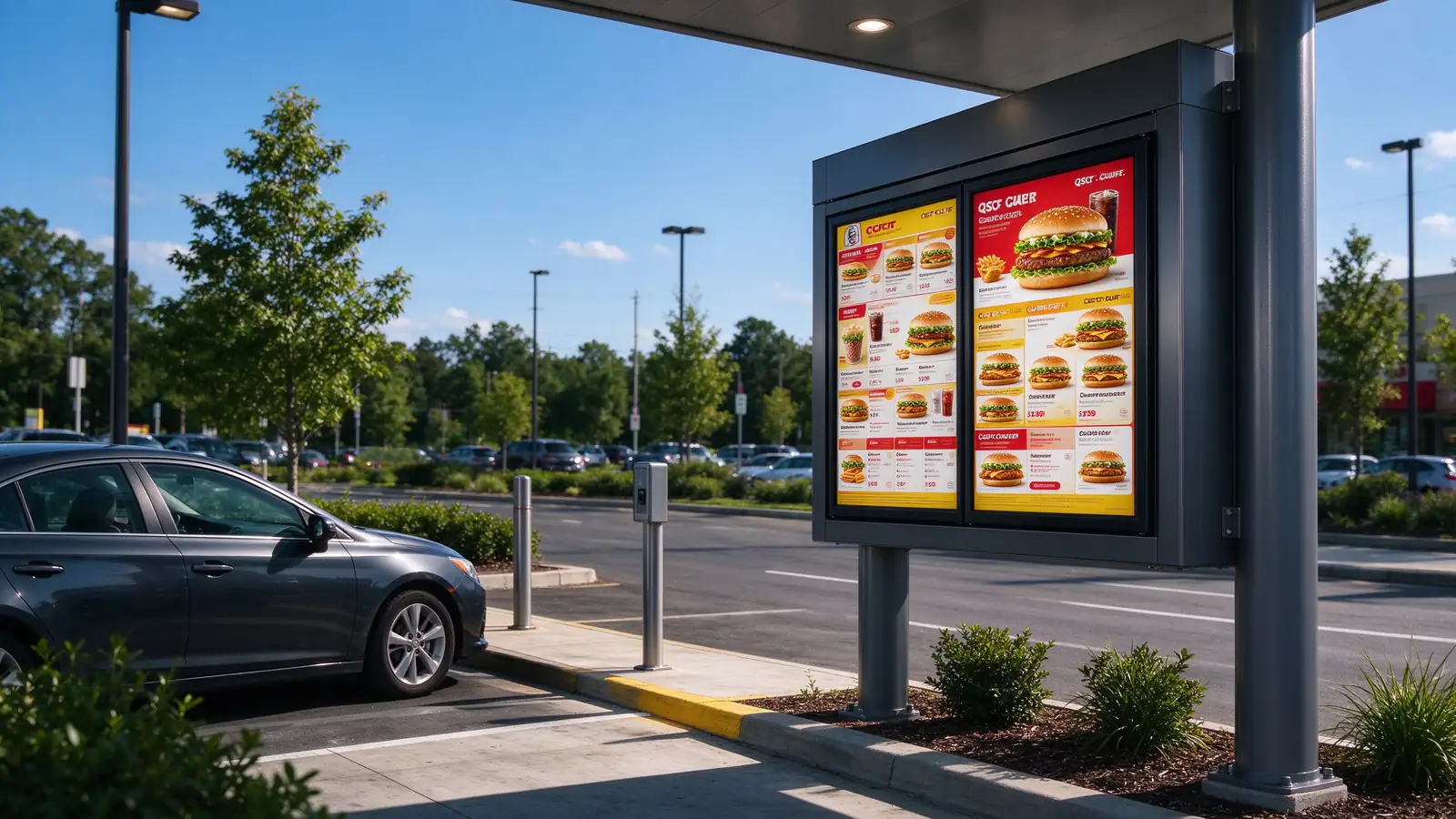
An outdoor drive-thru digital signage enclosure must survive direct sun, rain, wash-down pressure, coastal humidity and a decade of lane-side abuse — while keeping your QSR drive-thru menu board readable enough to confirm orders instead of losing them. Qtenboard builds single, dual and triple-screen enclosures rated 2500–4000 nits, IP66/IP67, fanless and thermally managed so the screen inside stays alive through the third winter.
Request a Drive-Thru Enclosure QuoteB2B supply · OEM/ODM available · CE / FCC / RoHS / PSE / IK10 certified · 55–98 inch options
Intouch Insight’s 26th Annual Drive-Thru Study (2,000+ mystery visits, published October 2026) shows that speed is no longer the problem your drive-thru should be solving next — order confirmation is.
Not every “outdoor display” is a drive-thru enclosure. These are the parameters that decide whether your QSR drive-thru menu board is still readable, dry and online in year three. Qtenboard publishes them on the product page — most suppliers will not volunteer them.
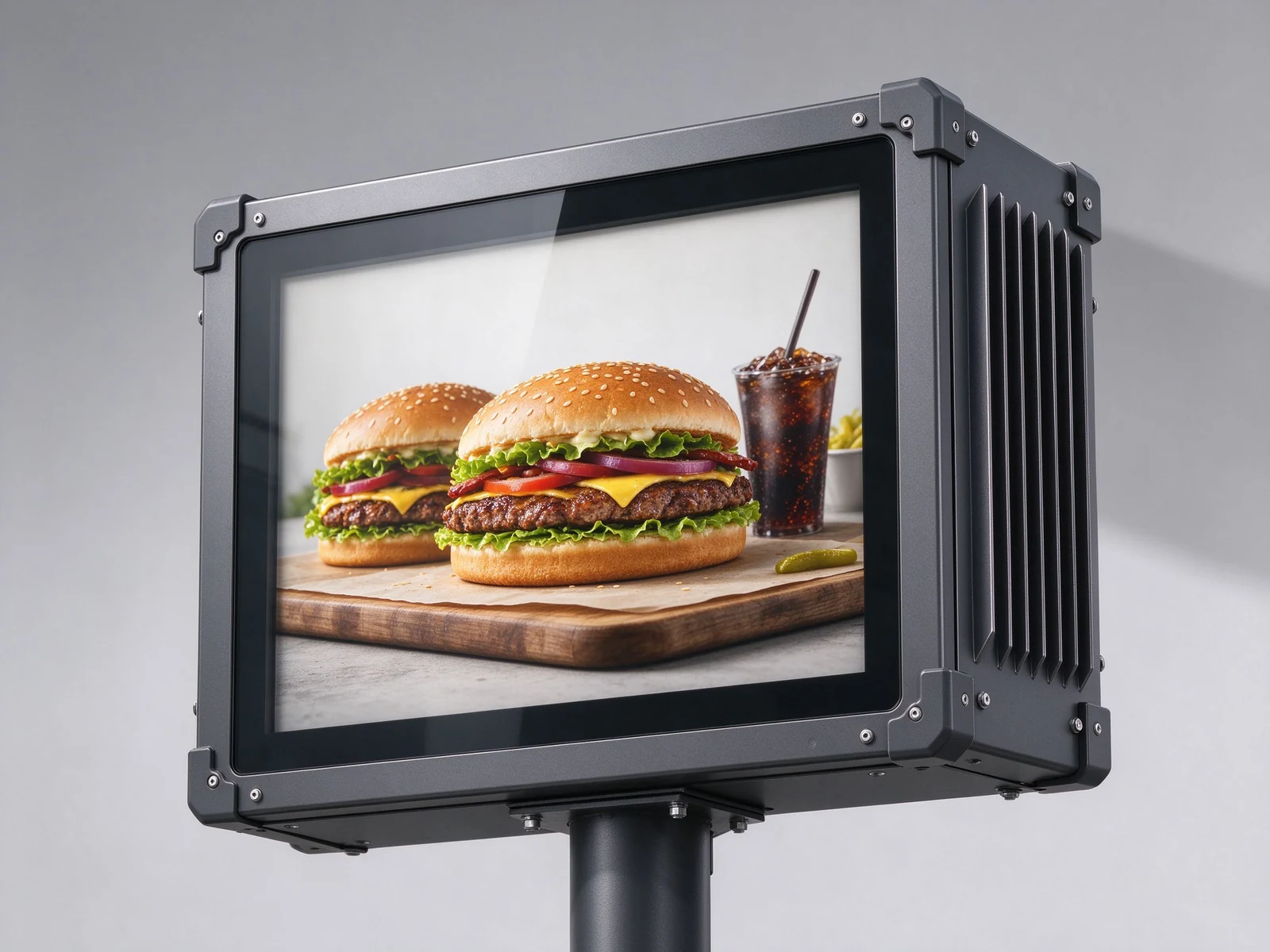
| Spec | Qtenboard drive-thru enclosure | Why it matters in the lane |
|---|---|---|
| Brightness | 2500–4000 nits | The lane faces direct sun; below ~2500 nits the menu disappears at noon. |
| Ingress protection | IP66 / IP67 (full cabinet) | Rain, wash-down hoses, pressure cleaning — confirm the rating covers the whole cabinet, not just the front glass. |
| Cooling | Fanless, passive thermal path | Fans pull in dust and insects — the #1 outdoor failure source. |
| Operating temp | -30°C to +55°C | Separate “operating” from “storage” temperature; storage ratings do not reflect real run-time endurance. |
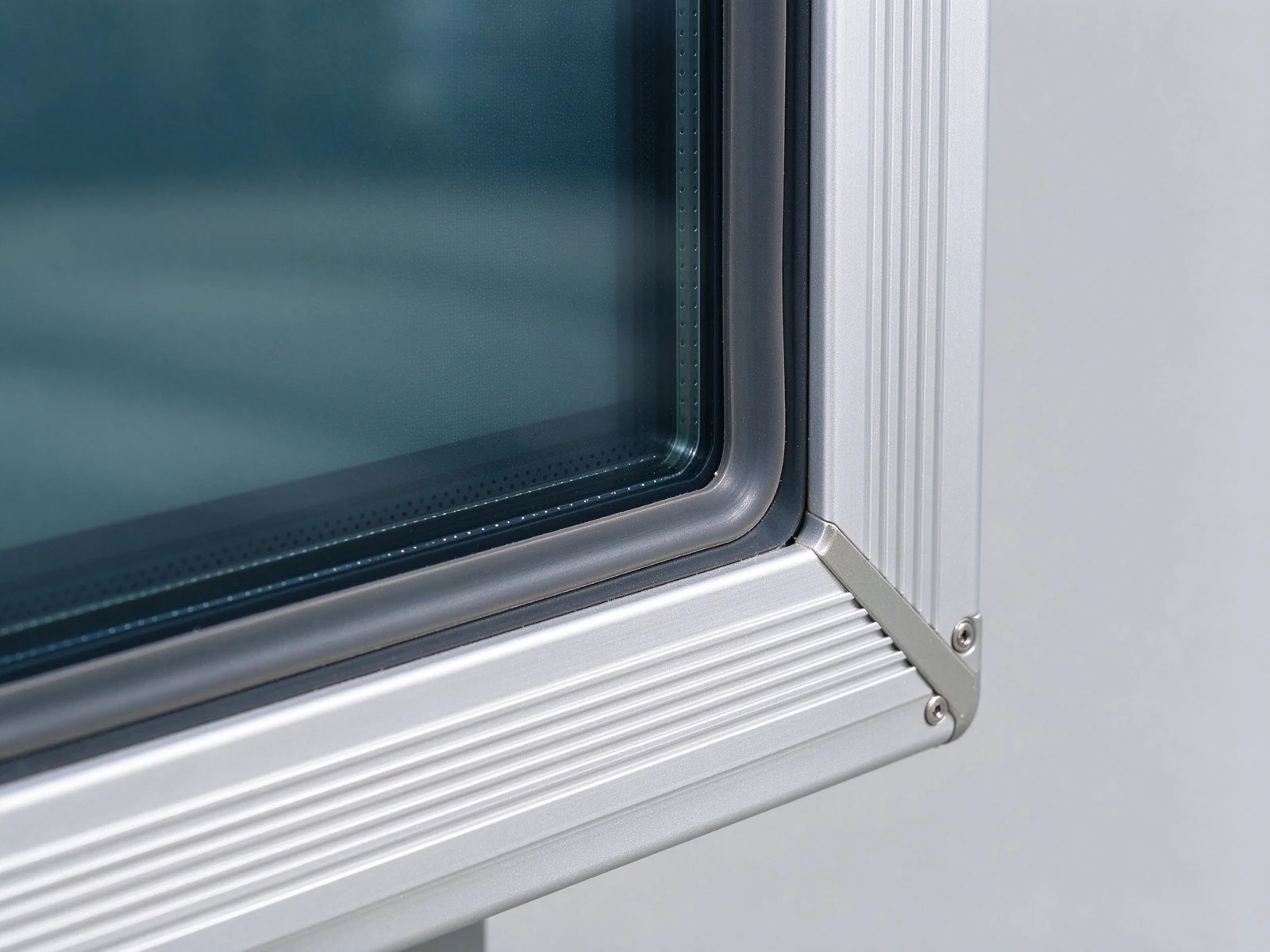
| Glass | IK10 impact + AG anti-glare + optical bonding | Lane-side impact protection; optical bonding removes internal reflection for sun contrast. |
| Housing | Aluminum / galvanized steel + outdoor powder coating | Corrosion warranty should be written into the spec, not judged from the first photo. |
| Screen layout | Single / dual / triple screen | Menu, confirmation and promotion can each get a dedicated zone. |
Full technical sheet: Qtenboard Drive-Thru Digital Menu Board · Outdoor Drive-Thru Menu Board video
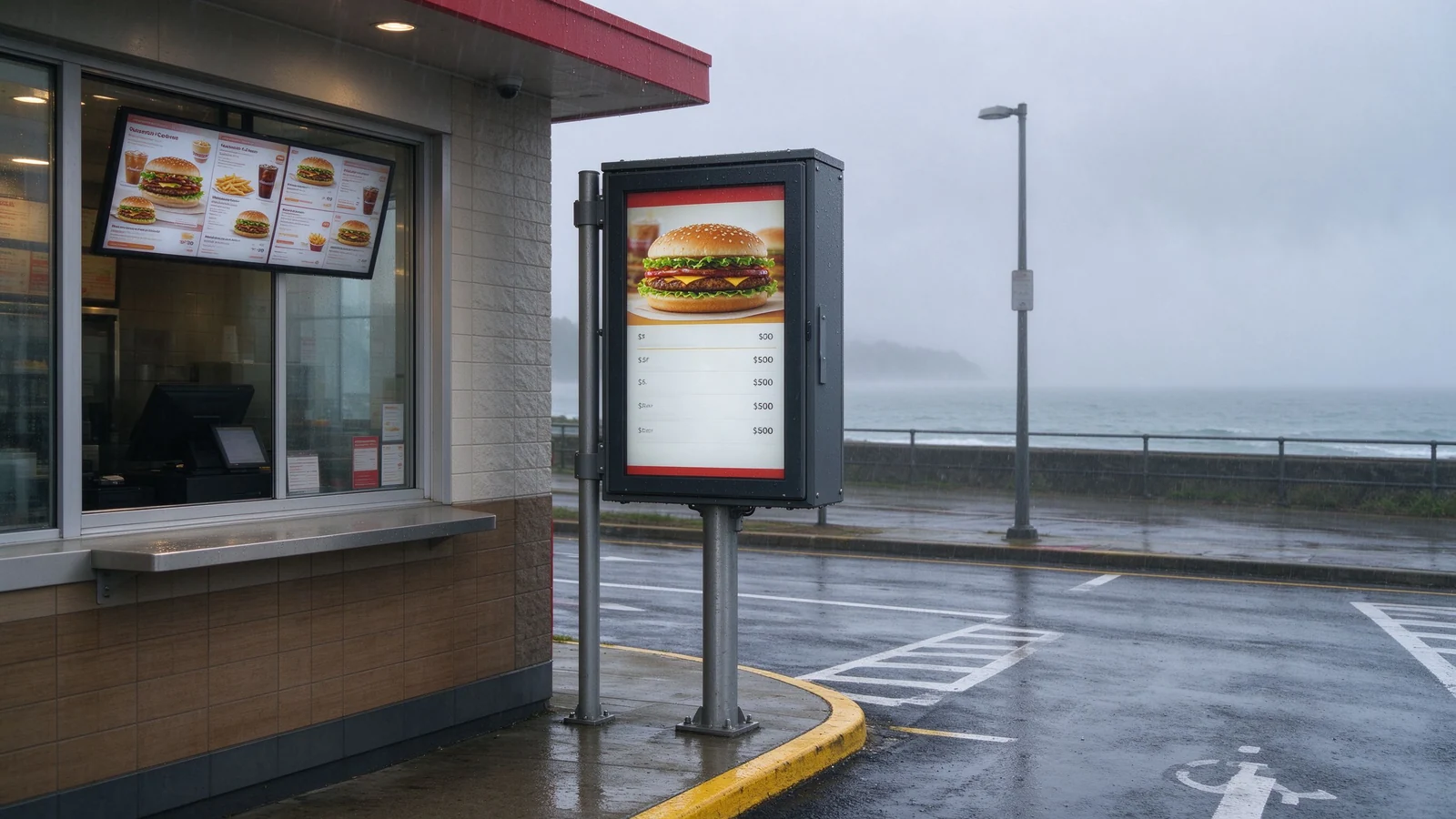
A higher IP number does not stop condensation. In a coastal QSR drive-thru, a sealed IP65 enclosure kept the rain out — but moisture trapped inside condensed on the glass, fogged the menu over months, and corroded the driver board.
In July 2026, Palmer Digital Group launched the PDG 22OCBSM — a standalone 22-inch order confirmation enclosure with speaker, microphone and camera that mounts beside the existing menu board. The industry signal is clear: drive-thru signage is splitting from one large menu board into function-specific modules, and order confirmation is the first module QSRs are adding.
Qtenboard covers the same evolution with single, dual and triple-screen outdoor drive-thru enclosures — so you can add a confirmation zone without replacing an entire lane, or build a fully integrated lane from day one.
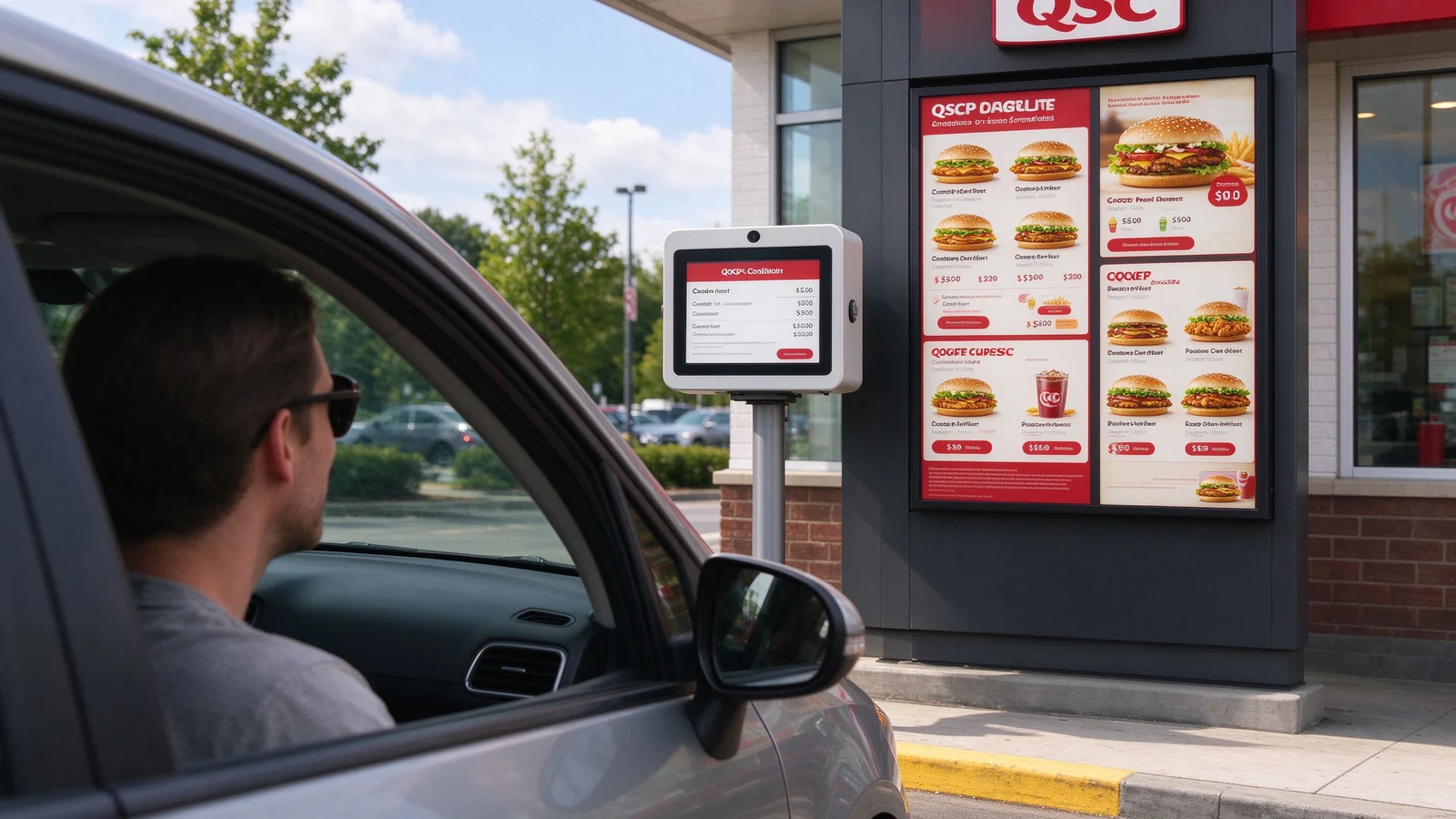
Qtenboard’s outdoor signage selection guide lists six checks every buyer should run before approving a drive-thru enclosure — and why each one changes the quote.
Single / dual / triple screenBrand-matched housing colorAndroid / Windows55–98 inchCEFCCRoHSPSEIK10
Structural customization, housing color matching and system choice — one enclosure family that scales across every lane format and brand identity. Reference: Outdoor Digital Signage Selection Guide
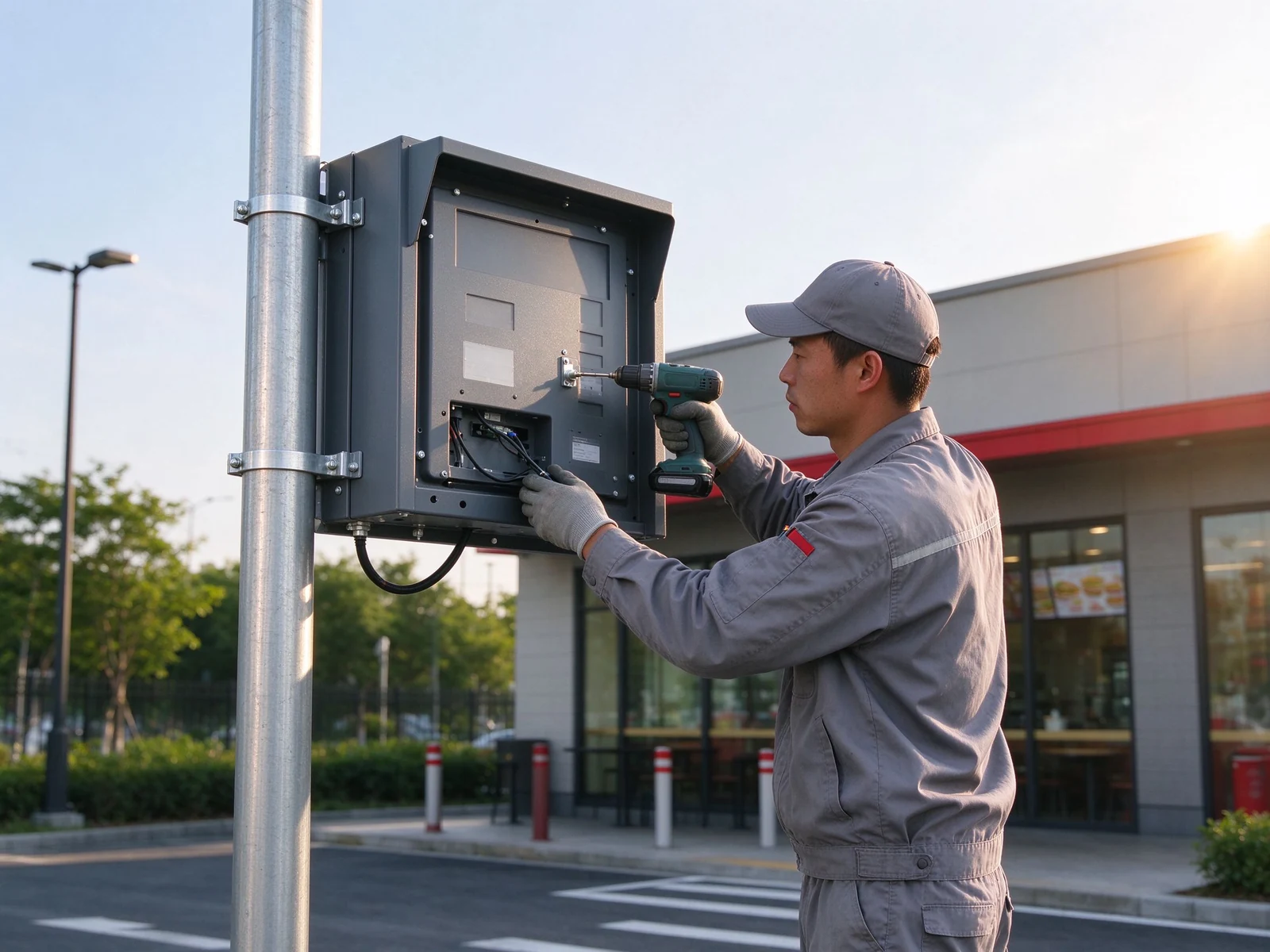
A coastal drive-thru operator ran a sealed IP65 enclosure for two seasons. External rain was blocked, yet internal moisture condensed on the glass, fogging the menu and corroding the driver board within months. The failure was not water ingress — it was the absence of internal condensation control. The site moved to a Qtenboard enclosure with heating / dehumidification and a managed thermal path; the menu has stayed fog-free through continuous 24/7 operation. Read the coastal condensation case →
Drive-thru lanes oriented toward afternoon sun need two layers of defense: 2500–4000 nits of panel brightness plus optically bonded anti-glare glass that kills internal reflection. Either layer alone fails at peak sun. Qtenboard combines both in one drive-thru digital signage enclosure, so the menu and the confirmation screen stay readable when the lane is busiest. See the drive-thru menu board spec →
A drive thru digital signage enclosure is a weatherproof, impact-resistant housing that protects a digital menu board or order confirmation display in an outdoor QSR lane. It covers brightness, ingress protection, thermal management, glass and mounting as one engineered system rather than a bare display bolted to a pole.
The lane is the harshest environment in a restaurant: direct sun, rain, wash-down hoses, insects, dust, temperature swings and occasional impact. An outdoor drive-thru display enclosure keeps the screen readable, dry, cool and protected so the menu board runs 24/7 without service calls every season.
For a sun-facing lane, Qtenboard recommends 2500–4000 nits. Below roughly 2500 nits, menu content washes out at midday. Brightness alone is not enough — pair it with anti-glare glass and optical bonding to remove internal reflection.
Both protect against rain and wash-down pressure; IP67 adds temporary immersion resistance. The more important question is whether the rating covers the whole cabinet — rear power bay and cable entry included — not just the front glass. Qtenboard drive-thru enclosures are rated IP66/IP67 as full cabinets.
No. An IP rating stops external water; it does not manage internal moisture. In humid or coastal climates, sealed enclosures can fog from the inside and corrode electronics. Condensation control — internal heating / dehumidification plus a correct thermal path — is a separate specification line you should demand.
Yes. A standalone drive-thru order confirmation enclosure (single-screen or a dedicated zone) mounts beside the current menu board and adds visual confirmation with minimal disruption — the same incremental path the industry is adopting in 2026. For new lanes, a dual or triple-screen enclosure is the more economical design.
Qtenboard drive-thru menu board enclosures are rated to operate from -30°C to +55°C with fanless passive cooling. Always ask whether a quoted temperature range is operating or storage — storage ratings do not reflect real run-time endurance.
Yes. Qtenboard offers OEM/ODM: single, dual or triple screens, brand-matched housing colors, Android or Windows systems, 55–98 inch sizes, plus CE, FCC, RoHS, PSE and IK10 certifications. One enclosure family can scale across every lane format and market.
Mounting is engineered per site: foundation and footing sized from enclosure weight and wind load, waterproof power and network routing, peripheral cabling for camera/microphone/speaker where confirmation is used, and front- or rear-service access that matches your maintenance schedule.
Lifetime is decided by the spec you buy: galvanized steel or aluminum with outdoor powder coating, stated corrosion warranty, fanless cooling, condensation control and full-cabinet IP sealing. Qtenboard validates each unit with high-brightness, IP seal, thermal endurance, optical bonding and long-run aging tests before it ships.
Whether you are replacing an existing menu board or adding an independent order confirmation enclosure, Qtenboard delivers the full package — screen specification, enclosure protection, system integration and OEM customization.
Qtenboard — from one menu screen to a confirmable, manageable, revenue-generating drive-thru lane.
Benchmark data: Intouch Insight 26th Annual Drive-Thru Study, published October 2026 (2,000+ mystery visits; Voice-AI accuracy 90.8% vs 82.5% in 2025; 29.1% of shoppers repeated part of an order vs 34.2% in 2025; average visit fastest since 2018). Industry trend reference: Palmer Digital Group PDG 22OCBSM Order Confirmation Enclosure, July 2026. Product specifications from Qtenboard official product pages (qtenboard.com).
CEO | Interactive Display & Collaboration Solution Expert
I am the founder of Qtenboard, bringing over 17 years of hands-on expertise to the touch display industry. Drawing on the global management perspective gained through my EMBA studies at ShenZhen University, I lead my team in optimizing every stage of our operations—from product definition to high-efficiency supply chain management—ensuring our manufacturing capabilities remain at the forefront of the industry.
As the leader of Qtenboard, I specialize in providing tailored OEM/ODM solutions for interactive whiteboards, LCD video walls, digital signage, and industrial-grade touch terminals. Backed by our 330,000 m² modern industrial park in Shenzhen, we maintain full-lifecycle control over industrial design, precision manufacturing, and rigorous performance testing.
With nearly two decades of project experience, Qtenboard’s display solutions are now deployed in over 120 countries and regions, earned the trust of more than 15,000 enterprise customers worldwide. If you are seeking a responsive partner with a deep manufacturing foundation for your customized touch display projects, my team and I are ready to support your vision with professional excellence.
 EN
 spa
 pt
 vie
 th
 est
 lav
 aze
 ukr
 bel
 ru