For an outdoor digital signage display that has to survive snow, ice, and rain in winter and then run through a hot, high-UV summer, two specifications matter more than any marketing claim: the IP rating and the operating temperature range. Our outdoor LCD digital signage line is rated IP65 and operates across -20°C to +55°C in continuous outdoor use — figures based on the sealed cabinet design and cooling system described in detail below, not a general industry estimate.
Before going further, one clarification matters: this is an outdoor LCD digital signage display, not an LED wall. The two terms get used interchangeably in casual conversation, but they describe different hardware, and the confusion causes real sourcing mistakes.
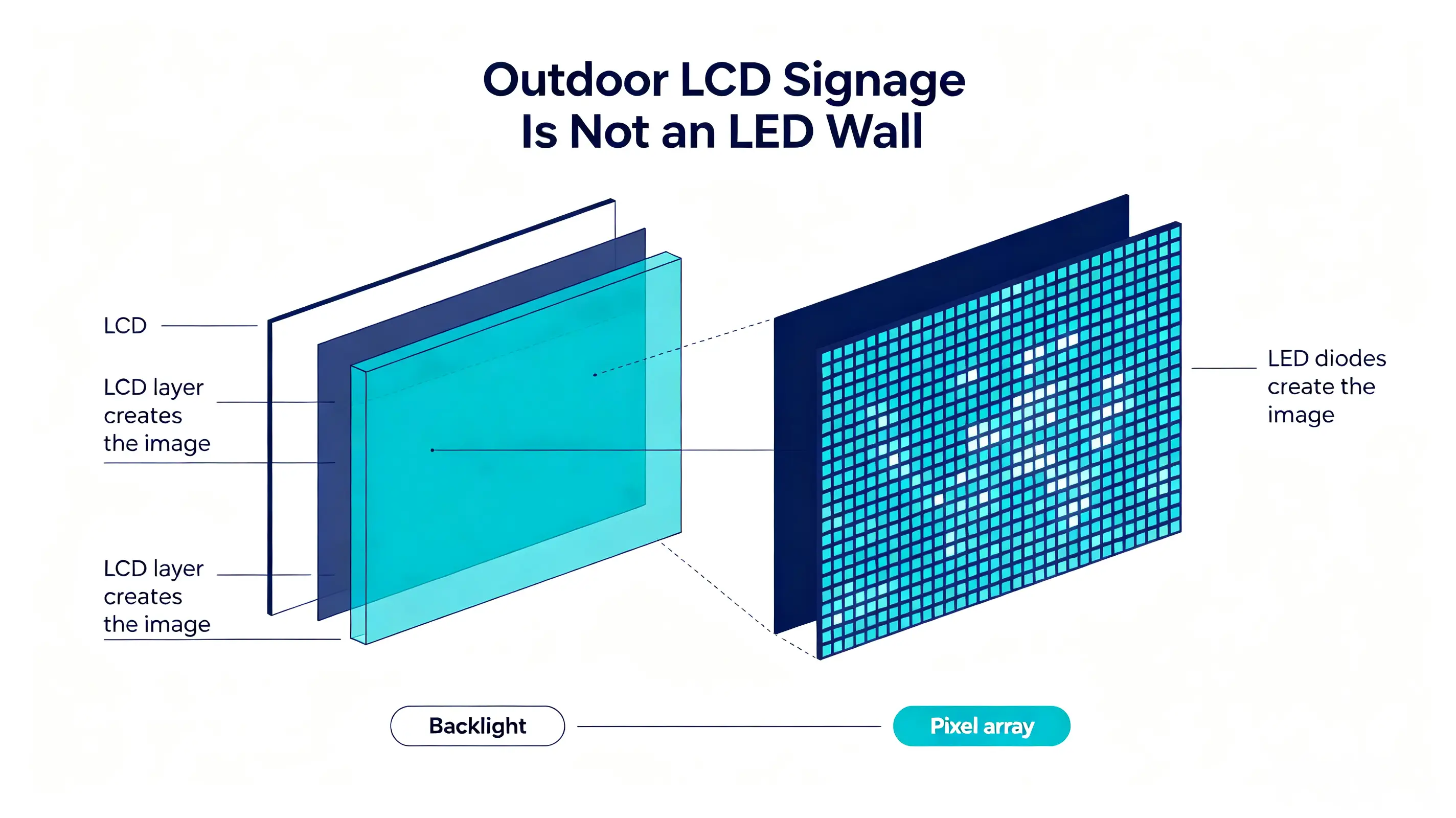
"LED sign" and "LED display" are common shorthand, but on a product like this, LED refers only to the backlight behind an LCD panel — not to individual LED pixels forming the image, which is how a true LED video wall works.
An LCD panel produces the image through a liquid crystal layer, with an LED array used purely as the light source behind it — the same basic principle as a high-end LCD television, engineered into a sealed outdoor enclosure. A true LED display (sometimes called an LED wall or LED tile) builds the image directly from thousands of individual LED diodes, with no LCD layer at all.
For commercial outdoor digital signage displays showing full-motion video, pricing, menus, or brand content at close-to-medium viewing distance, an LCD panel typically delivers sharper resolution and finer detail at a given screen size, because LCD pixel density is not limited by the physical spacing between LED diodes the way an LED wall is. LED walls remain the better fit for very large-format installations viewed from a long distance, such as stadium screens. Confirming which technology a quoted "outdoor display" actually uses — LCD panel or LED tile — is one of the first things a buyer should verify before comparing prices between suppliers.
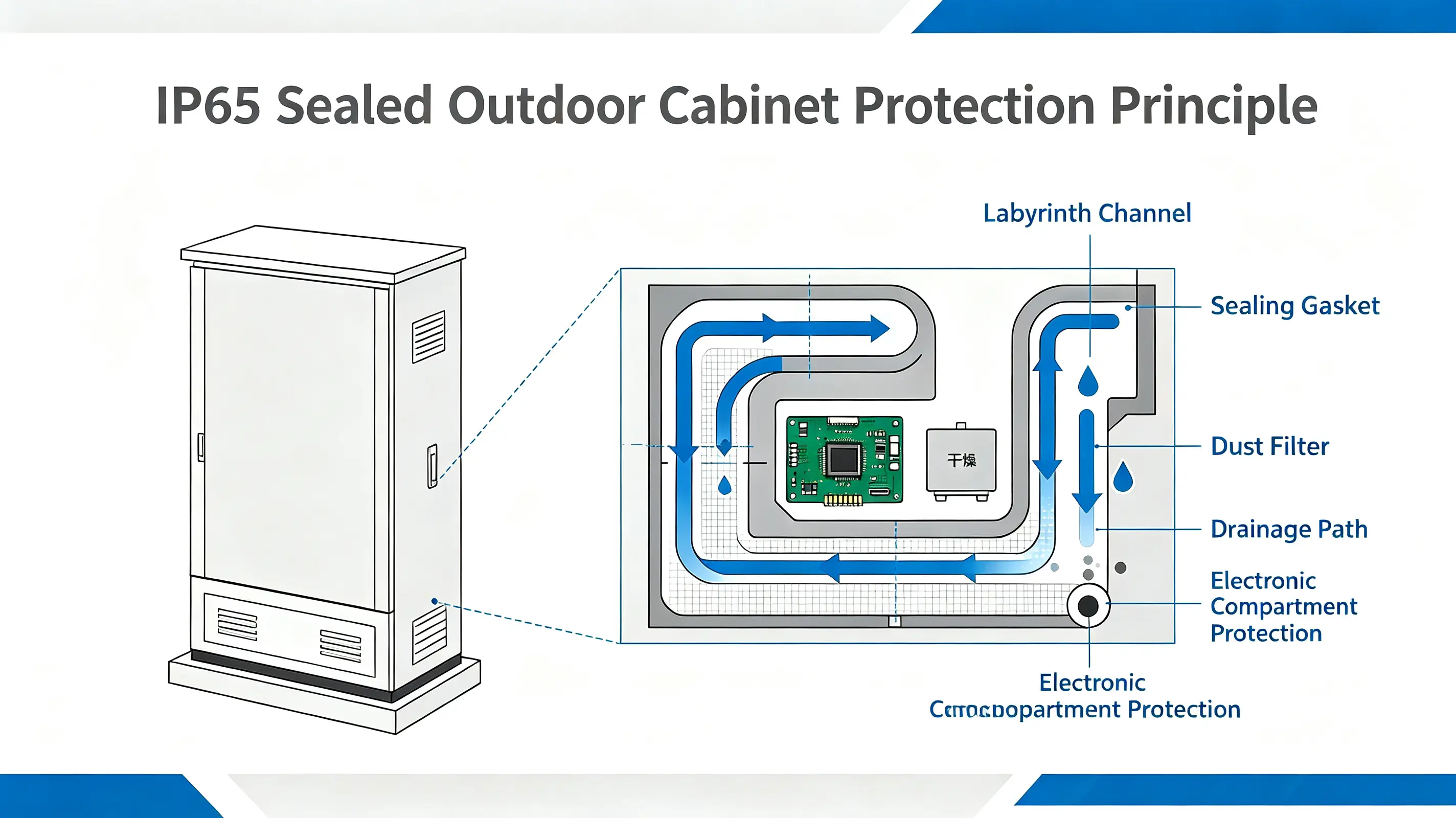
IP65 breaks down into two numbers: the first digit (6) means the enclosure is fully dust-tight, with no ingress of dust at all; the second digit (5) means the enclosure can withstand low-pressure water jets from any direction. In practical terms for winter conditions, that covers wind-driven rain, meltwater running off accumulated snow, and repeated freeze-thaw cycles around seams and vents — the exact failure points where lower-rated enclosures typically leak.
This protection level is built into the structure rather than added as a coating:
One distinction buyers should always confirm: some suppliers apply an IP rating only to the front display module, while the rear cabinet and power compartment carry no formal rating at all. On this product line, the IP65 rating applies to the complete sealed enclosure, not just the screen face.
An operating temperature range only means something if it reflects continuous, powered operation — not the passive storage range some spec sheets quote instead. This unit's -20°C to +55°C rating is defined for active outdoor operation, addressing both ends of a harsh four-season climate:
The fully sealed IP65 cabinet limits cold air infiltration and helps the enclosure retain heat generated by the display's own electronics, which supports panel stability in freezing conditions. Because the LCD panel and electronics operate inside a sealed shell rather than an open frame, temperature swings from a cold morning to a heated afternoon are also less abrupt — which matters, since rapid swings are what typically cause condensation problems, addressed further below.
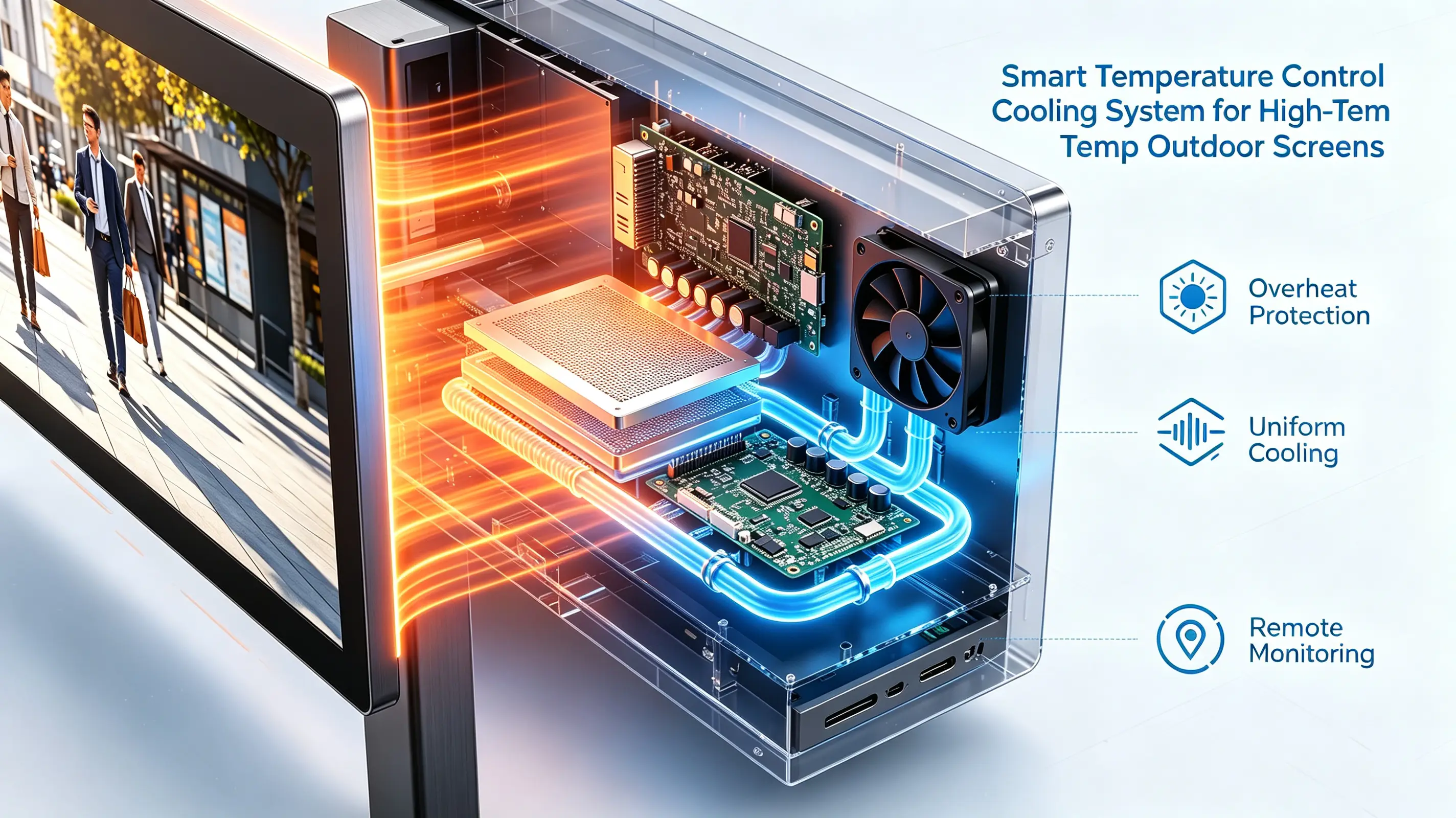
On the high-temperature end, an intelligent temperature control system continuously monitors the internal cabinet temperature and automatically adjusts the cooling response, working together with an air cooling system to keep the panel and driver electronics within safe operating limits during sustained summer heat and direct sun exposure. This automated response is what allows the unit to hold its rated brightness and color accuracy through a full day of high-temperature operation, rather than throttling performance or shutting down under thermal stress.
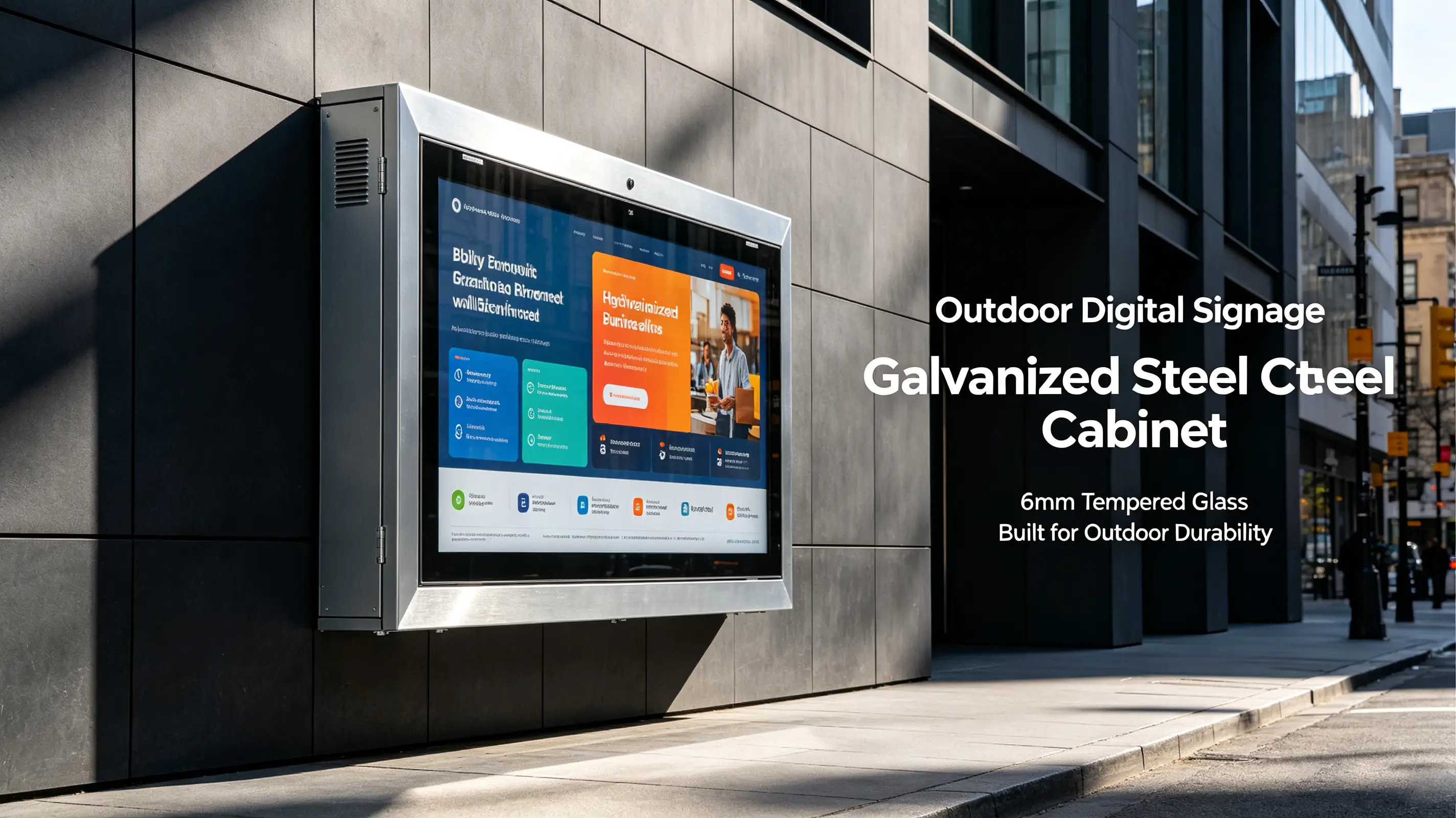
IP65 and a wide temperature range only hold up over years of outdoor exposure if the surrounding structure is engineered to match. The cabinet construction includes:
Together, these are the features that separate a genuine outdoor digital signage kiosk from an indoor display retrofitted with a weatherproof cover — the difference tends to show up not on day one, but after the second or third winter.
The air inlet and outlet are fitted with a medium-to-high efficiency dust-proof filter, which filters fine airborne dust before it reaches internal components and also physically blocks insects — mosquitoes in particular — from entering through the ventilation path. This matters specifically because the same vents that allow the air cooling system to manage heat in summer are also the most common entry point for both dust buildup and pest intrusion over time; filtering that pathway protects the cooling system's long-term efficiency as much as it protects the electronics themselves.
Beyond weatherproofing, two features affect day-to-day operating cost and neighborhood compliance for any outdoor advertising display:
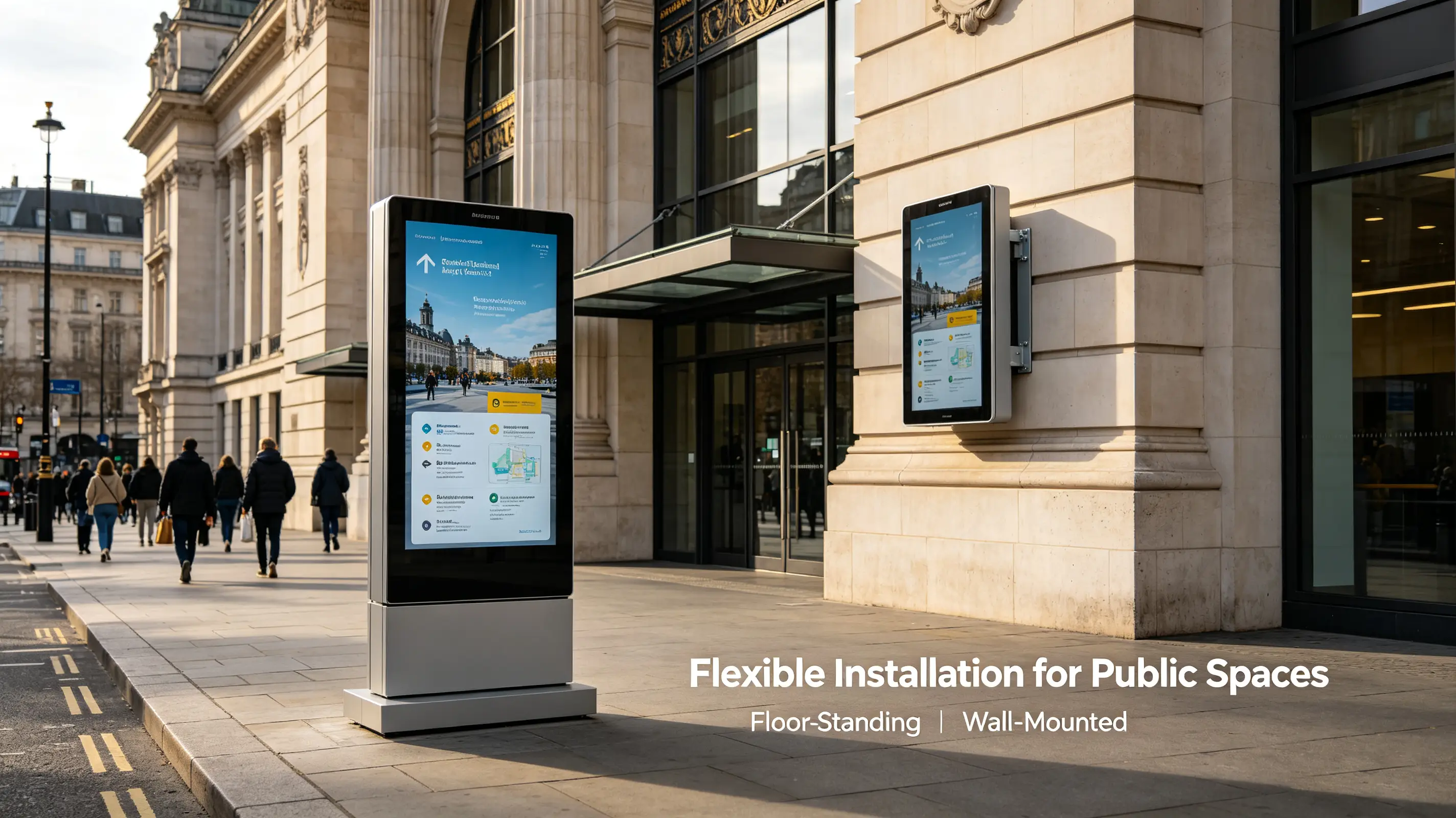
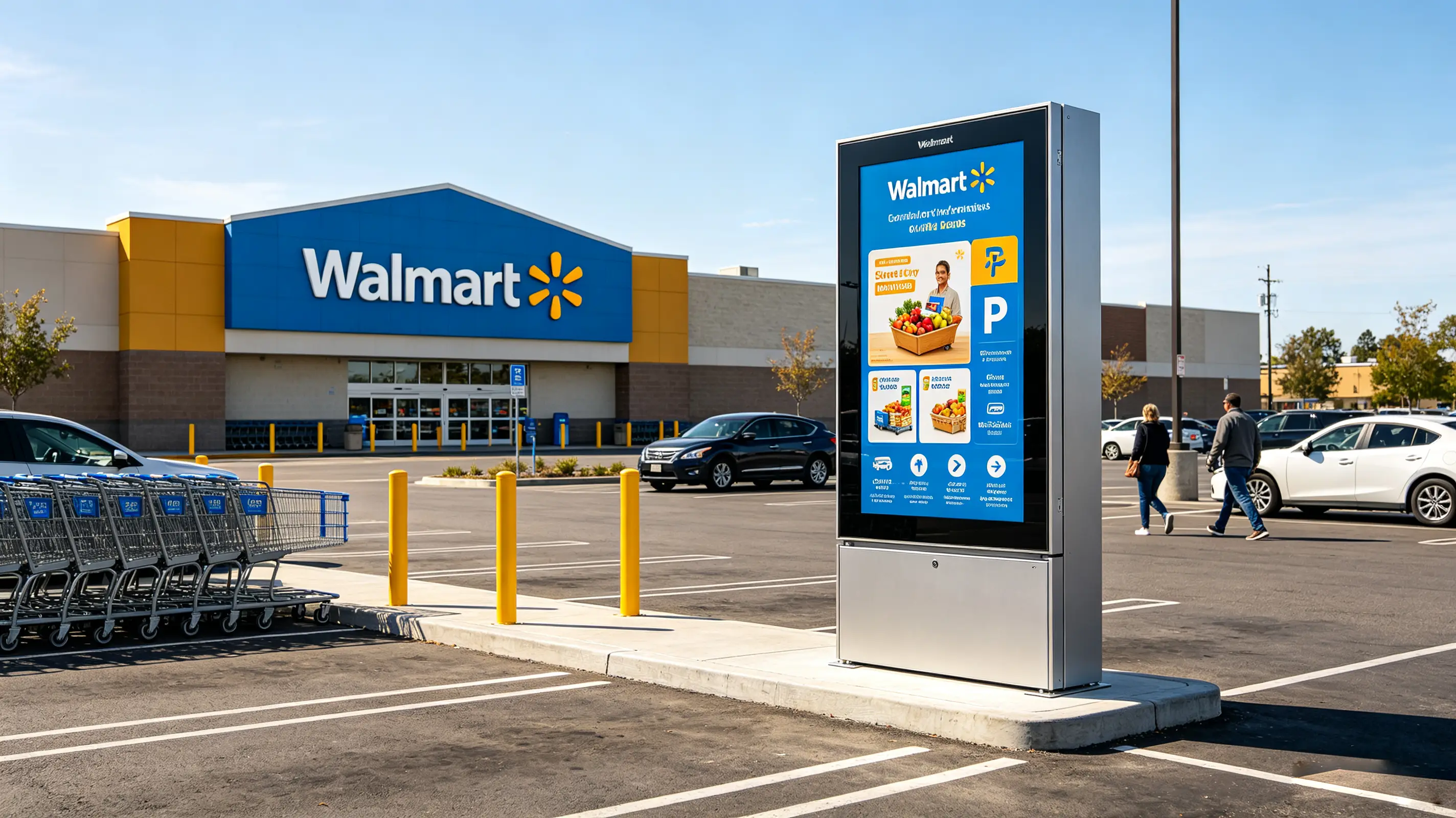
As a floor standing digital signage display, the unit is deployed as a self-supporting outdoor digital signage kiosk — suitable for parking lots, plazas, retail entrances, and drive-through lanes where there is no adjacent wall to mount against. This configuration is what buyers are typically searching for under terms like outdoor standing digital signage for sale, floor stand LCD outdoor digital signage, or outdoor vertical digital display, and it supports both portrait and landscape orientation depending on the content format.
As an outdoor wall-mount display, the same panel and cabinet technology is configured for direct mounting to a building exterior, column, or structural wall — commonly used for storefront advertising, transit stations, and building facades where floor space isn't available or desired. This wall mounted digital display screen format uses the identical IP65 sealing and temperature control system as the floor-standing version, so the choice between the two comes down to the installation site, not a compromise in weather protection.
| Specification to Confirm | Why It Matters |
|---|---|
| Is the IP65 rating applied to the full enclosure or only the front screen? | A rear cabinet or power compartment without a formal rating is the most common source of field failures |
| Is the quoted temperature range for operation or storage? | A storage range describes the unit powered off; it says nothing about performance while running |
| What is the shell material and corrosion warranty period? | Galvanized steel with outdoor powder coating and a stated anti-corrosion period (7+ years here) indicates a design built for long-term exposure, not just initial appearance |
| Is the front glass rated anti-riot or impact-resistant, and what is its light transmission? | Affects both physical security and how much brightness is lost passing through the glass |
| What type of air filter is used at the intake and exhaust? | Determines whether dust and insects can compromise the cooling system over time |
| What size range, orientation, and color options are available? | Confirms whether a single supplier can cover both wall-mounted and floor standing digital signage needs across a project, rather than sourcing two different products |
A regional retail chain operating in a continental climate zone needed an outdoor digital advertising display screen for its parking lot entrances — a location that sees regular winter snowfall, freeze-thaw cycling through early spring, and summer afternoons regularly exceeding 35°C in direct sun.
The client selected a 55" floor standing unit in the standard white finish. Through its first full winter, the sealed cabinet and waterproof labyrinth venting showed no water ingress after repeated snow accumulation and melt cycles at the base of the unit. Through the following summer, the intelligent temperature control system kept the display running at full brightness through peak afternoon heat without a reported thermal shutdown.
The facilities manager overseeing the installation noted: "We'd had an indoor display fail within a year in a weatherproof housing before. What we needed this time wasn't a cover — it was a unit actually built for the enclosure to be part of the design, not an add-on."
How to verify these figures yourself: IP65 and the -20°C to +55°C operating range described in this article reflect this product's factory test specifications. Before finalizing an order, buyers should request the underlying IP65 spray-test documentation and the temperature-chamber test report directly from the supplier, and confirm in writing whether the rating covers the full enclosure or the display module only — the same verification approach recommended for any outdoor digital signage display, regardless of supplier.
In casual use, "LED sign" often just means any bright outdoor screen. Technically, LED refers to the backlight source behind an LCD panel in this product line — the image itself is formed by the LCD layer, the same way a modern LCD television works, just built into a sealed outdoor enclosure. A true LED display forms the image directly from individual LED diodes with no LCD layer, which is a different product category typically used for large-format, long-viewing-distance installations.
Yes, provided the enclosure carries a full-unit IP65 rating and the sealed cabinet is designed with drainage grooves and labyrinth venting rather than exposed seams. The rating on this product line is verified to -20°C for continuous operation, which covers typical winter snow and freeze-thaw conditions.
Operating temperature describes the range in which the unit functions correctly while powered on and displaying content. Storage temperature only describes conditions the unit can survive while powered off and not in use. A supplier quoting only a storage range, without a separate operating range, has not actually answered the question of cold- or hot-weather performance.
The decision is driven by the installation site rather than weather performance, since both formats share the same IP65 sealing and temperature control system. Floor standing digital signage suits locations without an adjacent wall, such as parking lot entrances or plazas; outdoor wall-mounted digital signage suits storefronts, facades, and locations where floor space is limited.
For public-facing outdoor installations, anti-riot tempered glass (commonly around 6mm) is the standard used to resist impact and vandalism while maintaining high light transmission — typically above 95% — so screen brightness isn't significantly reduced by the protective layer.
IP65 and a -20°C to +55°C operating range are not separate marketing claims — they come from the same underlying design decisions: a fully sealed galvanized cabinet, labyrinth-vented cooling, an intelligent temperature control system, and impact-rated glass working together. If your site sees both heavy winter snow and sustained summer heat, the most useful next step is sharing your local winter low, summer high, and mounting preference (floor standing or wall-mounted) so the size and configuration can be matched to your actual climate data rather than a general spec sheet.

CEO | Interactive Display & Collaboration Solution Expert
I am the founder of Qtenboard, bringing over 17 years of hands-on expertise to the touch display industry. Drawing on the global management perspective gained through my EMBA studies at ShenZhen University, I lead my team in optimizing every stage of our operations—from product definition to high-efficiency supply chain management—ensuring our manufacturing capabilities remain at the forefront of the industry.
As the leader of Qtenboard, I specialize in providing tailored OEM/ODM solutions for interactive whiteboards, LCD video walls, digital signage, and industrial-grade touch terminals. Backed by our 330,000 m² modern industrial park in Shenzhen, we maintain full-lifecycle control over industrial design, precision manufacturing, and rigorous performance testing.
With nearly two decades of project experience, Qtenboard’s display solutions are now deployed in over 120 countries and regions, earned the trust of more than 15,000 enterprise customers worldwide. If you are seeking a responsive partner with a deep manufacturing foundation for your customized touch display projects, my team and I are ready to support your vision with professional excellence.

 EN
EN
 pt
pt  spa
spa  th
th  vie
vie  aze
aze  bel
bel  est
est  lav
lav  ukr
ukr  ru
ru