Google EDLA (Enterprise Device Licensing Agreement) is Google's official certification program for commercial Android devices larger than 18 inches without a battery — a category that covers interactive whiteboards. It is stricter than consumer GMS authorization, requires passing three test suites (CTS, GTS, stability) at the manufacturing stage, and cannot be added after production through any software update.
In public education and government procurement — particularly across North America, the EU, the Middle East and Latin America — EDLA is a pass/fail qualification requirement, not a feature preference. The most common procurement failure is not choosing the wrong brand — it is being told a device is "EDLA-Ready" when it is not EDLA Certified at all.
A school district in the Middle East spent eight months shortlisting vendors, running pilots and finalizing a 200-unit order — only to have the entire shipment rejected at the procurement review stage. The reason: the devices were not EDLA-certified, and the regional education authority had added it as a mandatory compliance requirement six months earlier.
This is not an isolated case. As public education and government procurement standards tighten across North America, Europe, Latin America and the Middle East, Google EDLA certification has shifted from a differentiating feature to a baseline entry requirement. For system integrators, project owners and B2B partners, understanding what EDLA actually means — and what it doesn't — is now a practical necessity before any large-scale deployment begins.
Google EDLA (Enterprise Device Licensing Agreement) is Google's official certification program for commercial Android devices larger than 18 inches operating without a battery — a category that covers interactive whiteboards for education and enterprise use. It is a different, stricter standard than ordinary GMS (Google Mobile Services) authorization, which is designed for consumer smartphones.
To receive EDLA certification, a device must pass three layers of Google testing at the hardware and system level — not as a software update, but as part of the manufacturing process:
Verifies hardware and software compatibility. Ensures all Android applications run stably without crashes or performance degradation across the device's intended service life.
Inspects the integration of Google core applications and enables Google Play Protect for built-in security. Grants legal access to the official Google Play Store.
Evaluates system reliability under high-frequency, long-duration commercial use — conditions typical of a classroom that runs 8 hours a day, 5 days a week.
Important: EDLA certification is tied to the device's mainboard hardware and underlying system. It cannot be retrofitted onto a non-certified device through software updates. A device is either certified from manufacturing, or it is not.
Many suppliers label products "EDLA-Ready" to attract procurement teams. This label means only that the device's hardware chip meets the basic technical specifications required for EDLA — it does not mean the product has completed Google's official review, testing, or licensing procedures. These devices have no legal GMS authorization, receive no official security patches, and are disqualified from virtually all formal public tenders.
This distinction has real consequences. A system integrator who deploys "EDLA-Ready" boards for a government K-12 project can face bid disqualification after delivery — triggering replacement costs and reputational damage. The phrase is marketing language, not a certification status.
The only way to know if a device is genuinely EDLA certified is to verify it directly. See Section 5 for a four-step on-device check you can do in under two minutes.
For system integrators, project owners, and B2B procurement teams, EDLA delivers value across five dimensions:
EDLA has become a baseline access requirement for public education and government procurement projects across North America, Europe, Latin America, and the Middle East. Multiple regional K-12 funding programs and public institution procurement documents now list EDLA as a hard technical indicator — not a preference. Non-certified products are filtered out in preliminary review, before any technical evaluation begins.
Without EDLA, technicians must install apps via sideloaded APK files — raising the risk of malware and data leakage in environments that handle student or employee data. EDLA mandates regular official security patches from Google and supports Android Enterprise, enabling IT teams to remotely configure, batch-control, and distribute security policies across large device deployments from a central console.
Google Classroom, Google Meet, and Google Workspace are the backbone of hybrid learning in most regions. EDLA-certified devices run these applications natively, with cameras, microphones, and display adapting automatically. Teachers start classes in seconds — no debugging, no workarounds.
Certified devices give users direct access to Google Play, including tools like Kahoot!, ClassDojo, and hundreds of third-party educational and office applications. Non-certified boards running modified Android systems restrict this ecosystem, limiting the value delivered to end users over time.
Backed by Google's continuous system iteration and driver optimization, EDLA-certified devices maintain consistent performance through their operational cycle. This avoids the system lag and function failures common in customized open-source Android builds, reducing replacement frequency and protecting long-term project ROI.
The table below focuses on underlying compliance mechanisms — separate from the usage values described above.
| Technical & Compliance Criterion | EDLA-Certified IWB | Non-EDLA IWB |
|---|---|---|
| Official Google licensing status | ✓ Complete commercial GMS licensing | ✗ No formal commercial GMS license |
| App installation channel | ✓ Official Google Play Store | ✗ Manual APK sideloading only |
| Security & system update mechanism | ✓ Google unified official patches | ✗ No official long-term update path |
| Google certification test completion | ✓ CTS, GTS, full stability tests passed | ✗ Not reviewed by Google |
| Android Enterprise remote management | ✓ Full MDM & policy distribution support | ✗ No official remote management |
| Global bidding qualification | ✓ Recognized in government & education tenders | ✗ Disqualified from most formal bids |
| Retrofit / post-production certification | ✓ Certified at manufacturing stage | ✗ Cannot be obtained via software update |
Four terms are routinely confused in supplier spec sheets and marketing materials. Only one of them qualifies a device for institutional education and government tenders.
| Term | Full Name | Target Device Category | Official Google Authorization | Tender Eligibility |
|---|---|---|---|---|
| AOSP | Android Open Source Project | Any Android device | ✗ None | ✗ Not eligible |
| GMS | Google Mobile Services (consumer tier) | Smartphones, tablets | ✓ Consumer-tier license | ✗ Does not meet enterprise requirement |
| GMS Certified | Consumer-tier Google-certified device | Phones, tablets, some displays | ✓ Consumer-tier | △ Depends on project specification |
| EDLA-Ready | Marketing label (not a Google status) | Varies — often unverified | ✗ No official authorization | ✗ Disqualified at documentation review |
| EDLA Certified | Enterprise Device Licensing Agreement | Commercial Android ≥18", no battery | ✓ Enterprise-tier official authorization | ✓ Meets institutional tender requirement |
Buyer's takeaway: if a supplier's product page mentions "GMS" or "EDLA-Ready" but does not explicitly state "EDLA Certified," treat the claim as unverified until proven by the four-step check in Section 5. In Google Workspace-dominant procurement markets, the distinction between these rows is the difference between a valid bid and a rejected one.
Before committing to any supplier, run these checks. Each takes under five minutes and can be done before or during a product demo.
Open Google Play Store → Settings → About → Play Protect Certification. A "Device is certified" message confirms official EDLA status.
Failure signal: the Play Protect Certification entry is missing, greyed out, or shows "Device is not certified." This means no official Google authorization is present — regardless of what the supplier claims.
Ask the supplier for Google's formal EDLA licensing file and the complete test report issued during certification. A genuine supplier can produce these immediately.
Failure signal: the supplier offers a "certificate" that is a marketing PDF, promises documentation "after order confirmation," or deflects with "we work with a certified partner." None of these are substitutes for the licensing file itself.
Check Google's public roster of certified commercial devices to confirm whether the exact model number is listed. No model number = no certification.
Failure signal: only a "series" or "family" name is listed, but not the specific model being quoted. EDLA is granted per model and Android version — not per brand.
Open Google Classroom and Google Meet directly from Google Play. Native launch without sideloading or workarounds is the functional proof of certification.
Failure signal: the demo requires a pre-installed APK file, an external PC, or a "special configuration" to run Google apps. Sideloading is not equivalent to certification.
Qtenboard transparency note: All Qtenboard EDLA-certified interactive whiteboards can be verified using any of the four methods above. We provide full Google licensing documents to serious buyers on request — no delays, no conditions. Request documentation →
Qtenboard is a professional manufacturer of interactive display equipment based in Shenzhen, China, with over 17 years of experience in the touch display industry. All Qtenboard interactive whiteboards are fully EDLA-certified — not EDLA-Ready — with complete verifiable documentation available for procurement review.
Our current product line is built on the Genio 520 mainboard, which has passed Google's full CTS, GTS, and stability certification suite and is paired with the Android 16 system. This hardware foundation ensures consistent performance in high-frequency commercial environments such as classrooms running 8+ hours daily and enterprise meeting rooms in continuous use.
Complete verifiable Google licensing documents provided for every product — confirm via Play Protect or Google's official device list.
Passed Google's full compatibility and security test suite. Stable under long-term high-frequency use in classrooms and conference rooms.
Google Classroom, Meet, and Workspace run natively out of the box. No sideloading, no workarounds, no IT overhead.
Branding, pre-installed software, and hardware customization — all with full EDLA certification documentation included for every customized model.
Compliance guidance, bid documentation support, and technical docking throughout project delivery. 24-hour response commitment.
Full in-house industrial design, precision manufacturing, and performance testing in Shenzhen — with 15,000+ enterprise customers across 120+ countries.
Whether you need certification verification, a project quotation, or a product demonstration, our team responds within 24 hours.
Questions we hear most often from system integrators and procurement teams:
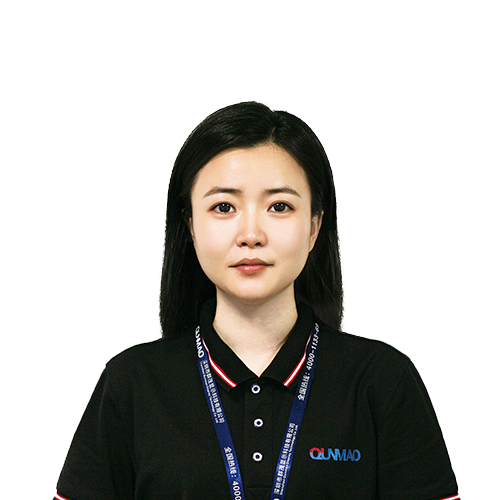
CEO | Interactive Display & Collaboration Solution Expert
I am the founder of Qtenboard, bringing over 17 years of hands-on expertise to the touch display industry. Drawing on the global management perspective gained through my EMBA studies at ShenZhen University, I lead my team in optimizing every stage of our operations—from product definition to high-efficiency supply chain management—ensuring our manufacturing capabilities remain at the forefront of the industry.
As the leader of Qtenboard, I specialize in providing tailored OEM/ODM solutions for interactive whiteboards, LCD video walls, digital signage, and industrial-grade touch terminals. Backed by our 330,000 m² modern industrial park in Shenzhen, we maintain full-lifecycle control over industrial design, precision manufacturing, and rigorous performance testing.
With nearly two decades of project experience, Qtenboard’s display solutions are now deployed in over 120 countries and regions, earned the trust of more than 15,000 enterprise customers worldwide. If you are seeking a responsive partner with a deep manufacturing foundation for your customized touch display projects, my team and I are ready to support your vision with professional excellence.
 ukr
ukr
 EN
EN  pt
pt  spa
spa  th
th  vie
vie  aze
aze  bel
bel  est
est  lav
lav  ru
ru