This guide is written for system integrators and white-label display brands evaluating factory-direct interactive screens for 2026 B2B procurement. It covers why EDLA certification has become a mandatory procurement gatekeeper, why Android 14 on the right mainboard outperforms "Android 16" on low-end chips, how BOM locking enforces batch consistency, a side-by-side factory-vs-brand comparison, a $400,000 rejected-order case study, and six critical questions buyers ask before placing an order.
EDLA certification is the single most important compliance requirement for interactive whiteboard procurement in 2026 — and devices without it are eliminated before pricing is even evaluated.
EDLA (Enterprise Device Licensing Agreement) is Google's mandatory certification for commercial Android devices larger than 18 inches operating without a battery. A school district in the Middle East lost a $400,000 order when their shortlisted brand lacked EDLA certification — a gap that could have been verified in two minutes.
Qtenboard's product line is built on the MediaTek Genio 520 mainboard, which has passed Google's full CTS and holds 100% EDLA certification — not EDLA-Ready — with complete verifiable documentation for procurement review.
Android performance is defined by the mainboard hardware, not the version number printed on the packaging. A supplier advertising "Android 16" on a low-end chip is selling you a number, not performance.
Interactive flat panels are not phones. They are large-format commercial devices used for 8–10 hours a day, expected to run for years. For IFPs, Android version affects system stability, app compatibility, touch latency, security updates, and long-term maintenance.
Qtenboard standardizes on Android 14 because it is the latest version ready for real-world deployment — adopted only after hardware drivers are fully adapted, system-level compatibility is verified, long-hour aging tests are completed, and app ecosystems are validated.
BOM (Bill of Materials) locking is a non-negotiable practice for maintaining batch consistency across large orders. Locking the BOM for 3–5 years prevents unapproved component substitutions that change product performance mid-order.
A European education project learned this lesson when a non-factory brand changed factories mid-order, replacing premium touch sensors with cheaper alternatives. The result was 30% slower multi-touch response and 8–10°C higher operating temperatures — issues directly tied to failed BOM locking.
Qtenboard signs long-term supplier contracts to enforce BOM locking, eliminating the silent component swaps common after a factory switch. Our batch consistency is ≤2% across all shipments.
More than 90% of interactive flat panels worldwide are manufactured by professional OEM/ODM factories. Brands like Samsung, LG, and ViewSonic select high-quality factories for OEM production and then affix their own brands. Qtenboard is the factory that other brands select.
| Comparison Dimension | Brand-Only (Samsung / LG / ViewSonic) | Qtenboard Factory-Direct OEM |
|---|---|---|
| Minimum Order Quantity (MOQ) | Standard built units: 10-50 pcs minimum | ✅ 1 unit custom order; supports SKD/CKD knockdown export |
| Operating System | Tizen / WebOS (closed ecosystem, limited enterprise app support) | ✅ Android 14 + OPS Windows dual-system hot-swappable |
| Native Conference Platform Integration | Teams or Zoom (choose one, not both natively) | ✅ Microsoft Teams / Zoom / Google Meet full compatibility |
| Touch Points & Latency | 20-point touch, ~15ms response | ✅ 40-point touch, ≤8ms latency (zero drift) |
| Warranty & Technical Support | Ticketed email system, 5-7 day response cycles | ✅ 24/7 direct technical support (WhatsApp/WeChat), 3-year global warranty |
| Total Procurement Cost (TCO) | $$$$$ (brand premium + import tariff markup) | ✅ $$ (Save 30%-40% on total landed cost) |
This page is written for two B2B buyer types: system integrators managing multi-site rollouts, and white-label brands building their own display brand.
You get the call when a client's 50-unit deployment has inconsistent touch response across batches. You eat the cost of replacing panels that don't meet the tender spec. Qtenboard's BOM locking — a 3-5 year freeze on all core components — means you will never receive a "silent substitution" that changes performance mid-order.
🎯 Bulk tenders • Multi-site rolloutsYou are building your own brand in your market. You need a manufacturing partner who understands OEM/ODM — who can deliver CKD (Completely Knocked Down) or SKD (Semi-Knocked Down) kits, who can adapt firmware to your local language and certification requirements, and who won't compete with you on your own turf. Qtenboard has been the manufacturing backbone behind some of the world's most recognized display brands.
🎯 Private labeling • Regional exclusivityThis is not an isolated case. EDLA certification has shifted from a differentiating feature to a baseline entry requirement for public education and government procurement across North America, Europe, Latin America, and the Middle East.
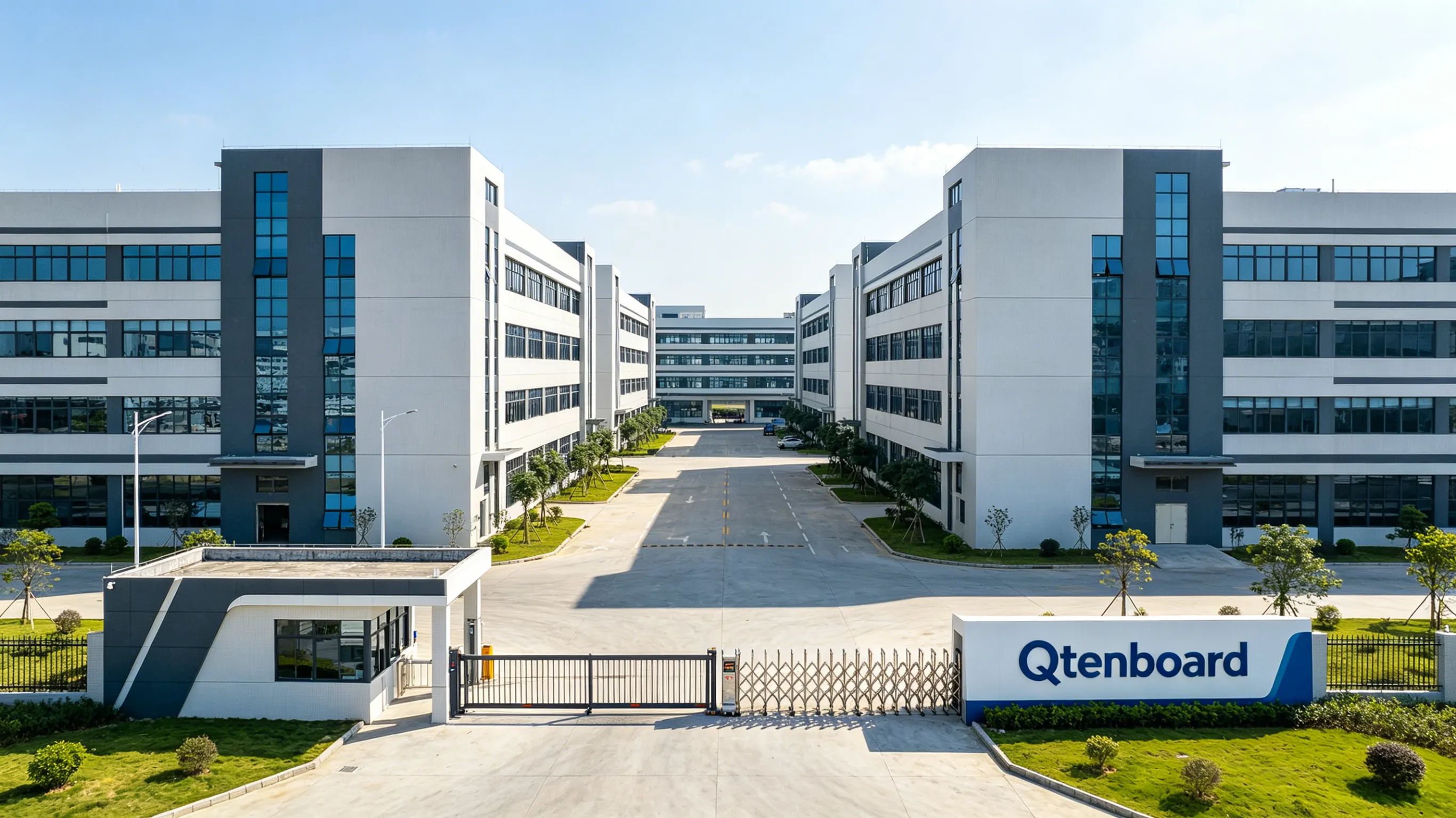
Qtenboard owns its production capacity, engineering validation, and supply chain infrastructure — we don't sell concepts, we sell verifiable manufacturing capability.
Straight factory answers. No fluff. No hidden terms.
Qtenboard sample orders start at 1 unit minimum. Bulk finished-unit orders start at 10 units. For CKD (Completely Knocked Down) or SKD (Semi-Knocked Down) kits, we ship based on a single 20FT or 40FT container load (approximately 80–150 units depending on screen size).
Key advantage: CKD/SKD models save you 15%–25% on import duties and VAT in your destination country, while also helping you meet local content/procurement regulations (e.g., government tender localization clauses).
Hardware-level customization with no NRE/development fees:
Software-level customization:
⚠️ Important: We charge zero "brand licensing" or "white-label management" fees. The only costs are one-time tooling/engineering charges for physical changes.
Sample procurement process:
Lead Time (from order confirmation):
Shipping: FOB Shenzhen / CIF destination port both available.
Qtenboard provides a 3-year standard warranty covering the entire unit (including LCD panel, mainboard, power supply, and touch module).
DOA (Dead on Arrival) Policy – within 15 days of signed delivery:
Bulk defect clause: If the failure rate of a single batch exceeds 3% (non-human-damage related), we provide on-site inspection and parts replacement at our own expense.
EDLA certification is tied to the hardware model (SKU) and core firmware baseline — not to the brand name.
Does customization affect the certification?
Deliverables: Every shipment includes official EDLA test reports + GMS authorization letters for your procurement files.
vs. Tier-1 Brands (Samsung / LG / ViewSonic):
vs. Other Chinese OEM Factories:
* All factory capacity, certification status, and case data are verifiable upon request. Global interactive display market data sourced from industry 2026 forecasts.
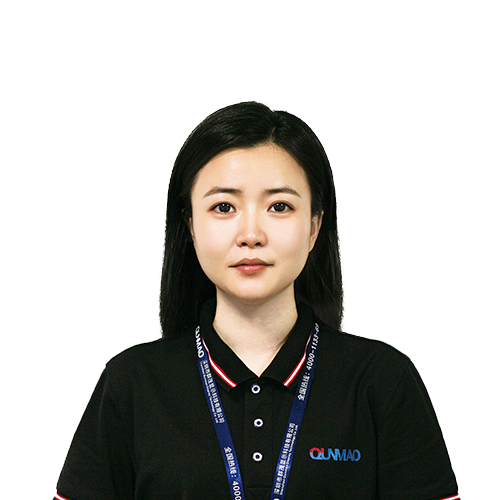
CEO | Interactive Display & Collaboration Solution Expert
I am the founder of Qtenboard, bringing over 17 years of hands-on expertise to the touch display industry. Drawing on the global management perspective gained through my EMBA studies at ShenZhen University, I lead my team in optimizing every stage of our operations—from product definition to high-efficiency supply chain management—ensuring our manufacturing capabilities remain at the forefront of the industry.
As the leader of Qtenboard, I specialize in providing tailored OEM/ODM solutions for interactive whiteboards, LCD video walls, digital signage, and industrial-grade touch terminals. Backed by our 330,000 m² modern industrial park in Shenzhen, we maintain full-lifecycle control over industrial design, precision manufacturing, and rigorous performance testing.
With nearly two decades of project experience, Qtenboard’s display solutions are now deployed in over 120 countries and regions, earned the trust of more than 15,000 enterprise customers worldwide. If you are seeking a responsive partner with a deep manufacturing foundation for your customized touch display projects, my team and I are ready to support your vision with professional excellence.
 ukr
ukr
 EN
EN  pt
pt  spa
spa  th
th  vie
vie  aze
aze  bel
bel  est
est  lav
lav  ru
ru