A field-grounded evaluation of what Android 16 on Qtenboard's interactive flat panel display actually changes — for procurement teams, IT directors, and the classrooms they serve.
Across Latin America, education ministries are investing in smart classroom infrastructure at scale — hundreds of interactive flat panel displays per district, multi-school contracts, multi-year rollouts. The hardware arrives. The screens go up. And then, within one semester, the support tickets start. Not because the product failed. Because the platform running it was never designed for an institutional environment.
Android 16 changes four things that matter most to institutional buyers. Here is what each one solves, and why it belongs in your procurement evaluation criteria.
A teacher runs three things at once: whiteboard annotation, a video clip, and a student device being mirrored wirelessly onto the display. This is a normal lesson workflow. On older Android platforms, it creates a CPU contention problem — background system processes compete for the same processor resources as the touch input thread. The result: stylus strokes lag 80 to 150 milliseconds behind contact. On a 98-inch 4K interactive flat panel display, where the rendering canvas is significantly larger, this lag is visually pronounced. Teachers see their handwriting trail behind their pen. Students notice. The lesson slows.
A math teacher in Lima drawing function curves on the board while a video explanation plays is interrupted — not by a hardware failure, but by platform-level resource conflict. The break in stroke continuity forces her to pause, redraw, re-explain. This happens multiple times per lesson. Over a semester, across dozens of teachers, this is not a minor inconvenience: it is a consistent degradation of the instructional environment that the procurement budget was intended to improve.
Teachers at a secondary school network reported that stylus lag was the single most-cited reason they reverted to physical whiteboards during complex lessons — despite having smartboards for classroom use mounted and available. The technology was present. The platform behavior made it feel unreliable.
Android 16 introduces a system-level dynamic compute scheduling framework that assigns the touch input thread a protected Tier-1 priority — it cannot be preempted by background services regardless of overall system load. On Qtenboard's platform, this maintains sub-20ms touch-to-display latency under concurrent task conditions. 20ms is the threshold below which human perception cannot detect delay. Teachers annotate. Students follow. The lesson continues without interruption.
Stylus latency stays below 20ms under full multi-task load — compared to 80–150ms on legacy Android — enabling uninterrupted lesson delivery without requiring teachers to manage task priority themselves.
Brazilian Ministry of Education data shows average public secondary class sizes of 32–38 students. Teachers in this environment carry substantial post-lesson administrative load: lesson summaries, behavioral notes, material distribution, content translated for multilingual students. This is time that competes directly with lesson preparation.
A secondary teacher in São Paulo reported spending an average of 30–35 minutes per school day on post-lesson documentation: writing up what was covered, distributing materials, noting which students needed follow-up. None of this required her professional judgment. All of it took time she did not have.
Qtenboard's Android 16 platform includes an AI feature suite powered by the onboard MediaTek Genio 520 NPU — 10 TOPS of dedicated edge AI compute that runs entirely on-device, without cloud dependency. This matters in Brazil, where school internet connectivity in semi-rural districts is inconsistent.
🔗 MediaTek Genio 520 on Qtenboard IFPD — Technical Overview →The AI tools address four specific pain points identified across Brazilian school deployments:
Post-lesson summary time: 30 minutes → under 60 seconds. For a teacher running five daily lessons, this recovers approximately 2.3 hours of planning time per week. Content distribution: 4–7 manual steps eliminated per class session. These are not feature additions — they are administrative tasks that the platform now handles so the teacher does not have to.
Peru's public school infrastructure expansion placed interactive flat panel displays in schools across all 25 regions. A single device is used by multiple teachers and dozens of students across a school day. On legacy Android, there was no viable middle path: either the device was left fully open — allowing students to install entertainment applications, change network settings, or copy files to USB drives — or it was locked down entirely, which prevented teachers from doing their jobs.
An IT coordinator managing 87 smartboard for classroom in a coastal region district documented: within three months, 34% of devices had unauthorized applications installed, 11% had modified network settings, and 6 units showed evidence of USB file exfiltration. Restoring each device to a compliant state required a full local factory reset — averaging 45 minutes per unit. That is more than 65 hours of unplanned IT labor from a single deployment cycle.
Android 16 introduces role-based permission control that operates below the application layer — it cannot be bypassed through user-space actions. Qtenboard's implementation applies three access tiers to each enrolled device:
USB mass storage blocking operates at the Android storage HAL layer — it does not require an active internet connection and remains enforced even if a student attempts to use ADB or other technical workarounds. This is a structural control, not a policy toggle that can be talked around.
In the district scenario above, Android 16's permission architecture would have prevented 100% of the documented security incidents at the platform level — eliminating the 65+ hours of emergency remediation labor. Across a 100-unit fleet, this represents an estimated saving of 3,000–4,500 USD in unplanned IT labor annually, based on prevailing regional contractor rates.
A state education secretariat in Brazil deployed 80 smart classroom display units across 24 schools in a district. Under legacy configuration requirements, each unit needed a technician on-site: connect a keyboard, navigate setup menus, configure the school account, enroll in the MDM system, verify connectivity. Average on-site time: 35–45 minutes per device. Across 24 sites requiring 40–90 minutes of driving between them, the initial rollout consumed more than 300 person-hours of labor — plus travel overhead adding 20–28% to the deployment budget.
Post-deployment, the support model was reactive: IT staff learned of hardware failures only when a teacher filed a ticket, often days after a device stopped functioning. Mean time to resolution averaged 6.8 days — nearly two full teaching weeks of lost access per incident, per device. For a 80-unit fleet, this is not a minor operational inefficiency. It is a structural gap between the infrastructure investment and its actual classroom availability.
Two technicians working full-time with a vehicle took 15 working days to complete initial commissioning. Three months in, 12 units had hardware faults that went undetected for an average of 4.2 days before teacher reports triggered ticket creation — representing 50+ lost device-days of classroom availability.
Qtenboard's Android 16 platform supports Zero-Touch Enrollment: a new interactive flat panel display unit, when powered on for the first time, automatically contacts the organization's MDM server, downloads its configuration profile, installs approved applications, sets permission tiers, and configures network parameters — with no technician interaction beyond mounting and powering the device. Per-unit commissioning time: under 4 minutes.
Qtenboard's Device Management System (DMS) provides a centralized console for monitoring hardware telemetry across every enrolled unit in real time — CPU temperature, display backlight hours, storage health, connectivity status. Anomaly detection flags devices showing hardware stress signatures before failure, enabling predictive maintenance dispatch rather than reactive fault response.
Commissioning labor: 300+ person-hours reduced to approximately 36 hours for 480 units — an 88% reduction. At Brazilian IT contractor rates, this represents a direct saving of BRL 21,000–27,000 on initial rollout. Fault detection time: 4.2 days reduced to under 4 hours, recovering an estimated 18–24 instructional days per affected unit per year.
Procurement decisions for large-scale interactive flat panel display projects are not completed at purchase. They are validated over the deployment lifecycle. Qtenboard's institutional support structure is built around this reality.
Whether you're assessing a 50-unit pilot or a 500-unit district rollout, our team can provide deployment specifications, MDM compatibility documentation, and a hands-on platform walkthrough tailored to your institutional context.
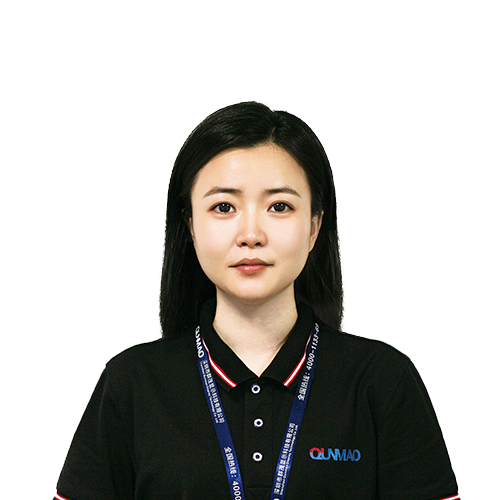
CEO | Interactive Display & Collaboration Solution Expert
I am the founder of Qtenboard, bringing over 17 years of hands-on expertise to the touch display industry. Drawing on the global management perspective gained through my EMBA studies at ShenZhen University, I lead my team in optimizing every stage of our operations—from product definition to high-efficiency supply chain management—ensuring our manufacturing capabilities remain at the forefront of the industry.
As the leader of Qtenboard, I specialize in providing tailored OEM/ODM solutions for interactive whiteboards, LCD video walls, digital signage, and industrial-grade touch terminals. Backed by our 330,000 m² modern industrial park in Shenzhen, we maintain full-lifecycle control over industrial design, precision manufacturing, and rigorous performance testing.
With nearly two decades of project experience, Qtenboard’s display solutions are now deployed in over 120 countries and regions, earned the trust of more than 15,000 enterprise customers worldwide. If you are seeking a responsive partner with a deep manufacturing foundation for your customized touch display projects, my team and I are ready to support your vision with professional excellence.

 EN
EN
 pt
pt  spa
spa  th
th  vie
vie  aze
aze  bel
bel  est
est  lav
lav  ukr
ukr  ru
ru