Las universidades de campus múltiples se están topando con cuellos de botella persistentes en la gestión de la información al aire libre. Los carteles en papel estático no pueden entregar alertas de emergencia sincronizadas o anuncios en tiempo real en el campus en zonas públicas al aire libre.
Según la investigación de la industria global de Technavio, el mercado de señalización digital para la educación mantiene una tasa de crecimiento anual compuesta del 10,9% de 2025 a 2030, con terminales de exhibición pública al aire libre como el segmento de más rápido crecimiento.
Los equipos de TI de la universidad y los oficiales de adquisiciones están reposicionando la señalización digital exterior desde una actualización cosmética hasta el hardware de comunicación central del campus. Este cambio surge de la presión operativa práctica en lugar de los mandatos administrativos. Sin terminales de exhibición exteriores centralizadas, las escuelas no pueden garantizar notificaciones públicas instantáneas en medio de incidentes inesperados. Las placas estáticas impresas simplemente no pueden cumplir con los requisitos de actualización en tiempo real de la gestión moderna de la seguridad del campus.
Por esta razón, la señalización digital al aire libre se ha convertido en un elemento de presupuesto fijo para la construcción de infraestructura en nuevos proyectos de campus inteligentes.
La mayoría de los equipos de compras ya han sido quemados una vez. Antes de evaluar cualquier nuevo proveedor, vale la pena nombrar los cuatro patrones de falla que aparecen repetidamente en proyectos de exhibición al aire libre de grado campus:
Estas fallas generalizadas en la visualización genérica resultan en la reelaboración del proyecto, los excesos de presupuesto y la publicación de información de emergencia que no cumple con los requisitos, los tres principales riesgos para las licitaciones de informatización del campus.
HechoLa señalización digital al aire libre de Qtenboard & #039;s utiliza un sensor de luz ambiental para ajustar continuamente el brillo del panel en un rango de 3,000-5,000 nit, en lugar de funcionar con una sola salida fija.
ProblemaUna pantalla calibrada solo para pasillos sombreados se lava e ilegible en el momento en que se enfrenta a la luz solar directa en un patio abierto o campo deportivo, exactamente el entorno que requieren la mayoría de las instalaciones de la vía principal y el área atlética del campus.
ValorLa pantalla escala automáticamente la salida para adaptarse a las condiciones ambientales durante todo el día, manteniendo la legibilidad desde la sombra de la madrugada hasta el máximo sol del mediodía sin recalibración manual o intervención del personal. Nuestro equipo está especialmente diseñado para la operación a largo plazo del campus en lugar de ser reacondicionado desde pantallas comerciales ordinarias.
HechoEl recinto lleva un grado IP65 contra los chorros del polvo y de agua, emparejado con un sistema de gestión termal activo que regule temperatura interna y suprima activamente la acumulación de la condensación.
ProblemaLos campus en climas húmedos se enfrentan a fallas recurrentes en la temporada del monzón, mientras que aquellos en regiones más frías ven que la humedad interna se acumula durante los ciclos de congelación-descongelación; ambos escenarios son la principal causa de fallas prematuras de hardware en la señalización exterior que carece de control activo del clima.
ValorCálculo de TCO verificado: La señalización digital exterior de Qtenboard reduce los costos de operación integral del campus de 5 años en un 35%-42% en comparación con las señales estáticas y las pantallas exteriores de baja calidad, impulsadas principalmente por la reducción de las llamadas de servicio relacionadas con el clima y el reemplazo temprano del hardware. Nuestro hardware está hecho a medida para la operación a largo plazo del campus en lugar de paneles comerciales modificados.
HechoEl CMS basado en la nube admite permisos basados en roles, listas de reproducción de contenido programadas y administración de dispositivos agrupados en múltiples ubicaciones de campus desde un único inicio de sesión administrativo.
ProblemaSin un control centralizado, un equipo del centro de información que gestiona pantallas en tres o cuatro sitios del campus debe iniciar sesión en sistemas separados, o peor aún, enviar personal físicamente, para impulsar un solo anuncio coordinado, un proceso que puede llevar de dos a cuatro horas durante una situación de rápido movimiento.
ValorUn solo administrador puede enviar un aviso de emergencia verificado a cada pantalla conectada en todas las ubicaciones del campus en menos de 30 segundos, satisfaciendo directamente el requisito de comunicación de emergencia centralizada que los sistemas fragmentados no pueden cumplir. Nuestro sistema de gestión está desarrollado exclusivamente para escenarios de gestión de campus de múltiples sitios.
HechoQtenboard utiliza tecnología táctil infrarroja de grado industrial, que detecta la interrupción en lugar de la capacitancia, combinada con un módulo integrado de búsqueda de caminos y calendario de eventos del campus.
ProblemaDurante la orientación de nuevos estudiantes y grandes eventos en el campus, las instituciones generalmente despliegan personal adicional únicamente para responder instrucciones y programar preguntas, un costo laboral anual recurrente que se escala con la inscripción.
ValorEl tacto infrarrojo funciona confiablemente sin importar guantes, condiciones mojadas, o desgaste superficial del pantalla-protector-estilo, permitiendo que el terminal wayfinding funcione como punto auténtico del autoservicio todo el año. Los campus que implementan este módulo durante los períodos de orientación reducen constantemente las necesidades de personal dedicado a la información en puntos de alto tráfico. La función interactiva está totalmente adaptada a entornos complejos de campus al aire libre.
| Dimensión | Señalización impresa estática | Pantalla exterior de bajo grado genérico | Señalización digital al aire libre de Qtenboard |
|---|---|---|---|
| Ciclo de actualización de contenido | Reimpresión manual, 2-5 días | Remoto, pero fragmentado por sitio | Empuje en la nube, minutos, unificado en todos los campus |
| Tasa de fallas relacionadas con el clima | N/A (sin electrónica) | Alto (IP54 o inferior común) | Bajo (control térmico activo IP65) |
| Control multi-campus | No aplicable | Siloed por ubicación | CMS único, acceso basado en roles |
| Cumplimiento de la información de emergencia | No puede cumplir el requisito | Parcial, retrasado | Cumple con el requisito de empuje sub-30-segundo |
| Costo integral de 5 años | Alto (impresión acumulativa, mano de obra, reemplazo) | Moderado-alto (fallo de hardware frecuente) | Verificado 35%-42% más bajo que las dos categorías anteriores |
Esta no es una estimación de marketing, es un cálculo basado en ciclos de impresión/reimpresión, frecuencia promedio de llamadas de servicio para recintos de sub-IP65 y costo de mano de obra para administración de contenido descentralizada, en comparación con las tasas de falla de campo documentadas de Qtenboard & #039;.
Contexto del proyecto: Una universidad integral multi-campus, en respuesta a un mandato de la autoridad educativa regional para la infraestructura de información del campus unificado, emitió una licitación para un sistema estandarizado de liberación de información al aire libre a través de su campus principal y dos campus satélites.
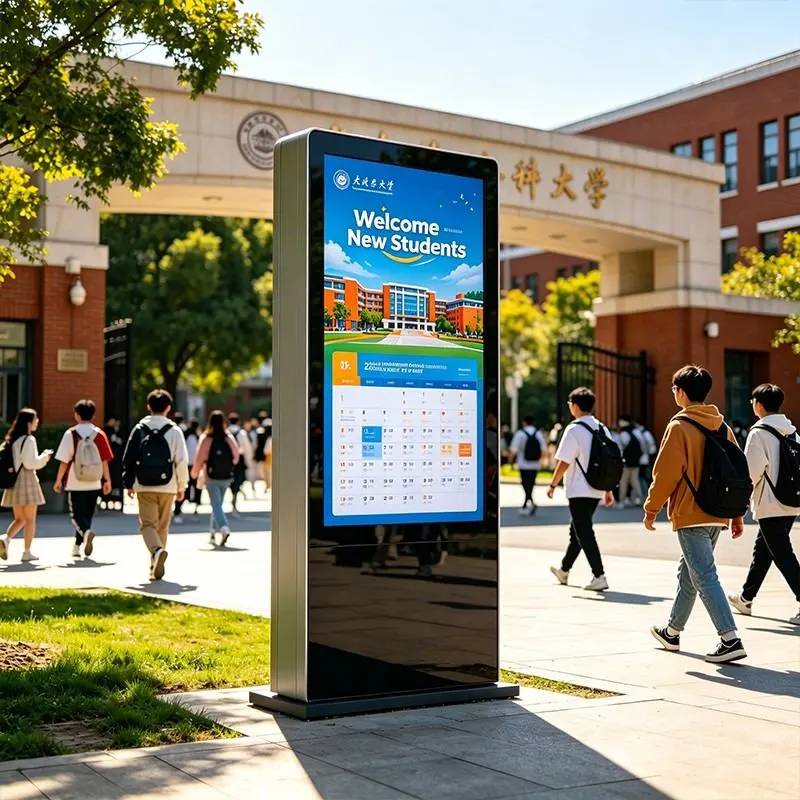
Quién lo utiliza: Profesores, estudiantes y padres visitantes que pasan por el corredor peatonal de mayor tráfico en el campus, varias veces al día.
Lo que se rompió:Tableros de anuncios impresos anteriores de la universidad a lo largo de esta ruta se actualizaron semanalmente en el mejor de los casos, lo que significa que los listados de eventos y los recordatorios de fechas límite académicas estaban rutinariamente desactualizados cuando los estudiantes pasaron por delante de ellos.
Cómo & #039;s resuelto ahora:Las unidades de Qtenboard instaladas a lo largo de la vía pública reciben empujes de contenido programados desde el CMS central: los anuncios diarios, los plazos académicos y las promociones de eventos se actualizan automáticamente sin ninguna visita del personal en el lugar, y la pantalla autoadaptativa de 3,000-5,000 nit permanece legible en todo el corredor & #039;s exposición mixta de sol y sombra durante todo el día.
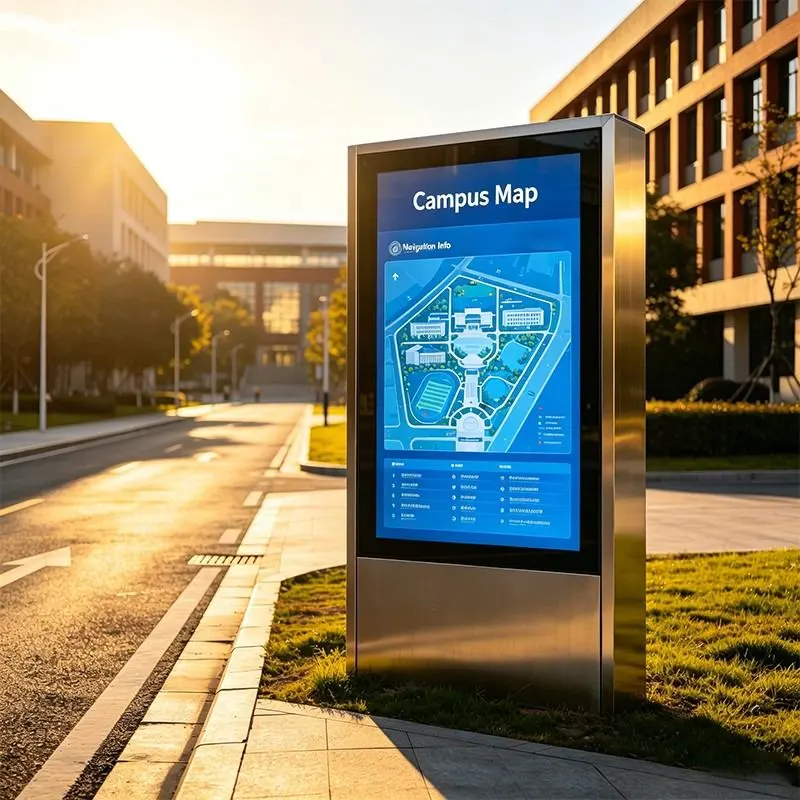
Quién lo utiliza: Visitantes entrantes, personal de entrega y nuevos estudiantes que no están familiarizados con el diseño del campus, junto con el personal de seguridad del campus que monitorea los puntos de entrada.
Lo que se rompió: La confusión de los visitantes en la puerta principal generó un flujo constante de solicitudes de dirección manual al personal de seguridad, alejando la atención de las funciones de seguridad reales, y la institución no tenía forma de presionar un bloqueo inmediato o un aviso de restricción de acceso a este punto durante un incidente.
Cómo & #039;s resuelto ahora: El módulo infrarrojo táctil wayfinding permite a los visitantes navegar por sí mismos hasta su edificio de destino sin la asistencia del personal, mientras que la misma unidad sirve como punto directo de notificación de emergencia: cuando la seguridad necesita transmitir una alerta de acceso restringido, llega a esta pantalla a través del mismo empuje de CMS de menos de 30 segundos utilizado en todo el campus.
Quién lo utiliza: Estudiantes, personal de atletismo y asistentes a eventos durante actividades deportivas programadas y eventos universitarios al aire libre.
Lo que se rompió: Las exhibiciones al aire libre anteriores en esta ubicación, calificadas con un brillo comercial estándar, eran efectivamente ilegibles durante el sol del mediodía, lo que obligó al departamento de atletismo a confiar en los horarios en papel y los anuncios verbales para las actualizaciones del tiempo de juego.
Cómo & #039;s resuelto ahora:Operando en el extremo superior del rango de 3,000-5,000 nit bajo exposición directa al sol, la pantalla permanece legible para actualizaciones de horarios en vivo, información de puntaje y, críticamente, sirve como un punto de transmisión de emergencia durante eventos al aire libre, satisfaciendo el campus. s obligación de comunicación de emergencia en uno de sus tipos de ubicación menos cubiertos.
De acuerdo con nuestra línea completa de hardware de señalización digital exterior, Qtenboard suministra modelos diferenciados para que coincida con cada escenario de implementación en terrenos universitarios, haciendo coincidir la estructura completa del producto en nuestro catálogo principal de productos:
Ideal para fachadas de edificios, exteriores de edificios de enseñanza y muros de límites del campus, utilizado para anuncios regulares del campus, promoción de la cultura del campus y avisos de política.
Terminales táctiles de pie desplegados en plazas, calles peatonales y plazas de entrada, dedicados al wayfinding de autoservicio, consulta de registro de primer año y búsqueda de información pública.
Grandes paneles modulares sin costura adecuados para plazas deportivas, ceremonias de apertura y grandes eventos al aire libre para ofrecer transmisión en vivo de alto brillo y visualización en pantalla grande.
Pantallas compactas al aire libre desplegadas cerca de comedores y áreas de dormitorios para actualizar las notificaciones de comedor, las reglas de gestión del campus y los recordatorios diarios en tiempo real.
Se instaló señalización exterior especializada en las paradas de autobús del campus para publicar horarios de transporte en tiempo real, cambios de ruta y recordatorios de seguridad.
Equipo al aire libre altamente estable del tacto para que los centros del visitante y las áreas de exposición apoyen la introducción del campus, la navegación del lugar y el registro del acontecimiento.
La cartera completa de productos permite a los integradores de sistemas construir un sistema de liberación de información unificado sin necesidad de obtener hardware de múltiples proveedores.
Póngase en contacto con Qtenboard para recibir una encuesta personalizada del campus, un informe completo de evaluación de TCO y un paquete de documentos técnicos previos a la licitación para su proyecto de campus inteligente.
La pregunta de adquisición para la señalización digital al aire libre en los campus universitarios ya no es si presupuestarla, sino si el sistema que se evalúa puede cumplir con el brillo, la durabilidad, el control centralizado y los estándares de autoservicio que los entornos del campus exigen específicamente.
Qtenboard & #039;s línea completa de señalización digital al aire libre está diseñado en torno a exactamente estos requisitos. No nos limitamos a la refinalidad de hardware de visualización comercial genérico. En cambio, ofrecemos pantallas diferenciadas montadas en la pared, quioscos independientes, paredes LED y terminales interactivas, que combinan completamente la implementación de múltiples escenas en todo el campus, junto con el soporte de sistemas de gestión de la nube adaptados a las instituciones de educación superior.
Q1: ¿Qué brillo se necesita para la señalización digital al aire libre?
A1: Para áreas al aire libre sombreadas, apunte a 3000 nits. En la luz solar directa, 5000 nits es ideal.
Q2: ¿Puede la señalización digital al aire libre soportar la lluvia y el clima?
A2: Sí. Las exhibiciones al aire libre comerciales son IP65/IP66 clasificadas y construidas para resistir los extremos del agua, del polvo, y de la temperatura.
P3: ¿Cómo actualizo el contenido de la señalización exterior?
A3: La mayoría de los sistemas utilizan CMS basados en la nube, lo que permite la programación remota y las actualizaciones desde cualquier lugar.
P4: ¿Las señales exteriores son energéticamente eficientes?
A4: Mientras que el alto brillo consume más energía, muchas unidades tienen modos de ahorro de energía y programación para minimizar el uso.
Q5: ¿Pueden las pantallas exteriores interactuar con los usuarios?
A5: Sí-a través de pantallas táctiles, códigos QR, Bluetooth o integración móvil.
Q6: ¿Cuánto tiempo duran los letreros digitales al aire libre?
A6: La señalización de grado comercial generalmente dura muchos años (a menudo 5-10 ), dependiendo del uso y el mantenimiento.
Q7: ¿Vale la pena el análisis?
A7: Por supuesto. Analytics ayuda a ver qué contenido funciona mejor y adaptar su estrategia para una mejor participación.

CEO | Experto en soluciones interactivas de visualización y colaboración
Soy el fundador de Qtenboard y aporto más de 17 años de experiencia práctica a la industria de las pantallas táctiles. Basándome en la perspectiva de gestión global obtenida a través de mis estudios de EMBA en la Universidad de ShenZhen, dirijo a mi equipo en la optimización de cada etapa de nuestras operaciones, desde la definición del producto hasta la gestión de la cadena de suministro de alta eficiencia, asegurando que nuestras capacidades de fabricación permanezcan a la vanguardia de la industria.
Como el líder de Qtenboard, me especializo en el abastecimiento de las soluciones adaptadas de OEM/ODM para los whiteboards interactivos, las paredes video del LCD, la señalización digital, y los terminales del tacto del industrial-grado. Con el respaldo de nuestro moderno parque industrial de 330.000 m² en Shenzhen, mantenemos el control del ciclo de vida completo sobre el diseño industrial, la fabricación de precisión y las rigurosas pruebas de rendimiento.
Con casi dos décadas de experiencia en proyectos, las soluciones de visualización de Qtenboard ahora se implementan en más de 120 países y regiones, y se ganaron la confianza de más de 15.000 clientes empresariales en todo el mundo. Si está buscando un socio receptivo con una base de fabricación profunda para sus proyectos personalizados de pantallas táctiles, mi equipo y yo estamos listos para respaldar su visión con excelencia profesional.

 spa
spa
 EN
EN  pt
pt  th
th  vie
vie  aze
aze  bel
bel  est
est  lav
lav  ukr
ukr  ru
ru