
 aze
 EN
 spa
 pt
 vie
 th
 est
 lav
 ukr
 bel
 ru
A three-year warranty on an interactive flat panel can give schools and education project buyers in Kazakhstan a clearer framework for managing equipment risks after installation. However, the warranty period alone does not explain which components are covered, how claims are assessed or who handles local repairs.
Qtenboard supports one-to-three-year warranty options, depending on the product model, project requirements and contractual agreement. For Kazakhstan projects, buyers should also understand how Qtenboard's remote technical support, spare-parts supply from China and locally arranged maintenance work together.
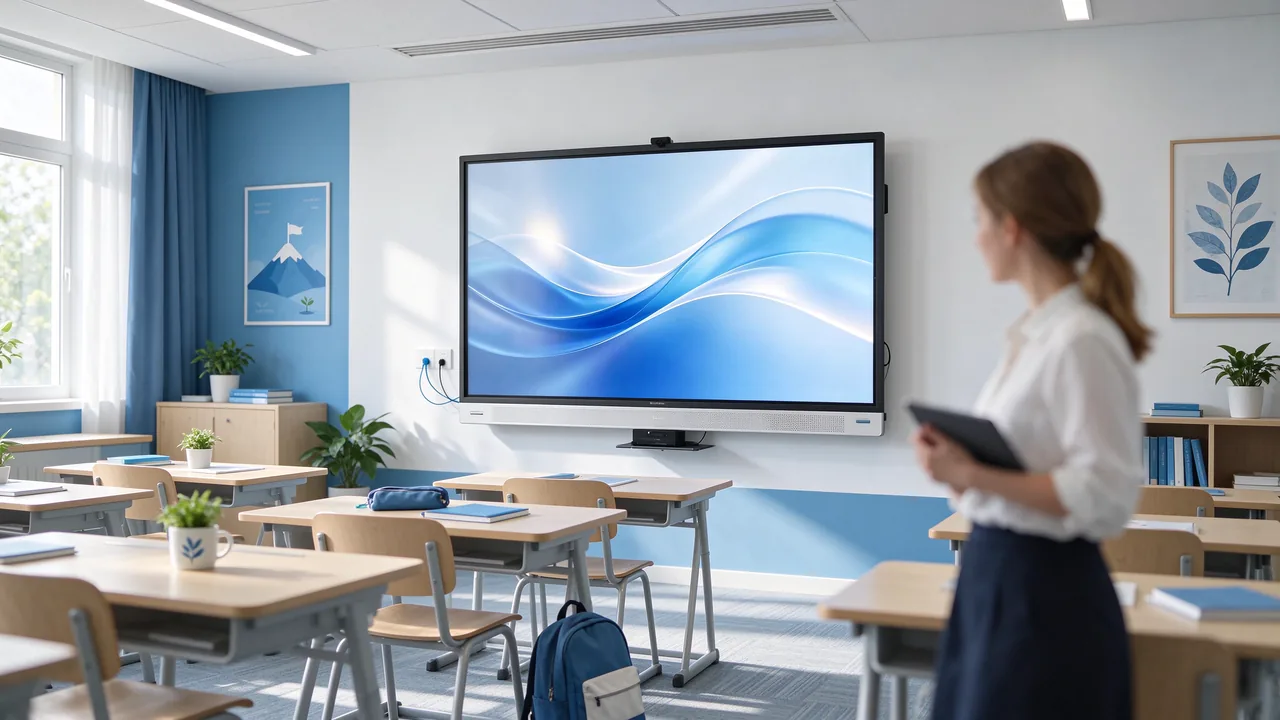
Qtenboard interactive flat panels for education projects and long-term classroom use
What Does a 3-Year Interactive Flat Panel Warranty Mean for Kazakhstan Buyers?
For a school, education group or system integrator, a three-year warranty is more than a statement about product reliability. It defines an agreed period during which eligible product faults can be assessed and handled according to the supplier's warranty terms.
When purchasing an interactive flat panel in Kazakhstan, buyers should evaluate three connected areas: warranty coverage, the process for submitting and resolving claims, and the practical arrangements for technical support and replacement parts.
Qtenboard is a manufacturer of interactive flat panels and education display solutions. Its warranty options can be discussed during project planning, allowing buyers to select an applicable period according to the model, deployment requirements and agreed contract terms.
A three-year option should be explicitly confirmed in the quotation and purchase agreement. It should not be assumed that every Qtenboard model or order automatically includes three years of coverage.
For schools comparing different display configurations, the Qtenboard interactive whiteboard range for education provides a starting point for reviewing products intended for classroom use.
What Does a 3-Year Warranty Cover and Exclude?
The value of a warranty depends on its actual coverage, not just the number of years stated in a quotation. Buyers should confirm which components are covered, how faults are assessed and which situations are excluded before placing a bulk order.
For an interactive whiteboard or smart board, the following component checklist can help procurement teams review the warranty documentation.
| Component or Situation | What Buyers Should Confirm | Nəyə görə vacib |
|---|---|---|
| LCD Paneli | Covered display faults, assessment criteria and applicable exclusions | The display is a major part of the equipment and its repair may affect classroom availability. |
| Touch System | Coverage for eligible touch module or touch-function failures | Touch performance directly affects writing, annotation and interactive teaching. |
| Main-viar | Hardware fault coverage and the repair or replacement procedure | System operation and connected functions may depend on the mainboard. |
| Əvvəl dəstəklər | Covered power-related faults and replacement conditions | Power problems may prevent the panel from operating. |
| Seçimləri | Whether pens, remotes, cables and other accessories have separate coverage terms | Accessories may have different warranty conditions from the main unit. |
| Physical Damage | Exclusions related to impact, improper handling, unauthorized modification or unsuitable installation | Not every equipment failure is necessarily a warranty-covered defect. |
Warranty Coverage Is Different from General Technical Support
A technical support request does not automatically qualify as a warranty claim. Some problems may be related to software settings, external devices, network conditions, operating procedures or installation environments rather than a covered hardware defect.
Qtenboard can provide remote technical guidance to help identify the issue and determine the appropriate next step. Whether a repair or replacement is covered must then be assessed against the applicable warranty policy and project agreement.
Check Exclusions Before Signing the Contract
Procurement teams should pay particular attention to physical damage, unauthorized repairs, improper installation, unsuitable operating conditions and consumable or accessory items where separate terms may apply.
These are areas to verify in the actual warranty documentation, not a substitute for the official policy. The Qtenboard warranty policy should be reviewed alongside the quotation and contract for the selected products.
Important for project buyers: Do not treat a three-year warranty as an automatic promise that every component, accessory, shipping charge and local labor expense is covered. Request written confirmation of the coverage and exclusions applicable to the exact model and order.
How Does the Qtenboard Warranty Claim Process Work?
A clear claim process helps schools and integrators avoid unnecessary delays caused by incomplete fault information or unclear responsibilities. For projects in Kazakhstan, remote diagnosis is an important first step before deciding whether a local check, replacement part or another agreed solution is required.
The following workflow provides a practical framework for submitting and managing a warranty request with Qtenboard. The actual procedure and final resolution remain subject to the applicable warranty terms.

Remote technical assessment and fault diagnosis before warranty resolution
-
Identify the equipment and report the issue.
Record the product model, serial number, purchase information and installation location. Describe when the problem occurred and which functions are affected.
-
Provide supporting evidence.
Submit clear photographs, short videos or other relevant information showing the fault. Include details about connected devices, power conditions or recent configuration changes when relevant.
-
Contact Qtenboard for remote technical assessment.
Qtenboard can use the submitted information to provide remote technical guidance and help narrow down possible causes. Additional diagnostic information may be requested where necessary.
-
Confirm the warranty status and responsibility.
The reported issue is assessed against the product's warranty terms and project agreement. The parties should confirm whether the issue qualifies for warranty handling and what expenses or responsibilities may remain outside the coverage.
-
Agree on the appropriate resolution.
Depending on the assessment and contractual terms, the next step may involve further troubleshooting, a replacement part, repair arrangements or another agreed solution.
-
Complete the local work and retain the service record.
Where local replacement or installation is needed, the customer or its local service provider arranges the work. The school or integrator should record the repair details and update the equipment history.
Information to Prepare Before Submitting a Claim
| Required Information | Recommended Details |
|---|---|
| Məhsulun identifikasiyası | Model, serial number and relevant purchase or delivery records |
| Fault description | Symptoms, affected functions and when the issue first appeared |
| Visual evidence | Photographs or videos showing the problem clearly |
| Operating conditions | Power supply, connected equipment, system configuration and installation environment |
| Project information | School or site name, installation location and relevant order details |
For a multi-school deployment, the integrator or project administrator should collect this information in a consistent format. It makes it easier to identify affected units, review recurring faults and coordinate technical support with the factory.
How Are Spare Parts and Repairs Managed in Kazakhstan?
One of the most important considerations for Kazakhstan buyers is the distinction between factory-level technical support and local on-site maintenance. A supplier may provide technical diagnosis and replacement components without operating its own repair centers in every destination region.
Qtenboard's support arrangement for Kazakhstan projects is based on factory technical assistance, remote guidance and spare-parts supply from China. Local installation and first-line repair work are arranged by the customer or its local service provider.
Qtenboard's Factory-Level Support
When a customer reports a product issue, Qtenboard can provide technical documentation, troubleshooting guidance and remote support to help identify the likely cause. If a replacement component is required and the case is handled under the applicable agreement, the relevant parts can be arranged for shipment from China.
This factory-to-customer arrangement gives the local project team access to product-related technical information while keeping the responsibility for local on-site work clearly defined.
Local Responsibilities in Kazakhstan
The customer or its designated local service provider is responsible for arranging local installation and first-line maintenance. This may include inspecting the equipment, removing a component, installing an approved replacement part and confirming that the panel has returned to normal operation.
Before deployment, schools and integrators should agree on who will provide these local services, how technicians will receive installation instructions and how completed work will be reported to Qtenboard.
Spare Parts and Cross-Border Logistics
Replacement parts are arranged for shipment from China. Buyers should confirm the applicable shipping method, transportation costs, customs responsibilities, local handling expenses and delivery arrangements for each project.
Actual delivery time depends on the part, shipment arrangements, customs procedures and destination. Qtenboard should not be assumed to provide a local spare-parts warehouse or a fixed delivery time in every Kazakhstan region.
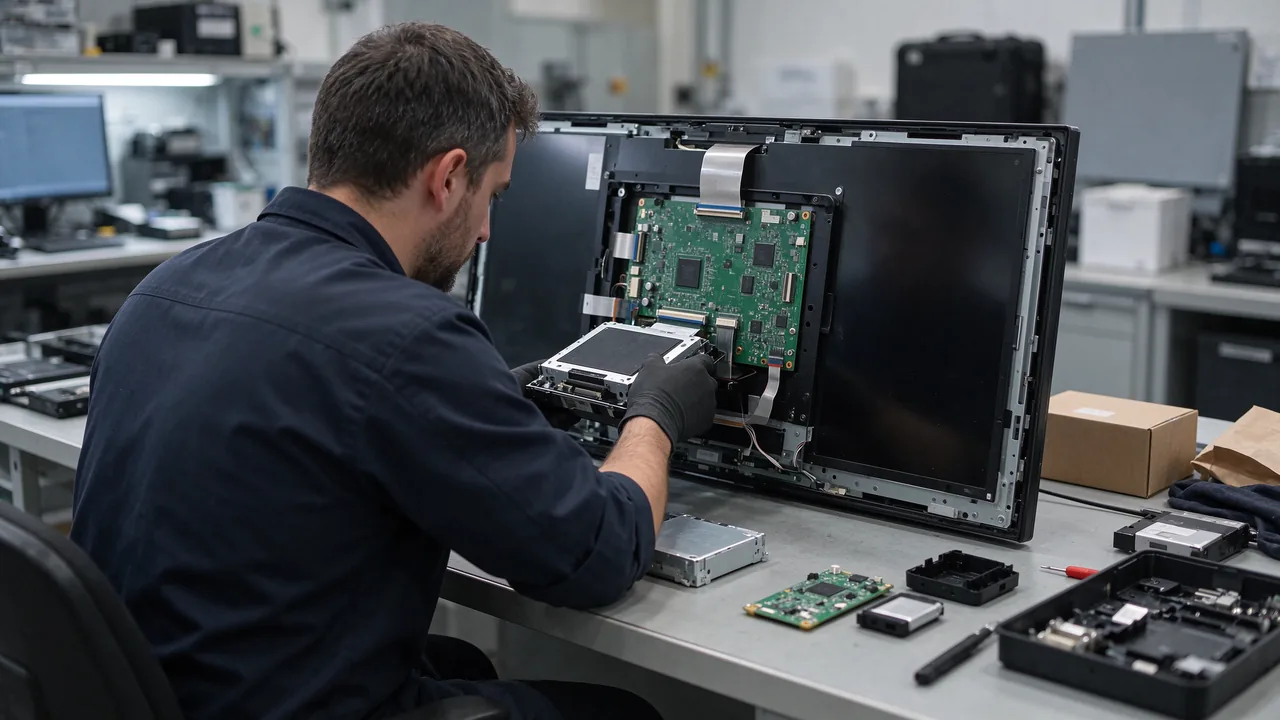
Replacement components supplied from China and handled through local maintenance arrangements
| Support Activity | Qtenboard et | Customer or Local Service Provider |
|---|---|---|
| Product technical documentation | Provides applicable product information and guidance | Uses the documentation for local deployment and maintenance |
| Remote troubleshooting | Provides remote technical support | Supplies fault information and assists with diagnostic checks |
| Warranty assessment | Assesses the reported issue against applicable warranty terms | Provides purchase, installation and fault records |
| Replacement parts | Arranges applicable parts for shipment from China | Coordinates receipt and local handling according to the agreement |
| Local installation and first-line repair | Provides relevant technical guidance where applicable | Arranges local technicians and on-site work |
| Repair records | Reviews relevant technical information when required | Records local work and updates equipment history |
This division of responsibilities is particularly important for projects involving multiple cities or school locations. A clear local service arrangement helps buyers understand what the factory can support remotely and what must be organized at the destination.
What Should Schools and Integrators Include in a Warranty Agreement?
A warranty statement in a product brochure is not a substitute for a clearly defined contractual agreement. For a school, education group or public-sector project, the warranty terms should be documented before the purchase order is finalized.
Qtenboard recommends that buyers confirm the following points with the supplier and include the applicable details in the quotation, purchase agreement or related project documents.
| Contract Item | Questions to Confirm | Procurement Purpose |
|---|---|---|
| Vaxt | Is the selected product covered by a one-, two- or three-year option? | Establishes the agreed coverage period. |
| Warranty start date | Does coverage begin at shipment, delivery, acceptance or another agreed milestone? | Prevents uncertainty about the expiry date. |
| Covered components | Which components and fault types are included? | Defines the scope of eligible claims. |
| Exclusions | Which damage, usage conditions or accessories are excluded? | Reduces disputes over warranty eligibility. |
| Claim procedure | What documents and diagnostic evidence must be submitted? | Creates a consistent reporting process. |
| Response arrangements | What acknowledgement, diagnostic and escalation arrangements are agreed? | Sets measurable communication expectations. |
| Replacement parts | Who supplies, ships and receives replacement components? | Clarifies the spare-parts process. |
| Local labor | Who pays for removal, installation and first-line repair? | Separates factory responsibilities from local service costs. |
| Shipping and customs | Who is responsible for applicable transportation and import-related expenses? | Prevents unexpected cross-border costs. |
Should a Project Include an SLA?
For larger education deployments, a service-level agreement (SLA) can help define how technical requests are acknowledged, prioritized, escalated and followed up. It can also specify the information required from the local project team before remote diagnosis begins.
However, an SLA should contain only response and resolution commitments that both parties have reviewed and accepted. Acknowledgement time, diagnostic time, replacement-part dispatch and final repair time are different stages and should not be treated as one guaranteed response period.
For Qtenboard projects, buyers should discuss any required service targets during quotation and contract negotiations. Regional response times should not be assumed unless a specific arrangement has been confirmed in writing.
How Can Schools Manage Warranty Records Across Multiple Locations?
For a single classroom, keeping a purchase record and serial number may be sufficient. For a project covering several schools or multiple regions in Kazakhstan, a more structured equipment register makes warranty administration and maintenance easier.
Qtenboard recommends that project owners and integrators maintain a centralized record containing the following information:
- Equipment identification: Product model, serial number and configuration.
- Deployment information: School name, city, building and classroom location.
- Purchase records: Purchase order, invoice, delivery record and acceptance documentation.
- Warranty details: Contracted warranty period, agreed start date and expiry date.
- Service history: Fault reports, diagnostic findings, claim decisions and repair records.
- Parts history: Replacement component details, shipment records and local installation status.
For integrators, this register also helps distinguish recurring product issues from problems associated with installation conditions, connected devices or local operating practices.
When a project uses standardized configurations across multiple schools, the same records can support spare-parts planning, technical training and future procurement decisions. The Qtenboard education solutions page provides additional context for education display deployment and project planning.
What Happens After the Three-Year Warranty Expires?
The end of a warranty period does not automatically mean that an interactive flat panel must be replaced. Schools can continue using equipment when its condition, performance and maintenance requirements remain suitable for their teaching needs.
Before the warranty expires, project administrators should review equipment condition, repair history, recurring faults and the availability of relevant replacement parts. They can then decide whether to continue operating the panels, arrange additional maintenance or plan a phased replacement.
This is also where warranty planning connects with long-term ownership costs. Buyers should consider not only the first three years of coverage, but also maintenance and operating expenses over the wider equipment lifecycle.
For a more complete financial comparison, see the Qtenboard interactive whiteboard buying guide and evaluate warranty arrangements alongside the equipment's expected operating and maintenance costs.
Frequently Asked Questions About Interactive Flat Panel Warranties
Does Qtenboard Offer a Three-Year Warranty on Interactive Flat Panels?
Qtenboard supports one-to-three-year warranty options, depending on the product model, project requirements and contractual agreement. Buyers who require three years of coverage should confirm the selected option and its terms in the quotation and purchase contract.
What Is Included in a Three-Year Interactive Flat Panel Warranty?
Coverage depends on the applicable product warranty policy and contract. Buyers should confirm eligible components, covered faults, exclusions, claim procedures and any separate conditions for accessories, shipping or local labor.
Can Qtenboard Provide Remote Technical Support in Kazakhstan?
Yes. Qtenboard can provide remote technical support, product information and troubleshooting guidance. Local installation and first-line maintenance are arranged by the customer or its designated local service provider.
How Are Replacement Parts Supplied to Kazakhstan?
Applicable replacement parts are arranged for shipment from China. The shipping method, delivery arrangements, transportation expenses and local handling responsibilities should be confirmed according to the project and warranty agreement.
Who Handles Local Installation and Repairs?
The customer or its local service provider arranges local installation and first-line repair work. Qtenboard provides relevant technical documentation and remote guidance to support the agreed troubleshooting and replacement process.
Discuss Your Interactive Flat Panel Warranty Requirements with Qtenboard
For education projects in Kazakhstan, Qtenboard can discuss suitable interactive flat panel configurations and one-to-three-year warranty options according to the selected models and project requirements.
When requesting a quotation, provide the expected equipment quantity, product sizes, deployment locations, required warranty period and local maintenance arrangements. This allows the warranty scope, spare-parts process and technical support responsibilities to be discussed before the order is confirmed.
Explore Qtenboard products, education solutions and project support:
