 vie
 EN
 spa
 pt
 th
 est
 lav
 aze
 ukr
 bel
 ru
Over-specifying the deployment
Paying private-mold pricing for a unit that will spend its life in a standard guest room. GM01 covers roughly 90% of the functional requirement at a materially lower unit cost.
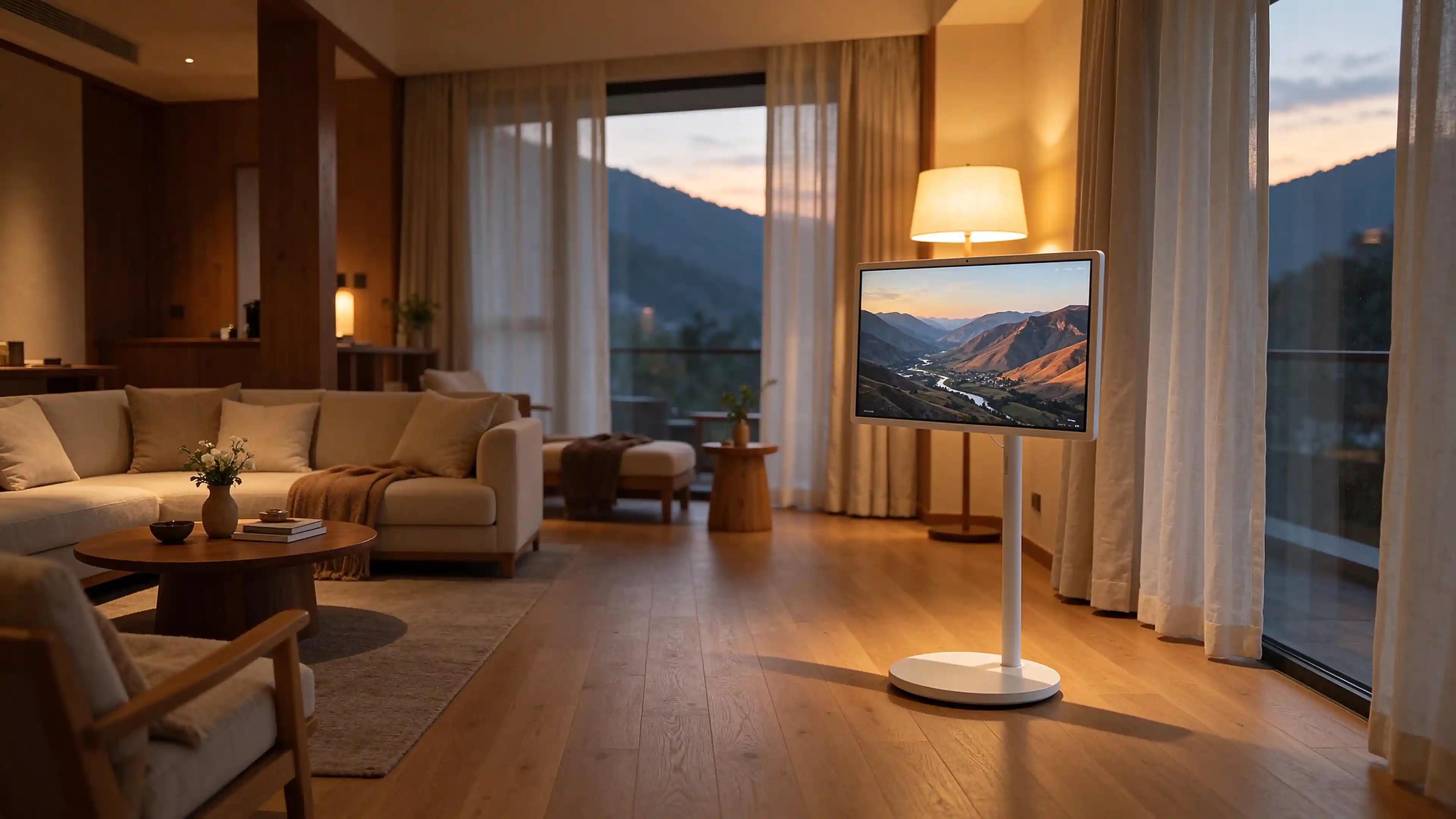
One battery-powered screen from 21.5″ to 43″ that rolls from a hotel suite to a hospital ward, a retail floor and an exhibition booth — on a rotating stand, running open Android, managed by your own CMS. Built for distributors, integrators and brand owners who need a single platform across several deployments.
A movable display replaces a wall-mounted TV, a digital poster and a meeting-room screen with one unit that tilts, rotates and rolls. The project almost never fails on the panel — it fails on three decisions made quietly at the quotation stage.
Paying private-mold pricing for a unit that will spend its life in a standard guest room. GM01 covers roughly 90% of the functional requirement at a materially lower unit cost.
A budget housing in a suite or a flagship showroom reads as a downgrade the moment the client stands next to it. GM02 exists for placements where the enclosure is part of the room.
A base-integrated battery keeps the centre of gravity low on carpet and uneven floors. A rear-mounted battery cuts weight and cost but changes how stable the unit feels when moved.
Consumer Android builds block third-party APKs. If the client's CMS cannot be installed at the factory, 200 units arrive and the integration starts on site — at your cost.
All three series share one hardware and software platform. These are not upgrade options; they are the baseline that separates a commercial portable display from consumer-grade units and low-cost marketplace copies.
The commercial build accepts third-party APKs, remote CMS management, bulk device-status monitoring and OTA system updates. A hotel group can push a menu change to 200 rooms from one dashboard; a retail chain can update campaign content without sending anyone to site.
Consumer portable TVs optimise for movie bass. These units optimise for speech intelligibility in high ambient noise — mall floors, hospital corridors, exhibition halls — because that is where the commercial use cases actually sit.
Applied as standard, not sold as an upgrade. In bright retail lighting or beside a window, an untreated panel becomes unreadable for point-of-sale, wayfinding and consultation use.
Every unit runs continuously from an AC adapter, so a hotel room or retail counter does not depend on battery. The battery is what enables the hybrid fixed-plus-mobile model most projects end up deploying.
Hardware detail, port layout and panel data for the volume model sit on the 27-inch rotatable touch model page.
GM01, GM02 and GM03 are not a good-better-best ladder. Each is engineered for a different commercial objective. Choosing by "which one is more advanced" is the wrong frame — choose by the deployment you are quoting into.
For first-time brand entrants, distributors testing demand and corporate gift channels. The battery sits in the base, which keeps the unit stable on carpeted hotel floors and uneven exhibition surfaces, and the rotating stand is reinforced for high-cycle commercial use. Staff can demo it without training.
The right specification when the priority is moving 500 units at a healthy margin — not when the product has to justify a premium placement in a flagship store.
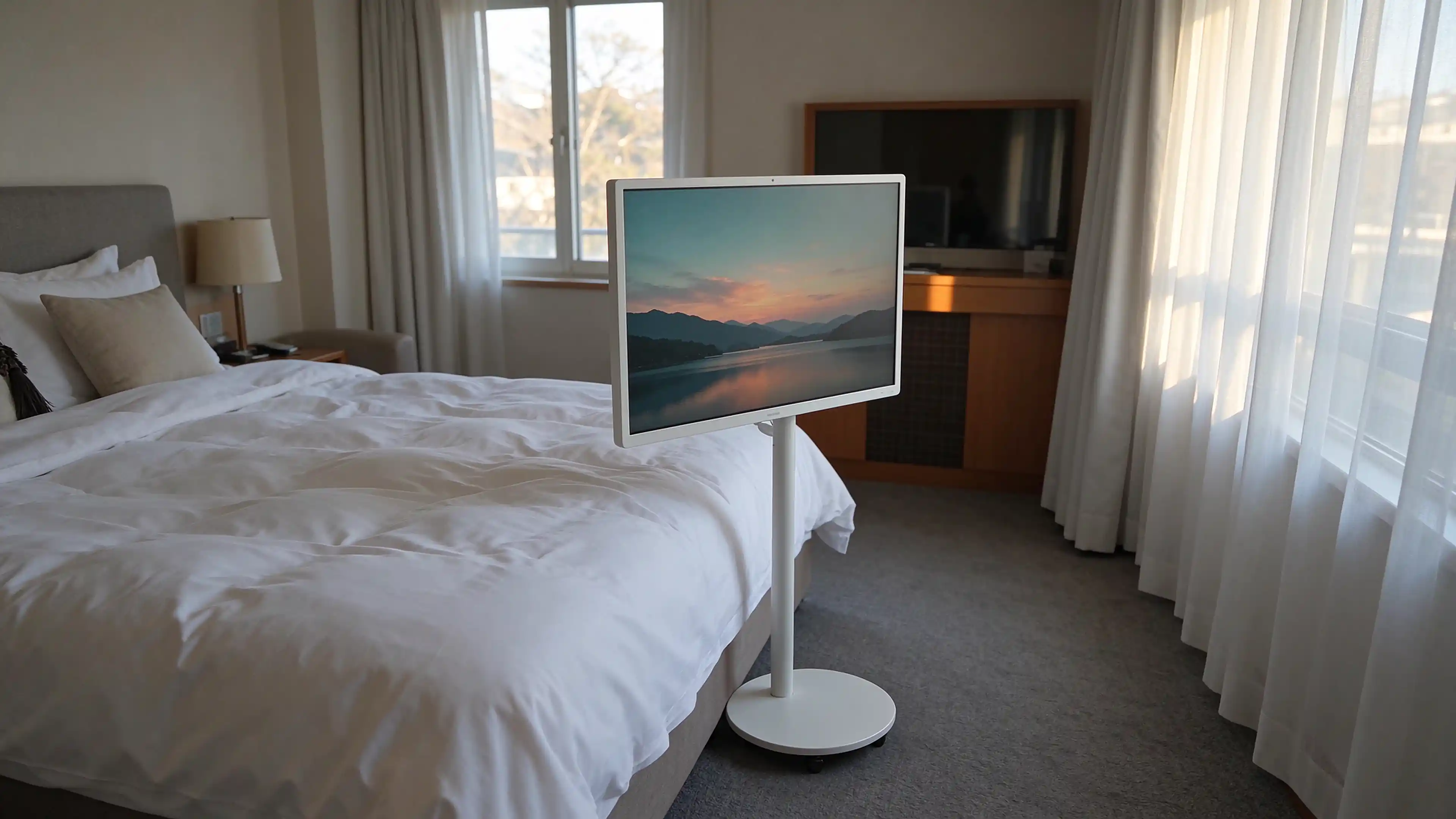
Exclusive industrial design that no public-mold product can match, with a sleeker body, higher audio output for lobby and suite environments and deeper firmware tuning that reads as roughly 30% smoother in daily operation.
Specify GM02 when the screen is part of the room's aesthetic rather than an appliance in the corner. Buyers who started on GM01 for hotel rooms and later upgraded report noticeably better guest feedback at review stage.
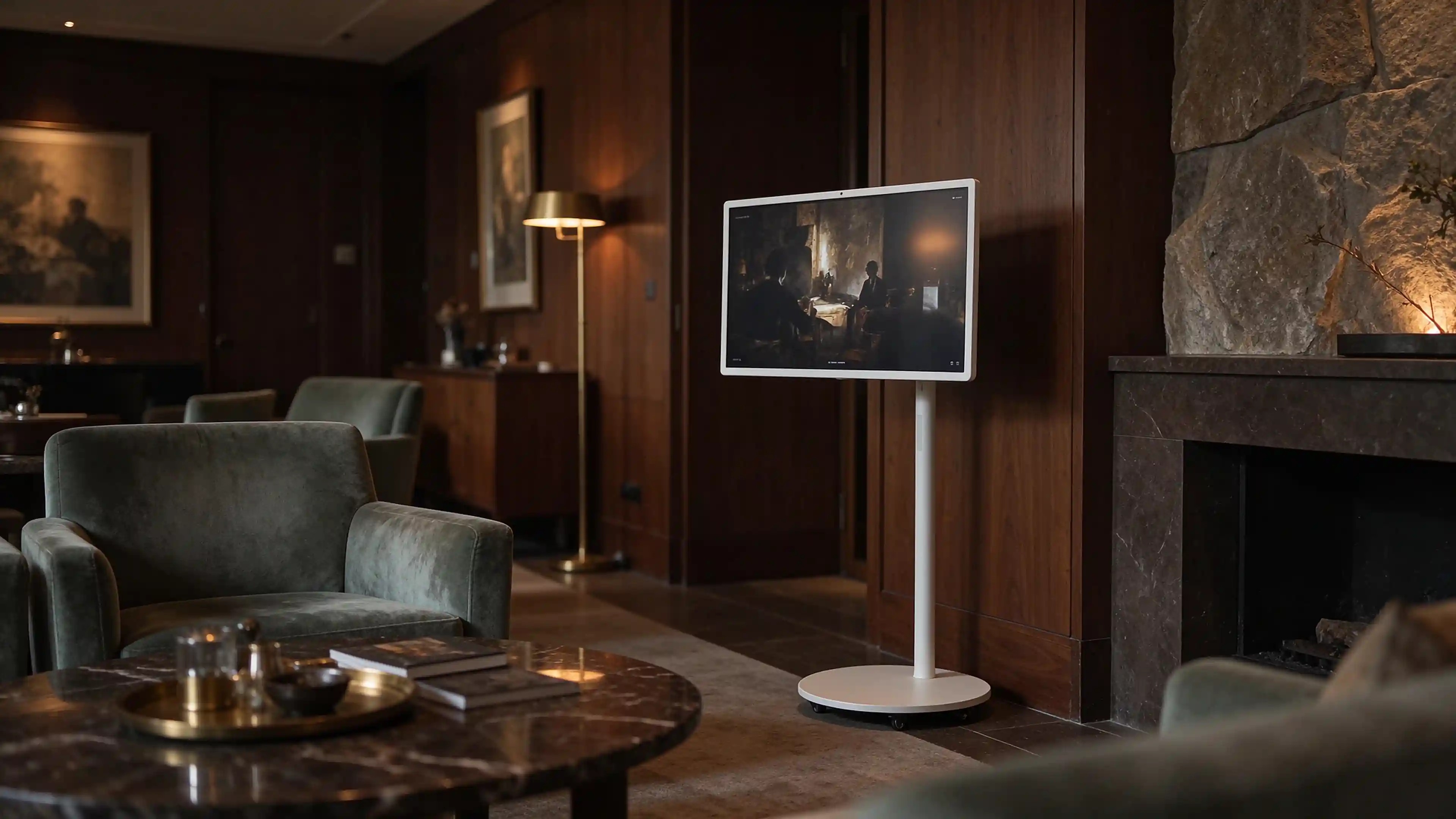
The battery moves behind the screen rather than into the base. That simplifies the chassis, removes decorative components that do not affect the primary use case and cuts per-unit cost at scale, while image clarity and stand stability stay level with GM01.
For a 1,000-unit retail deployment where every screen stands against a wall or shelf, the battery-position trade-off is irrelevant and the saving is real.
| Tiêu chuẩn | GM01 — baseline | GM02 — high-end | GM03 — cost-optimised |
|---|---|---|---|
| Thiết kế công nghiệp | Public mold, mainstream form | Khuôn riêng độc quyền | Public mold, simplified |
| Vị trí Pin | Base-integrated | Base-integrated, cleaner aesthetic | Behind the screen |
| Hệ thống âm thanh | Cấp độ rõ ràng bằng giọng nói thương mại | Tăng cường-to hơn, che phủ rộng hơn | Standard, meets basic voice needs |
| Camera | 13 MP standard | 13 MP with optimised ISP tuning | 13 MP standard |
| Privacy cover | Bao gồm | Bao gồm | Bao gồm |
| Anti-glare panel | Tiêu chuẩn | Tiêu chuẩn | Tiêu chuẩn |
| System tuning | Xây Dựng Thương mại tiêu chuẩn | In-depth firmware optimisation | Xây Dựng Thương mại tiêu chuẩn |
| MOQ, custom branding | 50 chiếc | 300 chiếc (Khuôn riêng) | 50 chiếc |
| Vị trí lý tưởng | Standard rooms, retail, gift channels | Luxury suites, flagship showrooms, lounges | Retail chains, government and enterprise bulk |
| OEM / ODM scope | Giao diện người dùng, logo, bao bì, ứng dụng | Full, including hardware design | Giao diện người dùng, logo, bao bì, ứng dụng |
Customisation splits into two tiers: software and packaging changes that apply from 50 units, and hardware changes that require the GM02 private-mold path from 300. Knowing which is which prevents misaligned expectations at the quotation stage.
Boot animation, launcher skin, branded wallpaper, startup logo and colour scheme. Buyer-specified pre-installed apps, including proprietary apps and CMS agents. Settings menus can be locked down for hotel or hospital environments.
Outer carton print, foam insert design, accessory bundle composition, retail-ready SKU labels for distributors who shelf-stack or drop-ship.
Screen size, touch or non-touch, 2K or 4K panel, camera enable or disable, port configuration. Changes that need new tooling — enclosure shape, custom port placement — apply to GM02 only and require the 300-unit MOQ.
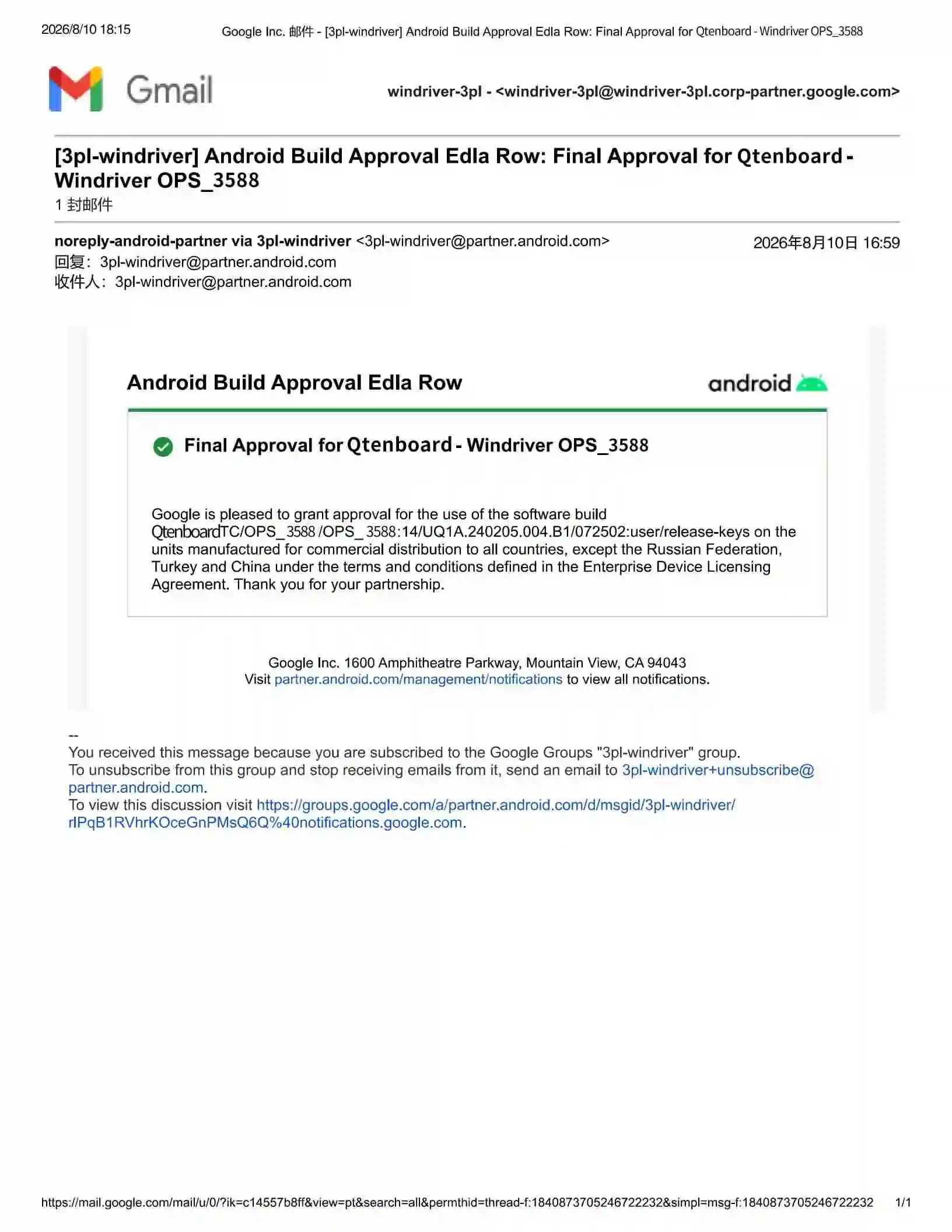
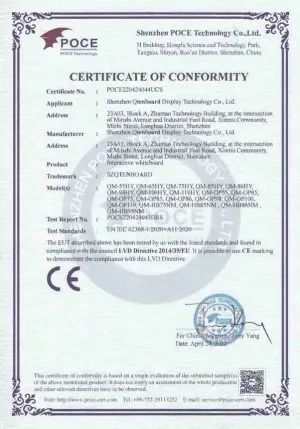
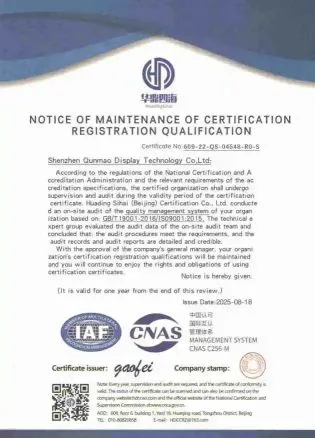
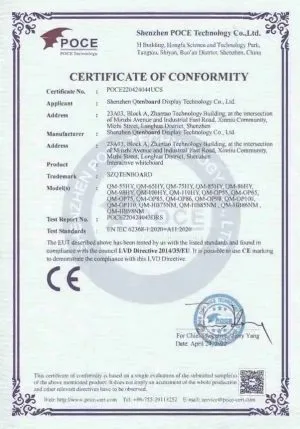
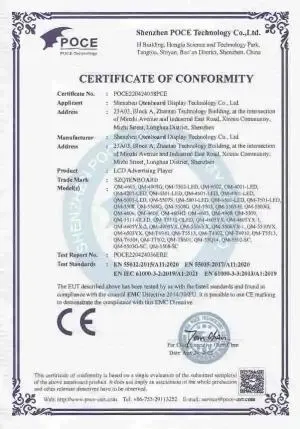
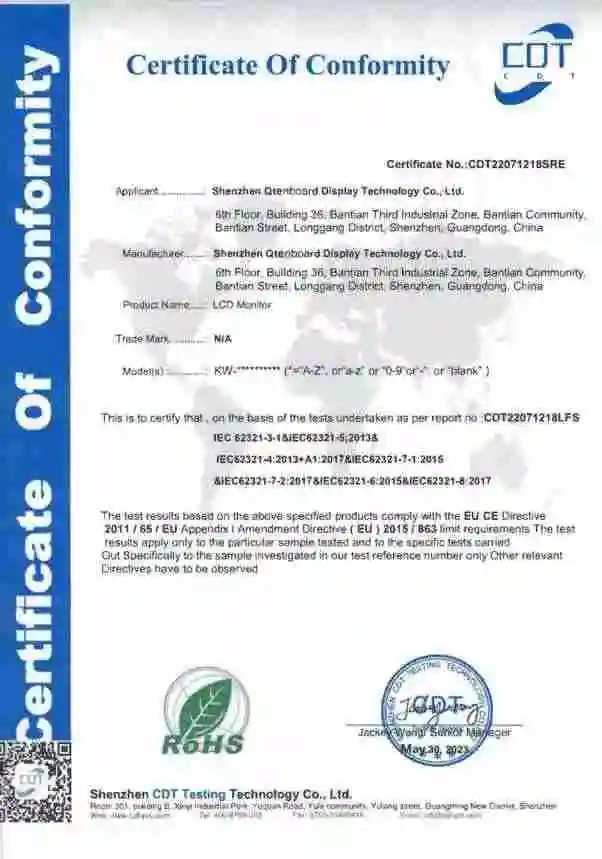
CE and FCC as standard. UKCA, BIS, SASO, EAC and NOM on request. Declaration of Conformity and test reports are provided to OEM buyers for their own import submissions.
Two documents decide most of this before a sample is even built: the customisation scope matrix and the target-market certification list. Both are covered in the OEM / ODM process and in the 2026 product catalogue.
For brand owners who need a product no other buyer can source — where the enclosure itself has to be exclusive — GM02 is the only path in this range.
The scenarios below are drawn from active deployments. Each carries a recommended series, because the same use case with the wrong tier becomes a service call in month three.
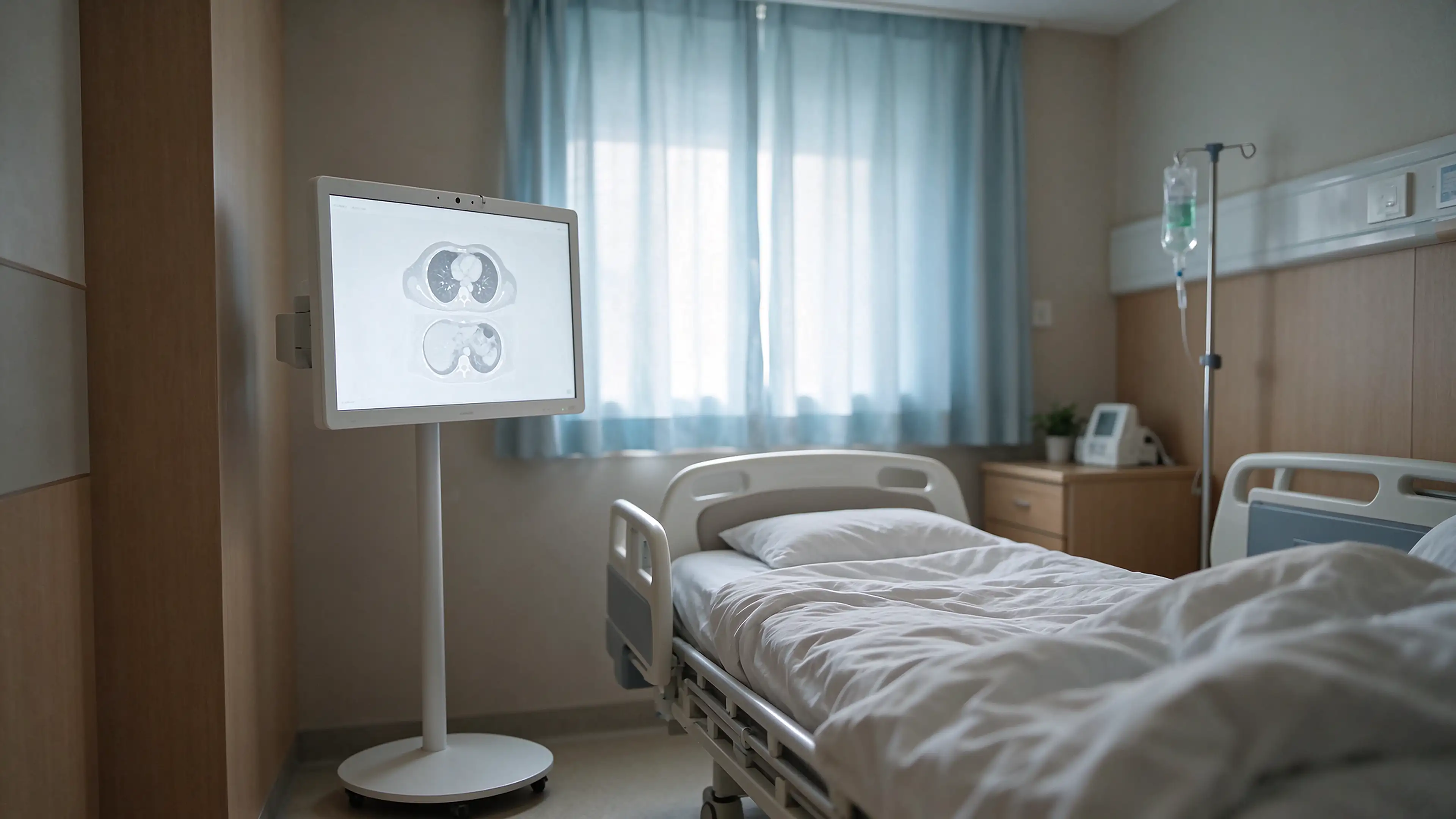
Bedside teleconsultation, patient education and ward case review. The 13 MP camera and the physical privacy cover are the two line items healthcare procurement writes into the spec, which is why both are standard rather than optional.
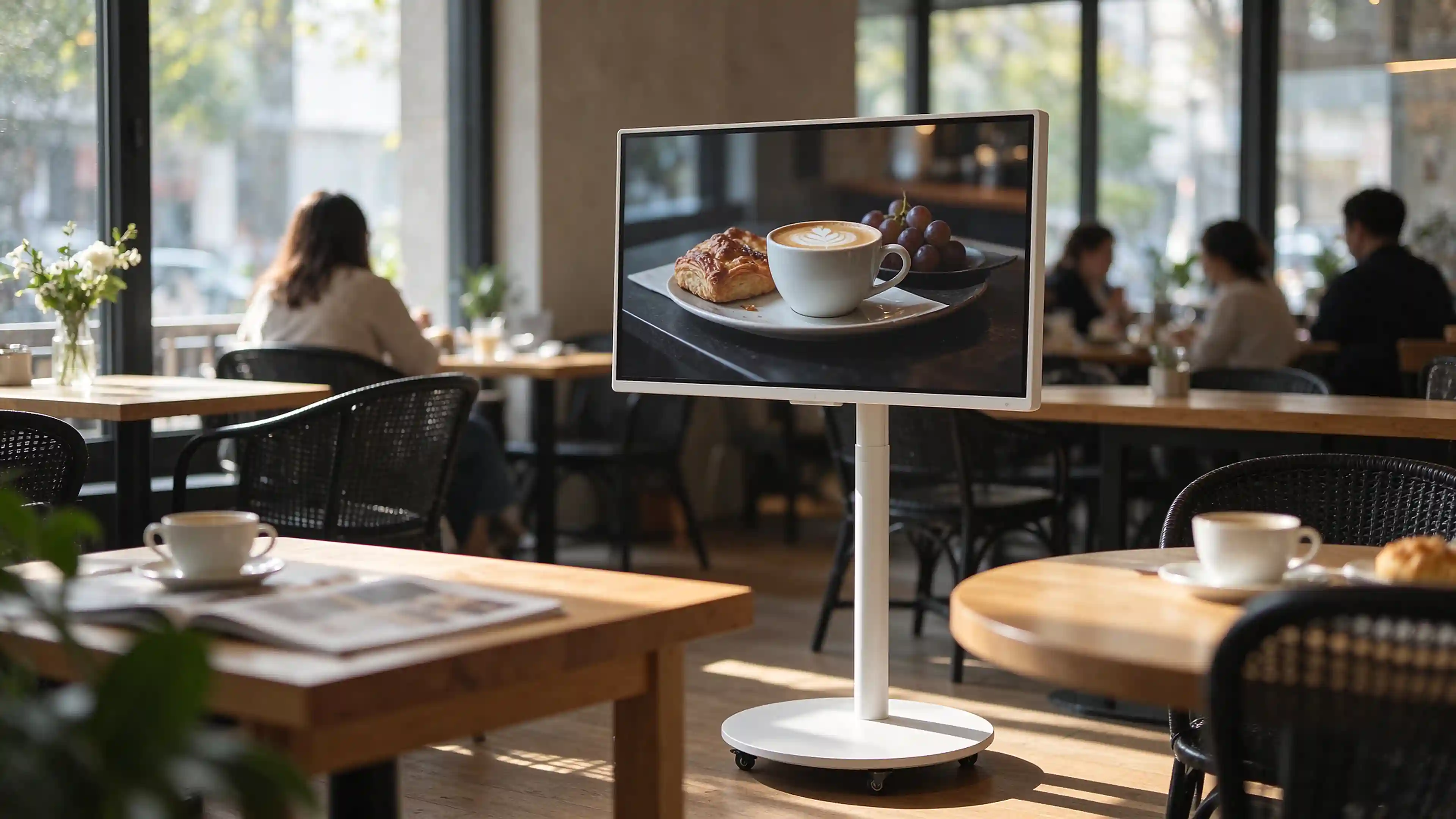
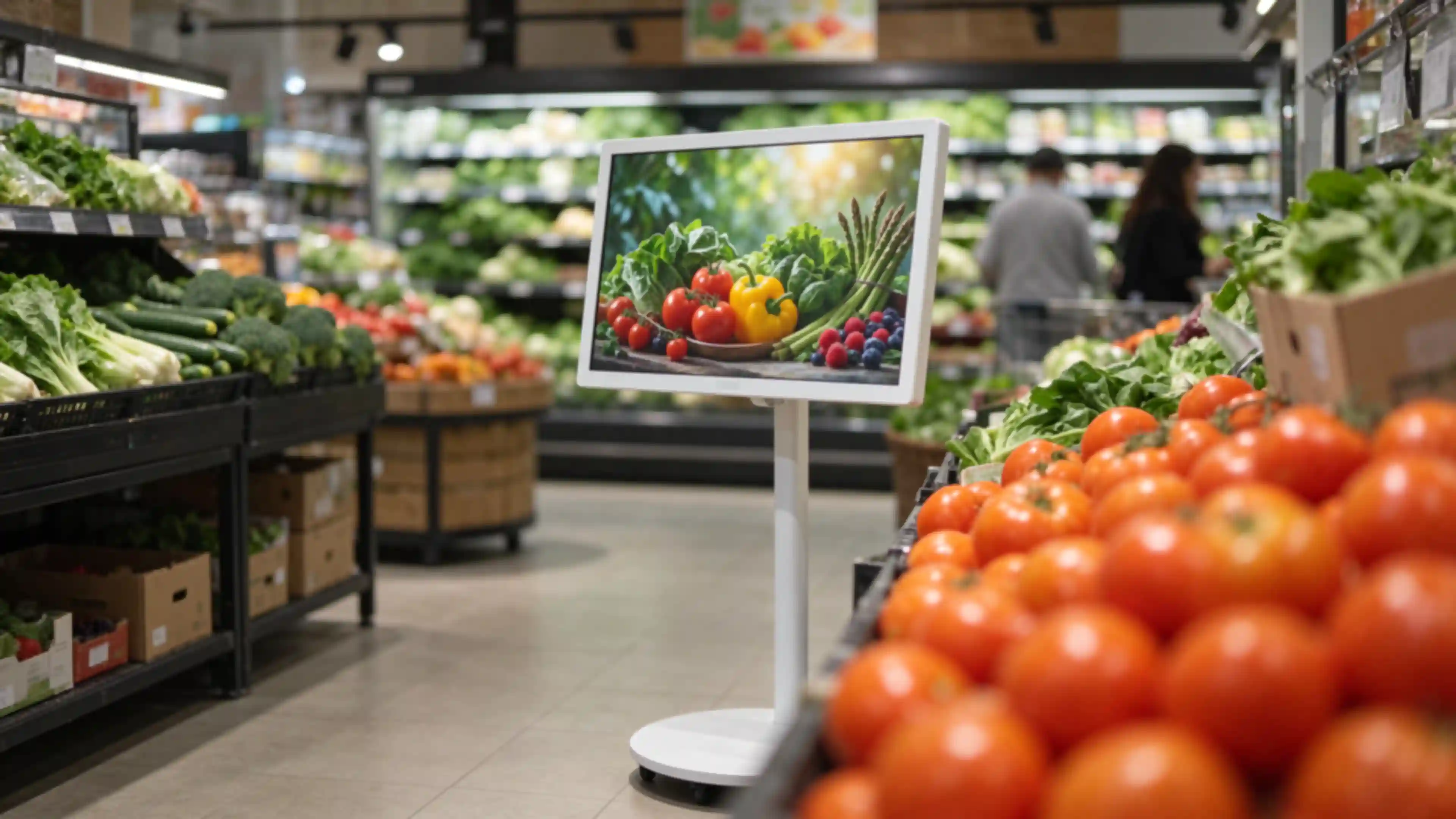
Menu boards that move between table groups, end-cap promotion screens, touch lookup for self-service. In a lit store, anti-glare decides whether the screen is readable at noon — brightness figures alone do not.
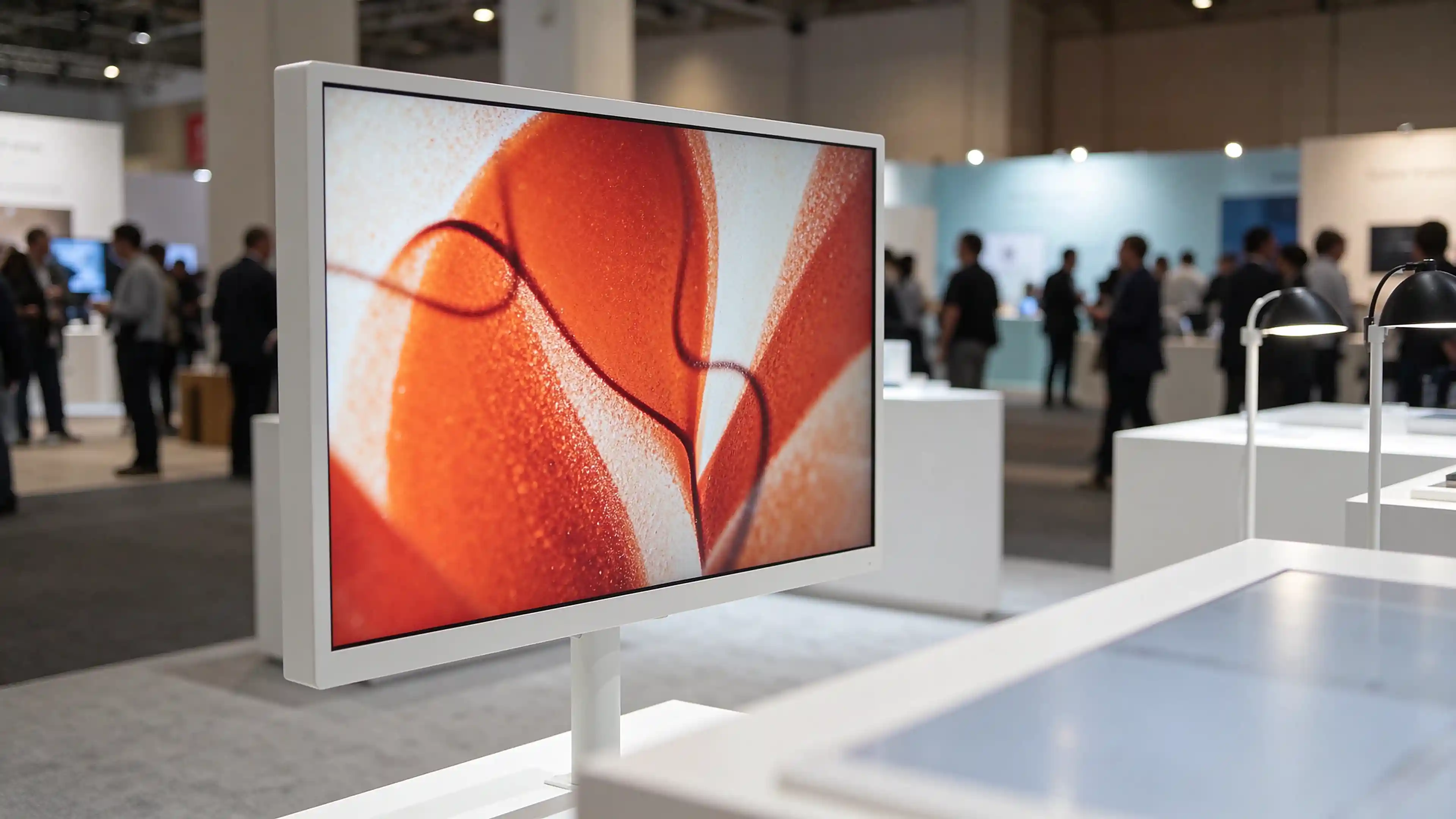
Rapid deploy and rapid pack-down, with battery operation for halls where power access is awkward. The unit follows the sales conversation around the booth instead of anchoring it to one wall.
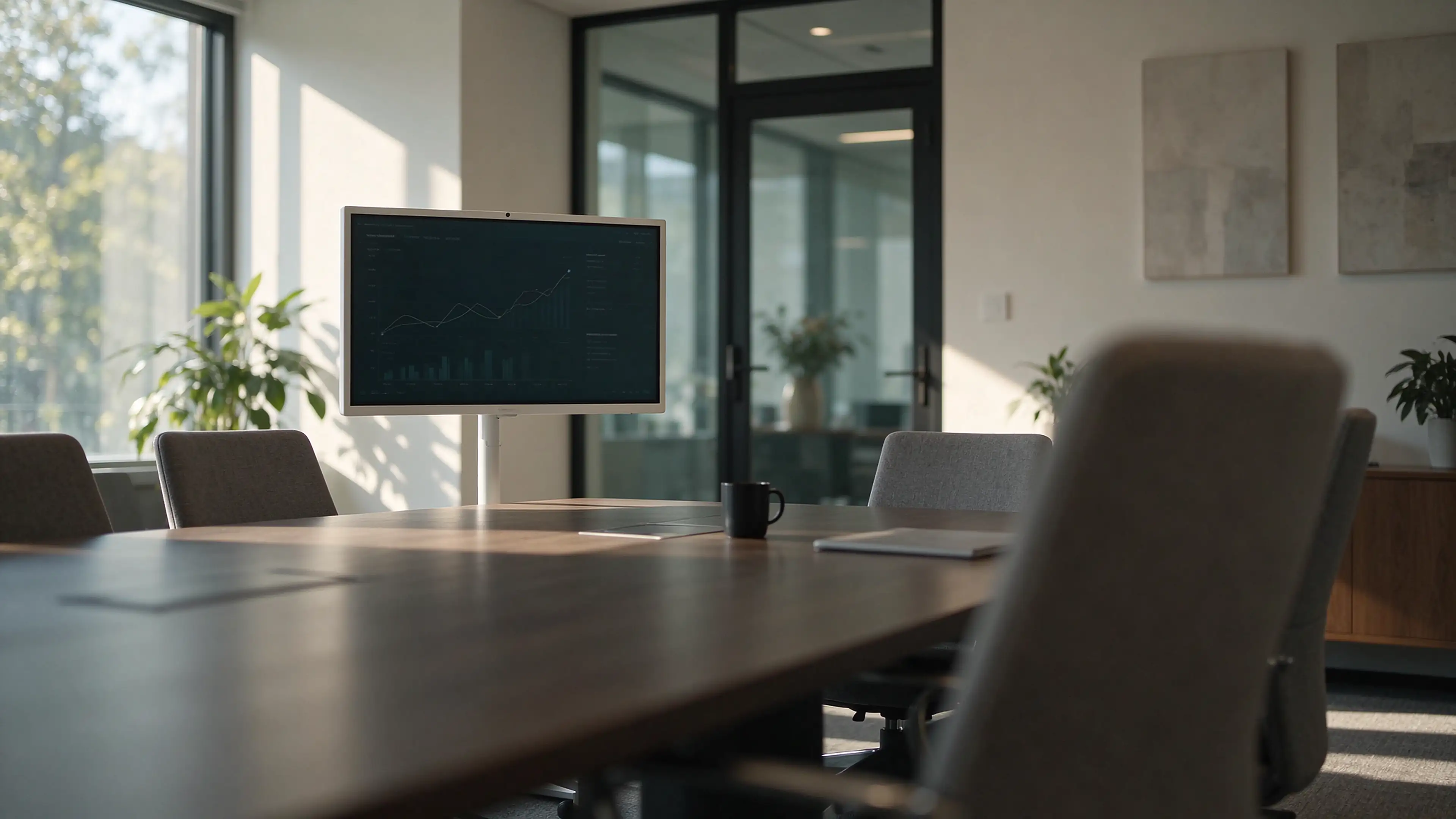
Meeting rooms that change week to week, reception wayfinding, visitor information and branded executive gifts. IT teams value the CMS integration; procurement values the fact that one SKU covers all of it.
Most buyers arrive here after searching for StanbyME, the LG lifestyle screen that created the movable-screen category. It is worth being clear about where that product stops and where a commercial OEM platform starts.
| Qtenboard GM series | LG StanbyME (consumer retail) | Marketplace portable units | |
|---|---|---|---|
| Channel and model | B2B factory, OEM / ODM | Consumer retail, single unit | Reseller, unspecified build |
| Kích thước màn hình | 21.5″–43″, five sizes | 27″ (32″ on the 2 Max) | Usually one size |
| Hệ điều hành | Open Android, APK + CMS agent | webOS, closed app store | Android, often locked |
| Battery runtime | 4–8 h at 50% brightness | Up to 3–4 h | Varies, rarely documented |
| Camera | 13 MP + privacy cover | No camera | 5 MP or add-on |
| Customisation | UI, packaging, hardware from 50 units | Không có | Logo sticker at best |
| Certification file | CE / FCC, regional on request | Consumer retail compliance | Often undocumented |
| Warranty for bulk | 1 year, 2 years at 100+ units | Consumer warranty | Seller-dependent |
The two products are not substitutes. If you need one screen for a showroom, buy the consumer product — it is a finished lifestyle device. If you need 50 to 1,000 units that carry your logo, boot with your animation, load your CMS and ship with an import-ready certification file, that is a different category, and this range is built for it. Third-party specifications are quoted from publicly published 2026 data and can change; verify on the manufacturer's page before specifying.
Straight answers on timeline, integration, certification and field support — the four areas where quotations usually stall.
A portable smart display has its own Android system, battery, speakers and stand, so it plays content on its own. A portable monitor is a panel that needs a laptop or phone to drive it. The distinction matters at procurement: a monitor cannot run a CMS, schedule content or report device status, which is exactly what a hotel or retail deployment needs.
StanbyME is a consumer lifestyle screen sold through retail: 27 inches, webOS, a few hours of battery, no camera and no bulk customisation. This range is a commercial OEM platform: 21.5″–43″, open Android with CMS agents, 13 MP camera with a privacy cover, 4–8 hours of runtime and custom branding from 50 units. One is a finished consumer product; the other is a platform you specify into a project.
Five standard sizes between 21.5″ and 43″, with 27″ and 32″ carrying most of the commercial volume. Resolution is specified by size and viewing distance — 2K is usually sufficient at 21.5″–27″, while 4K is specified at 32″ and above, or where the screen is read close up for consultation and wayfinding.
6–8 hours at 21.5″–27″ and 4–6 hours at 32″–43″, measured at 50% brightness. For a fixed installation — hotel room, retail counter, ward — the unit runs continuously from the AC adapter, so battery life only matters during the hours it is actually being moved.
Yes. The commercial build accepts third-party APKs, so any CMS with an Android client — including proprietary enterprise platforms — can be pre-installed at the factory, registered to your platform and tested against your content format before shipment. If your platform has a specific Android version requirement, confirm it with the version number at quotation stage.
GM01 and GM03 with basic branding — UI, logo, packaging — start at 50 units with 20–30 working days from PO confirmation. GM02 private mold or hardware-level customisation starts at 300 units with 45–60 working days. Qualified buyers can receive sample units in 7–10 working days.
CE and FCC are standard. UKCA, BIS, SASO, EAC and NOM are available on request if you declare the target markets at quotation stage. OEM buyers receive the Declaration of Conformity, test reports and a technical file summary for their own import and regulatory submissions.
Standard warranty is one year; bulk orders of 100+ units extend to two years with a dedicated after-sales contact rather than a general queue. Field failures are handled by OTA remote diagnosis first, then component replacement, then unit swap. Replacement stock is held for active bulk orders, and regional stock can be arranged at contract stage for multi-country deployments.
On GM01 and GM03: front bezel logo, rear panel branding, packaging, boot animation and launcher UI — the branding is yours, the shell geometry is shared. On GM02 the private mold makes the enclosure, bezel profile and stand exclusive to your order, so no other buyer sources the same physical product.
Specifications, live deployments and the customisation process — each on its own page, so you only read what your project actually needs.
Every model, size and configuration currently in production.
Open range →Full hardware detail: panel, ports, rotation, battery and stand.
View model →Hotel, healthcare, retail and event projects already in the field.
See cases →How to size, specify and budget a movable display programme.
Read guides →Rotation, battery changeover and production line footage.
Watch videos →From brief to tooling to certification, step by step.
See process →Send the room type, floor surface, quantity and target market. You get a tier recommendation, MOQ, lead time and certification list in one reply, usually within one working day.
Deployment scenes on this page are illustrative. Installation photography from live projects and product renders in any size are available on request. Specifications subject to change without notice.
Thành lập
Khu vực sản xuất
Nhân viên
Các Quốc Gia đã bán