Shenzhen, 2027 — the B2B procurement standard for meeting solutions is shifting from "screen size and touch points" to a different set of questions: Can the system pass an enterprise IT security review? Will it interoperate with room infrastructure that is already deployed? Will the experience hold up across a 20-room rollout, not just a showroom? As an interactive meeting solutions factory và double screen smart podium with mobility supplier — and a China source factory for LCD video walls — Qtenboard's engineering scope covers interactive meeting displays, smart podiums, and OEM/ODM customization. This article explains how that shift changes what integrators and IT buyers should verify from a manufacturer before committing to a purchase.
In 2027, the buying center for meeting room equipment has moved. The AV manager still has strong opinions, but the IT department now holds the signature. IT runs security reviews, manages device lifecycles, and answers for consistency across dozens of rooms. That is why factory capabilities — documentation, engineering depth, production control — now matter more than the panel spec sheet. The purchase is no longer "buy a screen"; it is "deploy a system that must survive enterprise scrutiny."
In an AVIXA 2024 survey, 58% of IT leaders said they would delay hardware deployment until suppliers prove ISO 27001-certified manufacturing and a secure boot chain. Enterprises increasingly require Trusted Platform Modules and automated patch tooling — roughly $100–200 more per endpoint — but the cost is absorbed because the alternative is GDPR exposure, failed vendor reviews, and stalled projects.
Industry procurement guides now recommend starting with room-level use-case mapping — huddle spaces, standard meeting rooms, training environments — before defining interoperability and security requirements, and only then selecting hardware. Evaluation should include lifecycle cost, remote monitoring, firmware governance, installation support, and replacement planning.
The consequence for suppliers is direct: a factory that runs controlled production lines and standardized firmware can prove that "room 1 and room 20 feel identical." A reseller that hand-assembles units from different batches cannot. Consistency is a manufacturing discipline, not a spec-sheet claim.
A smart podium's B2B value is simple to state: the presenter controls slides, annotation, audio, and room displays without a separate laptop. Typical B2B configurations include electric height adjustment (200 mm range), 15° tilt, a removable OPS module, and hidden lockable casters.
Buyers must confirm two things: whether the podium integrates with room displays and AV systems, and whether the OPS module can be serviced and upgraded by IT teams. Underneath both questions sits engineering. A podium is now an engineered product — motorized lift mechanisms, cable management, structural rigidity, thermal design around the OPS bay. A podium order is a fair test of whether a double screen smart podium with mobility supplier is backed by real manufacturing engineering, and whether it can act as a true interactive meeting solutions manufacturer for the whole room.
Before a purchase order is written, a factory-backed supplier should hand over four categories of verifiable deliverables. Each one maps to a specific step in the procurement decision — and each one separates a factory from a trading company.
A genuine interactive meeting solutions factory produces these from engineering records — BOM versions, firmware changelogs, test reports — because the documentation is written by the engineers who built the product, not rewritten from a spec sheet by a salesperson. Ask for the firmware changelog and the board revision list at the quotation stage. A trading company cannot produce them.
B2B buyers need to confirm: whether USB-C single-cable connection carries video, audio, touch, and power simultaneously; how HDMI output behaves with room displays in terms of latency and resolution negotiation; and how open the interfaces are with existing AV control systems such as Crestron and Extron. Frost & Sullivan notes that enterprise evaluation is shifting from camera resolution to ecosystem integration, device management, and security governance.
Interoperability is not a marketing checkbox — it is batch consistency. When a factory controls mainboard design, firmware builds, and test fixtures in-house, every unit in a fleet negotiates the same way. When boards and firmware vary by batch, integrators inherit the debugging. That is the difference between an interactive meeting solutions manufacturer and a panel reseller.
The core value of a dual-screen podium is separation: an operator display and an audience display, so the presenter faces the audience while controlling content. The factory should be able to explain, in engineering terms: how the podium's HDMI output drives the room display, how XLR audio output connects into the PA system, and how the network port joins the enterprise VLAN.
Mobility matters too — hidden lockable casters must survive multi-room reuse, which is a durability question, not a styling one. A podium manufacturer proves this through structural and electrical engineering: motorized lift cycle testing, cable routing, power distribution, EMI shielding — the kind of work that happens in an aging test center, not on a trader's quote sheet. These details determine whether a double screen smart podium with mobility supplier truly integrates with the meeting room system.
Customizable: logo, boot splash, preloaded applications (regional meeting platforms), language packs, packaging, and quick-start guides. Industry OEM practice includes silk-screened or laser-engraved logos, a 7-day boot splash customization cycle, and 30+ preloaded languages.
What must stay standard: the core touch solution, electrical safety design, platform compatibility baseline, and the hardware configuration covered by certifications. A responsible podium manufacturer documents this boundary in its quoting process and keeps separate production flows — standard certified SKUs and customized SKUs share the same core components, so certifications remain valid.
| Quyết định | OEM (build to your spec) | ODM (rebrand the platform) |
|---|---|---|
| Tốt nhất cho | Integrators / distributors with a clear brand and configuration requirement | Volume distribution without special configuration |
| MOQ level | Higher — production line set-up per spec | Lower — mature platform, fast rebranding |
| Độ sâu tùy chỉnh | Deep: hardware, firmware, UI, packaging | Shallow: logo, boot splash, language, docs |
| Time to market | Longer (sample iteration + certification) | Faster (certified baseline reused) |
| Certification handling | Factory maps config to certified variants | Baseline certification covers the unit |
Weigh project scale, brand-building goals, and certification requirements before choosing. Qtenboard publishes an OEM/ODM practice with MOQ around 30 units and 7–10 day customization cycles — reference for industry practice, not a promise. The structural point is that a genuine interactive meeting solutions factory runs both production flows and can quote either depth; the buyer's job is to know which one the project actually needs.
Missing these inputs is the leading cause of sample-iteration loops and deployment delays. Quoting is a BOM-level exercise: the factory maps each configuration to a certified variant, which is why engineering inputs come before pricing. A competent interactive meeting solutions manufacturer asks these questions first — and refuses to quote a "universal configuration" that fits nothing.
Ask for production-line photos or video, business license scope, and case references in meeting products. The classic verification trick: ask a question that requires engineering knowledge — "How do you handle USB-C touch-return driver differences between Windows and Android?" A trader cannot answer specifically; an interactive meeting solutions factory can walk you through the driver stack.
If the project is large enough, do a video factory audit or a visit: check assembly lines, the aging test center, and the reliability laboratory. Qtenboard publishes a 330,000+ sqm manufacturing base across multiple facilities in China — a scale claim you can verify directly before relying on it.
Confirm core board and panel supply lead times, spare parts policy, and firmware update support duration. Industry procurement guides now fold replacement planning into the decision, and buyers should also ask whether the factory will commit to configuration consistency for key models across the project cycle.
This is where sourcing depth shows. A manufacturer that controls component sourcing and plans end-of-life can promise spare parts and board continuity; a reseller cannot. Configuration consistency, firmware support years, and spare parts availability are what distinguish an interactive meeting solutions manufacturer from a "sell-and-disappear" trader.
Deploy one representative room first, then verify: connection reliability, meeting start time, remote participant audio clarity, and podium-to-display synchronization. Industry guides recommend evaluating with operational metrics — connection reliability, audio intelligibility, meeting start time, support ticket count — rather than feature checklists.
The pilot is also a test of the factory's support chain: whether engineering answers arrive in days, and whether firmware fixes ship with rollback paths. Whether a double screen smart podium with mobility supplier passes the pilot is ultimately answered in a real room, not in a datasheet.
Qtenboard's engineering scope covers interactive meeting displays and dual-screen smart podiums from the same factory, supporting pilot-to-fleet deployments. As an interactive meeting solutions factory and a China source factory for LCD video walls, it publishes product lines and OEM/ODM cooperation details at Www.qtenboard.com.
Whether you are an IT procurement team, an AV integrator, or a regional distributor, ask for the same package Qtenboard's engineering team prepares for pilots: an IT deployment checklist, a podium interface specification sheet, an OEM customization proposal, and a pilot room testing policy. Visit Www.qtenboard.com and request the 2027 verification package — a practical first test of whether an interactive meeting solutions factory deserves a place on your shortlist.
Visit Qtenboard to discuss your project →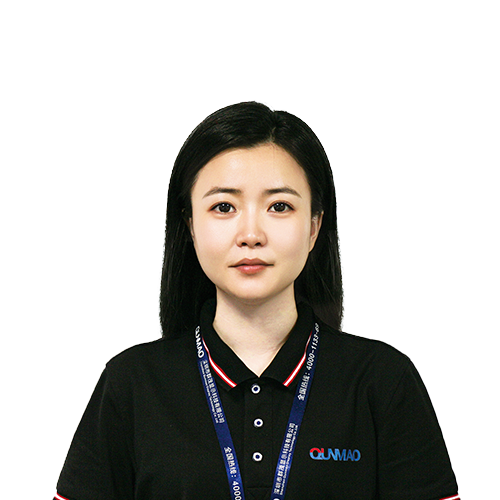
Giám đốc điều hành | chuyên gia giải pháp trưng bày và hợp tác tương tác
Tôi Là Người sáng lập qtenboard, mang đến hơn 17 năm kinh nghiệm thực hành cho ngành công nghiệp màn hình cảm ứng. Dựa trên quan điểm quản lý toàn cầu thu được thông qua nghiên cứu emba của tôi tại Đại học thâm quyến, tôi dẫn dắt đội ngũ của tôi trong việc tối ưu hóa mọi giai đoạn hoạt động của chúng tôi-từ định nghĩa sản phẩm đến Quản Lý Chuỗi Cung ứng hiệu quả cao-Đảm bảo khả năng sản xuất của chúng tôi luôn đi đầu trong ngành.
Là lãnh đạo của qtenboard, tôi chuyên cung cấp các giải pháp OEM/ODM phù hợp cho bảng trắng tương tác, tường video LCD, biển báo kỹ thuật số và thiết bị đầu cuối cảm ứng cấp công nghiệp. Được hỗ trợ bởi khu công nghiệp hiện đại 330,000 m² ở thâm quyến, chúng tôi duy trì kiểm soát toàn bộ vòng đời đối với thiết kế công nghiệp, sản xuất chính xác và kiểm tra hiệu suất nghiêm ngặt.
Với gần hai thập kỷ kinh nghiệm của dự án, các giải pháp trưng bày của qtenboard hiện được triển khai tại hơn 120 quốc gia và khu vực, đã giành được sự tin tưởng của hơn 15,000 khách hàng doanh nghiệp trên toàn thế giới. Nếu bạn đang tìm kiếm một đối tác phản hồi với nền tảng sản xuất sâu cho các dự án màn hình cảm ứng tùy chỉnh của bạn, nhóm của tôi và tôi đã sẵn sàng hỗ trợ tầm nhìn của bạn với sự xuất sắc chuyên nghiệp.
 vie
 EN
 pt
 spa
 th
 aze
 bel
 est
 lav
 ukr
 ru